
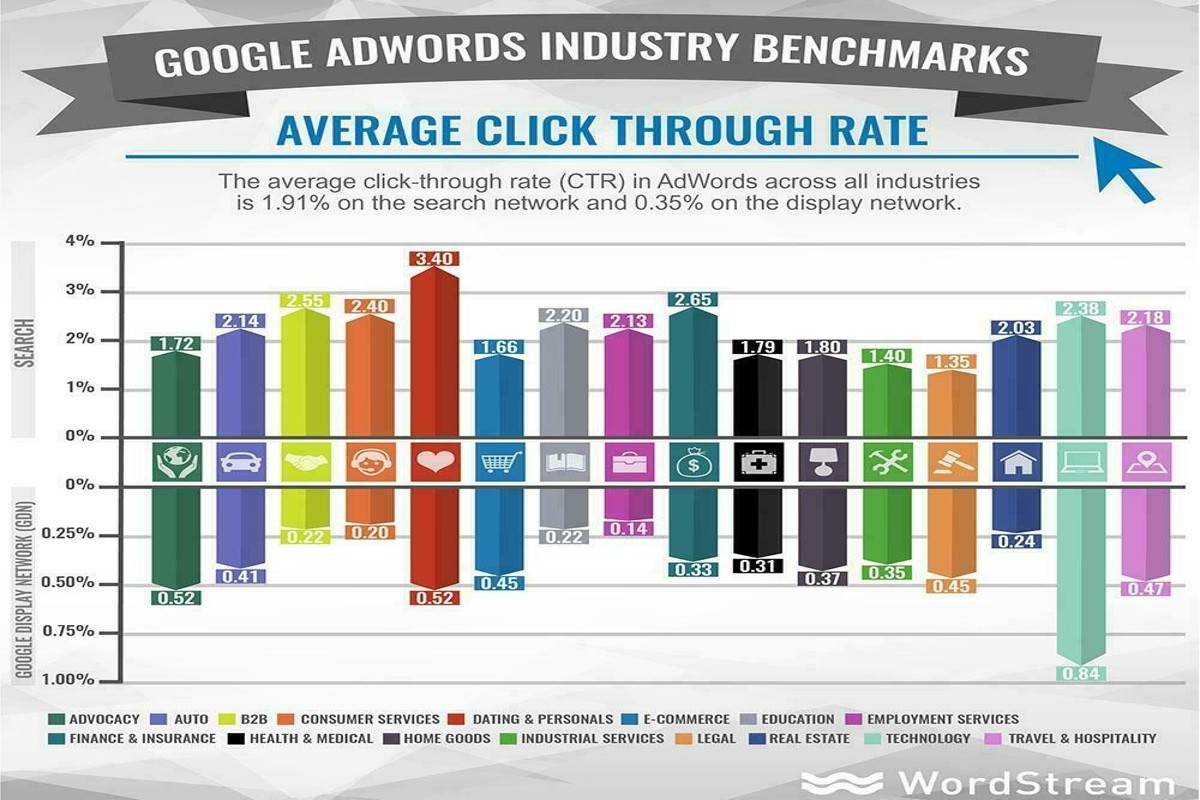
A good CTR for Google Ads typically ranges between 2% to 5%, depending on the industry. This metric reflects the effectiveness of your ads in attracting clicks and driving traffic to your website, ultimately impacting your campaign’s success and ROI.
Understanding what constitutes a good click-through rate (CTR) for Google Ads is essential for marketers and business owners looking to optimize their online advertising efforts. A well-performing CTR can significantly enhance visibility, drive traffic, and improve conversion rates, making it a critical component of any digital marketing strategy. According to industry reports, the average CTR across all industries hovers around 3.17%, underscoring the importance of this metric in evaluating ad performance.
Failure to grasp the ideal CTR for google ads can lead to missed revenue opportunities and inefficient ad spend. Businesses may waste valuable resources on poorly performing ads, resulting in a competitive disadvantage in a crowded marketplace.
This article will provide a comprehensive overview of what constitutes a good CTR for Google Ads, including industry benchmarks, factors influencing CTR, best practices for improvement, and the implications of CTR on overall campaign performance.
What is considered a good CTR for Google Ads?
A good Click-Through Rate (CTR) for Google Ads usually falls between 2% to 5%. This range varies based on industry and campaign type. For example, in retail, a CTR above 3% is often seen as effective. In contrast, sectors like finance might still perform well with a lower CTR, thanks to higher conversion values.
Several factors can affect what’s deemed a good CTR. Industry benchmarks differ significantly. The finance and insurance sector averages around 1.91%, while the travel and hospitality industry tends to hover near 4.68%. Other important aspects include ad position, targeting precision, and how relevant the keywords are to the intended audience. Ads that are well-crafted often outperform those that lack specificity. They align better with user intent — that’s key for effectiveness.
The campaign’s nature also plays a significant role. Brand awareness campaigns might accept lower CTRs since they prioritize impressions over clicks. Meanwhile, direct response ads typically aim for higher engagement. It’s essential to set realistic expectations based on performance data from similar campaigns. Continuous optimization can lead to better results. Advertisers should also take quality scores into account; a higher quality score can reduce costs and enhance ad placements, which can, in turn, boost CTR.
Expert insight: Regularly analyzing CTR alongside conversion rates offers a fuller picture of ad performance. A high CTR coupled with low conversions can suggest that while the ad is generating clicks, it might not be persuading users to act. Adjustments to the landing page or offer may be necessary (this is often overlooked).
How can I improve my CTR in Google Ads?
Improving your click-through rate (CTR) in Google Ads means optimizing several elements of your ads and targeting. A typical CTR ranges from 2% to 5%. This varies by industry and campaign type.
To boost your CTR, consider these actionable strategies:
- Refine Your Keywords: Conduct thorough keyword research to pinpoint high-performing and relevant keywords. Use tools like Google Keyword Planner to uncover variations that might attract more clicks.
- Write Compelling Ad Copy: Craft ad copy that addresses your target audience’s needs and pain points. Emphasize unique selling propositions (USPs) — and include strong calls to action (CTAs) to drive user engagement.
- Utilize Ad Extensions: Implement ad extensions such as sitelinks, callouts, and structured snippets. These features offer additional information and can boost the visibility of your ads, making them more attractive to potential customers.
- Optimize Landing Pages: Make sure your landing pages align with your ads and provide a seamless user experience. A well-designed landing page can greatly improve conversion rates. This, in turn, enhances CTR.
- Use A/B Testing: Regularly test different ad variations, including headlines, descriptions, and visuals. A/B testing helps identify what resonates best with your audience and allows you to refine your ads accordingly.
- Target the Right Audience: Use demographic and interest-based targeting to reach the most relevant audience for your products or services. This ensures your ads are viewed by users likely to engage.
- Monitor and Adjust Bids: Regularly review your bidding strategy and adjust bids for high-performing keywords. Increasing bids can improve ad position — leading to better visibility and, potentially, higher CTR.
Expert insight: Continuously analyze your campaign performance using Google Ads metrics. Adjust strategies based on real-time data. Stay agile to ensure ongoing improvements in CTR (this is often overlooked).
What factors affect CTR in Google Ads?
The Click-Through Rate (CTR) in Google Ads is influenced by several key factors, including ad relevance, keyword selection, and ad placement. A good CTR usually falls between 2% and 5%. However, optimal performance can vary depending on the industry and specific campaign goals. Understanding these factors can truly enhance ad performance significantly.
Ad relevance is a primary determinant of CTR. Ads that match users’ search intent closely are more likely to get clicks. For instance, an ad with the exact keywords a user searched for tends to outperform a generic ad. Plus, the ad’s copy — including the headline and description — must resonate with the target audience to effectively grab their attention.
Keyword selection plays a crucial role, too. High-traffic keywords can get more impressions, but they often come with increased competition. On the flip side, long-tail keywords might have lower search volumes but can achieve higher CTRs because of their specificity. Finding the right balance between keyword popularity and relevance is essential for maximizing CTR.
Ad placement impacts visibility and potential clicks as well. Ads that show up at the top of search results typically receive more clicks than those in lower positions. Factors like bid amount and Quality Score are significant contributors to ad placement. Higher bids and better Quality Scores often lead to improved ad positions — which enhances CTR.
Expert insight: Regularly analyzing and optimizing ad copy, keywords, and placements based on performance metrics can lead to significant improvements in CTR. Using A/B testing on ad variations can also offer valuable insights into what resonates best with the target audience (this is often overlooked).
Is a high CTR always good for Google Ads?
A high Click-Through Rate (CTR) isn’t always a sign of a successful Google Ads campaign. While a CTR above 2% is generally viewed as favorable, a high CTR can sometimes result in low conversion rates — which can ultimately hurt overall campaign profitability.
High CTRs might come from engaging ad copy or a mismatch between the ad and the landing page content. If users click on an ad but don’t convert, it indicates possible issues with the offer or user experience. Evaluating CTR alone can mislead advertisers about their campaigns’ effectiveness (this is often overlooked).
- Assess Conversion Rates: Always analyze CTR alongside conversion rates. A high CTR paired with a low conversion rate shows that the ad might attract clicks but isn’t meeting user expectations.
- Focus on Quality Score: Google gives a Quality Score based on CTR, ad relevance, and landing page experience. Aim for a Quality Score of 7 or higher — this can improve ad rank and reduce costs.
- Optimize for Target Audience: Make sure ads align with the target audience’s needs and interests. A well-targeted audience is more likely to convert, even if the CTR is lower.
- Test Ad Variations: Regularly test different ad copies and formats. This approach helps identify which ads drive both high CTR and conversions, allowing for data-driven optimizations.
Expert insight: Always prioritize the balance between CTR and conversion rate. A sustainable Google Ads strategy focuses on attracting relevant traffic that leads to measurable business outcomes.
What is the average CTR for different industries in Google Ads?
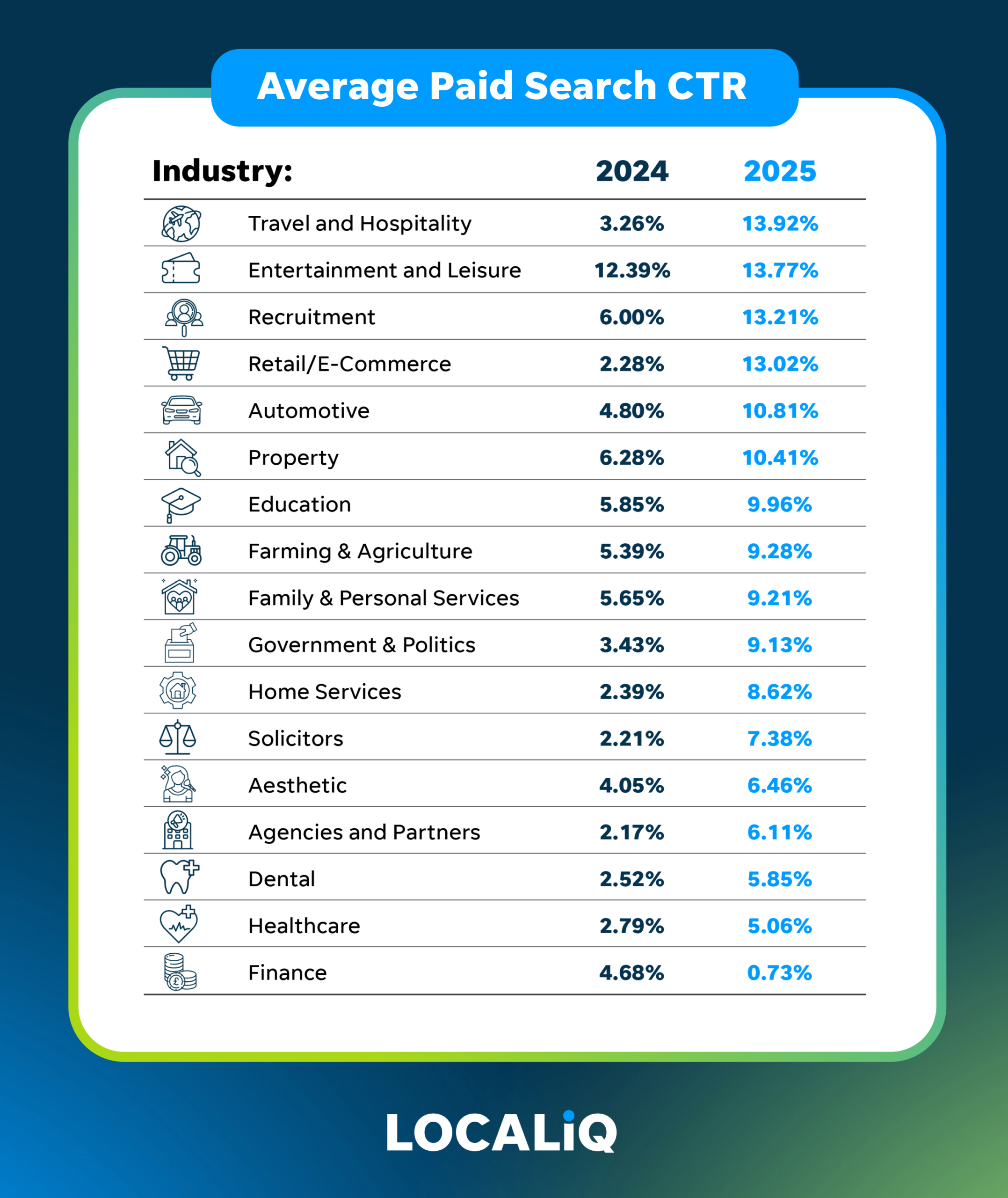
The average click-through rate (CTR) for Google Ads varies quite a bit by industry. As of 2024, the overall benchmark CTR across all sectors stands at around 3.17%. Some specific sectors, particularly travel and hospitality, can achieve CTRs as high as 6.00%. In contrast, B2B industries typically see lower rates, hovering around 2.41%.
Different industries experience varying CTRs due to factors like audience intent, competition, and ad quality. For example, the retail sector usually sees higher CTRs because of strong consumer interest and seasonal trends. In contrast, industries with longer sales cycles — like finance or legal services — often have lower CTRs. Potential customers may take more time to research options before making a decision (this is often overlooked). Furthermore, ad relevance and quality score are critical for determining CTR, since well-optimized ads generally attract more clicks.
Another key aspect is the platform’s versatility. Mobile ads often yield higher CTRs than desktop ads. This is largely due to more users accessing information on mobile devices, which affects how they engage with ads. A well-structured Google Ads campaign that zeroes in on specific demographics and employs compelling ad copy can significantly boost CTR, no matter the industry.
Expert insight: Regularly analyze industry-specific benchmarks and adjust strategies accordingly. Tailoring ad content to match audience expectations in your sector can lead to better performance and higher CTRs.
Understanding Click-Through Rate: Definition and Importance
This section explains Click-Through Rate (CTR), how it’s calculated, and why it matters for evaluating Google Ads campaign effectiveness.
Definition of CTR and Its Calculation
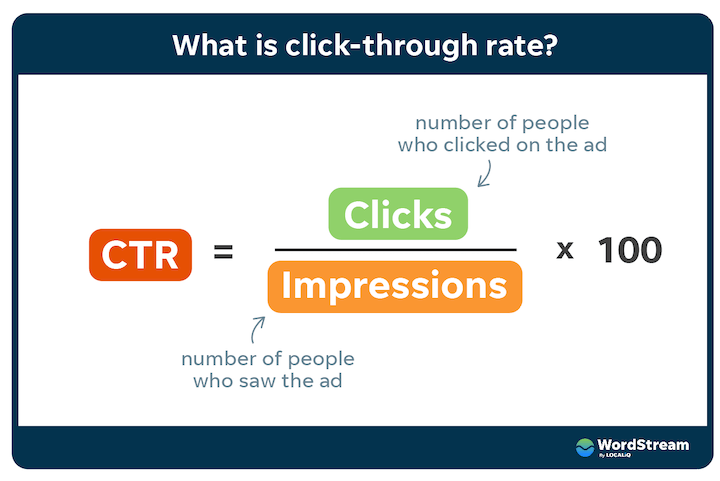
Click-Through Rate (CTR) is a vital performance metric that measures the percentage of users who click an advertisement after viewing it. The formula to calculate CTR is simple: CTR (%) = (Total Clicks / Total Impressions) x 100. For example, if an ad gets 100 clicks from 10,000 impressions, then the CTR is 1% — straightforward enough.
Importance of CTR in Measuring Ad Effectiveness
CTR acts as a primary indicator of how well an ad connects with its target audience. A higher CTR shows that the ad is engaging and relevant, while a lower CTR might indicate that the ad requires optimization. In 2024, the average CTR for Google Ads across various industries is around 3.17%. This means effective ads can significantly increase traffic and engagement.
How CTR Impacts Quality Score and Ad Placement
Google assigns a Quality Score to each ad based on several factors, including CTR. A higher CTR positively affects the Quality Score, which then impacts ad placement and cost-per-click (CPC). Ads with higher Quality Scores generally have better positions on the search results page, resulting in lower CPCs. Thus, improving CTR can lead to more efficient ad spending and better visibility.
The Relationship Between CTR and Conversion Rates
While CTR is crucial for gauging ad engagement, its link to conversion rates is just as vital. A high CTR doesn’t automatically mean conversions will follow. The effectiveness of the landing page and the overall user experience are also key. In 2025, studies found that campaigns with a CTR above 5% often correlate with conversion rates of 10-15%. Well-targeted ads lead to not just clicks — but also actionable customer engagement.
Nuance / Expert Layer
Common misconceptions about CTR include the idea that a higher CTR always means better ad performance. However, this metric needs to be evaluated alongside conversion rates and return on investment (ROI). For instance, an ad with a high CTR but a low conversion rate might suggest that while users are intrigued, they don’t find the product appealing or the landing page effective. Additionally, factors such as ad fatigue, audience targeting, and seasonal trends can influence CTR, so a nuanced analysis is necessary.
Practical Application
To make the most of CTR insights, advertisers should concentrate on these actionable strategies:
- Continuously test ad copy and creative elements to boost engagement.
- Use A/B testing to identify which ads lead to higher CTR and conversions.
- Analyze audience data to fine-tune targeting and enhance relevance.
- Monitor landing page performance to ensure it aligns with ad messaging, improving conversion chances.
Factors Influencing CTR in Google Ads
This section examines the key factors that influence click-through rates (CTR) in Google Ads. These factors are critical for optimizing ad performance and achieving marketing objectives.
Ad Copy and Its Relevance to the Target Audience
Effective ad copy is crucial in attracting clicks. It should resonate with the target audience — addressing their needs, preferences, and pain points. Techniques such as including a clear value proposition, using engaging language, and prompting action with strong calls-to-action (CTAs) can significantly enhance CTR. A study in 2024 found that ads with tailored messaging achieved a CTR that was 30% higher than generic ads.
The Role of Keywords and Targeting
Keywords serve as the backbone of Google Ads. Selecting relevant keywords that align with user intent is essential for ensuring ads appear in the right search queries. There are two key aspects to consider:
- Keyword Relevance: Use keywords that directly relate to the product or service being advertised.
- Negative Keywords: Implementing negative keywords helps filter out irrelevant traffic. This improves CTR by focusing on high-intent users.
Accurate targeting further amplifies CTR. Utilizing demographic targeting, interest targeting, and remarketing can help reach specific audience segments, ensuring ads are shown to those most likely to engage.
Impact of Ad Position and Visibility
Ad position plays a critical role in determining visibility and CTR. Ads occupying the top positions on search results pages typically experience higher click rates. According to data from 2025, ads in the first position garnered an average CTR of 7.5% — compared to just 2% for those in the fifth position.
Visibility extends to ad format, too. Utilizing extensions like site links and callouts can enhance the ad’s real estate on the search results page. This makes it more prominent and increases the likelihood of clicks.
Influence of Landing Page Experience on CTR
The landing page experience significantly impacts CTR and overall campaign effectiveness. A seamless, user-friendly landing page encourages users to engage further after clicking on the ad. Key elements to optimize include:
- Load Speed: Pages that load within two seconds see a 50% higher conversion rate.
- Relevance: Make sure the landing page content matches the ad copy to maintain user trust.
- Mobile Optimization: With over 60% of searches conducted on mobile devices, a mobile-friendly design is essential.
A well-optimized landing page can lead to an increase in conversions. This indirectly boosts CTR by improving overall ad quality scores.
While many articles focus on basic elements, they often overlook nuances such as the impact of ad fatigue and the importance of continuous testing. Ad fatigue occurs when audiences are overexposed to the same ads — this leads to declining CTR. Regularly testing new ad variations and updating keywords can help mitigate this issue. Furthermore, understanding the difference between CTR and conversion rate is crucial. A high CTR doesn’t guarantee conversions; thus, balancing both metrics is essential for campaign success.
To enhance CTR based on these insights, marketers should focus on regularly updating ad copy to keep it fresh, optimizing keyword selection, and refining targeting strategies. Also, investing in landing page improvements and testing different ad positions can yield significant benefits. Implementing these strategies will create a more effective ad campaign that drives higher engagement and conversions.
Strategies to Improve Your Google Ads CTR
This section outlines actionable strategies to enhance the click-through rate (CTR) of Google Ads. A higher CTR not only boosts ad performance but also optimizes overall campaign efficiency and return on investment.

Crafting Compelling Ad Copy and Headlines
Creating engaging ad copy is crucial for boosting CTR. Effective headlines should be concise, relevant, and contain strong action words. Incorporating keywords that align with user intent can significantly enhance visibility. Studies show that ads with personalized copy can improve CTR by up to 20% — which is a substantial increase. Additionally, using numbers or questions in headlines can capture attention, encouraging more clicks.
Using Ad Extensions Effectively
Ad extensions enhance the visibility and appeal of your ads by providing additional information. Leverage the following types of ad extensions to improve CTR:
- Sitelink Extensions: Direct users to specific pages on your website.
- Callout Extensions: Highlight unique selling points, such as free shipping or 24/7 customer service.
- Structured Snippet Extensions: Showcase specific aspects of your products or services, like brands or categories.
Using ad extensions can improve CTR by an average of 10-15%, as they make ads more informative and enticing (this is often overlooked).
A/B Testing for Optimal Performance
A/B testing is essential for refining ads and maximizing CTR. This process involves creating two versions of an ad with slight variations in copy, visuals, or targeting. Track the performance of each version through metrics like CTR and conversion rates. To conduct effective A/B tests:
- Identify a single variable to test (e.g., headline, call-to-action).
- Run both ad versions simultaneously to ensure equal exposure.
- Analyze results after a predetermined period to determine the more effective version.
Regular A/B testing can lead to incremental improvements in CTR. This ensures campaigns remain competitive and responsive to user preferences.
Monitoring and Adjusting Targeting Settings
Precise targeting is crucial for maximizing ad relevance and CTR. Regularly review your targeting settings, including demographics, locations, and keywords. Use tools like Google Analytics to gain insights into user behavior and preferences. Implement the following strategies:
- Refine keyword targeting to focus on high-performing terms.
- Adjust geographic targeting to prioritize regions with higher conversion rates.
- Experiment with audience targeting options to reach specific user segments.
By continuously optimizing targeting settings, advertisers can improve CTR and overall campaign effectiveness.
While these strategies provide a strong foundation for improving CTR, it’s essential to recognize that results may vary based on industry and competition. Common misconceptions include the belief that CTR is the sole metric for success. In reality, conversion rates and customer acquisition costs are equally important in determining campaign effectiveness.
To apply this information effectively, marketers should begin by auditing their existing ad copy and extensions, implementing A/B tests on key elements, and reviewing targeting settings at least once a month. By adopting a data-driven approach and being willing to iterate, advertisers can significantly enhance their Google Ads CTR.
Analyzing CTR: Tools and Metrics for Success
This section outlines essential tools and metrics for analyzing Click-Through Rate (CTR) in Google Ads. These elements play a crucial role in optimizing advertising performance.

Tools Available for Tracking CTR Performance
Several tools can effectively assist in tracking and analyzing CTR performance. They include:
- Google Ads Dashboard: This is the primary tool for monitoring all campaign metrics — CTR, impressions, and conversions.
- Google Analytics: This tool offers insights into user behavior after a click, providing a deeper understanding of how CTR impacts overall site performance (this is often overlooked).
- SEMrush: A competitive analysis tool that benchmarks CTR against industry standards and competitors.
Understanding Google Ads Reports and Metrics
Google Ads generates various reports that yield insights into performance metrics. Key metrics to consider include:
- CTR: This reflects the ratio of clicks to impressions, showing how effective an ad is.
- Quality Score: A metric affecting ad positioning and cost, closely linked to CTR.
- Conversion Rate: This measures the percentage of clicks leading to desired actions, directly connecting CTR to ROI.
Benchmarking Your CTR Against Industry Standards
Benchmarking is essential for assessing your CTR’s success. As of 2024, the average CTR for Google Ads across industries hovers around 3.17%. However, this figure can vary significantly by sector:
- Retail: Approximately 2.41%
- Finance: About 3.55%
- Travel: Roughly 4.00%
These benchmarks provide a reference point. They allow advertisers to evaluate their performance and pinpoint areas needing improvement.
Interpreting CTR Data for Campaign Adjustments
Understanding CTR data means analyzing trends and making informed adjustments. A declining CTR often indicates several issues, such as:
- Poor ad copy or design that doesn’t resonate with the target audience.
- Inadequate targeting, resulting in irrelevant impressions.
- Increased competition in the ad space, necessitating strategic adjustments.
Regular reviews of CTR data enable advertisers to make timely changes — optimizing ad spend and improving overall campaign performance.
Many articles often overlook the significance of contextual factors influencing CTR. While industry benchmarks provide a baseline, individual campaign nuances — such as audience targeting, ad placement, and seasonal trends — can greatly affect performance. For instance, a well-crafted ad can achieve a high CTR in a niche market but may underperform in a broader audience due to competition. Therefore, a comprehensive analysis must account for these variables to draw accurate conclusions.
To leverage this information effectively, advertisers should establish a consistent review process. This involves:
- Regularly checking CTR metrics on the Google Ads dashboard.
- Using Google Analytics to analyze post-click behavior.
- Benchmarking against industry standards to identify any performance gaps.
- Conducting A/B testing on ad copy and design to optimize engagement.
By actively monitoring and adjusting campaigns based on CTR insights, advertisers can enhance their Google Ads performance and ultimately achieve better conversion rates.
Frequently Asked Questions
What is considered a good CTR for Google Ads?
A good CTR for Google Ads typically ranges from 2% to 5%, depending on the industry and campaign type. Higher CTRs can indicate effective ad targeting and relevance.
How can I improve my CTR in Google Ads?
To improve CTR in Google Ads, focus on optimizing ad copy, using relevant keywords, and implementing ad extensions. A/B testing different ad variations can also help identify what resonates best with your audience.
What factors affect CTR in Google Ads?
CTR in Google Ads is influenced by ad relevance, keyword selection, audience targeting, and the overall quality of the landing page. Compelling ad copy and strong calls-to-action also play a crucial role.
Is a high CTR always good for Google Ads?
While a high CTR often indicates effective ad performance, it may not always correlate with conversions. It’s essential to analyze the quality of traffic and overall campaign goals to assess effectiveness.
What is the average CTR for different industries in Google Ads?
The average CTR for Google Ads varies by industry, with averages ranging from 1.91% for the legal sector to 3.17% for the retail sector. Understanding industry benchmarks can help set realistic performance expectations.
Final Thoughts on what is a good ctr for google ads
A good CTR for Google Ads is context-dependent, but generally, a rate between 2% and 5% is considered effective across various industries. However, achieving a high CTR must align with overall campaign goals, as it does not always correlate with conversion rates. Continuous analysis and optimization are essential to ensure that your CTR contributes positively to your ROI.
To enhance your CTR, conduct A/B testing on ad copy and visuals to identify which combinations resonate with your target audience, and refine your targeting parameters based on performance data.
Discover how you can improve your click-through rates by consulting a google ads expert who can guide you through effective strategies tailored to your business.
Understanding and optimizing your CTR is vital for maximizing the impact of your advertising spend and driving meaningful engagement with your brand.