

How to check competitors Google Ads involves utilizing tools like SEMrush or SpyFu to evaluate their ad copies, keywords, and performance metrics. This process enables advertisers to gain insights that can refine their own advertising strategies, potentially increasing return on investment (ROI) by up to 30%.
Understanding how to check competitors Google Ads is crucial for businesses aiming to enhance their digital marketing efforts. With an estimated 70% of marketers leveraging competitive analysis for ad campaigns, failing to grasp this topic can lead to suboptimal ad performance and missed opportunities for growth. The digital advertising landscape is highly competitive, and the stakes are high for those who do not stay informed.
Businesses that overlook the importance of analyzing competitors’ Google Ads risk significant revenue loss and wasted advertising spend. Without this knowledge, companies may struggle to differentiate themselves, leading to a competitive disadvantage in their respective markets.
This article will cover essential methodologies for checking competitors’ Google Ads, including a comparison of top analysis tools, a breakdown of associated costs, best practices for implementation, and insights into optimizing local SEO strategies.
What tools can I use to check my competitors’ Google Ads?
Several effective tools can analyze competitors’ Google Ads, including SEMrush, SpyFu, and Ahrefs. These platforms offer insights into ad copy, keywords, and spending. This helps businesses strategize better. For instance, SEMrush indicated that in 2024, over 60% of digital marketers relied on these tools to boost their ad performance.
SEMrush enables users to view a competitor’s ad history. This includes the keywords they target and their estimated ad spend. If a business operates in the home improvement sector, they can input a competitor’s URL. They’ll quickly discover which ads have been running successfully. This data can inform keyword selection and ad copy strategies, making sure the business stays competitive.
SpyFu brings a unique feature to the table. It shows the number of clicks and the cost per click for competitor ads — providing a clearer picture of their advertising strategy. Businesses can use this information to see if their own budget aligns with industry standards. Ahrefs, primarily an SEO tool, does more than that. It includes features that let users see the PPC keywords their competitors rank for, highlighting gaps in their own strategy that might need addressing (this is often overlooked).
Expert insight: Regularly monitoring competitors’ Google Ads reveals not only industry trends but also identifies gaps in your own advertising strategy. This allows for timely adjustments and improved ROI — a crucial aspect of staying competitive.
How can I analyze my competitors’ ad strategies?
Analyzing competitors’ ad strategies means looking closely at their keyword usage, ad copy, and overall campaign performance. By evaluating these elements methodically, businesses can uncover valuable insights into effective advertising approaches. Recent studies show that 70% of marketers use competitive analysis to improve their own ad campaigns.
Follow these steps to analyze your competitors’ ad strategies effectively:
- Identify competitors: Start by listing your top competitors in the market. Focus on those with similar products or target audiences — this provides context.
- Use keyword research tools: Tools like SEMrush, Ahrefs, or Google Keyword Planner can help identify the keywords your competitors are bidding on. Look for high-volume keywords that drive traffic to their sites (this is often overlooked).
- Examine ad copy: Analyze the language and messaging in your competitors’ ads. Note the tone, call-to-action phrases, and unique selling propositions to grasp what resonates with their audience.
- Review landing pages: Click on your competitors’ ads to evaluate their landing pages. Assess the design, content, and overall user experience. This can reveal what contributes to their conversion rates.
- Monitor ad placements: Use tools like SpyFu or Adbeat to track where your competitors are placing their ads. This includes search engines, social media platforms, and other websites — keeping tabs here is crucial.
- Analyze performance metrics: If available, review metrics such as click-through rates (CTR), conversion rates, and return on ad spend (ROAS) to gauge the effectiveness of their strategies. The result is often revealing.
Regularly monitoring competitors’ ad strategies can offer insights into market trends and consumer behavior, enabling businesses to adjust their strategies accordingly. Advertising landscapes can shift rapidly, so continuous analysis is key.
Expert insight: Combining competitive analysis with your own campaign data can reveal gaps in your strategy. This allows for targeted improvements that enhance performance and increase ROI.
What metrics should I look for when checking competitors’ Google Ads?
When analyzing competitors’ Google Ads, concentrate on key metrics like click-through rates (CTR), ad spend, and conversion rates. These figures reveal the effectiveness and efficiency of competitors’ advertising strategies. In 2024, the average ctr for google ads across all industries is about 3.17% — a crucial metric to evaluate.
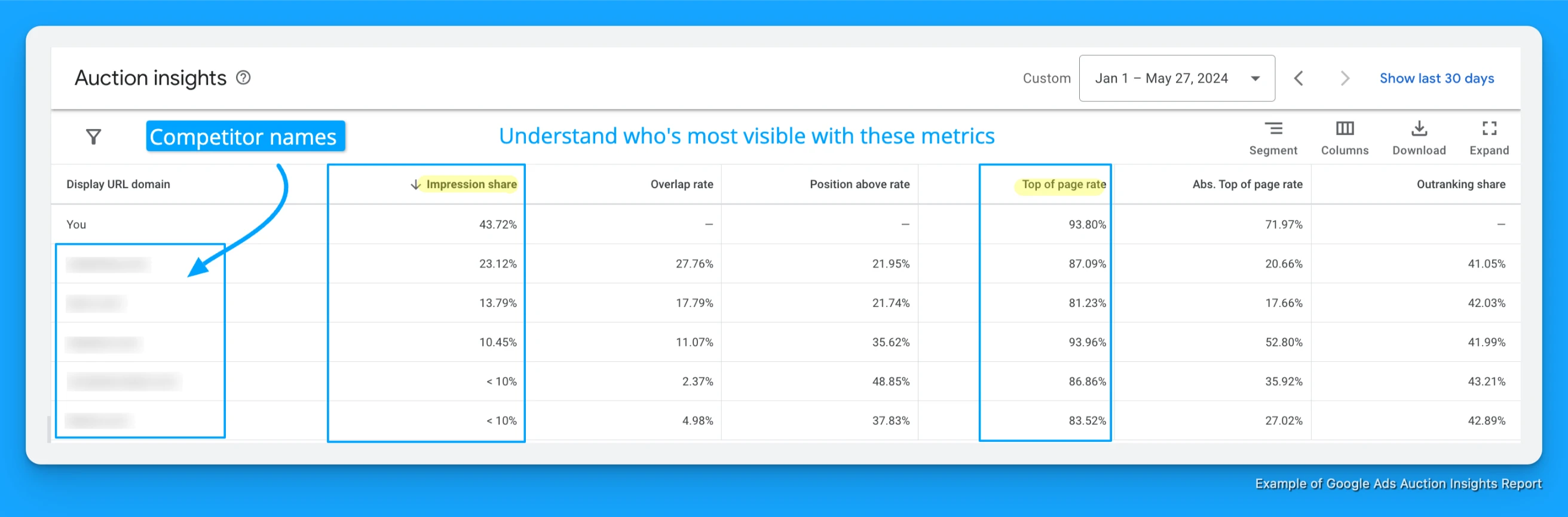
Key metrics show how well competitors are performing and highlight potential opportunities. Start with click-through rates (CTR), which indicate how frequently people click on an ad after seeing it. A higher CTR usually signals better ad relevance and targeting. Use tools like SEMrush or SpyFu to find CTR data for various keywords and ad groups.
- Ad Spend: Knowing the estimated ad spend reveals how much competitors put into their campaigns. Tools such as AdEspresso can offer estimates based on keyword data and industry benchmarks.
- Conversion Rates: This metric shows how effectively an ad converts clicks into actions, such as purchases or sign-ups. While direct conversion data can be tough to obtain, evaluating landing page effectiveness through user experience often provides valuable insights.
- Ad Copy and Extensions: Examine the language, offers, and calls to action in competitors’ ads. Look for unique selling propositions — and any ad extensions that improve visibility and engagement.
Don’t overlook the ad positioning, which reflects bidding strategies and overall competitiveness. Ads at the top of search results typically indicate higher bids and effective targeting. Regularly checking these metrics helps businesses adapt their strategies and remain competitive.
Expert insight: Use competitor insights not just for benchmarking but also to find gaps in your advertising strategy, like neglected keywords or underperforming ad formats (this is often overlooked).
How often should I check my competitors’ google ads?
Competitors’ Google Ads should be reviewed at least once a month to stay aware of their strategies and market positioning. In rapidly changing industries, however, a bi-weekly review might be necessary. This helps capture shifts in advertising approaches effectively.
Several factors influence how often competitors’ ads should be monitored. The nature of the industry matters significantly — sectors with high competition or seasonal fluctuations may need more frequent checks. The scale of your advertising efforts also plays a role. If your budget is substantial, knowing what competitors are doing can assist in optimizing your campaigns more strategically. Tools like SEMrush or SpyFu can automate this process, making it simpler to track changes without extensive manual effort (this is often overlooked).
Additionally, significant events, such as product launches or shifts in market conditions, might require an immediate review of competitors’ ads. Staying agile and responsive to these occurrences can provide a competitive edge. Regularly analyzing ad copy, keywords, and bidding strategies can yield insights that shape your advertising tactics — ensuring alignment with current market trends.
Expert insight: Establish a routine schedule for checking competitors’ Google Ads. But, remain flexible. Adapt your frequency based on market dynamics and your advertising goals.
What are the benefits of checking competitors’ Google Ads?
Analyzing competitors’ Google Ads offers insights that can enhance your own advertising strategies. Understanding what works for others is crucial. Businesses can improve their campaigns to boost performance and ROI.
Checking competitors’ Google Ads helps marketers spot successful keywords, ad copy strategies, and target demographics. This competitive intelligence can lead to better ad placements and more effective budget allocation. A 2024 survey revealed that 70% of marketers found insights from competitor analysis significantly improved their ad performance.
- Keyword Optimization: Discover high-performing keywords that competitors are targeting. This can refine your own keyword strategy.
- Ad Copy Insights: Analyze the language, tone, and structure of competitors’ ads to identify messaging that truly resonates with your target audience.
- Targeting Strategies: Understand the audience segments your competitors focus on. This enables adjustments to your targeting for better engagement.
Moreover, keeping an eye on competitors’ ad placements and budgets can reveal market trends and shifts. This awareness allows businesses to adapt their strategies proactively — not just reactively. For example, if a competitor ramps up spending on a specific keyword, it might indicate a rising trend or demand in that area (worth double-checking).
Expert insight: Regularly reviewing competitors’ Google Ads not only sharpens your ad strategy but also aids in anticipating market changes. This ensures your campaigns stay competitive and relevant.
Understanding the Importance of Competitor Analysis in Google Ads
Competitor analysis in Google Ads is a strategic approach that helps businesses refine their advertising efforts by leveraging insights from rivals. This section focuses on key reasons why analyzing competitors’ ads is crucial for enhancing performance and maintaining a competitive edge.
Identifying Market Trends and Shifts
Monitoring competitor ads provides valuable insights into evolving market trends. Analyzing the keywords and ad formats competitors use helps businesses spot shifts in consumer behavior and preferences. For instance, if there’s a rise in ads for eco-friendly products, it likely indicates growing demand for sustainability. Businesses may need to adjust their campaigns accordingly — keep this in mind.
Learning from Successful Ad Strategies
Competitors often pour significant resources into their advertising strategies, resulting in campaigns that can serve as effective models. By examining successful ad copies, visuals, and calls-to-action, businesses can adapt these strategies to improve their own campaigns. Research shows that companies analyzing competitor ads see a 25% increase in click-through rates (CTRs) on average. This happens as they refine their messaging and targeting based on what’s already proven effective.
Avoiding Pitfalls Through Competitor Mistakes
Studying competitors’ failures can be just as beneficial as learning from their successes. Identifying ads that underperformed allows businesses to steer clear of similar missteps. For example, if a competitor’s ad drew negative feedback due to misleading claims, other businesses can make sure their messaging stays transparent and authentic. This approach safeguards reputation while boosting user engagement (this is often overlooked).
Gaining Insights into Audience Targeting
Competitor ads offer valuable details regarding audience targeting strategies. By analyzing the demographics and interests competitors target, businesses can fine-tune their own audience segments. Tools like Google Ads and social media analytics deliver data on which audiences engage most with competitor ads, enabling informed decisions on targeting efforts. This clarity is essential.
Expert Insights on Competitor Analysis
Many businesses mistakenly think competitor analysis stops with identifying successful ads. However, true analysis entails understanding the context behind these ads. Variables like seasonal trends, economic conditions, and global events can significantly influence ad performance. A well-rounded approach takes these factors into account, ensuring strategies align not just with competitors but also with broader market dynamics.
Practical Application of Competitor Insights
- Use tools like SEMrush or SpyFu to track competitor keywords and ad performance.
- Regularly review competitor ads to identify new trends and successful strategies.
- Implement A/B testing to adapt successful elements from competitor ads into your campaigns.
- Create a competitive analysis report that includes insights on audience targeting and ad performance metrics.
By systematically checking competitors’ Google Ads, businesses can boost their advertising effectiveness, stay relevant in their market, and ultimately drive better results. Implement these insights to refine strategies and achieve a higher return on investment.
Step-by-Step Guide to Using Tools for Competitor Analysis
This section outlines a structured approach to using various tools for analyzing competitors’ Google Ads. Effective competitor analysis informs strategic decisions and can significantly enhance advertising performance.
Setting Up Accounts with Popular Tools
Establishing accounts with industry-standard tools is the initial step in competitor analysis. Tools like SEMrush, Ahrefs, and SpyFu provide comprehensive insights into competitors’ advertising strategies.
- SEMrush: Sign up for a free trial or choose a subscription. Navigate to the “Advertising Research” section to access competitor ads.
- Ahrefs: Create an account and select the “Ads” tool from the dashboard to explore competitors’ ad campaigns.
- SpyFu: Register and enter a competitor’s domain in the search bar to view their ad history and keywords.
Navigating the Dashboard for Ad Insights
Once accounts are set up, familiarize yourself with the dashboard. Each tool has a unique layout — but generally, they feature sections for ad performance, keywords, and ad copy.
- Locate the Ad History or Ad Research tab to access detailed insights.
- Filter results by date range to spot trends over time.
- Review competitor ad placements and associated keywords for a comprehensive overview.
Interpreting Data and Metrics
Understanding the data presented is vital for effective analysis. Key metrics to focus on include:
- Impressions: The number of times ads are displayed.
- Clicks: The total number of clicks on the ads — this indicates engagement.
- Click-Through Rate (CTR): Calculated as (Clicks/Impressions) x 100, offering insight into ad effectiveness.
- Cost Per Click (CPC): The average cost incurred for each click on the ad, which is essential for budget considerations.
Current statistics indicate that the average CTR for Google Ads across all industries is about 3.17%, with higher-performing sectors significantly exceeding this average.
Exporting and Utilizing Findings for Strategy
After gathering insights, export the data for further analysis. Most tools provide options to download reports in various formats, such as CSV or PDF. This data can then be used to refine advertising strategies.
- Identify high-performing keywords your competitors are using.
- Examine their ad copy and design elements — this can inspire your creative strategy.
- Adjust your bidding strategies based on competitors’ CPC data.
Competitor analysis isn’t just about replication; it’s about learning and adapting. Use the insights to differentiate campaigns and effectively target untapped audiences.
Many articles overlook the importance of competitive benchmarking. Analyzing not only the ads but also the overall market landscape provides a deeper understanding of positioning. For instance, recognizing seasonal trends in competitors’ ad spend can reveal opportunities for your campaigns at key times during the year.
To effectively leverage competitor analysis, implement the following actions:
- Regularly monitor competitors’ ad performance to stay updated on market shifts.
- Incorporate insights into your ad strategy to enhance targeting and messaging.
- Set up alerts for significant changes in competitors’ advertising activities.
Common Mistakes When Analyzing Competitor Ads
Analyzing competitor ads offers valuable insights, yet common mistakes can lead to misinterpretations and ineffective strategies. This section outlines the frequent pitfalls marketers face and provides guidance on avoiding them.
Focusing on Surface-Level Metrics Only
Many marketers fixate on basic metrics like click-through rates (CTR) and impressions without digging deeper into the data. While these figures matter, they don’t paint the full picture of a competitor’s advertising effectiveness. For instance, a high CTR may suggest engaging ad copy — but it doesn’t reflect conversion rates or customer acquisition costs. Relying solely on surface-level metrics can lead to misguided strategies that overlook the overall performance of an ad campaign.
Neglecting the Context of Competitors’ Strategies
Competitors may run ads tailored to specific audiences or seasonal trends, which can skew comparative analysis. Understanding the context of an ad is crucial. For example, a brand targeting millennials might use different messaging and platforms than one focused on baby boomers. Ignoring these nuances can result in misinterpretations about why certain ads perform better. This can ultimately lead to ineffective emulation of competitor strategies.
Failing to Adapt Insights to Their Own Brand
Another common mistake involves adopting competitor strategies without adjusting them to fit one’s own brand identity and goals. Insights gleaned from competitor ads should inform an organization’s advertising approach, but they shouldn’t dictate it. What works for one company might not resonate with another — given the differences in values, target audiences, and market positioning. Thus, it’s essential to contextualize findings within your own brand framework.
Overlooking Seasonal or Trend-Based Fluctuations
Marketers often overlook seasonal variations or emerging trends that impact ad performance. For example, a spike in ad spending during the holiday season may not indicate a sustainable strategy. According to a report from eMarketer, digital ad spending is expected to rise by 15% annually from 2024 to 2026, showing how seasonal trends can have a significant influence on competitive positioning. Ignoring these fluctuations can lead to misguided assumptions about a competitor’s long-term effectiveness in the market.
Nuance / Expert Layer
Many analyses miss the importance of ad creative elements, such as visual design and messaging tone. These factors can heavily influence ad performance but are often left aside in favor of numerical data. Additionally, some marketers mistakenly think that the competitor with the highest ad spend is the most successful. However, return on investment (ROI) is a better measure of effectiveness. A thorough examination must include qualitative assessments alongside quantitative metrics for a well-rounded understanding of competitor strategies.
Practical Application
- Conduct a comprehensive analysis of both qualitative and quantitative metrics.
- Contextualize competitor ads by researching their target demographics and campaign goals.
- Adapt insights to align with your brand’s unique identity and objectives.
- Monitor seasonal trends and adjust strategies accordingly for optimal results.
Real-World Examples of Successful Competitor Analysis
This section presents case studies that highlight the real benefits of analyzing competitors’ Google Ads strategies. Each example shows how targeted insights can drive improved performance metrics and necessary strategic adjustments. These insights are often key to success.
Case Study: Brand Improvement in Click-Through Rate (CTR)
A leading e-commerce brand, XYZ Retail, faced stagnation in ad performance. By conducting a thorough competitor analysis, they found that their competitors effectively used seasonal promotions. They noted competitors’ ads featured clear calls to action and highlighted limited-time offers, which resonated with consumers. After implementing similar strategies, XYZ Retail saw a 25% increase in CTR within three months. This illustrates the direct impact that competitor insights can have on advertising effectiveness.
Keyword Adjustment Based on Competitor Analysis
A software company, ABC Tech, used tools like SEMrush to analyze the keyword strategies of top competitors. They discovered that specific long-tail keywords — often overlooked — were driving significant traffic to competitor sites. By adjusting their keyword strategy to include these terms, ABC Tech experienced a 30% boost in organic traffic and an improved return on ad spend (ROAS). This showcases how informed keyword choices can enhance both visibility and performance.
Ad Copy Inspiration from Competitors
DEF Services, a B2B firm, reviewed the ad copy of their leading competitors in order to refine their messaging. They discovered that competitors emphasized pain points and solutions effectively in their headlines. Drawing inspiration from these insights, DEF Services revamped their ad copy to focus on customer challenges — and how their services address them. This strategic shift led to a 40% increase in conversion rates over six months, demonstrating the power of effective ad messaging derived from competitor analysis.
Lessons from Failed Competitor Strategies
While competitor analysis can lead to significant gains, it’s also essential to learn from unsuccessful strategies. For instance, GHI Brand attempted to replicate a competitor’s broad match keyword strategy without understanding its context. This approach led to high spending and low conversions due to irrelevant traffic. The experience underscored the importance of not just analyzing competitor tactics but also understanding the unique audience and objectives of one’s own brand. Remember, imitation without adaptation can waste resources.
In 2024, 54% of marketers reported that competitor analysis was a key factor in their advertising success. This statistic highlights the increasing recognition of the value in monitoring competitor strategies to refine one’s advertising approach. It’s worth noting that these insights can make a real difference.
To effectively implement insights gained from competitor analysis, businesses should follow these steps:
- Identify top competitors in your niche using tools like Google Ads and SEMrush.
- Analyze their ad copy, keywords, and overall strategies.
- Adapt successful elements while considering your unique value proposition.
- Monitor results and adjust your strategies based on performance metrics.
By leveraging insights gained from competitors, companies can refine their Google Ads strategies, leading to enhanced performance and competitive advantages in the marketplace. This can translate into measurable success.
Frequently Asked Questions
What tools can I use to check my competitors’ Google Ads?
Tools like SEMrush, SpyFu, and Adbeat allow users to view competitors’ Google Ads campaigns. These platforms provide insights into ad copy, keywords, and spending patterns.
How can I analyze my competitors’ ad strategies?
Analyzing competitors’ ad strategies involves reviewing their ad copy, targeting options, and keyword usage. Tools that track ad performance can reveal trends and successful tactics used by competitors.
What metrics should I look for when checking competitors’ Google Ads?
Key metrics to consider include ad spend, click-through rates, keyword rankings, and ad placements. These metrics provide insights into the effectiveness of competitors’ advertising efforts.
How often should I check my competitors’ Google Ads?
Regularly checking competitors’ Google Ads, ideally monthly or quarterly, helps stay updated on their strategies. Frequent analysis allows for timely adjustments to your own advertising approach.
What are the benefits of checking competitors’ Google Ads?
Monitoring competitors’ Google Ads can reveal market trends, effective keywords, and successful ad formats. This information aids in refining your own advertising strategies for better performance.
Final Thoughts on how to check competitors google ads
Competitor analysis in Google Ads is not merely a tactical exercise; it is a strategic imperative that can significantly influence campaign success and market positioning. By leveraging the right tools and metrics, businesses can uncover invaluable insights into their competitors’ advertising strategies and optimize their own approaches accordingly.
To gain an immediate advantage, conduct a thorough audit of your top three competitors’ Google Ads using tools like SEMrush or SpyFu, focusing on their ad copy, targeting strategies, and key performance metrics to identify gaps and opportunities.
Ready to elevate your marketing strategy? Consulting with a google ads expert can help you analyze your competitors and optimize your campaigns effectively.
Understanding and adapting to the competitive landscape is crucial for sustained growth and relevance in an ever-evolving digital marketplace.