
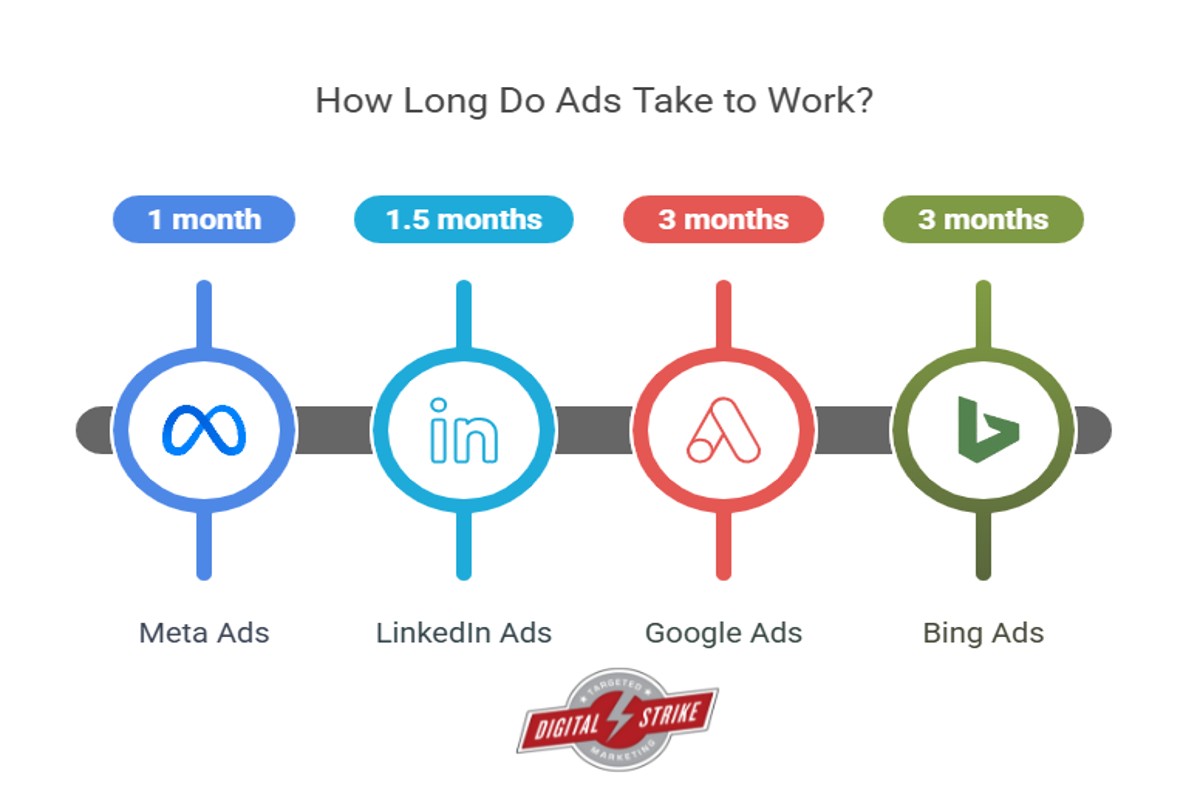
How long does it take for Google Ads to work? Typically, Google Ads can start showing results within a few days, but optimal performance may take 3-6 months as data accumulates and campaigns are optimized. Understanding this timeline is crucial for businesses aiming to leverage paid advertising effectively.
Understanding the timeline for Google Ads effectiveness is essential for businesses seeking to maximize their marketing budget. In a digital landscape where nearly 80% of companies utilize online advertising, knowing how quickly to expect results can significantly impact strategic planning. Missing this insight could lead to misallocated resources or unmet sales objectives.
Failure to grasp the timing of google ads can cost businesses substantial revenue, resulting in wasted advertising spend and a competitive disadvantage in a fast-paced market. Companies that misjudge the performance timeline may abandon campaigns prematurely, missing out on potential long-term benefits.
This article will cover the expected timeline for Google Ads results, including a breakdown of initial performance, factors influencing optimal results, best practices for campaign management, and strategies to enhance effectiveness over time.
How quickly can I see results from Google Ads?
Results from Google Ads can typically be seen in as little as 24 hours or as long as a few weeks. This varies based on several factors. Many advertisers notice increases in traffic and engagement metrics within the first week. However, reaching optimal performance often takes weeks or even months as campaigns are refined.
Initial results can differ significantly across industries, budgets, and the competitiveness of chosen keywords. For example, highly competitive sectors might demand more time and a bigger budget to gain visibility and traction. Additionally, the quality of ad copy, targeting settings, and landing page optimization are crucial in determining how quickly results show up — these elements shouldn’t be underestimated. Advertisers must also factor in the learning phase of Google Ads, which commonly lasts about two weeks; during this period, the platform optimizes ad delivery based on performance data.
Moreover, the type of campaign influences the timeline for seeing results. Search campaigns often produce quicker responses, as they target users who are actively seeking specific products or services. In contrast, display or video campaigns may take longer to build brand awareness before driving conversions. Consistent monitoring and adjustments are vital for maximizing effectiveness — this is often overlooked — and achieving desired outcomes over time.
Expert insight: To speed up your Google Ads results, prioritize optimizing your ad copy and landing pages from the start. Regularly analyze performance metrics to make data-driven adjustments. Doing this ensures your campaign effectively evolves to meet audience needs.
What factors affect how long Google Ads take to work?
The time it takes for Google Ads to work effectively hinges on several key factors, such as targeting precision, budget allocation, and ad quality. Advertisers often see initial results in just a few days. However, optimal performance typically takes several weeks as the system learns and optimizes.
One of the most crucial elements is the targeting strategy. Well-defined audience segments often lead to higher engagement rates. Use demographic, geographic, and interest-based targeting to connect with users who are most likely to convert. Additionally, refine your keywords and negative keywords regularly. This helps eliminate irrelevant traffic and can boost ad performance over time.
Budget allocation has a significant impact on how quickly ads produce results. A larger budget allows for more impressions and clicks, which leads to faster data collection and optimization. Allocate funds based on performance metrics — and consider automated bidding strategies to maximize your budget’s effectiveness. Ad spend should align with your overall marketing goals to confirm competitiveness within your industry.
Finally, ad quality is pivotal. Google favors ads that are relevant and engaging, which is reflected in the Quality Score. High-quality ads typically boast better click-through rates (CTR) and conversion rates, resulting in improved ad placements. Regularly A/B test different ad copy, visuals, and landing pages. This helps identify what resonates best with your audience (this is often overlooked). Optimize accordingly.
Expert insight: Continuously monitor key performance indicators (KPIs) like CTR, conversion rate, and cost per acquisition (CPA) to adapt your strategy swiftly. This proactive approach can significantly shorten the time needed for Google Ads to deliver effective results.
Is there a way to speed up Google Ads results?
Yes, there are several strategies to speed up Google Ads results. By optimizing campaigns through targeted actions, businesses often notice significant improvements in performance within just a few days to weeks. Key factors include ad relevance, targeting precision, and budget allocation.
To optimize Google Ads for quicker results, consider the following strategies:
- Refine Targeting: Focus on highly specific keywords and demographics to make sure ads reach the most relevant audience. This can lead to higher click-through rates (CTR) and quicker conversions.
- Use Ad Extensions: Implementing ad extensions like site links, callouts, and structured snippets can boost ad visibility and provide additional information — this enhances user engagement.
- Adjust Bids Strategically: Increase bids on high-performing keywords to improve ad position and visibility. Higher placements typically yield better results, which can lead to faster traffic and conversions.
- Test Ad Variations: Create multiple ad variations to find out which resonate best with your audience. A/B testing can help refine messaging quickly, leading to improved performance.
- Optimize Landing Pages: Confirm that landing pages are relevant to the ads and offer a seamless user experience. Fast-loading and mobile-friendly pages significantly reduce bounce rates and increase conversion rates (this is often overlooked).
Implementing these strategies can lead to improved efficiency in campaign performance. However, results may still vary based on industry, competition, and the initial setup of the ads.
Expert insight: Regularly reviewing and adjusting your Google Ads campaigns based on performance data is crucial for sustained improvement and quick results. Use Google Ads’ built-in analytics tools to inform your decisions effectively.
What is the average cost of Google Ads?
The average cost of Google Ads varies widely, typically ranging from $1 to $2 per click for search ads. However, this figure can change significantly. In some cases, costs may even soar to $50 per click depending on the industry.
Several factors influence the cost of Google Ads, including:
- Industry Competition: Industries such as legal or finance are highly competitive. This often results in higher costs per click due to increased keyword bidding.
- Keyword Selection: The choice of keywords matters. More popular keywords usually require higher bids.
- Quality Score: Google assigns a Quality Score based on ad relevance, expected click-through rate, and landing page experience. A higher score can lower costs — a crucial aspect to consider.
- Ad Format: Different ad formats, whether display ads or video ads, have their own costs. This impacts overall expenditure.
- Targeting Options: Advanced targeting such as geographic or demographic targeting can influence costs. More refined targeting often ramps up competition (this is often overlooked).
Understanding these cost factors can help businesses set realistic budgets and expectations for Google Ads campaigns. While initial costs might seem steep, effective management and ongoing optimization can lead to significant returns on investment over time. Monitoring performance metrics closely is crucial to adjusting strategies as needed.
Expert insight: Businesses should consider allocating a portion of their budget for testing various ad strategies and keywords. This can yield valuable insights into what works best for their specific market segment — worth double-checking.
How does Google Ads compare to SEO in terms of speed?
Google Ads usually delivers results almost instantly — often within hours. In contrast, Search Engine Optimization (SEO) can take several months to display significant outcomes. Businesses often notice traffic from Google Ads right after the campaign launches, whereas SEO efforts typically need a span of at least 3 to 6 months to rank effectively in organic search results.
Google Ads is a paid advertising platform that lets businesses show ads in search results and on partner sites. The quick turnaround of Google Ads comes from the immediate visibility granted by paid placements. On the other hand, SEO targets optimizing website content and structure to enhance organic rankings. This involves a slower process influenced by several factors — like keyword competition, website authority, and content quality (this is often overlooked).
- Time to Results: Google Ads results can appear within hours, while SEO generally needs 3-6 months to achieve noticeable rankings.
- Cost Structure: Google Ads demands a budget for each click or impression, whereas SEO primarily incurs costs related to time and resources for content creation and optimization.
- Longevity of Results: Google Ads results stop almost right away after the campaign ends, while effective SEO can keep driving traffic long after the initial efforts.
The difference in speed also shapes strategic decisions. Businesses that need quick visibility — like for product launches or seasonal promotions — often lean towards Google Ads. Conversely, companies focused on long-term growth and establishing brand authority may choose to invest in SEO, understanding that organic traffic strengthens over time and can yield sustainable results.
Expert insight: A balanced approach, combining both Google Ads and SEO, can maximize visibility and traffic. This strategy meets immediate needs while also creating a solid foundation for future organic growth.
Understanding the Google Ads Auction Process
This section clarifies the Google Ads auction system, which directly impacts ad visibility and performance timelines. A comprehensive understanding of how this process operates is crucial for optimizing ad campaigns.

Overview of the Auction Process
The Google Ads auction determines which ads show up for a particular search query and their order. Each time a user performs a search, an auction takes place in real-time. Advertisers bid on keywords that are relevant to their offerings, and the auction evaluates these bids alongside other factors to set ad placements. This dynamic process means the same keyword can yield different outcomes for various advertisers, depending on their strategies and ad quality.
Factors Influencing Ad Rank
Ad rank plays a pivotal role in determining ad visibility. It’s calculated using several key factors:
- Bid Amount: The maximum amount an advertiser is willing to pay per click.
- Quality Score: A metric reflecting the relevance and quality of the ad, keywords, and landing page.
- Ad Extensions: Additional information that boosts the ad’s visibility and click-through rate (CTR).
Impact of Quality Score on Performance
Quality Score is a critical aspect of the auction process, with scores ranging from 1 to 10. A higher Quality Score can lead to lower costs per click (CPC) and improved ad positions. In 2024, campaigns boasting a Quality Score of 8 or above reported a 20% reduction in average CPC compared to those scoring below 5. This underscores the importance of Quality Score for achieving effective ad performance.
How Bidding Strategies Affect Results
Advertisers can use various bidding strategies, each affecting ad performance in distinct ways. Common strategies include:
- Manual CPC: Advertisers set their maximum CPC bids.
- Maximize Clicks: Automatically sets bids to generate as many clicks as possible within a budget.
- Target CPA: Sets bids to reach a specific cost per acquisition.
Choosing the right bidding strategy can significantly influence how quickly ads start performing effectively. For example, using automated bidding may lead to faster results thanks to Google’s machine learning capabilities, which optimize bids based on real-time data.
Despite understanding the auction process, many advertisers mistakenly think that simply increasing bids will guarantee better ad placements. While higher bids can enhance ad rank, they must be paired with a solid Quality Score and relevant ad content to be effective. In 2025, data revealed that advertisers who focused on quality improvements alongside their bidding strategies experienced a 30% increase in CTR compared to those who concentrated solely on increasing bids.
To maximize the effectiveness of Google Ads, advertisers should focus on enhancing Quality Scores through relevant ad content and optimized landing pages. Additionally, experimenting with different bidding strategies can provide valuable insights into what works best for specific campaigns. Regularly monitoring performance metrics and adjusting strategies (this is often overlooked) will lead to more effective ad outcomes over time.
Common Mistakes That Delay Google Ads Success
This section highlights key pitfalls that can impede the effectiveness of Google Ads campaigns. Ultimately, these mistakes can prolong the time needed to achieve meaningful results. Recognizing and addressing them helps advertisers enhance their campaign performance — leading to quicker success.
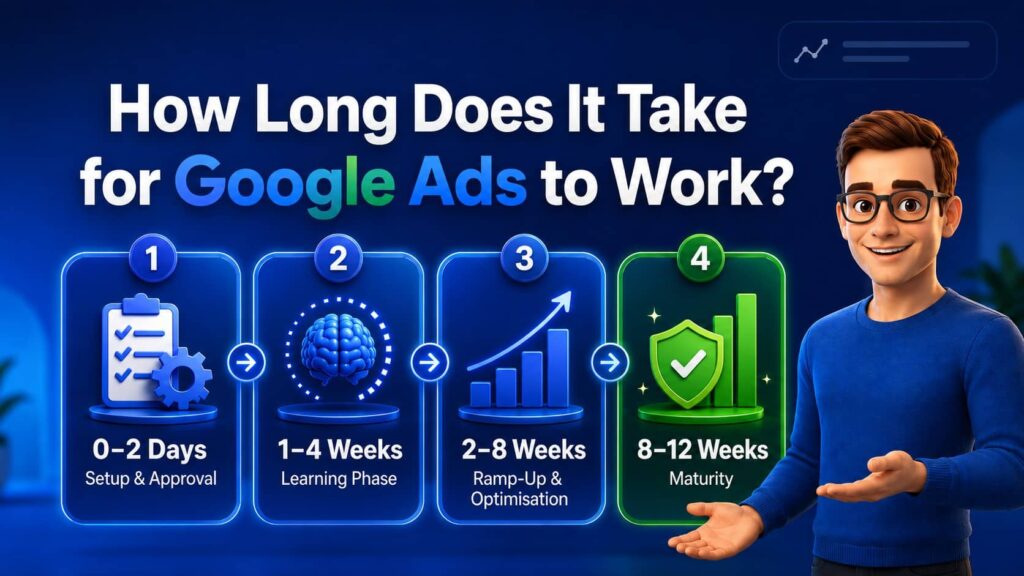
Neglecting Keyword Research
Keyword research is the backbone of any successful Google Ads campaign. Not investing time to identify relevant keywords can result in targeting the wrong audience, wasting ad spend. A 2024 survey found that campaigns using thorough keyword research achieved a 30% higher click-through rate (CTR) than those that did not. Comprehensive keyword analysis aligns ads with user intent and boosts Quality Score — this directly impacts ad placement and cost-efficiency.
Poor Ad Copy and Landing Page Alignment
Effective ad copy must connect with the content of the landing page. Discrepancies can confuse users and lead to high bounce rates. A well-structured ad clearly communicates the value proposition — make sure to include a strong call to action. Data from 2025 shows that ads with aligned messaging and landing pages experience a 25% lower cost per acquisition (CPA). Advertisers should confirm the keywords used in ads are reflected in the landing page content to maximize conversion potential.
Ignoring Performance Analytics
Performance analytics are essential for optimizing Google Ads campaigns. Ignoring metrics like CTR, conversion rates, and Quality Score prevents advertisers from making informed adjustments. Regularly reviewing performance data allows for timely identification of underperforming ads and keywords. In 2026, businesses that actively monitored and adapted their campaigns based on analytics reported a 40% improvement in overall campaign effectiveness — this underscores the necessity of data-driven decision-making.
Inadequate Budget Allocation
Budget allocation greatly impacts the success of Google Ads campaigns. Underfunding a campaign can limit exposure and decrease the likelihood of generating leads. On the flip side, overspending without a strategy can quickly deplete resources with minimal return. A balanced approach is vital; allocate budgets based on keyword competitiveness and expected ROI for better results. Research indicates that businesses optimizing their budget allocation saw a 50% increase in their return on ad spend (ROAS).
Nuance and Expert Insight
Many advertisers mistakenly assume that once a campaign is live, little oversight is needed. This misconception can lead to stagnation in performance. Continuous testing and iteration are key for success. A/B testing various ad copies, adjusting bidding strategies, and refining keyword lists can significantly influence campaign outcomes. Moreover, understanding market dynamics and seasonal trends can provide insights on when to scale campaigns or adjust budgets — it’s crucial for keeping ads competitive and relevant.
Practical Application
- Conduct thorough keyword research using tools like Google Keyword Planner to pinpoint high-performing keywords.
- Make sure ad copy aligns closely with landing page content to enhance user experience and boost conversion rates.
- Regularly monitor performance analytics, adjusting strategies based on real-time data.
- Allocate budgets strategically based on keyword competitiveness and expected ROI to maximize ad effectiveness.
Optimizing Google Ads for Faster Results
Optimizing Google Ads campaigns effectively can cut down the time needed to achieve desired results. This section outlines strategies that can enhance performance and speed up the impact of advertising efforts.

Utilizing A/B Testing for Ads
A/B testing, often referred to as split testing, involves creating two or more variations of an ad to see which one performs better. This method lets advertisers refine their messaging and design based on actual user interactions. Experts cite that businesses using A/B testing can achieve conversion rate improvements of up to 30%. Key elements worth testing include:
- Ad copy and headlines
- Call-to-action phrases
- Visual elements and layout
Adjusting Targeting Parameters
Targeting the right audience is vital for maximizing ad effectiveness. Adjusting parameters like demographics, interests, and geographic locations can lead to quicker conversions. For example, narrowing the audience to specific age groups or locations that have shown higher engagement can enhance click-through rates (CTR) and conversion rates. Data from 2024 shows that personalized ads can achieve a CTR over 50% higher than non-targeted ads.
Leveraging Remarketing Strategies
Remarketing targets users who’ve previously interacted with your website or ads. This method is effective for re-engaging potential customers who may not have converted initially. Remarketing lists can be segmented based on user behavior — allowing for tailored messaging that addresses specific interests or needs. Research indicates that remarketing can lead to conversion rates that are up to 70% higher than standard campaigns.
Monitoring and Adjusting Bids Regularly
Regular monitoring and adjusting of bids is crucial for maintaining competitive positioning in ad auctions. Automated bidding strategies, like Target CPA (Cost Per Acquisition) or Target ROAS (Return on Ad Spend), optimize bids based on real-time data. A study from 2025 revealed that advertisers who adjusted their bids weekly saw a 25% increase in ad visibility and engagement compared to those who didn’t.
While these optimization strategies are quite effective, it’s essential to recognize that results might not come instantly. Many advertisers believe that once their ads go live, performance will be optimal. However, ongoing refinement and testing are necessary to adapt to shifting market conditions and audience behaviors.
To apply these insights effectively, advertisers should consider these actionable steps:
- Set up A/B tests for at least three ad variations to find the most effective elements.
- Regularly review and refine targeting settings based on performance metrics.
- Develop a remarketing campaign focusing on specific user segments who engaged but didn’t convert.
- Establish a routine for bid adjustments, reviewing performance data at least once a week.
By integrating these optimization techniques, advertisers can significantly boost their Google Ads performance and reduce the time taken for Google Ads to become effective.
Real-World Case Studies of Google Ads Performance
This section shares real-world examples of businesses using Google Ads, focusing on the diverse timelines for reaching effective results. By looking at both successes and failures, important insights arise for businesses in various industries.

Case Study: Small Business Success
A local coffee shop in Austin, Texas, implemented Google Ads with a modest budget of $500 per month. In the first week, they saw a significant 30% increase in foot traffic. After refining their ad copy and targeting specific demographics, the shop achieved a remarkable 50% increase in sales over three months. This example shows that small businesses can realize substantial returns fairly quickly — especially when campaigns are closely monitored and adjusted.
Large Enterprise Campaign
A multinational e-commerce retailer launched a Google Ads campaign with a budget exceeding $100,000. The objective was to promote a new line of eco-friendly products. Initial results were disappointing; the click-through rate (CTR) was only 1.2% during the first month. However, after employing A/B testing on ad formats and targeting, the CTR jumped to 3.5% within three months, leading to a 20% increase in conversion rates. This case highlights that larger budgets may need longer optimization periods to generate impactful results (this is often overlooked).
Lessons Learned from Failed Campaigns
Not all Google Ads campaigns yield success. A B2B software company invested $50,000 in a campaign that failed to generate leads. Key issues included overly broad targeting and unclear messaging. After analyzing performance data, the company restructured its approach, concentrating on niche markets and clarifying its value proposition. The revised campaign saw an impressive 400% increase in qualified leads over six months. This underscores the importance of targeted strategies and clear objectives.
Key Takeaways for Different Industries
- Retail: Quick wins are achievable with local targeting and promotions.
- B2B Services: Longer timelines may be necessary; focus on lead quality over quantity.
- Healthcare: Compliance with regulations is crucial; clear, informative ads work best.
According to recent data, about 75% of businesses that optimize their Google Ads campaigns report improved performance within the first three months. Such statistics reinforce the notion that while immediate results can vary, strategic adjustments can significantly enhance outcomes.
Many businesses mistakenly think that Google Ads will deliver instant results. The truth is, effective campaigns often require time—time for optimization and audience engagement. Factors like competition, ad quality, and targeting precision can dramatically influence timelines. A common misconception holds that higher budgets guarantee better performance; in reality, strategic planning and ongoing monitoring play a much more vital role in achieving success.
To effectively leverage these insights, businesses should begin with a clear understanding of their objectives and target audience. Develop a structured plan that includes regular performance reviews and adjustments based on data analytics. For small businesses, even a modest budget can yield results if campaigns are focused and measurable. Larger enterprises should be ready for a longer optimization phase, emphasizing testing and refinement to achieve desired outcomes.
Frequently Asked Questions
How quickly can I see results from Google Ads?
Results from Google Ads can be seen within a few hours to a few days after the campaign goes live. However, optimal performance typically develops over a few weeks as data accumulates and adjustments are made.
What factors affect how long Google Ads take to work?
Factors influencing the speed of Google Ads results include campaign budget, targeting settings, ad quality, and competition within the industry. Each of these elements can accelerate or delay the effectiveness of your ads.
Is there a way to speed up Google Ads results?
To speed up Google Ads results, consider increasing your budget, refining targeting options, and improving ad quality. Implementing these strategies can enhance visibility and engagement more quickly.
What is the average cost of Google Ads?
The average cost of Google Ads varies widely, with businesses spending anywhere from $1 to over $50 per click, depending on industry and competition. Effective budgeting and bidding strategies are crucial for maximizing ROI.
How does Google Ads compare to SEO in terms of speed?
Google Ads typically delivers faster results compared to SEO, which can take months to generate significant organic traffic. While Google Ads can provide immediate visibility, SEO focuses on long-term growth and sustainability.
Final Thoughts on how long does it take for google ads to work
While immediate results from Google Ads can be enticing, true effectiveness often hinges on a range of factors including campaign structure, competition, and ongoing optimization. Understanding the intricacies of the Google Ads auction process and avoiding common pitfalls are essential for accelerating success.
To achieve faster results, prioritize the refinement of your ad copy and targeting strategies based on performance metrics, ensuring that every dollar spent is optimized for maximum impact.
Ready to see results faster? Consult a google ads expert today and watch your advertising efforts pay off!
Mastering Google Ads is not just about speed; it’s about strategic investment that can yield substantial returns and shape the trajectory of your business growth.