
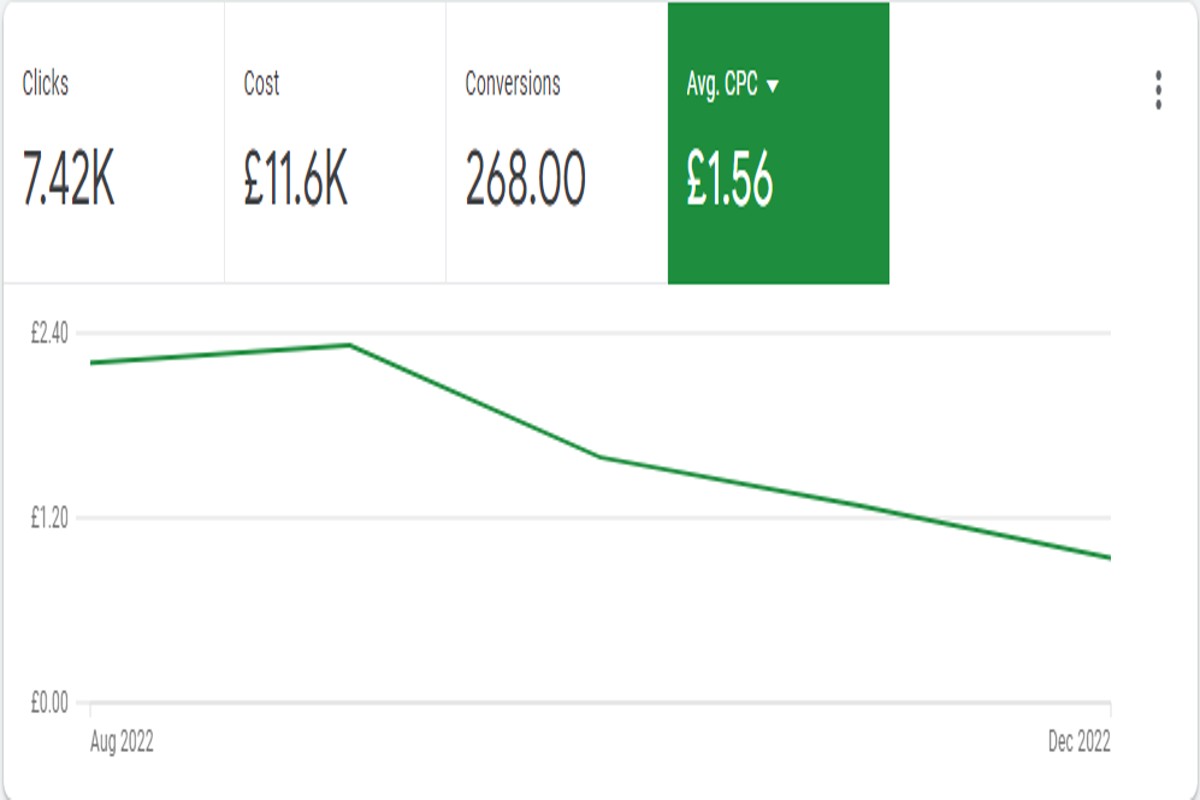
CPC in Google Ads stands for Cost Per Click, which is the amount an advertiser pays each time a user clicks on their ad. Understanding CPC is crucial for managing advertising budgets effectively and optimizing campaign performance, as it directly impacts return on investment (ROI) for advertising efforts.
Understanding CPC in Google Ads is essential for marketers and businesses aiming to maximize their digital advertising effectiveness. With the global digital advertising market projected to reach $600 billion by 2024, mastering CPC not only helps in budget management but also in tailoring ads to achieve better engagement and conversion rates.
Failure to grasp the concept of CPC can lead to significant financial losses, with businesses potentially wasting thousands on ineffective ad placements and missing out on valuable leads. In a competitive landscape, understanding and optimizing CPC can be the difference between profitability and stagnation.
This article will cover the intricacies of CPC, including a comparison of top advertising providers, a detailed cost breakdown, best practices for optimizing CPC, and insights on how it can impact local SEO strategies.
What does CPC mean in google ads?
CPC, or Cost Per Click, is the amount an advertiser pays every time a user clicks on their ad. This pricing model is crucial in online advertising; it directly affects budgets and returns on investment (ROI) for campaigns. In 2024, the average CPC across different industries ranged from $1 to $2. However, this can vary widely based on competition and keywords.
CPC serves as a key metric in pay-per-click (PPC) advertising. It influences how much businesses invest in attracting traffic through Google Ads. Advertisers set a maximum CPC bid — the most they’re willing to pay for each click. The actual CPC can be lower than this bid, depending on several factors. These include the ad’s Quality Score, keyword competition, and the ad’s position in search results. A higher Quality Score generally leads to a lower CPC, since Google favors relevant and well-structured ads.
Several factors affect CPC, including:
- Keyword Competition: More competitive keywords usually have higher CPCs because of increased bidding by advertisers.
- Ad Quality: Ads that are more relevant and have better performance metrics can achieve lower CPCs.
- Industry Standards: Different industries experience varying average CPC rates, which are influenced by demand and market saturation.
Managing CPC effectively can enhance the performance of Google Ads campaigns. Advertisers should monitor their CPC rates regularly. Adjust bids based on performance data and campaign objectives. This proactive approach can often lead to more efficient spending and improved overall results.
Expert insight: To optimize CPC, consider using tools like Google Ads’ Keyword Planner. This helps identify low-cost, high-conversion keywords that fit into your overall strategy (worth double-checking).
How is CPC calculated in Google Ads?
CPC, or Cost-Per-Click, in Google Ads is based on a bidding system that weighs various factors — including Quality Score and Ad Rank. Advertisers only pay when a user clicks their ad. Often, the actual CPC ends up being lower than the maximum bid set by the advertiser.
The calculation of CPC is influenced by several key factors:
- Max CPC Bid: This represents the highest amount an advertiser’s willing to pay for a click. However, the actual CPC might be lower, depending on competition and other elements.
- Quality Score: Google assigns each ad a Quality Score based on its relevance, expected click-through rate (CTR), and landing page experience. A higher Quality Score can lead to a lower CPC.
- Ad Rank: This is determined by multiplying the Quality Score by the max CPC bid. Ads with a higher Ad Rank show up in better positions, which influences CPC rates. Google operates a second-price auction — the actual CPC is often less than the max bid.
- Competition: The number of advertisers competing for the same keywords directly affects CPC. High competition usually results in higher CPC rates, as advertisers are bidding against each other for visibility.
- Ad Extensions: Using ad extensions can improve ad visibility and boost Quality Score, potentially lowering CPC. Well-structured ads tend to be favored by Google’s algorithms.
These factors create a dynamic bidding environment where actual CPC can fluctuate based on real-time competition and ad performance metrics. Make sure to monitor campaigns regularly — optimizing bids and Quality Scores is essential.
Expert insight: To effectively manage CPC costs, regularly analyze Quality Scores and adjust bidding strategies as needed. Consider A/B testing ad variations. This can enhance performance and help reduce costs over time.
What is a good CPC for Google Ads?
A good cost-per-click (CPC) for Google Ads can vary widely by industry, with averages falling between $1 and over $6. In 2024, the average CPC across all industries sat at about $2.69. However, this can change based on factors like competition, target audience, and ad quality.
CPC benchmarks are crucial for assessing how effective a Google Ads campaign is. Different industries encounter varying levels of competition and consumer behavior, which directly influence CPC rates. For example, the finance and insurance sectors often experience higher CPCs—averaging around $3 to $6—due to their competitive nature. In contrast, fields like retail and e-commerce generally see lower CPCs, typically ranging between $1 and $2.
- Legal Services: $6 – $10
- Finance and Insurance: $3 – $6
- E-commerce: $1 – $2
- Travel and Hospitality: $2 – $5
Numerous factors determine what a good CPC is for a specific campaign. These include the ads’ quality score, the relevance of keywords, and the geographic targeting of the ads. A higher quality score can lower CPC — this shows just how vital optimized ad content is. Additionally, seasonal trends and market fluctuations can also impact CPC rates. Thus, it’s essential for advertisers to continually analyze their campaigns.
Expert insight: Regularly monitor industry benchmarks. Adjust bids as necessary to maintain competitive CPCs while maximizing return on ad spend (ROAS).
How can I lower my CPC in Google Ads?
Lowering your Cost Per Click (CPC) in Google Ads means optimizing campaigns for better performance at a lower cost. Implementing effective strategies can lead to CPC reductions of 20% or more. This varies based on how well the strategies are executed.
To effectively lower CPC, focus on improving the quality and relevance of your ads. Google uses a Quality Score to determine ad placement and cost — enhancing your ad’s relevance can result in lower costs. Here are some actionable strategies:
- Optimize Keywords: Conduct thorough keyword research to find high-performing, low-competition keywords. Use tools like Google Keyword Planner to discover relevant long-tail keywords that can yield lower CPC.
- Improve Ad Quality: Create compelling ad copy that truly resonates with your target audience. A/B testing is essential; it helps identify which versions of your ads perform best. Refine them accordingly.
- Enhance Landing Page Experience: Make sure your landing pages are relevant, user-friendly, and optimized for conversions. A better user experience can significantly boost your Quality Score, leading to lower CPC.
- Use Negative Keywords: Implement negative keywords to filter out irrelevant traffic. This can prevent wasted clicks on ads that don’t align with your offering — thus lowering overall CPC.
- Adjust Bidding Strategies: Experiment with automated bidding strategies like Target CPA or Maximize Conversions. These can help manage your spending and lower CPC over time.
Expert insight: Regularly monitor and analyze your campaign performance metrics. Small adjustments based on data can lead to significant improvements in CPC and overall ad efficiency — this is often overlooked.
What is the difference between CPC and CPM in Google Ads?
Cost Per Click (CPC) and Cost Per Mille (CPM) are two distinct advertising models used in Google Ads. CPC charges advertisers each time a user clicks on their ad. On the other hand, CPM charges a fee for every 1,000 impressions — irrespective of whether there’s interaction. By 2024, CPC campaigns can yield an average click-through rate (CTR) of around 3%. This makes them quite effective for driving traffic.
CPC is mainly used in search advertising, targeting users actively seeking specific products or services. Advertisers pay only for actual clicks. This can lead to a higher return on investment (ROI) for campaigns that focus on direct responses. In contrast, CPM is more common in display advertising. The goal here is to maximize brand exposure rather than immediate clicks. This model allows advertisers to reach a broader audience but doesn’t guarantee engagement (this is often overlooked).
- Payment Structure: CPC charges per click, while CPM charges per 1,000 impressions.
- Campaign Goals: CPC is suited for conversion-focused campaigns; CPM is ideal for brand awareness.
- Target Audience Engagement: CPC targets users with intent; CPM reaches a wider audience without guaranteeing clicks.
Expert insight: Choosing between CPC and CPM should align with campaign objectives. If driving traffic is the goal, CPC may offer better value. But if increasing brand visibility is the focus, a CPM model could be more effective, especially for display ads. Analyze historical data — this can guide the decision on which model to use for optimal results.
What factors influence CPC in Google Ads?
The Cost Per Click (CPC) in Google Ads is affected by several key factors. These include keyword competitiveness, quality score, ad relevance, and targeting options. For instance, a highly competitive keyword may come with a CPC of $5. In contrast, less competitive keywords could be as low as $1.
One primary factor is the keyword competitiveness. Keywords that see frequent searches and have multiple advertisers bidding on them typically produce higher CPCs. A keyword like “insurance” might command a CPC of $20. However, a niche keyword such as “vintage bicycle repair” could only cost $2. This difference illustrates how market demand for specific keywords can lead to varying costs.
Another critical factor is the quality score, which Google assigns based on ad relevance, expected click-through rate, and landing page experience. A higher quality score often means lower CPCs — Google rewards advertisers who create effective and relevant ads. For instance, if two advertisers are bidding on the same keyword, the one with a superior quality score may pay only $3 per click. The other could be paying $5. Additionally, targeting options such as geographic location and demographics can also impact CPC. Advertisers targeting high-income areas may end up facing higher CPCs due to increased competition.
Expert insight: Regularly monitoring and optimizing your quality score is crucial. This can significantly reduce your CPC over time, leading to a more cost-effective advertising strategy.
How does quality score impact CPC in Google Ads?
The quality score plays a crucial role in determining the cost-per-click (CPC) in Google Ads. A higher quality score can lead to lower CPCs — it reflects the relevance and quality of ads, keywords, and landing pages. For instance, advertisers with a quality score of 8 or higher often pay 20-50% less per click than those with lower scores.
The quality score is a metric that ranges from 1 to 10, with higher scores indicating better ad performance. It’s primarily influenced by three factors: expected click-through rate (CTR), ad relevance, and landing page experience. Improving these factors not only boosts the quality score but can also lower CPC, making campaigns more cost-effective (this is often overlooked).
- Enhance ad relevance: Make sure your ad copy closely matches the keywords you’re targeting. Use the primary keyword in the ad headline and description. This alignment increases the likelihood of clicks — which improves your expected CTR.
- Optimize landing pages: Create landing pages that provide valuable content along with a seamless user experience. Ensure fast loading times and mobile-friendliness, along with relevant information that aligns with your ad. A well-optimized landing page can lead to higher conversion rates and a better quality score.
- Use keyword groups: Organize keywords into tightly themed ad groups. This approach allows for more targeted ad copy and landing pages, boosting both relevance and CTR. The more specific your targeting is, the better your quality score will be.
- Regularly review performance: Use Google Ads reports to analyze the performance of your ads. Identify underperforming keywords or ads and adjust them accordingly. Continuous improvement can lead to a sustained increase in quality scores.
Expert insight: Focus on user intent when crafting ads and landing pages. Aligning your content with what users are searching for can dramatically enhance both quality score and CPC efficiency (worth double-checking).
What are some common mistakes that increase CPC in Google Ads?
Common mistakes that increase Cost Per Click (CPC) in Google Ads include poor keyword selection, inadequate ad targeting, and neglecting to optimize ad quality. Advertisers who overlook these factors can see CPCs rise significantly — sometimes by as much as 50% or more, depending on competition and market conditions.
One frequent error is selecting overly broad keywords. Broad match keywords may attract a high volume of clicks, but they often lead to irrelevant traffic. This results in wasted spend and higher CPCs. Instead, using more targeted options, such as phrase match or exact match, ensures that ads reach a relevant audience, thereby lowering CPC. Additionally, failing to conduct regular keyword analysis can lead to continued expenditure on ineffective terms — this is often overlooked.
Another common mistake is improper ad targeting. Advertisers often miss the opportunity to refine their audience settings: demographics, interests, and geographic location. This oversight can lead to ads being shown to users unlikely to convert, inflating CPC. Implementing features like negative keywords can also help prevent ads from appearing in irrelevant searches — it further optimizes ad spend.
- Poor ad copy and quality score: Low-quality ads tend to have higher CPCs. Crafting compelling, relevant ad copy and improving the landing page experience can enhance ad quality scores. These scores directly influence CPC.
- Ignoring competitor analysis: Failing to analyze competitor strategies can lead to missed opportunities for bidding adjustments. Understanding competitor CPCs and ad strategies often informs more effective bidding tactics.
- Not utilizing ad extensions: Ad extensions can improve ad visibility and click-through rates, which can lower CPC over time. Advertisers should use all available ad extensions to enhance performance.
Expert insight: Regularly review and adjust your keyword strategy and ad targeting to ensure alignment with business goals. Employing data-driven insights can significantly reduce CPC, while improving overall campaign performance.
Understanding the Auction Process in Google Ads
This section explores the complexities of the Google Ads auction process. It highlights how bids and quality scores impact Cost Per Click (CPC). The discussion also covers competition and ad rank, which play crucial roles in determining ad visibility and costs.
Overview of the Auction Process
The Google Ads auction functions on a real-time bidding system. When a user searches, Google assesses all relevant ads from advertisers who are set to display their ads for that particular search query. The auction kicks off by figuring out which ads are eligible — based on targeting criteria, budget, and keywords. This way, users see the most relevant advertisements.
Role of Bid Amount and Quality Score
Two key factors drive an ad’s success in the auction: the bid amount and the Quality Score. The bid amount shows the maximum price an advertiser will pay for a click on their ad. Quality Score, on the other hand, is a metric that reflects multiple components, including click-through rates (CTR), ad relevance, and landing page experience. A higher Quality Score can significantly reduce CPC, helping advertisers secure better placements at a lower cost.
Impact of Competition on CPC
Competition among advertisers heavily influences CPC. When more advertisers vie for the same keywords, CPC generally rises. In 2024, it was found that sectors like finance and legal experienced average CPC rates surpassing $6.00 due to intense competition. By contrast, less competitive niches may yield CPCs below $1.00—this underscores the importance of choosing the right keywords and grasping market dynamics.
How Ad Rank Affects Visibility and Cost
Ad Rank determines an ad’s position in search results. It’s calculated by multiplying the bid amount with the Quality Score. A higher Ad Rank translates to better visibility and often results in lower CPC. For example, an advertiser may have a lower bid but a high Quality Score, allowing them to outrank competitors with higher bids but weaker ad relevance. This scenario highlights how strategic bidding, when paired with quality improvements, can boost overall campaign performance.
Nuances of the Auction Process
Common misconceptions about the Google Ads auction include the idea that the highest bid always prevails. In fact, the auction focuses on relevance and user experience. Thus, a lower bid can outperform a higher one if it boasts a better Quality Score. Moreover, advertisers frequently overlook the significance of ad extensions, which can enhance ad visibility and CTR, further impacting CPC and ad effectiveness. Understanding these nuances is crucial for optimizing campaigns effectively.
Practical Application
To apply insights from the auction process, advertisers should concentrate on the following actions:
- Conduct thorough keyword research to pinpoint less competitive phrases.
- Continuously optimize ad copy and landing pages to enhance Quality Scores.
- Use ad extensions to boost visibility and CTR.
- Regularly analyze auction insights to adjust bidding strategies according to competition.
Implementing these strategies allows advertisers to maximize the efficiency of their Google Ads campaigns and effectively manage CPC. Understanding the auction process is essential for achieving optimal outcomes in digital advertising.
Strategies for Optimizing Your CPC
Optimizing Cost Per Click (CPC) is crucial for maximizing the effectiveness of Google Ads campaigns while keeping expenditures low. This section highlights key strategies that advertisers can put into action to reach these goals.
:max_bytes(150000):strip_icc()/cpc.asp-final-c19c255d763146ab9b610973067805ee.png)
Importance of Keyword Research
Effective keyword research establishes the groundwork for a successful Google Ads campaign. Identifying relevant keywords that align with user intent can boost Quality Scores — which in turn lowers CPC. Tools like Google’s Keyword Planner are useful for uncovering search volume, competition, and cost estimates for various keywords. Focusing on long-tail keywords can yield great results. These keywords are often more specific and have less competition, resulting in lower CPC rates while attracting targeted traffic. For instance, campaigns using long-tail keywords can experience CPC reductions of up to 20% compared to generic keywords.
Utilizing Negative Keywords
Negative keywords keep ads from appearing in irrelevant searches, optimizing spending. By consistently updating a list of negative keywords, advertisers can filter out traffic that’s unlikely to convert. This practice not only enhances the click-through rate (CTR) but also improves overall campaign efficiency. Research shows that campaigns employing negative keywords can lower CPC by about 10-15% on average. Regularly analyzing search terms can reveal new opportunities to grow this list (worth double-checking).
Ad Copy Optimization Techniques
Compelling ad copy is vital for attracting clicks at a lower cost. Using A/B testing to compare different headlines, descriptions, and calls to action can significantly boost ad performance. Ads that resonate with the target audience tend to achieve higher CTRs, which can lower CPC through improved Quality Scores. Additionally, including relevant keywords in ad copy directly impacts both ad relevancy and performance metrics. According to Google, highly relevant ads can reduce CPC by up to 30%.
Testing Different Bidding Strategies
Exploring various bidding strategies can help optimize CPC. Google Ads provides several bidding options, such as manual CPC, enhanced CPC, and target CPA. Each strategy carries its own advantages and may perform differently based on campaign goals. For example, enhanced CPC adjusts bids automatically to maximize conversions while aiming for a specific CPA. Regularly evaluating the performance of these strategies enables advertisers to select the most cost-effective approach for their objectives.
Beyond the basics, many advertisers overlook the significance of competitor analysis on CPC optimization. By assessing competitor ad copy, keyword strategies, and bidding methods, advertisers can pinpoint gaps in their own campaigns. This strategic insight often leads to adjustments that enhance ad performance and reduce costs. Furthermore, misconceptions about needing high bids can lead to overspending; lower bids on high-Quality Score keywords can often yield better results.
To effectively implement these strategies, advertisers should take the following actions:
- Conduct thorough keyword research to identify both primary and long-tail keywords.
- Regularly update a list of negative keywords based on search term analysis.
- Engage in A/B testing for ad copy to refine messaging and improve CTR.
- Experiment with different bidding strategies and track their performance over time.
By applying these strategies, marketers can achieve a more efficient CPC, ensuring their Google Ads campaigns deliver maximum impact for every dollar spent.
Analyzing CPC Trends Across Different Industries
This section explores the variations in Cost Per Click (CPC) across various industries, emphasizing the factors that drive these differences. Understanding these trends is crucial for optimizing advertising budgets — and improving campaign effectiveness.

Average CPCs by Industry
The average CPC can differ greatly across industries. This is due to competition, customer behavior, and the perceived value of products or services. As of 2024, the following average CPCs have been recorded:
- Legal Services: $6.75
- Insurance: $4.50
- Finance: $3.80
- Healthcare: $3.50
- E-commerce: $1.25
These figures show that industries with high customer lifetime value (CLV), such as legal and insurance, typically have higher CPCs. This reflects the fierce competition for securing valuable leads.
Factors Affecting CPC in Different Sectors
Several factors contribute to the variation in CPC across industries:
- Competition Level: High competition in an industry naturally drives up CPC. Sectors like legal and finance experience intense bidding wars.
- Target Audience: Industries targeting niche or affluent demographics often incur higher CPC due to increased competition for limited audience segments (this is often overlooked).
- Conversion Rates: Industries that demonstrate higher conversion rates can justify higher CPC. The return on investment remains favorable in these cases.
Case Studies of Successful Campaigns
Examining successful campaigns can provide valuable insights into effective CPC management. For example, a legal firm implemented a targeted Google Ads strategy that focused on specific high-intent keywords. By optimizing ad copy and landing pages, they achieved a CPC reduction of 30% while increasing lead generation by 50% over six months.
In another case, an e-commerce retailer used remarketing strategies to lower their average CPC from $1.50 to $0.90. By targeting previous site visitors, they improved engagement and conversion rates. Ultimately, this boosted sales without significantly raising ad spend.
Benchmarking Your CPC Against Industry Standards
To gauge your CPC performance, compare your figures with industry benchmarks. Use tools like Google Ads Keyword Planner and third-party analytics platforms to assess where your CPC stands relative to competitors. Aim for a CPC within 10% of the industry average — this keeps your efforts competitive while maintaining a healthy return on ad spend.
Common misconceptions arise regarding CPC as a standalone metric. Many advertisers focus solely on minimizing CPC without considering overall campaign performance. A lower CPC doesn’t necessarily lead to better results if it results in lower conversion rates. Therefore, integrating CPC analysis with metrics like conversion rate and CLV is crucial for a comprehensive campaign assessment.
To leverage this information effectively, advertisers should regularly monitor and analyze their CPC trends. Implement A/B testing on ad copy and landing pages to optimize performance. Additionally, stay informed about industry changes and adjust bidding strategies accordingly. Establishing a consistent review process allows advertisers to adapt swiftly, ensuring their competitive positioning in the market.
The Future of CPC in Digital Advertising
This section examines emerging trends that will shape the cost-per-click (CPC) landscape in digital advertising. It’s crucial for advertisers to stay aware of these developments — they can adapt and optimize their strategies effectively.
Impact of AI and Machine Learning on CPC
Artificial Intelligence (AI) and machine learning are changing how advertisers approach CPC. These technologies improve ad targeting by analyzing vast datasets to predict user behavior. The result is often more efficient ad placements. For instance, AI algorithms can optimize bidding strategies in real-time. This can cut CPC by as much as 30% when they allocate budgets based on performance metrics.
Shift Towards Performance-Based Advertising
The digital advertising industry is increasingly leaning towards performance-based models — where advertisers pay for actual results, not just clicks. This shift will likely redefine CPC dynamics, putting more emphasis on metrics like conversion rates and return on ad spend (ROAS). Advertisers may notice lower CPC rates as competition heats up among platforms to deliver performance-driven solutions.
Predictions for CPC Changes in the Next Few Years
- By 2026, the global digital advertising market is projected to exceed $650 billion. CPC rates will adjust according to market demands and technological advancements.
- Estimated average CPC is expected to drop by 15-20%. New bidding strategies and automation tools are gaining traction.
- Emerging platforms utilizing advanced targeting and personalization methods could further disrupt traditional CPC models.
The Role of Privacy Regulations on Advertising Costs
Privacy regulations like the General Data Protection Regulation (GDPR) and the California Consumer Privacy Act (CCPA) are reshaping how advertisers collect and use data. As these laws become stricter, compliance costs may lead to increased advertising expenses. Advertisers may encounter higher CPC as they invest in privacy-friendly technologies and strategies — all while striving to deliver targeted ads.
Moreover, limitations on third-party cookies will likely affect data availability. Advertisers must adapt their strategies accordingly. This shift could create a fragmented CPC landscape, where those leveraging first-party data enjoy lower costs compared to those relying on less effective methods (this is often overlooked).
Discussions on CPC frequently overlook how privacy measures can inflate costs. At the same time, they push advertisers to innovate. Failing to adapt to these regulations may lead to misguided investments in traditional CPC models, which might no longer hold up.
Practical Application
Advertisers should consider implementing the following strategies to navigate the evolving CPC landscape:
- Invest in AI-driven tools that optimize bidding and targeting — this helps reduce CPC.
- Focus on performance-based advertising metrics. Align spending with actual results.
- Stay updated on privacy regulations. Adjust data collection practices to ensure compliance while maximizing ad effectiveness.
Frequently Asked Questions
What does CPC mean in Google Ads?
CPC stands for Cost Per Click, which is the amount an advertiser pays each time a user clicks on their ad. It is a key metric in Google Ads that helps determine the cost-effectiveness of advertising campaigns.
How is CPC calculated in Google Ads?
CPC is calculated by dividing the total cost of clicks by the total number of clicks received. This formula helps advertisers understand how much they are spending on each click in their campaigns.
What is a good CPC for Google Ads?
A good CPC varies by industry and campaign goals, but generally, lower CPCs indicate more cost-effective advertising. Benchmarking against industry averages can help determine an acceptable CPC for specific campaigns.
How can I lower my CPC in Google Ads?
To lower CPC, focus on improving ad relevance, optimizing keyword selection, and enhancing Quality Score. Implementing targeted bidding strategies can also contribute to reducing costs.
What is the difference between CPC and CPM in Google Ads?
CPC (Cost Per Click) charges advertisers for each click on their ad, while CPM (Cost Per Mille) charges for every 1,000 impressions. CPC is typically used for performance-driven campaigns, whereas CPM is used for brand awareness initiatives.
What factors influence CPC in Google Ads?
Factors influencing CPC include keyword competition, ad quality, landing page experience, and overall campaign performance. Advertisers must monitor these elements to effectively manage costs.
How does quality score impact CPC in Google Ads?
Quality Score directly affects CPC, as higher scores can lead to lower costs per click. A better Quality Score indicates more relevant ads, which can result in improved ad positioning and reduced bidding costs.
What are some common mistakes that increase CPC in Google Ads?
Common mistakes include targeting overly broad keywords, neglecting ad relevance, and failing to optimize landing pages. These errors can lead to higher CPC due to decreased Quality Scores and ineffective bidding strategies.
Final Thoughts on what is cpc in google ads
Cost Per Click (CPC) is a pivotal metric in Google Ads that directly influences the effectiveness of online advertising campaigns. Understanding its calculation, benchmarks, and optimization strategies is crucial for maximizing return on investment and achieving advertising goals.
To effectively manage CPC, conduct a thorough analysis of your campaign performance data, focusing on high-performing keywords and adjusting bids accordingly to enhance ad visibility while minimizing costs.
Ready to take your advertising to the next level? Consult with a google ads expert today for tailored strategies that drive results!
Mastering CPC not only enhances individual campaign success but also strengthens overall digital marketing strategies, ensuring sustained competitive advantage in an ever-evolving landscape.