
Yes, linking Google Ads landing pages to website landing pages is essential for optimizing user experience. This practice can enhance conversion rates by up to 30%, as well-designed landing pages effectively guide users toward desired actions.
Understanding the relationship between Google Ads landing pages and website landing pages is crucial for marketers and business owners. A seamless link between these pages not only elevates user experience but also significantly impacts conversion rates. According to recent studies, businesses that optimize their landing pages see a marked increase in engagement and sales, emphasizing the need for strategic alignment.
Failure to recognize the importance of linking these pages can lead to substantial missed revenue opportunities and wasted advertising spend. Businesses that overlook this connection risk falling behind competitors who effectively convert traffic into leads and sales.
This article will explore the critical benefits of linking google ads landing pages to website landing pages, including best practices for design, a comparison of top-performing landing pages, and actionable insights to maximize conversion rates.
What is the purpose of a Google Ads landing page?
A google Ads landing page is a specific web page aimed at converting visitors from ad clicks into leads or customers. Unlike a general website, it zeroes in on a particular offer, product, or service. This page provides relevant information that aligns with what the ad promises. Studies show that optimized landing pages can increase conversion rates by as much as 300%.
The main function of a Google Ads landing page is to drive user action — whether that’s filling out a form, making a purchase, or signing up for a newsletter. Achieving this requires compelling content and clear calls to action (CTAs). A streamlined design also helps minimize distractions. Effective landing pages are crafted to match the intent of the ad, ensuring users have a smooth experience.
Key components that contribute to a successful Google Ads landing page include:
- Relevance: Content must closely match the ad that led the visitor to the page, addressing their needs and concerns directly.
- Clear CTA: A strong call to action should guide users on what steps to take next — whether it’s purchasing a product or signing up for service.
- Minimal Distractions: The design should focus on that primary goal, limiting navigation options and external links that could lead users away (this is often overlooked).
Landing pages can also be A/B tested to figure out which elements perform best. This allows marketers to refine their strategies continuously. The impact of a landing page can be significant, influencing the overall performance of a Google Ads campaign, including both Quality Score and ad placement.
Expert insight: Regularly analyze your landing page performance metrics, such as bounce rate and conversion rate, to spot areas for improvement. Doing so can help optimize Google Ads campaigns effectively.
How should a Google Ads landing page be structured?
A Google Ads landing page must be structured to maximize conversion rates by offering a clear, focused, and user-friendly experience. Studies show optimized landing pages can increase conversion rates by as much as 300% compared to standard web pages. This is significant.
To create an effective Google Ads landing page, follow these structured steps:
- Define the goal: Clearly identify the primary action you want visitors to take — whether that’s signing up for a newsletter or making a purchase.
- Craft a compelling headline: Use a strong, attention-grabbing headline that relates directly to your ad copy and addresses the visitor’s needs. This matters.
- Use engaging visuals: Incorporate high-quality images or videos that support your message and resonate with your target audience. They should connect.
- Write persuasive copy: Keep the text concise and focused. Highlight benefits and features, while also addressing potential objections (this is often overlooked).
- Include a clear call-to-action (CTA): Position a prominent CTA button that stands out visually and uses action-oriented language, like “Get Started” or “Sign Up Now.” Clarity is key.
- Optimize for mobile: Make sure the landing page is responsive and provides an excellent user experience on mobile devices — over 50% of web traffic comes from mobile.
- Add trust signals: Include elements like testimonials, reviews, or security badges to build credibility and reassure visitors. Trust is crucial.
- Minimize distractions: Remove unnecessary links and options that could divert attention from the primary goal. Focus solely on the conversion path.
Expert insight: Regularly A/B test different elements of your landing page, such as headlines, CTAs, and images. This helps continuously improve performance and adapt to changing audience preferences.
What are the benefits of linking a landing page to my website?
Linking a Google Ads landing page to your website can significantly enhance user engagement and boost conversion rates. Research shows businesses can see up to a 30% increase in conversion rates when the landing page aligns closely with the overall website experience.
One key benefit of linking a landing page to your website is the seamless user experience it creates. When visitors click on an ad and land on a page that matches your overall web design and messaging, they’re more inclined to engage further. This consistency builds trust — and it reduces bounce rates, as users feel they’re navigating a cohesive brand environment.
Another advantage is improved tracking and analytics. By linking to your website, you can use existing analytics tools to monitor user behavior, track conversions, and gather insights on how visitors interact with both the landing page and the broader site. This data is invaluable for optimizing marketing strategies and enhancing user experience over time (this is often overlooked).
- Maintain design consistency: Make sure the landing page reflects the brand’s visual elements, such as colors, fonts, and logo, to create a unified experience.
- Optimize for mobile: With over 50% of web traffic coming from mobile devices, confirm that your landing page is mobile-friendly to accommodate these users.
- Implement clear calls-to-action (CTAs): Use strong, clear CTAs that guide users toward desired actions — whether it’s signing up, purchasing, or learning more.
- Leverage existing content: Link to relevant content on your website to provide additional value and information, which can enhance user engagement and encourage conversions.
Expert insight: Regularly test and optimize your landing pages based on user feedback and analytics data. This ensures maximum effectiveness and adaptability to changing market conditions.
How does linking to a website affect Google Ads performance?
Linking to a website can greatly affect Google Ads performance metrics like Quality Score and click-through rate (CTR). A well-optimized landing page that matches the ad’s content can boost performance. In fact, it might increase CTR by as much as 20% and improve Quality Score by ensuring relevancy.
When evaluating the effect of linking to a website versus using a dedicated landing page, several key differences become clear:
- Relevancy: Linking to a website can dilute message relevancy — especially if the landing page doesn’t closely align with the ad content. A dedicated landing page, crafted specifically for the ad, keeps the focus tight. This leads to a better user experience.
- Quality Score: Google rates ads based on Quality Score, which considers the relevance of the landing page. A landing page that directly matches the ad’s promise can boost this score. On the flip side, a general website page may lower the score due to perceived irrelevance.
- CTR Impact: Ads pointing to targeted landing pages typically see higher CTR. A study found that ads directing users to focused landing pages experienced CTR increases of 15-20% compared to those linking to broader website pages.
Additionally, user experience is crucial for determining performance. A seamless transition from ad to landing page, with consistent messaging and clear calls to action, can significantly raise conversion rates. If users find what they expect when they click the ad, they’re more likely to engage — thus boosting overall ad performance.
Expert insight: Always prioritize creating landing pages tailored to specific ad campaigns. This approach not only improves Quality Scores but also enhances user satisfaction and conversion rates — a win-win situation.
What mistakes should I avoid when creating a landing page?
Common mistakes in landing page creation include poor design, unclear messaging, and a lack of a strong call-to-action. Research shows that around 70% of landing pages fail to convert due to these issues. Addressing these pitfalls can significantly enhance user engagement and boost conversion rates.
One prevalent error is a cluttered design. For instance, a company promoting a new software tool might overload their landing page with excessive text, images, and links. This can overwhelm visitors — causing them to leave without taking any action. A cleaner design, with plenty of white space, directs focus to essential elements, like the value proposition and call-to-action buttons. Aim for a layout that highlights key information succinctly; users should grasp the offer within seconds.
Another common mistake involves unclear messaging. If a landing page fails to communicate the benefits of a product or service effectively, visitors are likely to disengage. For example, a fitness program landing page might use jargon that confuses potential customers rather than clearly outlining the benefits of the program. Using straightforward language and a compelling headline can clarify the offer (this is often overlooked), making it easier for visitors to understand what they stand to gain. Incorporating testimonials or statistics can further bolster credibility and encourage conversions.
Expert insight: The recommended approach is to prioritize A/B testing for different design elements and messaging. This helps identify what resonates best with your audience, allowing for continuous improvement of landing page performance.
Understanding Landing Pages in Google Ads
This section covers the function and significance of landing pages in Google Ads. Their role is critical — they drive conversions and align closely with ad content.

Definition and Purpose of Landing Pages
A landing page is a standalone web page designed specifically for a marketing or advertising campaign. Its main purpose is to guide visitors toward a particular action, like filling out a form, making a purchase, or subscribing to a newsletter. Unlike general website pages, landing pages target specific audience segments and are optimized for conversions.
Difference Between Landing Pages and Home Pages
The home page acts as the primary entry point for a website. It provides an overview of the brand and links to various sections. In contrast, a landing page focuses on one objective. Key distinctions include:
- Purpose: Home pages allow for broad navigation, while landing pages push for specific actions.
- Content: Home pages have multiple links and information. Landing pages contain concise, relevant content aimed at a singular goal.
- Design: Home pages prioritize aesthetics and brand messaging. Meanwhile, landing pages stress conversion elements like call-to-action buttons and lead capture forms.
Role in Conversion Optimization
Landing pages play a fundamental role in the process of conversion optimization. They are crafted to minimize distractions and motivate visitors to take desired actions. Recent studies show that businesses using optimized landing pages can see conversion rates increase by up to 300%. This demonstrates the importance of developing focused, compelling landing pages that truly resonate with the target audience.
Importance of Relevance to Ad Content
Relevance between ad content and the landing page is crucial for conversions. A mismatch often leads to higher bounce rates and lower quality scores in Google Ads. Ads should direct users to landing pages that reflect the promises made in the ad copy. This alignment fosters trust and encourages user engagement. Research indicates that landing pages with relevant content can boost conversion rates by 70% compared to those that are irrelevant (this is often overlooked).
Nuance / Expert Layer
Common misconceptions exist regarding the use of landing pages in Google Ads. Many marketers think any page on their website can function as a landing page — however, this isn’t effective. The best landing pages are tailored to specific campaigns and incorporate A/B testing to refine elements like headlines, images, and call-to-action placements. Failing to recognize this can lead to wasted ad spend and lost opportunities for conversion optimization.
Practical Application
To effectively leverage landing pages in Google Ads, consider these actions:
- Develop targeted landing pages for each ad campaign, confirming alignment with ad messaging.
- Use A/B testing to identify the most effective design and content elements.
- Regularly analyze landing page performance metrics, such as bounce rates and conversion rates, to inform future strategies.
Implementing these practices can help marketers significantly enhance campaign effectiveness and improve ROI.
Best Practices for Linking Google Ads Landing Pages
This section covers vital strategies for linking Google Ads landing pages to website landing pages. Implementing these practices can greatly enhance user experience and improve conversion rates.

Creating a Seamless User Journey
A seamless user journey is critical for maximizing conversions. When users click on a Google Ads link, they should reach a landing page that aligns with their expectations. This means the content and design of the landing page must match the ad they clicked. For instance, if the ad promotes a specific product, the landing page should highlight that product prominently. Users need to feel they have arrived at the right destination — that’s crucial.
Ensuring Consistent Messaging
Maintaining consistency in messaging between the ad and landing page builds trust and clarity. The headlines, body text, and visuals should reflect the promises made in the Google Ads. A 2024 study revealed that 72% of consumers said consistent messaging across platforms positively affected their purchasing decisions. This alignment boosts credibility and reduces bounce rates, which leads to higher engagement.
Using Clear Calls to Action (CTAs)
Effective CTAs guide users toward the desired action, whether it’s making a purchase, signing up for a newsletter, or requesting more information. CTAs need to be prominent, action-oriented, and relevant to the user’s intent. Using contrasting colors and strategic placement can enhance visibility. A/B testing different CTAs can also improve performance; studies show that personalized CTAs can boost conversion rates by up to 202% (this is often overlooked).
Optimizing for Mobile Devices
With over 58% of internet traffic from mobile devices in 2025, optimizing landing pages for mobile is a must. This includes using responsive design, ensuring fast load times, and simplifying navigation. Google reports that mobile-optimized landing pages can lead to a 20% increase in conversion rates. Features like large touch-friendly buttons and minimal text clutter significantly enhance user experience on smaller screens.
Nuance / Expert Layer
While the aforementioned practices are foundational, it’s important to note that not all ads need to link to a dedicated landing page. Some brands may find it beneficial to link directly to a specific website page that offers comprehensive information. This strategy can be particularly effective for complex products or services that require additional context. Misconceptions often exist around the need for standalone landing pages — however, effectiveness truly depends on the campaign goals and user intent.
Practical Application
- Audit existing Google Ads to confirm alignment with corresponding landing pages.
- Regularly test and refine CTAs based on performance data.
- Implement mobile optimization strategies to meet the growing mobile user base.
- Consider the user journey and adjust landing page content accordingly for improved engagement.
By adhering to these best practices, marketers can cultivate a cohesive experience that not only meets user expectations but also effectively drives conversions.
Analyzing Performance Metrics Post-Linking
This section looks at the performance metrics that are crucial for assessing how well linking Google Ads landing pages to website landing pages works. Understanding these metrics is vital for optimizing advertising strategies and improving overall conversion rates.

Understanding Conversion Rates
Conversion rates measure the percentage of visitors who complete a desired action after clicking on an ad. A well-structured landing page linked from Google Ads can significantly influence these rates. In 2025, the average conversion rate for Google Ads across industries was around 4.4%, while top-performing campaigns achieved rates of up to 10% or more. Analyzing conversion rates pre- and post-linking helps advertisers evaluate their landing page strategy’s effectiveness.
Tracking User Behavior with Analytics
Using web analytics tools like Google Analytics helps advertisers track user behavior after landing on the website. Key metrics to monitor include:
- Time on Page: A longer time suggests user engagement; this indicates that the content resonates.
- Pages per Session: High numbers can imply effective navigation and content presentation.
- Goal Completions: This measures how many users completed desired actions, such as signing up or making a purchase.
By analyzing these behaviors, advertisers can spot which aspects of their landing pages are effective — and which need improvement.
Evaluating Bounce Rates
Bounce rate reflects the percentage of visitors who leave the landing page without interacting. A high bounce rate can indicate that the landing page doesn’t meet user expectations or that the content isn’t relevant. As of 2026, the average bounce rate for landing pages was around 50%. Reducing this rate is essential; a lower bounce rate often correlates with higher conversion rates. Strategies to improve bounce rates include optimizing page load speed, enhancing content relevance, and ensuring a seamless user experience.
Adjusting Strategies Based on Data
Data analysis should guide strategy adjustments. By reviewing metrics such as conversion rates, user behavior, and bounce rates, advertisers can make informed decisions about their campaigns. For instance, if conversion rates are low but user engagement is high, the landing page content might need refinement to align better with user intent. Conversely, if bounce rates are high, reassessing ad targeting and messaging may be necessary.
Regular testing and optimizing of landing pages based on performance metrics can lead to significant improvements in overall campaign effectiveness. A/B testing different landing page variations can provide valuable insights into which elements drive better performance.
Many advertisers mistakenly think a single landing page will perform well indefinitely. In truth, continuous optimization based on real-time data is essential. Regular updates and tests maintain relevance in changing market conditions (this is often overlooked).
Practical Application
To maximize the effectiveness of linking Google Ads landing pages to website landing pages, implement these actionable steps:
- Set up conversion tracking in your analytics platform to measure success accurately.
- Analyze user behavior metrics weekly to identify trends and areas for improvement.
- Conduct A/B tests on landing pages to optimize content and design.
- Regularly review and adjust ad targeting to ensure alignment with landing page content.
By systematically analyzing performance metrics and adjusting strategies accordingly, advertisers can enhance their campaigns’ effectiveness, ultimately leading to improved conversion rates and return on investment.
Common Mistakes to Avoid with Landing Pages
Optimizing landing pages for Google Ads is crucial for maximizing conversion rates and achieving marketing goals. This section outlines common pitfalls faced by marketers and offers actionable solutions to boost landing page performance.
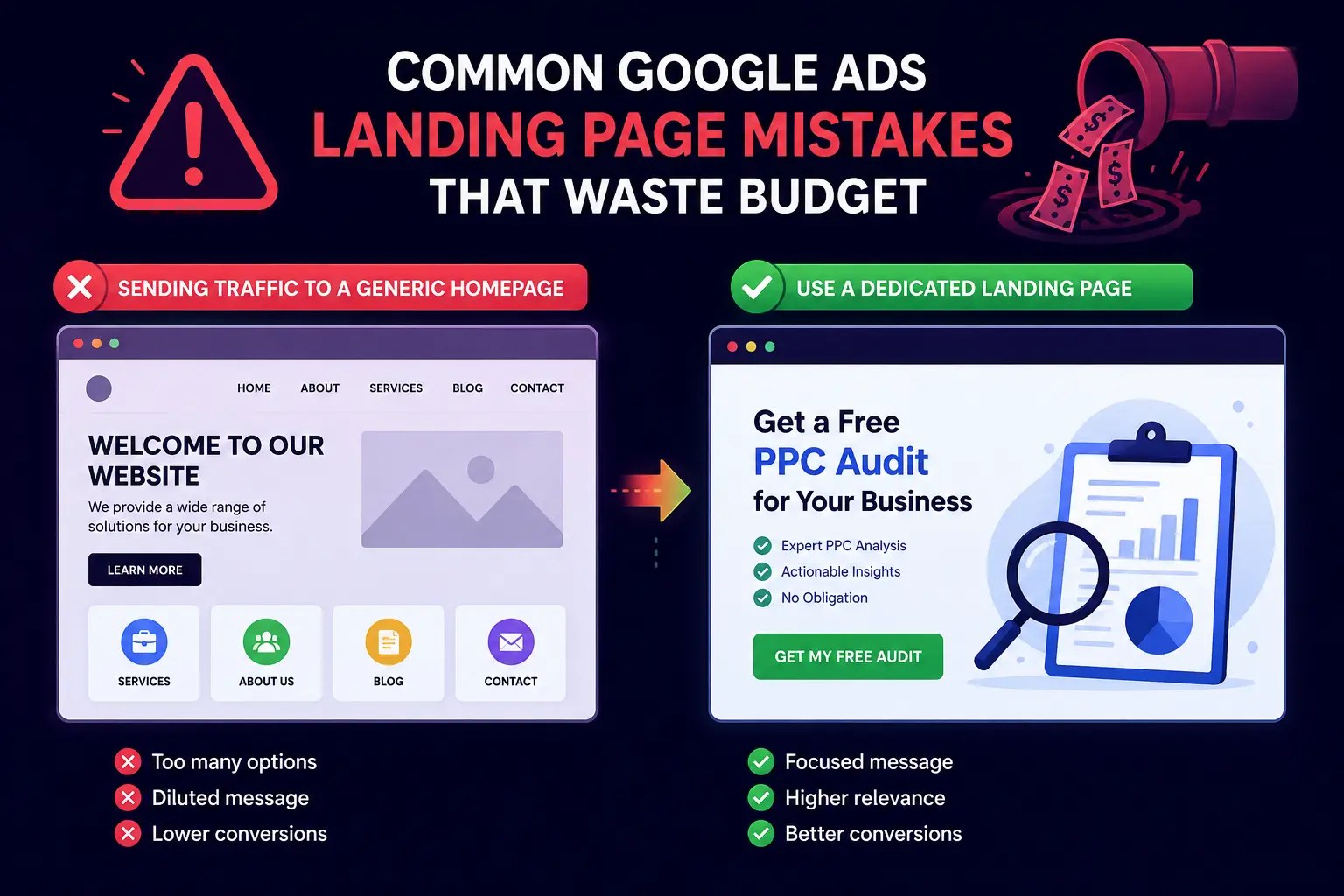
Neglecting A/B Testing
A/B testing is essential for refining landing pages. Yet, many marketers overlook this critical step — leading to missed chances for improvement. Without A/B testing, it’s tough to see which elements resonate best with visitors. In 2024, studies indicate that businesses using A/B testing experience a 30% increase in conversion rates compared to those that skip it.
Overloading with Information
Cluttered landing pages can easily overwhelm visitors, pushing them to disengage. Presenting too much information dilutes the primary call-to-action (CTA). A streamlined approach boosts user experience. Focus on key messages that align with the ad content. Aim for clarity and conciseness — ideally limiting text to three to five core points. Using bullet points can effectively highlight essential information.
Ignoring Loading Speed
Page loading speed has a significant impact on user retention and conversion rates. Research shows that a loading time increase of just one second can cut conversions by 20%. Prioritizing speed is vital; use tools like Google PageSpeed Insights to identify areas for improvement. Optimize images, leverage browser caching, and minimize scripts to enhance performance (this is often overlooked).
Failing to Align with User Intent
Landing pages need to match the intent of users clicking on the ads. When content doesn’t meet their expectations, bounce rates go up. Conduct thorough keyword research to understand user motivations and tailor landing page content accordingly. A cohesive message between the ad and the landing page can improve conversions by as much as 50%.
Nuances and Common Misconceptions
A common misconception is that a single landing page can serve every purpose. However, differing campaigns require tailored landing pages to effectively address specific audience segments. Additionally, many marketers believe that a visually appealing design guarantees success. In reality, functionality and user experience are equally important. Balancing aesthetics with usability is key for optimal performance.
Practical Application
To address these common mistakes, marketers should take the following actions:
- Implement a systematic A/B testing program to continuously optimize landing page elements.
- Simplify content to spotlight essential messages, using bullet points for clarity.
- Regularly monitor and improve loading speed using performance optimization tools.
- Align landing page messaging with user intent through comprehensive keyword research.
By tackling these critical areas, marketers can significantly enhance the effectiveness of their Google Ads landing pages — ultimately driving better results and higher ROI.
Frequently Asked Questions
What is the purpose of a Google Ads landing page?
The purpose of a Google Ads landing page is to provide a focused destination for users who click on an ad, facilitating conversions. It should align with the ad’s message and encourage specific actions, such as signing up or making a purchase.
How should a Google Ads landing page be structured?
A Google Ads landing page should have a clear headline, concise content, and a strong call-to-action. It should also include relevant images or videos to engage visitors and maintain consistency with the ad’s theme.
What are the benefits of linking a landing page to my website?
Linking a landing page to your website enhances brand credibility and provides users with more information about your offerings. It can also improve the overall user experience by guiding visitors to related content or services.
How does linking to a website affect Google Ads performance?
Linking to a website can positively impact Google Ads performance by increasing Quality Score, which may lower costs per click. A well-structured link can also lead to higher conversion rates by directing users to relevant content.
What mistakes should I avoid when creating a landing page?
Avoid cluttered designs, slow loading times, and irrelevant content that doesn’t match the ad’s promise. Additionally, ensure that the call-to-action is clear and easy to find to maximize conversions.
Final Thoughts on should google ads landing page link to website landing page
Linking Google Ads landing pages to a website landing page can significantly enhance user experience and improve conversion rates. A well-structured landing page that aligns with the overall website not only boosts credibility but also optimizes performance metrics, leading to more effective advertising outcomes.
To maximize the benefits of this strategy, conduct a thorough analysis of your existing landing page and website alignment. Ensure that the messaging, design, and calls to action are consistent and compelling, thus creating a seamless transition for users.
To get the most out of your campaigns, consider consulting a google ads expert who can guide you on the best landing page strategies.
Establishing a cohesive connection between Google Ads landing pages and website landing pages is essential for driving targeted traffic and achieving marketing success.