

How to spy on winning competitors’ Google Ads involves using digital tools like SEMrush or SpyFu to gain insights into their advertising strategies, keywords, and performance metrics. This practice enables marketers to understand and replicate successful tactics, potentially increasing their campaign effectiveness. According to recent data, analyzing competitors can improve ad performance by up to 30%.
Understanding how to spy on winning competitors’ Google Ads is crucial for businesses aiming to enhance their digital marketing strategies. With over 90% of online experiences starting with a search engine, failing to optimize ad campaigns can result in lost visibility and revenue. Companies that effectively leverage competitor data can gain a significant edge in their industry.
Without the ability to analyze competitors’ advertising strategies, businesses risk wasting resources on ineffective campaigns, missing out on potential revenue, and falling behind in a fiercely competitive landscape. Ignoring these insights can lead to substantial missed opportunities in customer acquisition.
This article will cover the best tools for competitor analysis, a comparison of top providers, cost breakdowns, and best practices for implementing insights from winning Google Ads campaigns effectively.
What tools can I use to spy on competitors’ Google Ads?
Multiple tools exist to analyze and spy on competitors’ Google Ads, offering insights into their strategies and performance. Popular options include SEMrush, SpyFu, Ahrefs, and AdBeat — each brings its own unique features for in-depth analysis.
1. SEMrush: This all-in-one digital marketing tool lets users view competitors’ ad copy, keywords, and performance metrics. With its Advertising Research feature, users can pinpoint top-performing ads and track trends over time.
2. SpyFu: SpyFu focuses on uncovering competitors’ ad spend, keywords, and specific ads they’ve run in the past. Users can access detailed reports to see how their competitors’ strategies change over time.
3. Ahrefs: While primarily known for its SEO capabilities, Ahrefs also sheds light on paid search campaigns. Users can analyze competitors’ ad keywords, landing pages, and traffic estimates — which helps refine their ad strategies.
4. AdBeat: This tool specializes in display advertising but also provides insights into Google Ads. Users can explore competitors’ ad creatives and placements, gaining a visual grasp of their advertising tactics.
5. iSpionage: This tool allows users to track competitors’ PPC campaigns, revealing keywords, ad copy, and even budget estimates. Its strength lies in monitoring shifts in competitors’ strategies over time.
Each of these tools delivers valuable insights, though the choice often hinges on specific needs — such as budget, features, and usability (this is often overlooked). Additionally, many of these platforms offer free trials, enabling users to assess their effectiveness before making a commitment.
Expert insight: Regularly monitoring competitors’ Google Ads not only uncovers their strategies but also helps identify gaps in your own campaigns. This allows for more informed decisions in ad development and budget allocation.
How can I analyze my competitors’ ad performance?
Analyzing competitors’ ad performance involves various methods that shed light on their strategies and effectiveness. Using the right tools and techniques can provide a competitive edge. Businesses might see their ad success rates increase by as much as 30% based on industry benchmarks.
To get started, follow these steps for a thorough analysis of your competitors’ ad metrics and strategies:
- Use Competitive Analysis Tools: Platforms like SEMrush, SpyFu, and Ahrefs give detailed insights into competitors’ ad spend, keywords, and ad copy. These tools reveal which ads drive traffic and the amount competitors invest.
- Examine Ad Copy and Design: Analyze the language, tone, and visual elements used in competitors’ ads. Look for patterns in messaging and calls-to-action that resonate with targeted audiences — this can inform your own creative strategies.
- Monitor Keyword Targeting: Identify the keywords your competitors are bidding on. Tools provide data on keyword rankings, search volume, and estimated costs per click. This allows for adjustments to your keyword strategy as needed.
- Evaluate Landing Pages: Visit the landing pages linked in competitors’ ads. Assess their design, content, and conversion elements to see what makes them effective (this is often overlooked). Such evaluations can offer insights into user experience and conversion optimization tactics.
- Track Ad Performance Over Time: Utilize tools to observe how competitors’ ads perform over weeks or months. Look for trends in ad visibility, click-through rates, and conversion rates. Such data can help identify successful strategies and seasonal variations.
Competitor analysis isn’t a one-time task — it’s an ongoing process. Regularly updating findings and adapting strategies keeps businesses competitive. Also, watch for industry trends, as shifts in market demand can affect ad performance.
Expert insight: Combine qualitative analysis of ad content with quantitative data from tools to gain a comprehensive view of competitors’ strategies. This approach allows for more effective adjustments to your own campaigns.
What are the benefits of spying on competitors’ ads?
Spying on competitors’ ads gives valuable insights into their marketing strategies. This, in turn, enables businesses to refine their own campaigns effectively. It can reveal successful keywords, ad copy, and target demographics — leading to improved return on investment (ROI). Research shows that companies analyzing competitors’ advertising often spend 30% less on ineffective strategies.
Understanding competitors’ advertising strategies offers several advantages. First, it helps businesses identify high-performing keywords that competitors are using. This can enhance their own search engine marketing efforts. With such strategic insight, companies achieve optimized ad placement and increased visibility. Second, analyzing ad copy and messaging provides a benchmark for creating compelling content that resonates with the target audience (this is often overlooked), potentially boosting click-through rates (CTR).
Moreover, keeping an eye on competitors can help businesses recognize market trends and shifts in consumer behavior. By observing what resonates with audiences in competitors’ ads, companies can adapt their strategies proactively. Also, understanding pricing strategies and promotional tactics can inform competitive positioning. This helps businesses attract price-sensitive customers without compromising perceived value.
Expert insight: Regularly reviewing competitors’ ads can yield actionable insights. This approach leads to a more agile marketing strategy, allowing businesses to pivot quickly when market conditions change.
How often should I check my competitors’ Google Ads?
Competitors’ Google Ads should be checked at least once a month for ongoing insights. During critical periods — like product launches or seasonal promotions — weekly monitoring is advisable. This helps stay updated on changes in strategy and messaging.
Monitoring competitors’ Google Ads regularly is essential for maintaining a competitive edge. The frequency of checks can depend on several factors, such as industry, market dynamics, and how aggressive competitors are with their advertising strategies. For example, in highly competitive sectors like e-commerce or technology, weekly checks are necessary. They help identify shifts in keyword targeting, ad creative, and promotional tactics. In less dynamic industries, though, a monthly review may suffice (this is often overlooked).
- Weekly Monitoring: For industries with rapid changes, perform a weekly review of competitors’ ads. This practice enables timely adjustments to your own campaigns based on competitor movements.
- Monthly Reviews: Conduct a thorough analysis of competitors’ ads at least once a month. This helps in spotting long-term trends and shifts in messaging that could impact strategy.
- Seasonal Checks: Before major sales events or product launches, increase the frequency to bi-weekly or even weekly. This ensures awareness of any promotional tactics or ad copy that could influence consumer behavior.
- Set Alerts: Use tools that let you set alerts for competitor activities. This enables immediate insights when they launch new ads or change strategies.
Expert insight: Combining regular monitoring with strategic analysis of competitors’ ads can greatly enhance campaign effectiveness and market positioning.
Can I see the keywords my competitors are using in Google Ads?
Yes, you can see the keywords your competitors are using in Google Ads by using various tools and platforms meant for competitive analysis. Tools like SEMrush, Ahrefs, and SpyFu offer insights into the keywords targeted by competitors — along with their ad strategies. This helps businesses refine their own advertising efforts.
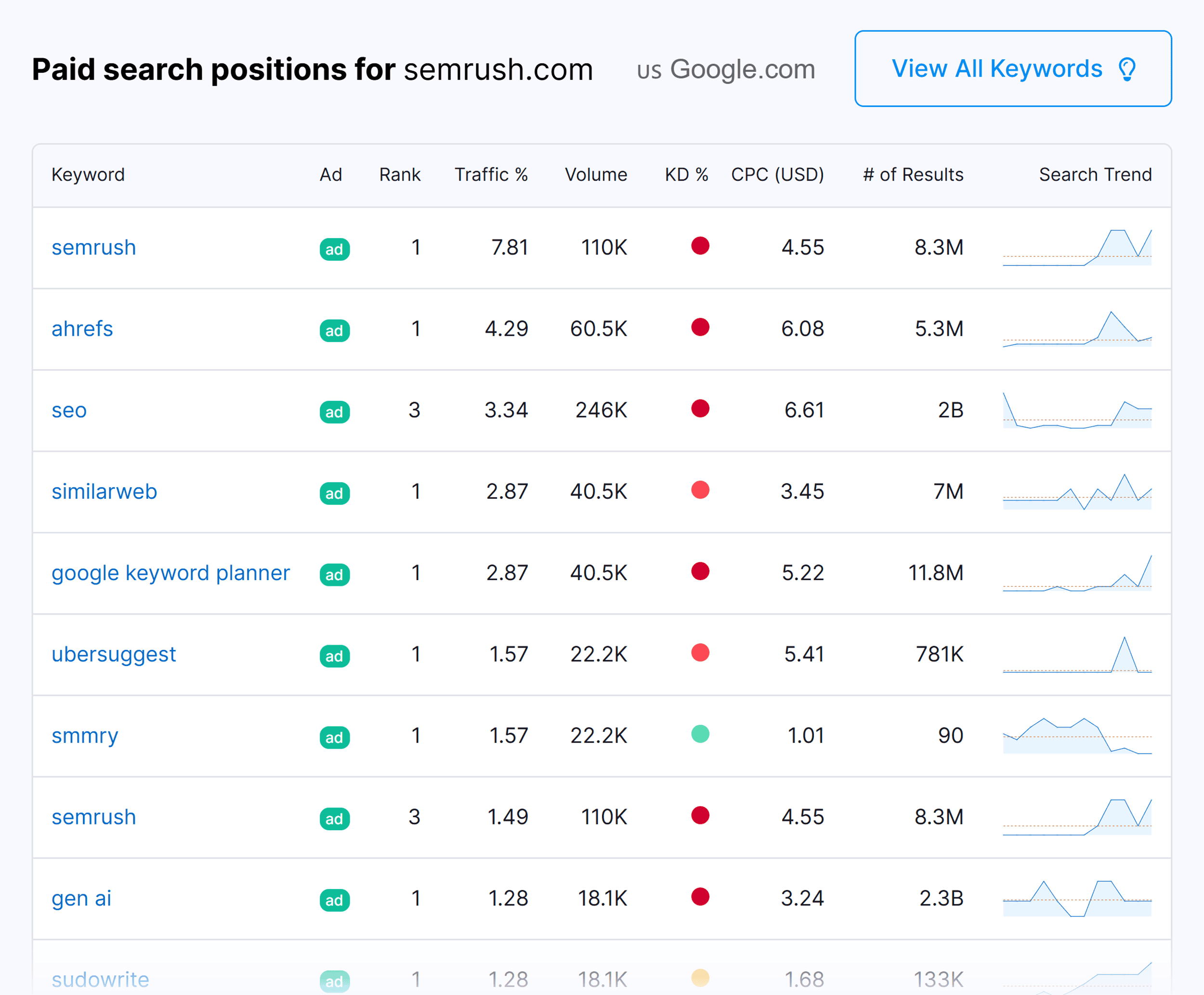
For instance, take a business selling eco-friendly cleaning products. By entering a competitor’s domain into SEMrush, users can access a dedicated section that reveals the keywords the competitor is currently bidding on. This might include terms like “green cleaning supplies,” “biodegradable cleaners,” and “natural household products.” The platform may also show estimated monthly traffic from these keywords. This could be around 1,500 visits per month, which often indicates the effectiveness of the competitor’s campaigns.
Additionally, these tools generally display the ad copy used by competitors, as well as their average position in Google Ads. This data is valuable — it allows businesses to identify which keywords perform well. But it also shows how competitors frame their ads. Analyzing ad copy can highlight trends in messaging that resonate with the target audience (this is often overlooked). This makes it easier to create compelling ads that stand out in a crowded market.
Expert insight: Regularly monitoring competitors’ keywords and ad strategies can provide a significant competitive edge. Adjusting your keyword strategy based on real-time insights can enhance ad performance and improve return on investment (ROI).
Understanding the Importance of Competitor Analysis in Google Ads
Competitor analysis in Google Ads offers crucial insights that can greatly improve advertising strategies. Gaining a clear view of the competitive landscape allows businesses to optimize their ad campaigns, leading to better performance.
Market Positioning Insights
Analyzing competitors’ Google Ads uncovers their market positioning and branding strategies. This information highlights strengths and weaknesses in your approach. For instance, if a competitor focuses on a particular product feature that resonates with customers, it could reveal an area ripe for improvement in your own content. In 2024, 65% of businesses noted that understanding competitor positioning directly impacted their ad copy effectiveness.
Identifying Successful Ad Formats
Tracking the types of ad formats competitors use can showcase effective strategies. Various formats, such as responsive search ads, video ads, and display ads, generate different engagement levels. For example, incorporating video content in ads has been shown to boost click-through rates (CTR) by as much as 49%. By examining which formats yield the most engagement for competitors, businesses can adapt or innovate their ad strategies accordingly.
Learning from Competitors’ Mistakes
Competitor analysis helps businesses learn from others’ missteps. By noting which ads fail—whether due to poor targeting, weak messaging, or irrelevant keywords—companies can sidestep similar errors. A recent survey revealed that 37% of marketers found that analyzing failed campaigns from competitors refined their own strategies, often resulting in improved ROI.
Staying Ahead of Industry Trends
Competitor analysis also reveals emerging trends in the industry. This involves tracking seasonal promotions, shifts in consumer behavior, and new technologies. For instance, if numerous competitors begin using artificial intelligence in their ad targeting, it might indicate a shift in best practices. Adapting to these trends early can give a competitive edge; 58% of leading firms cite trend adaptation as a key element of their advertising success.
While many acknowledge the importance of competitor analysis, some misconceptions linger. A common belief is that simply copying successful ads will lead to the same results. However, effective analysis demands a deeper understanding of the context behind competitors’ successes and failures. Factors like audience targeting, ad scheduling, and budget allocation can vary greatly, even among similar businesses.
To effectively leverage competitor analysis, consider these actionable steps:
- Use tools like SEMrush or SpyFu to gather data on competitors’ ad strategies.
- Analyze the keywords competitors are bidding on and their ad copy performance.
- Identify which ad formats and styles generate the highest engagement rates.
- Monitor and document competitor campaigns regularly to stay updated on changes and trends.
Implementing these strategies can enhance Google Ads campaigns and better position businesses for success in a competitive landscape. Understanding how to spy on winning competitors’ Google Ads isn’t just about imitation — it’s about informed adaptation and strategic innovation.
Step-by-step guide to Using Spy Tools for Google Ads
This section describes the process of using advanced spy tools like SEMrush and SpyFu to gain insights into competitors’ Google Ads strategies. Following these steps can help businesses identify effective keywords, compelling ad copy, and spending patterns. Ultimately, this enhances their advertising efforts.
Setting Up Accounts on SEMrush and SpyFu
To start, create accounts on both SEMrush and SpyFu. Both platforms offer free trials — a great way to explore features before committing to a subscription. Follow these steps:
- Visit the SEMrush website and click on “Sign Up” to create your account. Choose a plan that matches your business needs.
- For SpyFu, go to their homepage and select “Start Free Trial.” Fill in the required information to establish your account.
- Once registered, familiarize yourself with the dashboard and key functionalities of each tool.
Conducting Keyword Research
Keyword research is essential for understanding what keywords your competitors are targeting. Use SEMrush and SpyFu to analyze keyword strategies effectively:
- In SEMrush, go to the “Keyword Overview” section. Enter the competitor’s domain to view their top-performing keywords.
- SpyFu allows you to input a competitor’s website and see a list of keywords they’ve purchased for PPC campaigns.
- Identify keywords with high search volume and low competition — these can provide opportunities for your campaigns.
Analyzing Ad Copy and Landing Pages
Examining the ad copy and landing pages of competitors reveals critical insights into effective messaging and design. Use these methods:
- In SEMrush, access the “Advertising Research” section to view your competitors’ ad copies, including both text and visuals.
- SpyFu’s “Ad History” feature shows how long competitors have run specific ads and the variations they’ve tested.
- Review the landing pages linked to these ads using tools like SimilarWeb or by directly visiting the URLs to assess user experience and conversion tactics (this is often overlooked).
Tracking Competitors’ Ad Spend and Performance
Understanding competitors’ advertising expenditures and performance is crucial for strategic planning. Follow these steps:
- SEMrush provides estimates for ad spend in the “Advertising Research” section, showing how much competitors are investing monthly.
- SpyFu displays a cumulative view of ad spend over time, helping identify trends in budgeting and resource allocation.
- Use the performance metrics provided by both tools, such as click-through rates (CTR) and impressions, to gauge the effectiveness of competitors’ campaigns.
In 2024, businesses investing in PPC advertising reported an average return of 200% on their ad spend. This underscores the importance of competitive analysis in maximizing ad effectiveness.
Many marketers underestimate the value of testing ad variations and landing pages. Relying on just one version can hinder optimization. Continuous A/B testing, informed by competitor analysis, can lead to improved performance metrics.
To leverage this information effectively, prioritize regular competitor analysis using SEMrush and SpyFu. Start by compiling a list of top competitors and track their keywords, ad copy, and spend over time. Use this data to inform your ad strategies, optimize your campaigns, and ultimately enhance your market positioning.
Common Mistakes to Avoid When Spying on Competitors
This section highlights critical pitfalls in competitor analysis that can lead to misguided strategies and wasted resources. Avoiding these common mistakes sets the stage for a more effective approach to spying on winning competitors’ Google Ads.

Relying on Outdated Data
Using old data can really skew insights and lead to poor decision-making. Google Ads is a dynamic platform — changes in bidding strategies, ad placements, and audience targeting happen frequently. A 2024 report noted that 62% of marketers who relied on data older than six months saw a decline in campaign performance. Regularly updating data sources is essential for accurate competitor analysis.
Ignoring Ad Variations and Testing
Competitors often run multiple ad variations to identify which ads perform best. Failing to recognize this can limit understanding of what works in a specific niche. For example, A/B testing is common, with 70% of successful advertisers using it to refine their messaging. Analyzing just a single ad version can obscure the true effectiveness of different creative elements and calls to action.
Failing to Adapt Strategies Based on Findings
Data without action is pointless. Many marketers gather insights from competitors but don’t implement changes in their own strategies. A 2025 survey revealed that organizations actively adapting their campaigns based on competitor analysis improved their ROI by an average of 25%. To maximize the value of competitor research, integrate findings into ad strategies without delay.
Underestimating the Importance of Creative Elements
The visual and textual components of ads greatly impact performance. Focusing solely on keywords and ad placements overlooks crucial aspects like design, tone, and messaging. A recent study showed that ads with strong creative elements are 50% more likely to drive conversions than those with mediocre visuals. Analyzing competitors’ creative strategies yields valuable insights into what resonates with the target audience.
Edge Cases and Misconceptions
Many marketers mistakenly think that simply imitating competitors will lead to similar results. This approach overlooks the unique positioning and brand identity that each business has. Moreover, some assume that all high-performing ads are expensive; however, low-budget ads can also achieve high engagement rates if the creative is compelling. Understanding these nuances leads to a more tailored strategy that aligns with a brand’s strengths.
Practical Application
- Regularly update your data sources to ensure relevance in your analysis.
- Monitor multiple ad variations from competitors to grasp diverse strategies.
- Actively implement insights gained from competitor analysis into your campaigns.
- Evaluate the creative elements of competitors’ ads, and test similar concepts adapted to your brand.
Real-World Case Studies: Successful Competitor Analysis
This section explores real-world examples of businesses that improved their advertising strategies through careful competitor analysis. Understanding competitors’ Google Ads tactics provides tangible benefits.
Case Study: Retail Brand Transformation
A mid-sized retail brand faced stagnation in online sales and turned to competitor analysis for rejuvenation. By using tools like SEMrush and SpyFu, the brand pinpointed key competitors’ effective ad copy and targeted keywords. The analysis showed competitors were using seasonal promotions and customer testimonials, which resonated well with the target audience.
- Ad Copy Adjustments: The brand revamped ad headlines to include urgency-driven language. This resulted in a 30% increase in click-through rates (CTR).
- Targeted Keywords: Integrating high-ranking keywords from competitor ads improved the brand’s Quality Score. The result is often lower cost-per-click (CPC) rates.
- Promotional Strategies: By implementing similar promotional tactics, like limited-time offers, conversion rates increased by 25% within three months.
Tech Startup Insights
A tech startup specializing in mobile applications took a distinctive approach to competitor analysis. They focused on user feedback and reviews of competitors’ ads to identify common pain points among users. This informed their ad messaging, which emphasized superior customer support and unique features.
- Ad Messaging: Highlighting customer support resulted in a 40% increase in user acquisition.
- Target Audience Refinement: The startup refined audience segmentation based on competitor data. This ensured ads reached the most relevant users.
- Performance Metrics: The startup’s ad spend efficiency improved, leading to a significant 50% reduction in customer acquisition cost (CAC) within six months.
Lessons from a Service-Based Business
A service-based business focused on digital marketing used competitor analysis to sharpen its service offerings and advertising strategy. By examining competitors’ ads, the business discovered gaps in service presentation and customer engagement techniques.
- Service Differentiation: Highlighting unique services not offered by competitors increased inquiries by 35%.
- Customer Engagement: Applying call-to-action strategies seen in competitor ads improved lead generation by 20%.
- Ad Spend Optimization: Adjusting ad budgets based on competitor performance data led to a 15% increase in overall ROI.
Impact on ROI and Customer Engagement
The cumulative impact of these case studies shows that effective competitor analysis can lead to significant improvements in both return on investment (ROI) and customer engagement. Businesses that embraced competitor insights reported an average ROI increase of 25% within the first year of implementation. Notably, enhanced customer engagement strategies fostered greater brand loyalty and repeat business — key elements for long-term success.
Many businesses overlook the nuances of competitor analysis. They often focus solely on ad spend and keyword selection. However, understanding customer sentiment and engagement tactics can offer a more complete picture of what drives success in Google Ads. This distinction can make the difference between stagnation and rapid growth.
To apply these insights effectively, businesses should:
- Use competitor analysis tools like SEMrush and SpyFu to collect data on high-performing ads.
- Analyze customer feedback on competitors to pinpoint common pain points.
- Revise ad strategies centered around identified gaps and successful tactics from competitors.
- Continuously monitor and adjust campaigns according to performance metrics.
Frequently Asked Questions
What tools can I use to spy on competitors’ Google Ads?
Popular tools for spying on competitors’ Google Ads include SEMrush, SpyFu, and Ahrefs. These platforms provide insights into ad copy, budget estimates, and keyword strategies used by competitors.
How can I analyze my competitors’ ad performance?
Competitor ad performance can be analyzed using tools like Adbeat or iSpionage, which offer metrics on ad spend, click-through rates, and engagement. Reviewing their ad positioning and frequency can also provide valuable insights.
What are the benefits of spying on competitors’ ads?
Spying on competitors’ ads helps identify effective strategies and trends in your industry. It allows you to refine your own campaigns, optimize ad spend, and enhance targeting to improve overall performance.
How often should I check my competitors’ Google Ads?
Regularly checking competitors’ Google Ads every few weeks is advisable to stay updated on their strategies. Monthly reviews can help identify shifts in tactics and emerging trends that may impact your own campaigns.
Can I see the keywords my competitors are using in Google Ads?
Yes, tools like SEMrush and SpyFu allow users to view the keywords that competitors are bidding on in Google Ads. This information can help inform your own keyword strategy and identify potential gaps in your campaigns.
Final Thoughts on how to spy on winning competitors google ads
In the highly competitive landscape of digital marketing, effectively analyzing your competitors’ Google Ads can provide invaluable insights that propel your campaigns to new heights. Utilizing advanced spy tools and strategic analysis not only uncovers successful ad strategies but also enables you to refine your own approach, ensuring you remain ahead of the curve.
Implement a routine schedule to monitor your competitors’ Google Ads performance bi-weekly using a robust tool like SEMrush or SpyFu, focusing on key metrics such as ad copy, keywords, and landing page effectiveness.
Looking to elevate your advertising game? Consult a google ads expert today and learn how to outsmart your winning competitors!
Mastering the art of competitor analysis is essential; it transforms data into actionable intelligence, empowering brands to innovate and dominate their market space.