
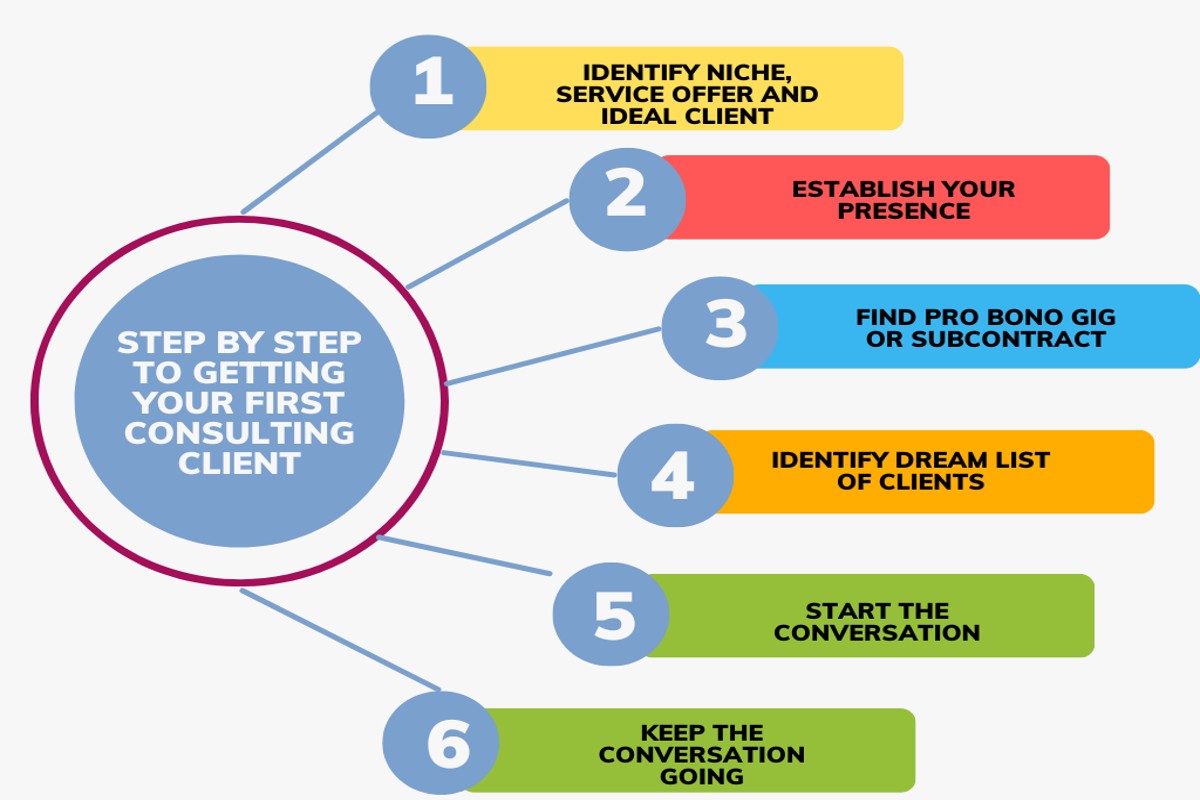
To get your first consulting client, you must define your niche and target audience, leveraging your existing network and establishing a robust online presence. Offering value through free consultations or workshops can significantly enhance your chances. Notably, 70% of consultants secure their first client through personal connections.
Understanding how to get your first consulting client is crucial for aspiring consultants looking to establish a foothold in a competitive market. With the consulting industry projected to reach $343 billion by 2025, mastering client acquisition strategies is essential for success. Failing to grasp these techniques can lead to missed opportunities and hinder business growth.
Without the ability to attract clients effectively, consultants risk lost revenue, wasted marketing efforts, and a significant competitive disadvantage in an increasingly crowded field. This can result in prolonged periods of underemployment and financial instability.
This article will provide a comprehensive step-by-step guide on securing your first consulting client, including strategies for niche identification, leveraging networks, enhancing online visibility, and offering compelling value propositions.
What are the best ways to find consulting clients?
The best ways to find consulting clients include leveraging your existing network, using social media platforms, and attending industry events. About 70% of consultants find their first client through personal connections — this highlights the importance of networking.
Start by reaching out to both your professional and personal contacts. Let them know about your consulting services and ask for referrals. A direct approach often leads to opportunities; people tend to trust recommendations from those they know. Additionally, creating a compelling LinkedIn profile is a smart move. Make sure it showcases your expertise and services. Regularly post valuable content related to your consulting niche to attract potential clients.
Join industry-specific groups on platforms like Facebook and LinkedIn. Engage actively by sharing insights and answering questions. This not only positions you as an expert in your field but also increases your visibility among potential clients. Plus, attending networking events or conferences allows for face-to-face interactions — these help establish rapport and trust with prospects. Such interactions are critical, as personal connections can often lead to consulting opportunities.
Finally, consider offering free workshops or webinars. This approach gives potential clients a chance to experience your expertise firsthand, which can significantly increase the likelihood of them hiring you for consulting services later on. Collect feedback and follow up with participants — nurturing these relationships is vital.
Expert insight: Focus on building authentic relationships rather than just selling your services. Genuine interactions often lead to referrals and long-term client relationships (this is often overlooked).
How long does it take to get your first consulting client?
On average, landing the first consulting client takes between one to six months. However, this timeline can vary widely. Influencing factors include your industry, marketing efforts, and network connections.
Several elements affect how long it takes to acquire clients. First, the clarity of your consulting niche is crucial. A well-defined niche usually allows for targeted marketing — which can speed up client acquisition. For instance, consultants in high-demand fields, like digital marketing or IT services, often attract clients faster than those in less recognized areas. Also, the strength of your professional network plays a significant role. Tapping into existing connections often leads to referrals, significantly shortening the waiting period.
Your marketing strategy is another key factor. Those who actively participate in networking events, engage in social media marketing, or create content usually find clients sooner. In contrast, those relying solely on passive outreach might struggle. Active marketing efforts not only boost visibility but also build credibility in your field. Furthermore, economic conditions can impact timelines, too. In a robust economy, businesses are more inclined to invest in consulting services compared to during a recession — which can delay the search for that first client.
Expert insight: Focus on building relationships within your industry. Consider offering free initial consultations to attract clients. This can create trust (this is often overlooked) and lead to referrals, speeding up the client acquisition process.
What should I include in my consulting proposal?
A compelling consulting proposal must include a clear project scope, defined deliverables, a timeline, pricing, and credentials. Each one of these elements helps potential clients grasp what to expect — and why they should choose your services.
To create a strong proposal, consider the following best practices:
- Project Scope: Clearly define the project objectives and the specific services you’ll provide. This prevents scope creep and ensures both parties are aligned from the start.
- Deliverables: List tangible outcomes you’ll deliver, like reports, presentations, or strategic plans. Specify the format and frequency of these deliverables to set clear expectations (this is often overlooked).
- Timeline: Provide a detailed timeline that outlines key milestones and deadlines. This helps clients understand the project’s pace. It also showcases your time management capabilities.
- Pricing: Clearly present your pricing structure, whether it’s hourly rates, fixed fees, or retainers. Justify your pricing with a breakdown of services — and the value they provide.
- Credentials: Include a brief overview of your qualifications, relevant experience, and case studies. Demonstrating your expertise builds trust — and confidence in your services.
Expert insight: Tailor each proposal to the specific client’s needs and industry. Personalization can significantly increase the likelihood of winning the contract.
How much should I charge my first consulting client?
New consultants typically charge between $50 and $200 per hour, depending on their industry and expertise. For project-based work, fees can fall anywhere from $1,000 to $10,000, based on the project’s scope and complexity.
Several factors influence the pricing strategy for consulting services. These include:
- Industry Standards: Different industries have varying norms for consulting fees. Technology and finance, for example, often command higher rates — while non-profit sectors tend to pay less.
- Experience Level: Newer consultants may start at the lower end of the scale. As experience grows and a proven track record develops, rates can and should be adjusted upwards.
- Client Size and Type: Larger corporations generally have bigger budgets. This allows consultants to charge more than they would for small businesses or startups.
- Project Complexity: Projects that are more complex and require specialized knowledge or skills can justify higher fees (this is often overlooked).
Additionally, geographical location can have a significant impact on consulting rates. Urban areas with a high cost of living usually support higher fees compared to rural locations. New consultants should research local rates and also consider their unique value proposition when determining pricing.
Expert insight: Establishing a pricing strategy that accurately reflects expertise while remaining competitive is crucial. Consider offering initial discounts or package deals to attract your first clients and build a portfolio — this can make a big difference.
What mistakes should I avoid when starting consulting?
New consultants often make several key mistakes that can hinder their success. Common pitfalls include underpricing services, neglecting marketing, and failing to establish a clear niche. According to a 2024 survey, 67% of new consultants reported that inadequate pricing strategies led to financial instability within their first year.
One significant error is underpricing services to attract clients. For instance, a consultant might set their hourly rate at $50 — considerably lower than the market average of $100 to $200 for their expertise. While this might seem like a smart approach to secure clients, it can lead to burnout and diminish the perceived value of the consultant’s skills. Instead, conducting thorough market research to determine a competitive yet fair rate is vital. This not only reflects the value of the services offered but also attracts clients who genuinely appreciate quality over low cost.
Another common mistake is neglecting marketing efforts. Many new consultants rely solely on word-of-mouth referrals, which can limit their client base. For example, a consultant specializing in digital marketing may think their existing network will bring in clients without actively promoting their services online (this is often overlooked). Establishing a strong online presence through a professional website, social media engagement, and content marketing is crucial. These strategies can greatly enhance visibility and credibility, leading to a steady stream of potential clients.
Expert insight: Focus on building a strong personal brand. Invest time in networking. Attend industry events and connect with potential clients to create opportunities that go beyond traditional marketing efforts.
Building Your Personal Brand as a Consultant
Establishing a strong personal brand is crucial for attracting that first consulting client. This section outlines the key steps to position yourself effectively in the competitive consulting landscape.
Define Your Unique Value Proposition
Your unique value proposition (UVP) sets you apart from other consultants. It captures what you offer that others don’t, addressing the specific needs of your target market. Start by pinpointing your skills, experiences, and the particular problems you can solve for clients. According to a 2024 survey, 72% of clients choose consultants who clearly articulate their UVP — this highlights how important clarity and specificity are.
Create a Professional Website and LinkedIn Profile
A professional website acts as your digital storefront. It should feature an overview of your services, your UVP, and a blog or resources section to showcase thought leadership. Your LinkedIn profile needs to reflect this professionalism too, displaying your expertise and connecting you with potential clients. Make sure both platforms are visually appealing and easy to navigate. After all, 94% of first impressions depend on design.
Use Social Media to Showcase Expertise
Social media platforms, especially LinkedIn and Twitter, are valuable assets for consultants. Regularly share insights, industry trends, and case studies to engage your audience. Consider these strategies:
- Post articles or blog entries related to your consulting niche.
- Engage with industry influencers and participate in discussions.
- Host webinars or live Q&A sessions to demonstrate your expertise.
Research shows that consultants who actively engage on social media can increase their visibility by up to 60% — this significantly boosts chances of securing clients.
Gather Testimonials and Case Studies to Build Credibility
Testimonials and case studies offer tangible proof of your capabilities. Start by collecting feedback from past clients or employers, with a focus on measurable outcomes. Create detailed case studies that outline challenges, your approach, and the results achieved. This evidence fosters trust and can convert hesitant prospects into clients. A study from 2025 found that businesses with testimonials experienced a conversion rate increase of 34%.
Nuance / Expert Layer
Many new consultants underestimate the importance of a cohesive personal brand. A common misconception is that a strong brand is solely about visual elements; however, it also includes your messaging, values, and engagement style. To truly stand out, think about how your personal story aligns with your consulting practice. Authenticity can resonate deeply with potential clients, forming a connection that goes beyond mere transactional relationships. Moreover, being too broad in your UVP can dilute your message — specificity is essential.
Practical Application
To effectively build your personal brand, follow these actionable steps:
- Identify your UVP and articulate it clearly in all communications.
- Develop a professional website and optimize your LinkedIn profile.
- Create and share valuable content on social media regularly.
- Collect and display testimonials and case studies prominently.
Implementing these strategies will enhance your visibility and credibility, ultimately guiding you on how to secure that first consulting client.
Networking Strategies for New Consultants
Building a solid network is vital for new consultants aiming to land their first clients. Effective networking helps establish valuable connections, gain industry insights, and boost visibility among potential clients.
Attend Industry Conferences and Events
Industry conferences and events offer a unique platform for new consultants to connect with potential clients and peers. These gatherings typically feature workshops, keynote speeches, and networking sessions that encourage relationship-building. Notably, a 2024 survey showed that 65% of attendees secured new business opportunities through connections made at conferences.
- Identify relevant conferences in your niche.
- Prepare an elevator pitch to clearly explain your services.
- Follow up with new contacts via email or LinkedIn within a week of the event.
Join Professional Associations and Online Communities
Membership in professional associations boosts credibility and offers access to a network of industry professionals. Furthermore, online communities like forums and social media groups allow for wider engagement. In 2025, 70% of consultants reported that their involvement in associations directly contributed to acquiring clients.
- Research associations relevant to your consulting area.
- Engage in discussions and share insights in online communities.
- Attend association meetings to build in-person connections.
Leverage Existing Connections for Referrals
Your current network can be an invaluable resource for landing your first consulting client. Reach out to former colleagues, friends, and acquaintances who might need your services or know someone that does. Referrals often lead to higher conversion rates — studies show that referred clients are 18% more likely to engage services.
- Compile a list of contacts who could benefit from your expertise.
- Craft personalized messages explaining your consulting focus and how you can help.
- Offer to provide value upfront, like a free consultation or resource.
Engage in Informational Interviews to Build Relationships
Informational interviews allow new consultants to gain insights while building relationships with industry professionals. Approach potential interviewees with genuine interest in their experiences. This not only expands your knowledge but also fosters goodwill, often leading to future client opportunities.
- Identify individuals in your target market or industry.
- Request a brief meeting to discuss their career path and industry trends.
- Follow up with a thank-you note and maintain the relationship.
Networking isn’t just about gathering contacts; it’s about nurturing relationships that can facilitate client acquisition. Focus on building authentic connections and delivering value to your network. This approach sets a strong foundation for your consulting practice, increasing the chances of securing that first client.
To effectively implement these strategies, identify two upcoming industry events to attend, join one professional association, and reach out to three existing contacts for referrals. Additionally, aim to schedule one informational interview each week to broaden your network and deepen your industry knowledge. Taking these actionable steps can significantly enhance the likelihood of landing your first consulting client.
Creating Compelling Offers to Attract Clients
Crafting compelling offers is critical for attracting that first consulting client. Address specific pain points and showcase your value to stand out in a crowded market.

Identify Pain Points and Needs
Understanding the challenges potential clients face is essential for creating offers that truly resonate. Conduct market research, engage in conversations, and use online forums to gather insights. Identifying key pain points helps tailor services effectively. For instance, a recent survey found that 67% of small businesses struggle with digital marketing — that’s a significant opportunity for consultants in this area.
Design Free Resources or Workshops
Offering free resources or workshops is a powerful way to demonstrate expertise and build trust. Consider creating valuable content like e-books, webinars, or workshops that tackle specific issues your target audience faces. These resources showcase your knowledge and let potential clients experience your consulting style firsthand. According to a report from the Content Marketing Institute, businesses that provide free resources see a 45% increase in client engagement (this is often overlooked).
Offer Introductory Pricing or Packages
Introductory pricing or time-limited packages can entice potential clients to take the plunge. By offering a discounted rate for first-time clients, you lower the risk of hiring a consultant. This tactic can be effective for establishing initial relationships and generating referrals. For example, providing a 20% discount on the first three months of service can significantly boost conversion rates, especially among those hesitant to invest in consulting.
Use Client Feedback to Refine Your Offerings
Soliciting and incorporating client feedback is crucial for refining your offerings. After completing a project or workshop, ask clients for their insights. Use surveys or informal discussions to understand what worked well and what could be improved. This feedback loop not only enhances services but also shows commitment to client satisfaction. A study from Deloitte found that companies actively seeking client feedback experience a 30% increase in retention rates.
Nuance / Expert Layer
Many consultants underestimate the importance of active listening in this process. While identifying pain points is vital, how you engage clients greatly impacts your success. Active listening means not just hearing clients’ words but understanding their emotions and underlying motivations. This depth of understanding leads to more tailored solutions — ultimately increasing the chance of securing ongoing relationships. Additionally, common misconceptions suggest that offering free resources devalues services. In reality, these offerings can enhance perceived value when done strategically.
Practical Application
To implement these strategies effectively, start with targeted market research to identify client pain points. Then, create at least one free resource that addresses a specific need. Launch a promotional campaign with introductory pricing, and actively seek client feedback after each engagement. Regularly revisit and refine offerings based on this feedback to ensure they remain relevant and compelling.
Leveraging Online Platforms to Find Clients
Digital platforms offer countless opportunities for aspiring consultants to connect with potential clients. By using these platforms strategically, consultants can significantly boost their visibility and outreach.
Utilize Freelance Platforms
Freelance platforms like Upwork and Fiverr serve as invaluable resources for finding consulting clients. They host millions of projects across various industries. This setup allows consultants to showcase their expertise and bid on relevant jobs.
- Upwork: Features a robust bidding system. Here, consultants can create profiles, submit proposals, and secure contracts. In 2024, Upwork reported over 12 million registered freelancers and 5 million clients.
- Fiverr: Focuses on service-oriented gigs. Consultants can list their offerings with set prices. This platform simplifies client acquisition, especially for those with well-defined services.
- Flexibility: Both platforms offer flexibility in project types — enabling consultants to find short-term, long-term, or one-off projects that align with their skill sets.
Engage in Content Marketing
Content marketing is a potent tool for establishing expertise and attracting potential clients. By creating relevant content through blogs or podcasts, consultants can effectively position themselves as thought leaders in their fields.
- Blogs: Writing informative articles on topics related to a consulting niche can drive traffic to a website. A study by HubSpot in 2024 showed that companies that blog receive 55% more website visitors.
- Podcasts: Launching a podcast lets consultants share insights and interview industry experts. It creates a platform for engagement with a wider audience.
- Social Media Integration: Sharing content across social media channels boosts visibility and drives traffic to consulting services.
Implement SEO Strategies
Search Engine Optimization (SEO) is crucial for increasing online visibility. By optimizing a website and its content for search engines, potential clients can easily discover offered services.
- Keyword Research: Identify and use keywords that potential clients search for regarding consulting services.
- On-Page SEO: Optimize title tags, meta descriptions, and content structure. This helps improve rankings on search engine results pages.
- Backlinks: Building backlinks from reputable sites can enhance a site’s authority and search engine ranking.
Consider Paid Advertising
Paid advertising can provide immediate visibility to targeted audiences. Platforms such as Google Ads and Facebook Ads allow for precise targeting based on demographics, interests, and behaviors.
- Google Ads: Create search ads that appear when users search for specific keywords related to consulting services.
- Facebook Ads: Leverage detailed targeting options to reach potential clients based on location, interests, and professional background.
- Cost-Effective Options: Depending on the platform, costs can vary from a few dollars to hundreds. This allows for flexible budget management.
Many consultants underestimate the importance of building a strong online presence. A common misconception is that merely being present on these platforms will attract clients. In reality, active engagement and strategic marketing are essential for success.
To effectively leverage online platforms for client acquisition, consultants should:
- Create detailed profiles on freelance platforms.
- Develop a content strategy that includes regular blogging and podcasting.
- Implement comprehensive SEO tactics to enhance online visibility.
- Experiment with paid advertising to reach a targeted audience quickly.
Frequently Asked Questions
What are the best ways to find consulting clients?
Effective methods to find consulting clients include networking through industry events, leveraging social media platforms, and utilizing freelance job boards. Building a strong online presence and asking for referrals from existing contacts can also yield potential clients.
How long does it take to get your first consulting client?
The timeline to secure your first consulting client can vary significantly, typically ranging from a few weeks to several months. Factors such as your network, marketing efforts, and niche demand play crucial roles in this process.
What should I include in my consulting proposal?
A consulting proposal should include a clear project scope, objectives, timelines, and pricing structure. Additionally, highlighting your qualifications and relevant experience can help establish credibility with potential clients.
How much should I charge my first consulting client?
Charging rates for your first consulting client should reflect your expertise, industry standards, and the value you provide. Researching competitor pricing and considering a project-based or hourly rate can help determine an appropriate fee.
What mistakes should I avoid when starting consulting?
Avoid underpricing your services, as it can undermine your value and lead to burnout. Additionally, neglecting to define a clear niche and failing to establish a professional online presence can hinder your consulting success.
Final Thoughts on how to get your first consulting client
Securing your first consulting client hinges on a strategic blend of personal branding, targeted networking, and compelling value propositions. Success in this arena requires a proactive approach and a commitment to continuous learning and adaptation in response to market demands.
Begin by identifying and reaching out to potential clients within your existing network, leveraging personal connections to create opportunities for engagement and showcasing your expertise through tailored proposals that clearly articulate the value you provide.
Ready to boost your consulting business? Discover how a google ads expert can help you attract your first client effortlessly!
Establishing a strong client base is essential for long-term success and credibility in the consulting industry.