
To get more consulting clients, implement strategies that enhance your visibility and credibility in the market. A strong online presence, effective networking, and the provision of valuable content are essential, as 70% of consultants acquire clients through referrals and networking.
This topic is crucial for consultants aiming to grow their client base and increase revenue. Understanding effective client acquisition methods can significantly impact a consultant’s success, as the consulting industry is projected to reach $500 billion globally by 2025. Missing key strategies can result in lost opportunities and stagnation in business growth.
Failure to grasp how to get more consulting clients can lead to decreased revenue and wasted marketing resources, putting consultants at a competitive disadvantage in a saturated market.
This article will cover proven strategies for acquiring more consulting clients, including building an online presence, leveraging networking opportunities, and creating valuable content that attracts and retains clients.
What are the best ways to attract consulting clients?
Attracting consulting clients involves a strategic mix of marketing, networking, and enhancing your online presence. Effective strategies can lead to a 30% increase in client inquiries — when implemented consistently.
To attract consulting clients successfully, concentrate on these best practices:
- Leverage Content Marketing: Create high-quality content that speaks to your target audience’s pain points. Blogs, whitepapers, and case studies can establish authority and draw potential clients to your services.
- Optimize Your Online Presence: Make sure your website is professional and user-friendly. Incorporate SEO best practices to improve visibility and attract organic traffic. Aim for a mobile-friendly design, and also ensure fast loading times.
- Build a Robust Network: Attend industry conferences, workshops, and networking events. Joining professional associations often provides valuable connections — and increases referral opportunities.
- Utilize Social Media Effectively: Choose platforms that fit your target market. Share insights and engage with followers regularly. LinkedIn is particularly effective for B2B consulting firms (this is often overlooked).
- Offer Free Initial Consultations: Providing a complimentary consultation can lower the barrier for potential clients. This gives them a chance to experience your expertise firsthand, which can increase the likelihood of conversion.
Building a strong client base takes ongoing effort. Each strategy should be tailored to the specific needs of the consulting niche. Regularly assess how effective your approach is — and be ready to adapt as market conditions change.
Expert insight: Focus on nurturing relationships with existing clients. Satisfied clients are more likely to provide referrals, which can significantly boost client acquisition efforts.
How can I use social media to get more consulting clients?
Using social media effectively can greatly enhance a consultant’s ability to attract clients. By strategically leveraging platforms like LinkedIn, Twitter, and Facebook, consultants can reach a wider audience and showcase their expertise. A 2024 survey found that 75% of businesses use social media for client acquisition — highlighting its importance in today’s marketing strategies.
1. Optimize Your Profile: Make sure your social media profiles clearly convey your consulting niche, services, and value proposition. A professional photo is essential; include a compelling bio and links to your website or portfolio to bolster credibility.
2. Engage with Industry Content: Share insightful articles, comment on relevant posts, and participate in discussions within your industry. This helps position you as a thought leader — and builds relationships with potential clients.
3. Join Relevant Groups: Platforms like LinkedIn and Facebook offer groups focused on specific industries or consulting topics. Actively participate by answering questions and providing valuable insights (this is often overlooked) to showcase your expertise and attract potential clients.
4. Utilize Paid Advertising: Consider using targeted ads on platforms like Facebook and LinkedIn to reach specific demographics. This can lead to increased visibility among potential clients who may not be in your immediate network.
5. Post Case Studies and Testimonials: Share success stories and testimonials from previous clients to demonstrate your impact. This social proof can be compelling for prospective clients assessing your services.
6. Host Webinars or Live Q&A Sessions: Use social media to promote webinars or live sessions where you can share valuable insights. This not only showcases your expertise but also creates opportunities for direct engagement with potential clients.
Expert insight: Consistency is key; regularly posting valuable content can keep your audience engaged. This increases your chances of converting followers into clients. Consider using analytics tools to track engagement and refine your strategy based on what resonates most with your audience.
What should I include in my consulting proposal to win clients?
A successful consulting proposal includes a clear scope of work, a detailed timeline, a pricing structure, and relevant case studies or testimonials. For example, a proposal that specifies precise deliverables over a three-month period, along with a cost breakdown, is much more likely to secure clients than one that remains vague.
First, define the scope of work clearly. This involves outlining specific tasks, deliverables, and expected outcomes. For instance, if a marketing consultant proposes to boost a client’s online presence, they might specify the development of a content strategy, management of social media, and monthly performance reports. Next, provide a timeline that details the project’s phases. A well-organized timeline—like a Gantt chart—can help clients visualize the entire process and know when to expect results.
Additionally, include a pricing structure that’s transparent and easy to digest. Make sure to state your fees clearly, whether they’re hourly, project-based, or retainer, and outline any additional costs. If a client sees a project fee of $10,000 along with a detailed task breakdown, they might feel more secure in making the investment. Finally, adding case studies or testimonials enhances credibility. Demonstrating past successes, such as a 30% sales increase for a former client, can significantly build trust and attract new clients.
Expert insight: Tailor each proposal to the specific needs and challenges of the client’s industry. Show a deep understanding of their business—and how your expertise can tackle their unique situation. (This is often overlooked.)
How much should I charge for consulting services?
Consulting rates usually range from $100 to $500 per hour, influenced by expertise and industry. For specialized consultants, rates can even exceed $1,000 per hour. Establishing a competitive, yet fair pricing structure is crucial for attracting clients.
Several factors affect consulting fees. These include the consultant’s level of experience, demand within the industry, and the project’s complexity. A consultant with extensive experience or niche expertise will typically command higher rates. If the industry is seeing high demand for certain skills, prices can rise. However, if the market is flooded with consultants offering similar services, rates might need to be adjusted downward to stay competitive.
- Experience and Credentials: More experienced consultants, especially those with advanced degrees or certifications, often charge higher fees due to their established track record.
- Service Scope: The breadth and depth of services offered can significantly impact pricing. Comprehensive packages that include multiple services are generally priced higher.
- Client Budget: Understanding the financial capacity of target clients is essential. Some consultants adjust their fees based on the client’s size or industry (worth double-checking).
Geographical location also plays a significant role in determining fees. Consultants in high-cost living areas may charge more than those in regions with lower living costs. Market research can offer insights into standard rates within specific locales or industries.
Expert insight: Regularly reassessing rates using client feedback and market trends helps maintain competitive pricing while ensuring profitability.
How long does it take to get consulting clients?
Typically, securing your first consulting clients takes three to six months, but this timeline can vary significantly based on several factors.
Several elements influence how quickly a consultant can attract clients. First, your existing network plays a critical role. If you have connections in your industry, clients may come more easily. Networking events, referrals, and using social media can speed up client acquisition. Plus, your marketing efforts — like your online presence and content marketing — can really shorten this timeline. An optimized website and active social media profiles can lead to inquiries within weeks.
Another factor is your niche and market demand. In fields with high demand, such as digital transformation or sustainability consulting, clients may appear faster. On the flip side, if you’re in a saturated market with many competitors, it might take longer to build credibility and attract clients. Furthermore, the value proposition and pricing strategy you choose can affect responsiveness. Clearly communicating unique benefits can lead to quicker client acquisition (this is often overlooked).
Expert insight: To speed up client acquisition, focus on building a strong online presence and actively engage in networking. Regularly sharing insights and case studies can position you as an authority in your field — attracting clients more rapidly.
What are common mistakes to avoid when seeking consulting clients?
Consultants often make critical mistakes that hinder their ability to attract clients. One major error is neglecting to clearly define their target market. This can reduce client engagement by as much as 50%. Understanding common pitfalls and navigating them effectively is essential for building a successful consulting practice.
Firstly, failing to establish a strong value proposition can lead to missed opportunities. Consultants must express how their services solve specific problems for potential clients. Without a clear value proposition, prospects often don’t recognize the benefits of hiring a consultant over a competitor.
- Neglecting online presence: A weak or non-existent online presence can keep potential clients from finding and evaluating your services. Invest in a professional website. Make sure to optimize it for search engines to enhance visibility.
- Overlooking networking: Many consultants underestimate the power of networking — it’s vital. Regularly attend industry events, join professional organizations, and engage on social media platforms to connect with potential clients.
- Failing to follow up: After initial meetings or inquiries, lack of follow-up can lead to lost leads. Develop a system for timely follow-ups. This helps maintain interest and demonstrates professionalism.
- Ignoring client feedback: Not seeking or responding to client feedback can hinder growth. Regularly solicit feedback (this is often overlooked) to improve services and strengthen client relationships.
Expert insight: Focus on building relationships rather than just closing sales. Establishing trust and rapport can significantly increase the likelihood of referrals and repeat business.
How can I leverage referrals to get more consulting clients?
Leveraging referrals is a powerful way to acquire more consulting clients. A study by HubSpot shows that 84% of consumers trust recommendations from friends and family more than any other advertising type. This makes referrals an invaluable tool for business growth.
Building a strong referral network requires a systematic approach. Start by identifying your satisfied clients and asking for their feedback. This not only reinforces your relationship — it also opens the door for referral requests. Next, create a structured referral program that incentivizes clients for successful leads. Offering discounts or exclusive services often motivates clients to actively refer others.
- Communicate your needs: Make it clear to your clients that you’re seeking referrals. Use direct communication methods like emails or follow-up calls to express your appreciation for their business — and your desire for introductions to others.
- Provide exceptional service: Deliver outstanding results to your current clients. When they’re satisfied, they’re more likely to recommend your services to others. Consistently exceeding expectations builds a positive reputation — which encourages referrals.
- Utilize social proof: Showcase testimonials and case studies on your website and social media platforms. This helps build trust with potential clients and encourages existing clients to refer your services, knowing their recommendations are backed by proven success.
- Network strategically: Attend industry events and join professional associations. Building relationships with other professionals can lead to mutual referrals, expanding your client base beyond your immediate circle.
- Thank your referrers: Acknowledge and thank clients who refer others. A simple thank-you note or a small gift goes a long way. Recognizing their efforts encourages them to keep referring you in the future.
Expert insight: Use follow-up systems to stay in touch with clients and remind them of your referral program. Regular communication reinforces relationships and keeps your services top-of-mind — which can increase the likelihood of referrals.
Building a Strong Personal Brand as a Consultant
Establishing a strong personal brand is crucial for consultants who want to attract more clients. A well-defined brand clearly communicates expertise, builds trust, and sets you apart in a competitive market.

Define Your Unique Value Proposition
Your unique value proposition (UVP) explains what differentiates you from other consultants. Identify the specific skills, experiences, or insights you offer — and align them with your target audience’s needs. For instance, if your focus is on digital marketing for healthcare, emphasize your grasp of both sectors and how that knowledge can drive results. According to a 2024 study, 64% of clients select consultants based on their perceived value and specialization.
Create a Professional Online Presence
An effective online presence is at the heart of personal branding. This not only includes a polished website but also active profiles on platforms like LinkedIn. Make sure your website clearly outlines your services and showcases your UVP. A blog for sharing industry insights is also vital (this is often overlooked). A professional LinkedIn profile should feature a compelling headline, detailed work experience, and a summary that truly reflects your brand. Regular updates and engaging with relevant content can significantly boost visibility.
Utilize Testimonials and Case Studies
Testimonials and case studies are powerful forms of social proof regarding your capabilities. They showcase your effectiveness and the tangible results you’ve delivered for previous clients. Collect testimonials from satisfied clients — display them prominently on your website. Also, develop detailed case studies that highlight your problem-solving methods and the outcomes achieved. A 2025 survey showed that 78% of potential clients are influenced by positive testimonials when choosing a consultant.
Engage with Your Audience Through Content
Creating valuable content positions you as an authority in your field. Regularly publish articles, white papers, or videos that tackle common industry challenges or trends. This not only boosts your credibility but also increases visibility in search engines. Consistency matters; aim to post at least once a week. Engaging with your audience through comments or social media can also cultivate relationships that may lead to client inquiries.
Nuance / Expert Layer
Many consultants underestimate how personal branding impacts their client acquisition strategies. While expertise is vital, cultivating an emotional connection with potential clients is equally important. Personal branding isn’t just about showcasing skills; it’s about telling a story. Consultants who effectively share their journeys, values, and reasons for doing what they do often connect better with clients. This emotional engagement can be a key factor, especially in industries where trust and rapport matter most.
Practical Application
- Clearly articulate your unique value proposition in all marketing materials.
- Invest in a professional website and confirm your LinkedIn profile is up-to-date.
- Gather testimonials from clients and create at least two detailed case studies.
- Commit to a content calendar — post relevant articles or videos weekly.
- Engage with your audience by responding to comments and participating in discussions.
By implementing these strategies, consultants can significantly strengthen their personal brand, leading to increased client acquisition and business growth.
Effective Networking Strategies for Consultants
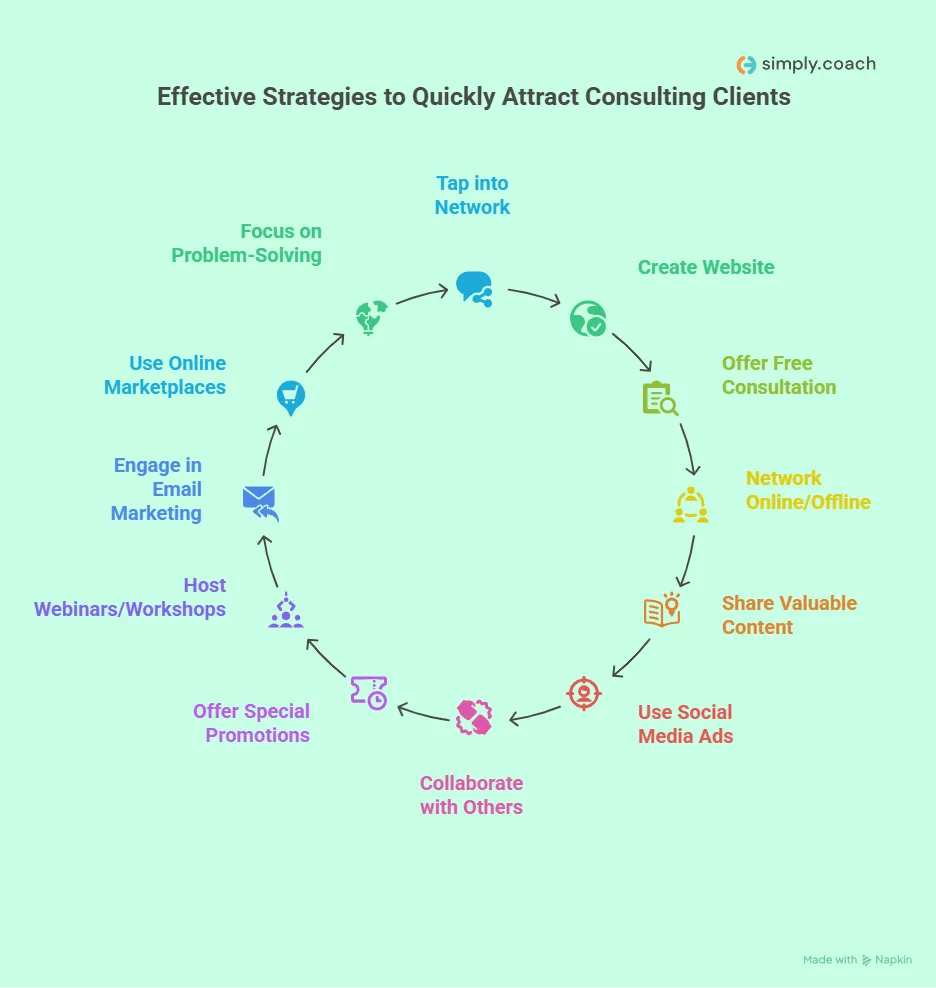
This section explores advanced networking techniques crucial for consultants aiming to broaden their client base. Building a strong professional network can really boost visibility — and it can lead to new consulting opportunities.
Identify and Attend Relevant Industry Events
Participating in industry-specific events serves as a cornerstone for effective networking. These gatherings create opportunities for consultants to meet potential clients and influential industry leaders. Focus on events that align with your niche to maximize relevance. For example, a survey by Eventbrite in 2024 found that 72% of professionals reported attending industry conferences directly led to new business opportunities.
- Conferences: Target major conferences in your field — they often attract key decision-makers.
- Workshops: Engage in hands-on workshops where showcasing your expertise is possible.
- Local Meetups: Join local meetups or networking groups to build relationships within your community.
Leverage LinkedIn for Professional Connections
LinkedIn remains a powerful tool for consultants. With over 900 million users as of 2026, it offers unparalleled access to industry professionals. Optimize your profile to reflect your expertise and actively engage with your network — this includes sharing valuable content and commenting on relevant posts, which can increase visibility.
Use LinkedIn’s advanced search features to identify potential clients and industry influencers. Send personalized connection requests that highlight mutual interests or connections (this is often overlooked) to boost the likelihood of acceptance.
Follow Up and Maintain Relationships
Networking doesn’t end after the initial meeting. Following up is crucial for maintaining connections. A study by HubSpot in 2025 revealed that 80% of sales require five follow-up calls after the initial meeting, yet most consultants only make one or two.
- Send a Thank-You Note: After meeting a new contact, send a brief thank-you email that references your conversation.
- Schedule Check-Ins: Set reminders to check in with contacts periodically, whether through emails or LinkedIn messages.
- Share Relevant Information: Forward articles or resources that align with their interests — this demonstrates a commitment to the relationship.
Offer Value Before Asking for Referrals
Building trust is essential in networking. Instead of asking for referrals right away, focus on offering value first. This could involve providing insights into industry trends, sharing resources, or even offering free consultations. Research indicates that consultants who provide value upfront are 60% more likely to receive referrals from their network.
Consider developing a content strategy that showcases your expertise. Blogs, whitepapers, or webinars can position you as a thought leader, which makes others more inclined to refer clients to you.
Nuance: Common Misconceptions in Networking
A common misconception among consultants is the idea that networking is solely about quantity—attending numerous events and amassing connections. However, prioritizing quality relationships yields far greater returns. Focus on developing deeper connections with a smaller circle of influential contacts instead of spreading efforts too thin. Furthermore, many fail to appreciate the importance of consistency; regularly engaging with your network is far more effective than sporadic outreach.
Practical Application
To implement these networking strategies effectively, consider the following:
- Identify three upcoming industry events to attend within the next quarter.
- Revamp your LinkedIn profile and connect with at least five industry professionals each week.
- Draft a follow-up email template to streamline your outreach process.
- Devote time each month to create and share valuable content that resonates with your target audience.
Content Marketing for Consulting Success
Effective content marketing serves as a cornerstone for attracting new consulting clients. Providing valuable information and engaging experiences builds trust, establishes authority, and can significantly expand reach.

Create Informative Blogs and Articles
Producing high-quality blogs and articles is fundamental. It demonstrates expertise and addresses potential client pain points. Each piece of content should focus on specific topics relevant to the consulting niche, offering actionable insights or solutions. For instance, a marketing consultant might publish an article titled “Top 5 Digital Marketing Trends for 2025.” Doing so can draw in prospects looking for current information.
- Target specific keywords to enhance discoverability.
- Include case studies or real-life examples to provide context.
- Encourage reader engagement through comments or social media shares.
Utilize Webinars and Online Workshops
Webinars and online workshops allow consultants to interact directly with potential clients while showcasing expertise. These platforms provide a space to discuss industry trends, share insights, and address common challenges. According to a 2024 report by the Content Marketing Institute, 73% of marketers consider webinars an effective method for generating leads. This statistic underscores their value.
- Choose topics that resonate with your target audience.
- Promote the event across social media and email campaigns.
- Follow up with participants to convert interest into consultations.
Develop a Newsletter for Ongoing Engagement
A well-structured newsletter keeps your audience informed and engaged. Regular updates can include industry news, blog highlights, or exclusive tips. This fosters a sense of community. Data from HubSpot indicates that email newsletters can yield a 4,200% return on investment when executed effectively, making them a powerful tool for client acquisition.
- Create a compelling subject line to increase open rates.
- Segment your audience for tailored content delivery.
- Include clear calls-to-action to guide readers towards your services.
Optimize Content for SEO to Reach a Wider Audience
Search Engine Optimization (SEO) is critical for enhancing content visibility. By optimizing blog posts, articles, and other materials for relevant keywords, consultants can significantly increase their chances of attracting organic traffic. For instance, using tools like Google Keyword Planner can identify high-volume search terms that potential clients are using.
- Incorporate both short-tail and long-tail keywords.
- Utilize meta descriptions and alt text for images.
- Ensure mobile optimization to improve user experience.
Common misconceptions about content marketing suggest it requires a substantial budget or extensive technical skills. However, many successful consultants leverage free platforms and tools to produce content that resonates with their audience. The focus should be on consistency and quality rather than sheer volume. Additionally, while many articles emphasize the need for frequent posting, quality must take precedence to maintain credibility and authority in the industry.
To effectively implement these strategies, start by creating a content calendar that outlines topics, formats, and publication dates. Prioritize SEO research to inform content decisions. Schedule at least one webinar per quarter to engage your audience. Regularly review analytics to assess which content resonates most with your audience and adjust your approach accordingly. Consistent, high-quality content marketing can greatly enhance the ability to acquire more consulting clients.
Measuring Success: Tracking Your Client Acquisition Efforts
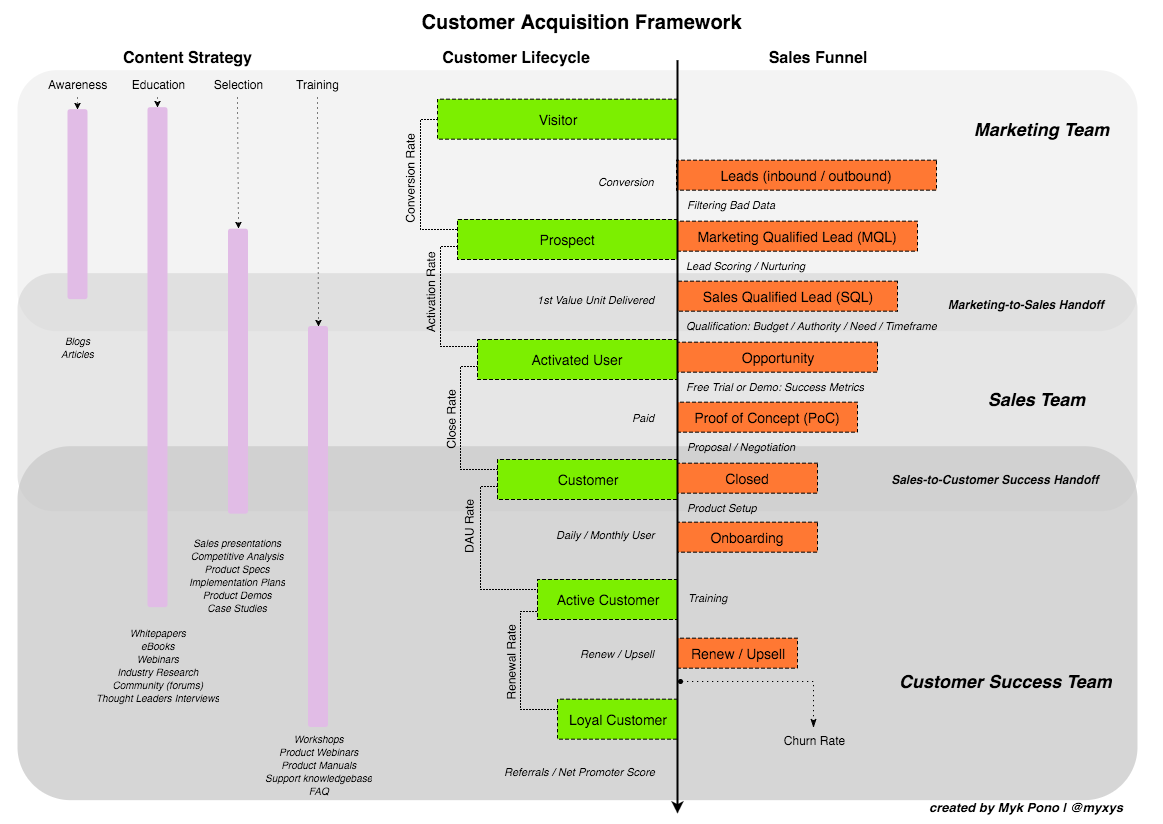
Measuring client acquisition strategies effectively is crucial for ongoing consulting growth. Clear goals must be defined. By leveraging analytics and making data-driven adjustments, consultants can refine their methods — ultimately maximizing client engagement.
Set Clear Goals for Client Acquisition
Establishing clear, measurable goals forms the backbone of an effective client acquisition strategy. These goals should meet the SMART criteria: Specific, Measurable, Achievable, Relevant, and Time-bound. For example, a consultant might target the acquisition of five new clients within three months or aim for a 20% increase in the conversion rate from leads to clients during a specified period. Clearly defined goals not only provide direction but also facilitate focused efforts.
Use Analytics Tools to Track Progress
Using analytics tools is critical for keeping tabs on the effectiveness of client acquisition strategies. Platforms like Google Analytics, HubSpot, or CRM systems offer valuable insights into client interactions and engagement levels. Key metrics to track include:
- Website traffic and source attribution
- Lead conversion rates
- Client acquisition costs
In 2024, businesses employing analytics to inform their strategies report a 15% increase in lead conversion rates compared to those that don’t (this is often overlooked).
Adjust Strategies Based on Data Insights
Regularly reviewing performance data lets consultants pinpoint successful strategies and areas in need of improvement. If a particular marketing channel shows a higher conversion rate, resources can be redirected to maximize that channel. On the flip side, if certain tactics aren’t delivering results, they can be modified or phased out. This iterative approach keeps strategies aligned with client needs and market trends.
Celebrate Small Wins to Stay Motivated
Celebrating small victories is essential for boosting motivation and morale. Whether reaching a milestone in client inquiries or successfully converting a lead, acknowledging these achievements fosters a positive mindset. This practice not only reinforces commitment to client acquisition goals but also promotes a culture of continuous improvement.
Nuance / Expert Layer
Many consultants underestimate the value of qualitative data alongside quantitative metrics. Client feedback and testimonials offer insights into communication effectiveness and service delivery. Moreover, it’s a misconception that high website traffic guarantees client acquisition. Analyzing lead quality is just as important; not all traffic equates to potential clients. Thus, a balanced approach that combines quantitative analytics with qualitative insights enhances overall strategy effectiveness.
Practical Application
To implement these strategies effectively:
- Define at least three SMART goals for your client acquisition efforts.
- Choose and set up analytics tools to track key performance metrics.
- Conduct monthly reviews of your data to identify trends and adjust strategies accordingly.
- Establish a routine for celebrating small wins, such as weekly team meetings.
Integrating these practices allows consultants to optimize their approach and ultimately learn how to acquire more consulting clients effectively.
Frequently Asked Questions
What are the best ways to attract consulting clients?
Networking, offering free workshops, and showcasing expertise through content marketing are effective strategies to attract consulting clients. Establishing a strong online presence also helps in building credibility and visibility.
How can I use social media to get more consulting clients?
Utilize social media platforms to share valuable content, engage with your audience, and showcase client testimonials. Consistent interaction and targeted advertising can also help reach potential clients effectively.
What should I include in my consulting proposal to win clients?
A successful consulting proposal should include a clear outline of services, project timelines, pricing, and expected outcomes. Tailoring the proposal to address the specific needs and challenges of the client is crucial for winning their business.
How much should I charge for consulting services?
Consulting fees typically vary based on industry, expertise, and project scope. Researching competitor rates and considering your experience will help determine a competitive yet fair pricing structure.
How long does it take to get consulting clients?
The time it takes to acquire consulting clients can vary widely, ranging from a few weeks to several months. Building a strong network and reputation can accelerate the process significantly.
What are common mistakes to avoid when seeking consulting clients?
Common mistakes include failing to define a target market, neglecting follow-ups, and not showcasing expertise effectively. Additionally, underpricing services can undermine perceived value and hinder client acquisition.
How can I leverage referrals to get more consulting clients?
Encouraging satisfied clients to provide referrals can significantly expand your client base. Offering incentives for referrals and maintaining strong relationships with past clients can enhance the likelihood of receiving recommendations.
Final Thoughts on how to get more consulting clients
To secure a steady stream of consulting clients, it is essential to cultivate a robust personal brand, leverage effective networking techniques, and implement targeted content marketing strategies. These elements work synergistically to position consultants as trusted authorities in their field, ultimately attracting clients who value expertise and professionalism.
Begin by refining your online presence; create a compelling LinkedIn profile that highlights your unique value proposition and engage actively with industry-relevant content to draw potential clients to your expertise.
Ready to elevate your consulting business? Connect with a google ads expert today and watch your client base grow!
In a competitive landscape, mastering the art of client acquisition is not merely advantageous—it’s imperative for sustained success and growth in the consulting industry.