
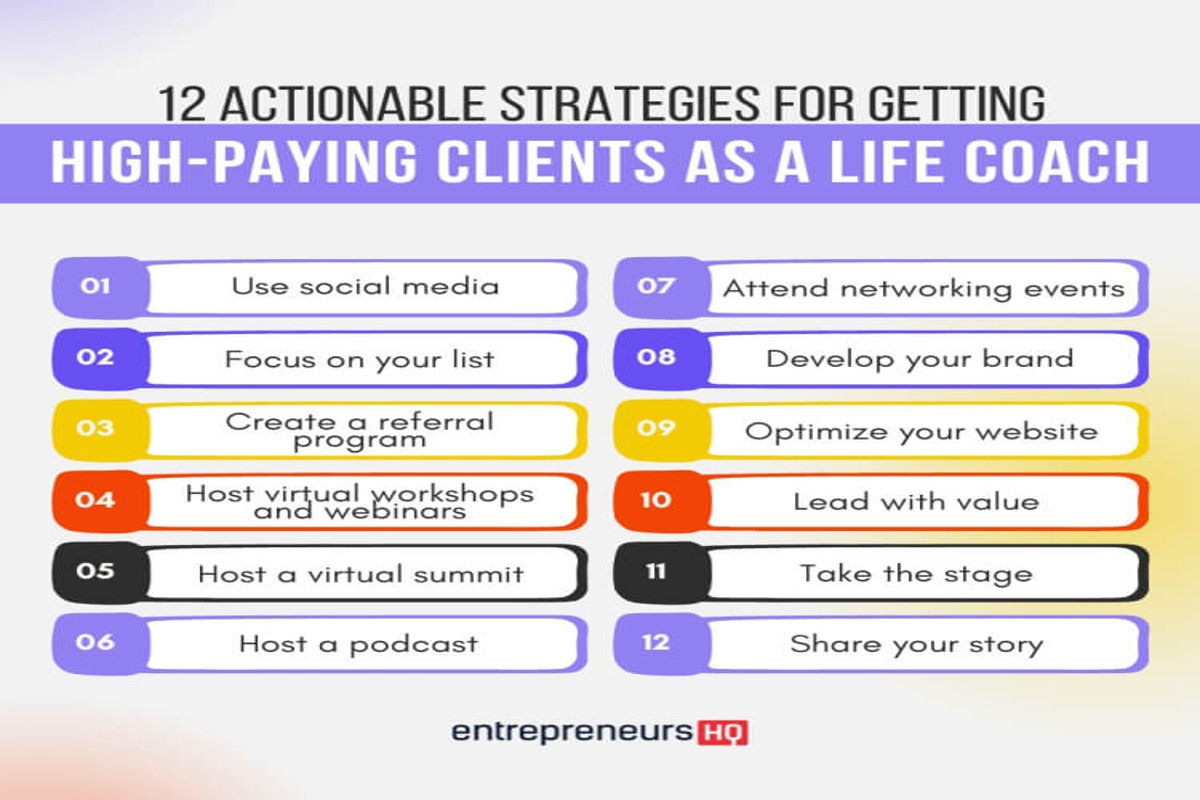
How to get clients for a life coaching business involves strategies focused on establishing a strong online presence, effective networking, and providing free introductory sessions. With 70% of clients favoring coaches with a robust online footprint, implementing these methods can significantly enhance client acquisition and retention.
Understanding how to get clients for a life coaching business is crucial for coaches aiming to build a sustainable practice. In a competitive industry where personal branding and visibility can make or break a business, life coaches must leverage digital marketing and relationship-building to attract and retain clients. Failure to do so can result in lost opportunities in a market projected to exceed $1 billion in revenue by 2025.
Neglecting effective client acquisition strategies can lead to missed revenue, wasted marketing resources, and a significant competitive disadvantage. Coaches who fail to adapt may find themselves unable to sustain their practice or grow their client base, ultimately jeopardizing their business viability.
This article will explore proven strategies for attracting clients, including the importance of online presence, networking techniques, and the benefits of offering complimentary sessions. Readers will gain insights into best practices that can elevate their life coaching business and ensure long-term client relationships.
What are the best marketing strategies for life coaches?
Effective marketing strategies for life coaches often include using social media, implementing content marketing, and building strong networking relationships. In 2024, 80% of life coaches reported gaining clients through social media platforms. This highlights their effectiveness in reaching potential clients.
Platforms like Instagram, Facebook, and LinkedIn are essential for life coaches to showcase their expertise. They help connect with potential clients. Creating engaging content — think motivational posts, success stories, and live Q&A sessions — can foster a community around the coaching practice. Regularly interacting with followers through comments and direct messages can enhance trust and rapport. This leads to increased client inquiries.
- Content Marketing: Develop a blog or video series that addresses common challenges faced by potential clients. By providing valuable insights and actionable tips, life coaches can position themselves as thought leaders. Consistently publishing high-quality content can improve search engine visibility and attract organic traffic to the coaching website.
- Email Marketing: Build an email list by offering a free resource, like an e-book or guide. Regular newsletters can keep subscribers engaged, offer coaching tips, and highlight success stories. Personalizing emails can increase open rates and foster a sense of connection.
- Networking: Attend workshops, seminars, and local events to meet potential clients and other professionals in the industry. Joining local business groups or online forums can also provide opportunities for collaboration and referrals — which can further expand the coaching business’s reach.
Expert insight: Focus on creating a specific niche within the life coaching industry. Tailoring marketing efforts to address the unique needs of a target audience can significantly enhance client acquisition and retention (this is often overlooked).
How can I build a client base as a new life coach?
Building a client base as a new life coach requires establishing presence through networking, using social media, and offering free initial sessions to attract clients. A study from 2024 shows that 70% of new coaches find their first clients via personal connections and online platforms.
First, identify your target audience and the specific issues you can help them with. This clarity will guide your marketing efforts. It’s essential to tailor your messaging effectively. Networking is vital; attend local events, workshops, and meetups that relate to personal development. Engage in conversations, share your expertise — and cultivate relationships that can lead to referrals.
- Create a Professional Online Presence: Develop a website and social media profiles that clearly convey your coaching niche and services. Make sure your online platforms are visually appealing and feature valuable content.
- Utilize Social Media: Use platforms like Instagram, LinkedIn, and Facebook to share insightful content, client testimonials, and success stories. Engage with your audience through live sessions or Q&A formats to establish authority (this is often overlooked).
- Offer Free Introductory Sessions: Attract potential clients by providing complimentary coaching sessions. This allows prospects to experience your coaching style firsthand and encourages them to commit to paid sessions.
- Join Coaching Associations: Become a member of coaching organizations to access resources, training, and networking opportunities. These associations typically provide platforms where coaches can promote their services.
- Leverage Referrals: Encourage satisfied clients to refer friends and family. Consider implementing a referral program that rewards clients for bringing in new business — this can lead to more connections.
Expert insight: Regularly assess and adapt your strategies based on feedback and results. Consistency in marketing efforts and a genuine connection with your audience will significantly enhance client acquisition.
What should I include in my life coaching website?
A life coaching website must include essential elements. Key components consist of a services page, client testimonials, a blog, and clear contact information. Research shows that 92% of consumers read online reviews before deciding — this underlines the need to showcase positive client experiences.
Start with a dedicated services page. This page should clearly outline the coaching packages offered. Details matter here: include session length, pricing, and any specializations like career coaching or personal development. Transparent pricing helps potential clients make informed decisions quickly.
Next, incorporate a testimonials section that features authentic feedback from past clients. Success stories build credibility — they also help prospective clients visualize their own potential transformations. Additionally, maintaining a blog can establish authority in the field. Regularly updated content on relevant topics engages visitors and can improve search engine rankings, driving more traffic to the site.
Expert insight: Integrate an easy-to-use scheduling tool on your website. This facilitates appointment bookings directly, streamlining the process for potential clients. It can significantly increase conversion rates.
How much should I charge for life coaching services?
The typical charge for life coaching services ranges from $50 to $300 per hour. This depends on various factors, including experience, specialization, and geographic location. Many coaches charge around $100 to $150 per hour for standard sessions. That’s a common range.
Several factors influence the pricing of life coaching services. First, the coach’s level of experience is key. Coaches with extensive training, certifications, and a solid track record often charge higher rates due to their expertise. The niche or specialization also plays a part. Coaches focusing on specific areas — like career transitions, relationships, or wellness — usually set different rates based on demand and perceived value (this is often overlooked).
- Location: Urban areas often see higher rates than rural ones. This reflects the cost of living and market demand.
- Duration and Package Options: Offering longer sessions or packages (e.g., a series of sessions at a discounted rate) can influence the hourly rate. Coaches may charge less per hour for packages — it’s a way to encourage commitment.
- Target Audience: Coaches targeting corporate clients or high-net-worth individuals tend to set higher fees compared to those working with a general public audience.
Expert insight: Conduct market research in your area to set competitive rates. Consider offering a free initial consultation to attract potential clients while establishing your value — this strategy can be quite effective.
What are common mistakes to avoid in life coaching marketing?
Life coaches make several common mistakes in their marketing efforts, which can hinder client acquisition. Key pitfalls include unclear messaging, neglecting online presence, and not engaging with potential clients. Recent studies show that 60% of life coaches struggle to attract clients due to ineffective marketing strategies.
One major mistake is unclear messaging that fails to resonate with the target audience. Coaches need to articulate their unique value proposition clearly. This involves identifying the specific problems they solve and communicating the benefits effectively. Avoid jargon — use relatable language that potential clients actually understand.
- Neglecting online presence: In a digital-first world, a robust online presence isn’t just important; it’s essential. Coaches should invest in a professional website and have active social media profiles. Regularly update content that showcases expertise. This could include blog posts, videos, or testimonials.
- Ignoring client engagement: A common oversight is failing to build relationships with potential clients. Coaches should engage through newsletters, webinars, or free resources. This establishes trust and positions the coach as an authority in their niche (this is often overlooked).
- Overlooking market research: Many coaches don’t conduct adequate market research to understand their target audience. Identifying client needs and preferences can really inform marketing strategies. Use surveys or social media polls to gather insights — and tailor services accordingly.
Expert insight: Consistent evaluation of marketing strategies is crucial. Regularly analyze what works and what doesn’t. Be willing to adapt to changing client needs and market trends.
Building a Strong Online Presence
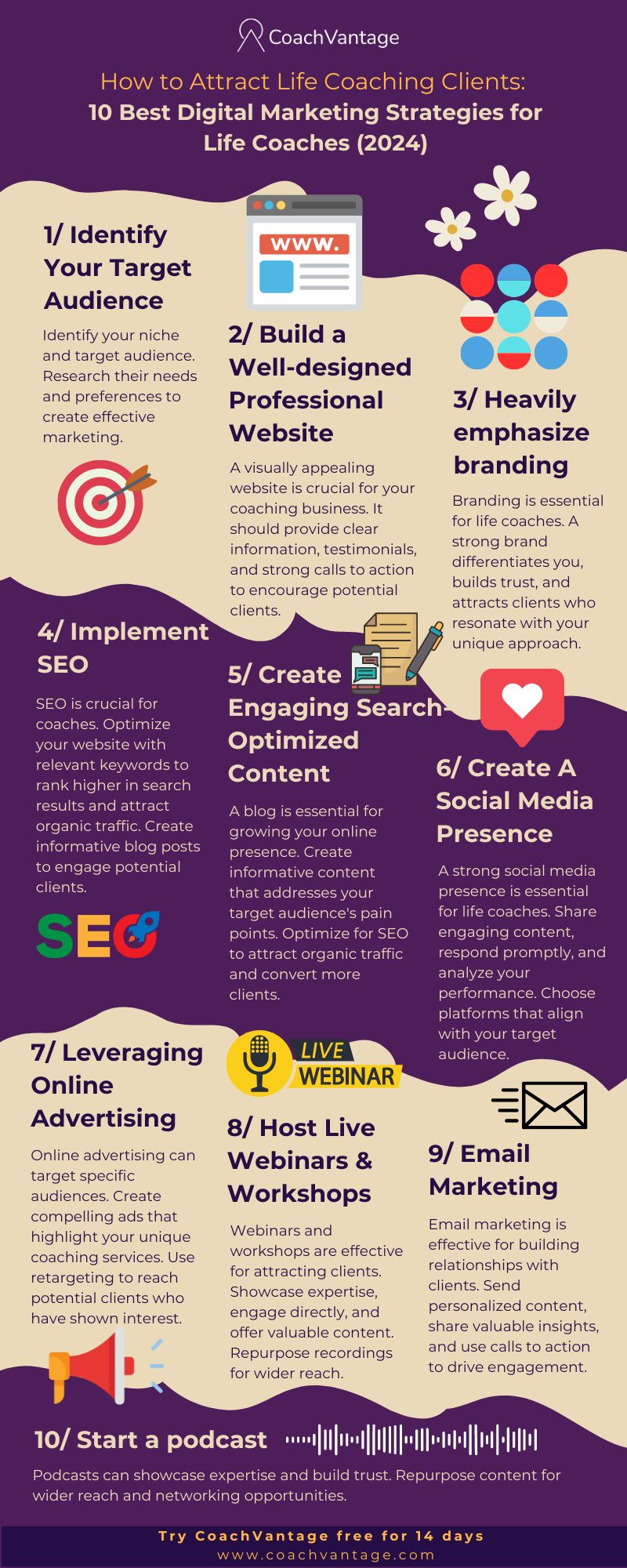
Establishing a robust online presence is critical for attracting and retaining clients in the life coaching business. Effective digital marketing strategies go beyond basic social media engagement. They require a multifaceted approach that includes a professional website, engaging content, and ongoing online reputation management.
%20(1).jpg)
Creating a Professional Website with SEO Optimization
A well-designed website is the cornerstone of a life coaching business’s online presence. Key elements to consider are:
- User-Friendly Design: Make sure the website is easy to navigate, featuring a clear layout and intuitive structure.
- SEO Optimization: Implement search engine optimization techniques to enhance visibility. Focus on relevant keywords related to life coaching — studies indicate that 93% of online experiences start with a search engine.
- Clear Calls to Action: Incorporate strong calls to action to guide visitors toward booking consultations or subscribing to newsletters.
Incorporating a blog section can further boost SEO efforts. Regularly updated content increases search rankings. Plus, it provides a platform to demonstrate expertise.
Utilizing Social Media Platforms Effectively
Social media platforms play a pivotal role in connecting with potential clients. Strategies for effective use include:
- Targeted Advertising: Use platforms like Facebook and Instagram to run targeted ad campaigns. These ads can specifically reach demographics interested in life coaching.
- Engagement: Foster community through regular interaction. Respond to comments, host live Q&A sessions, and share client success stories — this builds connection.
- Content Variety: Use a mix of posts, including motivational quotes, educational content, and behind-the-scenes glimpses of coaching sessions.
Research indicates that 54% of social browsers use social media to research products, underscoring the need for a strong presence on these platforms.
Engaging in Content Marketing through Blogs and Videos
Content marketing establishes authority and engages potential clients. Effective strategies include:
- Blogging: Write informative articles addressing common life challenges and coaching techniques. Consistent blogging can lead to a 434% increase in indexed pages — this is significant for SEO.
- Video Content: Use platforms like YouTube for video testimonials and coaching tips. Studies show that video content can increase conversion rates by up to 80% (this is often overlooked).
- Webinars: Host free webinars to showcase expertise and provide value while capturing leads.
Regular content creation not only enhances visibility but also builds trust with potential clients.
Leveraging Online Reviews and Testimonials
Online reviews significantly influence potential clients’ decisions. Strategies to leverage this include:
- Encouraging Reviews: Actively request satisfied clients to leave reviews on platforms like Google and Yelp.
- Showcasing Testimonials: Feature positive testimonials prominently on the website and social media. Visual testimonials, such as video reviews, can be especially compelling.
- Responding to Feedback: Engage with all reviews, whether positive or negative. This demonstrates a commitment to client satisfaction.
According to BrightLocal, 87% of consumers read online reviews for local businesses. This highlights the importance of a strong reputation.
Nuance / Expert Layer
A common misconception is that merely having an online presence guarantees client acquisition. Visibility is crucial — but the quality of engagement and authenticity of content matter significantly. Tailoring content to address specific pain points can lead to higher engagement rates. Furthermore, many life coaches underestimate the value of consistency in their online efforts. Regular updates and interactions are essential to maintain visibility and foster trust over time.
Practical Application
To effectively build a strong online presence, life coaches should:
- Develop a professional website optimized for SEO.
- Engage actively on social media, focusing on targeted advertising and community interaction.
- Create and regularly update a blog and video content that addresses client needs.
- Encourage and showcase online reviews to build credibility.
Implementing these strategies will enhance the ability to attract and retain clients for a life coaching business.
Networking and Building Relationships
This section dives into the significant role that networking plays in launching a successful life coaching business. It also offers practical strategies for creating meaningful connections that can lead to enduring client relationships.

Attending Industry Events and Workshops
Participating in industry events and workshops offers life coaches valuable chances to connect with potential clients and peers. Engaging in these settings builds a sense of community and boosts visibility. According to a 2024 survey by the International Coach Federation, 68% of coaches found significant business leads by attending workshops and networking events. That’s notable.
Joining Professional Coaching Organizations
- Membership in professional coaching organizations, like the International Coach Federation (ICF) or the Center for Credentialing & Education (CCE), gives access to resources, training, and networking opportunities.
- These organizations frequently host exclusive events, webinars, and forums that help forge connections with industry leaders and prospective clients.
- Being part of a recognized organization boosts credibility, attracting clients seeking reliable coaches.
Building Referral Relationships with Other Professionals
Establishing referral relationships with professionals in complementary fields is a smart way to grow a coaching practice. This can include therapists, nutritionists, or fitness trainers who may have clients in need of life coaching services. Creating a mutual referral system enhances trust and credibility — clients tend to seek services recommended by sources they already trust. A 2023 study revealed that 85% of clients find service providers through referrals, highlighting the value of these partnerships.
Utilizing Online Networking Platforms
Online networking platforms, particularly LinkedIn, are essential for life coaches looking to broaden their reach. Crafting a professional profile that showcases coaching credentials and success stories can draw potential clients. Participating in relevant groups and discussions allows coaches to position themselves as experts in their area. Statistics show that 80% of B2B leads come from LinkedIn — it’s a critical tool for building a client base.
Nuances in Networking
Many coaches overlook the impact of indirect networking. While direct connections matter, developing relationships with individuals who can influence potential clients is just as crucial. For instance, a coach may not directly collaborate with a corporate HR manager, but they can benefit from networking with people who sway hiring decisions for employee wellness programs. There’s also a common misconception that networking demands a large time investment — in reality, even small, consistent efforts can produce significant results over time (this is often overlooked).
Practical Application
- Identify and register for at least two industry events or workshops within the next six months.
- Join a professional coaching organization and actively participate in their events.
- Reach out to at least three professionals in related fields to discuss potential referral partnerships.
- Optimize your LinkedIn profile and connect with industry peers and potential clients by engaging in life coaching discussions.
By putting these strategies into action, life coaches can effectively build a network that attracts clients while also fostering long-lasting professional relationships needed for sustainable business growth.
Creating Compelling Offers and Free Sessions
Attracting potential clients through compelling offers and free sessions is crucial for building a successful life coaching business. These strategies not only showcase value, but they also foster trust and rapport with prospective clients.

Designing Free Workshops or Webinars
Free workshops and webinars are excellent platforms for showcasing coaching expertise. By delivering valuable content, coaches can engage participants and provide insights that resonate with their needs. These events should center on specific topics relevant to the target audience — think stress management, career transitions, or personal development. Notably, a 2024 survey found that 65% of participants in free workshops felt more inclined to pursue coaching services afterward.
Offering a Free Initial Consultation
A free initial consultation lets potential clients experience the coaching process without any financial commitment. This session aims to establish a connection and assess the client’s needs. During the consultation, coaches can outline their methodologies and show how they can help clients achieve their goals. Research suggests that 70% of clients who take advantage of a free consultation end up converting to paid sessions — illustrating the effectiveness of this approach.
Creating Limited-Time Discounts or Packages
Limited-time offers can create urgency and prompt potential clients to take action. By designing special packages that bundle services at a discounted rate, coaches can attract new clients while promoting long-term engagement. For example, a 20% discount on a three-month coaching package can encourage clients to commit to a longer coaching journey. It’s important to clearly communicate the deadline for these offers to bolster their impact.
Highlighting the Value of Coaching Through Case Studies
Demonstrating success stories through case studies can greatly influence potential clients’ decisions. By showcasing real-life transformations, coaches illustrate the tangible benefits of their services. Including specific metrics to quantify results — like percentage improvements in clients’ self-esteem or goal achievement rates — can be persuasive. According to recent data, case studies can boost conversion rates by up to 30%, making them a potent tool in client acquisition.
Nuance / Expert Layer
Many life coaches overlook the importance of follow-up communication after free sessions. A common belief is that one interaction suffices to convert a lead into a client. However, research reveals that 80% of sales require five follow-ups; unfortunately, most professionals stop after just one or two. Establishing a follow-up strategy that includes personalized emails or phone calls can notably enhance conversion rates and client retention. Moreover, tailoring follow-ups based on individual session feedback shows genuine interest and commitment to the client’s journey — a detail often missed.
Practical Application
- Plan and promote a free workshop or webinar within the next month, focusing on a relevant topic.
- Implement a free initial consultation offer and create a streamlined process for scheduling these sessions.
- Develop a limited-time discount package with clear terms and a deadline to encourage quick enrollment.
- Collect and present case studies that highlight client success stories, emphasizing measurable outcomes.
- Establish a follow-up system to engage potential clients after their free sessions, enhancing conversion opportunities.
Long-term Client Retention Strategies
Maintaining strong relationships with existing clients is vital for the longevity of a life coaching business. Implementing effective retention strategies enhances client satisfaction and fosters loyalty, which encourages clients to return and refer others.

Implementing Follow-up Strategies
Consistent follow-ups can greatly impact client retention. Establish a structured follow-up schedule to check in with clients after each session. This could be through emails, messages, or brief phone calls. Such gestures reinforce the relationship — showing clients that their progress matters.
- Send personalized emails to recap sessions and highlight key takeaways.
- Schedule periodic check-ins to assess goals and progress.
- Use automated reminders for upcoming sessions or milestones.
Creating a Community for Clients
Building a supportive community can enhance the client experience. Establishing a platform where clients can connect fosters a sense of belonging. This can be achieved through social media groups, forums, or regular meetups. A strong community encourages clients to share experiences — leading to deeper engagement.
- Host monthly group coaching sessions to facilitate shared learning.
- Create a private online group where clients can ask questions and share success stories.
- Organize networking events to strengthen connections among clients.
Offering Ongoing Support and Resources
Providing continuous support and resources helps clients feel valued. This could include access to exclusive content, such as webinars, articles, or e-books related to personal development. Tailored resources can address specific client needs (this is often overlooked) and reinforce the coaching relationship.
- Develop a resource library with tools and materials for self-improvement.
- Offer additional coaching packages or workshops for deeper learning.
- Provide access to guest speakers or experts in relevant fields.
Regularly Seeking Feedback and Adapting Services
Feedback is a powerful tool for improving client satisfaction. Regularly solicit input from clients regarding their experiences and desired outcomes. Utilize surveys or informal conversations to gather insights. This not only demonstrates commitment to their success but allows for service adaptation based on client needs.
- Conduct quarterly feedback surveys to assess client satisfaction.
- Implement changes based on feedback to enhance service offerings.
- Encourage open dialogue about what clients value most in their coaching journey.
While many coaches focus solely on acquiring new clients, retention strategies are equally crucial. A common misconception is that once a client is onboarded, the work is done. In reality, ongoing engagement is necessary. Studies show that businesses with high customer retention rates can see profits increase by 25% to 95%. Thus, prioritizing client relationships can lead to significant financial benefits.
To apply these strategies effectively, consider the following actionable steps:
1. Set a routine for follow-ups within 48 hours post-session.
2. Launch a dedicated online community platform within the next month.
3. Create and share new resource materials at least quarterly.
4. Schedule feedback sessions every three months to refine your offerings.
By implementing these practices, life coaches can foster lasting relationships. This ensures a steady flow of returning clients and referrals.
Frequently Asked Questions
What are the best marketing strategies for life coaches?
Effective marketing strategies for life coaches include leveraging social media platforms, creating valuable content, and networking within relevant communities. Additionally, utilizing email marketing and offering free workshops can attract potential clients.
How can I build a client base as a new life coach?
Building a client base as a new life coach involves establishing a strong online presence, offering free introductory sessions, and asking for referrals from satisfied clients. Engaging in local events and online forums can also help connect with potential clients.
What should I include in my life coaching website?
A life coaching website should include a clear description of services, client testimonials, a blog with relevant content, and an easy-to-use contact form. Additionally, incorporating a professional bio and a booking system can enhance user experience.
How much should I charge for life coaching services?
Life coaching fees can vary widely, typically ranging from $50 to $300 per hour, depending on experience and specialization. Researching competitors and considering your target market can help determine a competitive pricing strategy.
What are common mistakes to avoid in life coaching marketing?
Common mistakes in life coaching marketing include neglecting to define a target audience, failing to maintain an online presence, and not utilizing client testimonials effectively. Additionally, overpromising results can damage credibility and client trust.
Final Thoughts on how to get clients for life coaching business
Establishing a successful life coaching business hinges on a multifaceted approach that combines effective marketing strategies, robust online presence, and meaningful client relationships. By leveraging compelling offers and providing value through free sessions, coaches can attract and retain clients, ensuring long-term success in a competitive marketplace.
To take immediate action, develop a comprehensive marketing plan that incorporates social media engagement, targeted content creation, and strategic networking opportunities within your community to build credibility and visibility.
Discover how a google ads expert can transform your client acquisition strategy and help you build a thriving life coaching business today!
Implementing these strategies not only fosters client loyalty but also positions life coaches as essential partners in personal growth, thereby amplifying their impact in the lives of others.