

How to get clients for landscaping business involves implementing effective strategies to attract and retain customers. A strong online presence, strategic use of social media, and active community networking are essential for success. Notably, 70% of small businesses acquire clients through referrals, highlighting the importance of customer relationships.
Understanding how to attract clients is crucial for landscaping businesses seeking sustainable growth in a competitive market. With the landscaping industry projected to reach $115 billion in revenue by 2025, mastering client acquisition strategies can significantly impact a business’s bottom line. Failing to implement effective methods may result in missed opportunities and stagnated growth.
Without a solid grasp of these strategies, landscaping businesses risk losing potential revenue, wasting marketing resources, and falling behind competitors who effectively engage their target audience. The stakes are high, as inadequate client acquisition efforts can lead to a diminished market presence.
This article will provide actionable insights on proven strategies for acquiring clients, including a comparison of the most effective methods, an analysis of costs, best practices for local SEO, and tips for leveraging community relationships to drive business growth.
What are the best marketing strategies for landscaping businesses?
Effective marketing strategies for landscaping businesses include leveraging online platforms, focusing on local SEO, and engaging in community networking. About 70% of consumers search for local services online. A strong digital presence is crucial for attracting clients.
To successfully gain clients, landscaping businesses should concentrate on the following strategies:
- Optimize Your Website for Local SEO: Make sure your website is optimized for local search terms, such as “landscaping services in [Your City].” This means using relevant keywords and creating location-specific landing pages. Don’t forget to list your business on platforms like Google My Business.
- Utilize Social Media Marketing: Platforms like Instagram and Facebook are visual-heavy. They’re perfect for showcasing before-and-after photos of landscaping projects. Regularly post engaging content. Consider targeted ads to reach potential clients in your area — it can make a difference.
- Network with Local Businesses: Partner with local garden centers, real estate agents, or builders to create referral agreements. Attend community events to build relationships. This can increase visibility within your target market (this is often overlooked).
- Implement a Customer Referral Program: Encourage satisfied clients to refer friends and family by offering incentives, like discounts on future services. Word-of-mouth marketing can significantly boost your client base.
- Invest in Online Reviews and Testimonials: Actively solicit reviews from clients on platforms like Yelp or Google. Positive testimonials can influence potential customers and strengthen your business’s credibility.
Expert insight: Continuously analyze the performance of your marketing strategies using tools like Google Analytics. This data-driven approach allows for adjustments that can enhance effectiveness. It can also increase client acquisition.
How can I use social media to find landscaping clients?
Social media serves as a powerful tool for connecting with potential landscaping clients. By using platforms like Facebook, Instagram, and LinkedIn strategically, businesses can showcase their work and engage with the community. This attracts new customers. Recent data shows that over 70% of consumers use social media to research local services — a clear indicator of its importance in client acquisition.
To effectively leverage social media, follow these steps:
- Choose the Right Platforms: Focus on the platforms where your target audience is most active. Facebook and Instagram work particularly well for visual content. LinkedIn can help connect with commercial clients, too.
- Create Engaging Content: Post high-quality images and videos of your landscaping projects. Before-and-after photos work well to demonstrate transformations. Share landscaping care tips — this establishes authority.
- Utilize Local Targeting: Use geographic targeting features on platforms like Facebook to reach potential clients in your service area. Create ads that specifically highlight your services to local homeowners (this is often overlooked).
- Engage with the Community: Join local groups or forums related to home improvement or gardening. Actively participate by answering questions and sharing expertise. Avoid overtly advertising your services; subtlety is key.
- Encourage Customer Reviews: Ask satisfied clients to share their experiences on your social media profiles. Positive reviews enhance credibility and often attract new clients.
- Run Promotions or Contests: Organize social media contests or promotions that encourage sharing your content. This can boost visibility and engagement, drawing in new clients through referrals.
Using these strategies can significantly enhance visibility and engagement with potential clients. Consistency and authenticity in the social media presence are vital for building trust and attracting business.
Expert insight: Regularly analyze your social media metrics to understand which content performs best. This data-driven approach allows for continuous improvement and targeted marketing efforts — remaining adaptable is crucial.
What are common mistakes to avoid when getting landscaping clients?
Common mistakes include not defining a target market and not showcasing past work. About 60% of landscaping businesses that don’t specialize report lower client acquisition rates.
Many landscaping businesses enter the market without a clear grasp of their ideal clients. For instance, a general landscaping service might try to serve both residential and commercial clients without tailoring marketing efforts. This tends to dilute brand messaging — and confuse potential clients. By identifying a specific niche, like eco-friendly landscaping for homeowners or commercial maintenance for businesses, companies can better align services with target audience needs. The result is often higher engagement and better conversion rates.
Another frequent pitfall is underutilizing visual marketing. Landscaping is visual by nature, and potential clients are likely to respond to compelling images of completed projects. A company that doesn’t keep an updated portfolio or lacks a strong online presence can miss valuable opportunities. For example, a landscaping business that shares high-quality before-and-after photos on social media can greatly enhance its appeal. This attracts clients looking for similar transformations.
Expert insight: Invest in a professional portfolio and targeted marketing strategies to effectively communicate your unique value proposition — and attract your ideal clients.
How much should I budget for marketing my landscaping business?
Budgeting for marketing a landscaping business typically falls between 5% to 10% of projected annual revenue. For example, if the business expects to generate $100,000 in revenue, the marketing budget should range from $5,000 to $10,000.
Several factors impact the exact amount set aside for marketing. Key considerations include the target market, competition, and chosen marketing channels. Businesses aiming at high-end clients may need a larger budget for premium advertising — while those in competitive markets often must invest more in digital marketing strategies to stand out.
- Target Audience: Knowing the demographic and geographic characteristics of potential clients can shape marketing strategies and budgets.
- Marketing Channels: Different channels carry different costs. Digital marketing, like social media and search engine ads, often comes at a lower price compared to conventional methods like print or TV advertising (this is often overlooked).
- Brand Positioning: A well-established brand might spend less on marketing since it relies on word-of-mouth referrals. In contrast, a new business typically has to invest more heavily to gain brand recognition.
Regularly reviewing and adjusting the marketing budget based on performance metrics is vital. This keeps resource allocation aligned with successful strategies and changing business goals.
Expert insight: Use cost-effective strategies such as local SEO and community engagement events — these can maximize impact without overspending.
How long does it take to get clients for a landscaping business?
Typically, acquiring clients for a landscaping business takes anywhere from one to six months. This timeline can vary significantly due to factors such as marketing strategies, local demand, and seasonal trends.
Several factors influence how quickly clients can be acquired. Firstly, the effectiveness of marketing efforts is crucial. Businesses that use a mix of online marketing, social media, and local advertising tend to see faster results. For instance, landscaping companies with an active online presence often receive inquiries within weeks — that’s a major advantage. On the other hand, those relying solely on word-of-mouth might take longer to build a client base.
Secondly, geographic location and market saturation matter a great deal. In areas with high demand for landscaping services and fewer competitors, acquiring clients can happen more quickly. Conversely, in regions crowded with established landscaping businesses, standing out takes extra time and effort. Seasonal factors also play a role; spring and early summer are peak seasons for landscaping services, and businesses commonly see a surge in client inquiries during these months (this is often overlooked).
Expert insight: Building a strong local reputation through quality service and referrals can greatly reduce the time it takes to get clients. Focusing on customer satisfaction from the start will lead to repeat business and referrals — that’s essential for growth. Make sure to prioritize creating a portfolio of completed projects to showcase your work effectively.
What local SEO strategies are effective for landscaping businesses?
Effective local SEO strategies for landscaping businesses include optimizing Google My Business, leveraging local keywords, and building local backlinks. About 46% of all Google searches are local — this makes these techniques essential for attracting nearby clients.
To enhance visibility in local search results, landscaping businesses should prioritize the following best practices:
- Optimize Google My Business: Claim and complete your Google My Business (GMB) listing. Make sure the information is accurate, including the address, phone number, and operating hours. Use high-quality images of your landscaping projects to engage potential clients.
- Incorporate local keywords: Research and integrate keywords that reflect your services and location. Use tools like Google Keyword Planner to identify terms like “landscaping services in [City Name]” — and incorporate them naturally into your website content, meta tags, and headers.
- Encourage customer reviews: Actively solicit reviews from satisfied clients on Google and other review platforms. Positive reviews enhance your GMB ranking and build trust with potential customers. Aim for a mix of qualitative feedback and star ratings (this is often overlooked).
- Build local backlinks: Partner with local businesses or contribute to community events to earn backlinks from reputable local websites. This can boost your site’s authority and improve search ranking. Consider sponsoring local events or collaborating with real estate agents and garden centers.
- Create localized content: Develop blog posts or guides that address specific landscaping challenges in your area, such as seasonal planting tips or local pest control. This not only positions your business as an authority but also draws organic traffic from local searches.
Expert insight: Regularly monitor your GMB insights and website analytics to identify which strategies yield the best results. Adjust your local SEO efforts based on data-driven insights to maximize client acquisition opportunities.
How can referrals help in getting clients for landscaping?
Referrals are a powerful tool for acquiring clients in the landscaping business. They provide a trustworthy recommendation from a satisfied customer. Research shows that referred clients are 18% more likely to convert into paying customers than those acquired through traditional marketing channels.
Referrals tap into the trust built between existing customers and their networks. When a satisfied client shares their positive experience, it carries more weight than ads or promotions. This personal endorsement can lead to higher conversion rates. Often, it results in clients who are willing to pay a premium for services — knowing they come highly recommended. Plus, the cost of acquiring a new client through referrals is significantly lower. It can reduce marketing expenses by up to 50%.
- Client Loyalty: Clients who come through referrals often show greater loyalty. They’re more likely to return for additional services and refer others.
- Quality Leads: Referrals typically yield higher-quality leads. The new client is pre-sold on the landscaping business’s capabilities and reputation.
- Network Expansion: Each referral opens the door to an expanded network. This allows businesses to reach potential clients they may not have targeted otherwise.
To maximize the potential of referrals, landscaping businesses should establish structured referral programs. Offering incentives for clients who refer others can create a more robust referral pipeline. Additionally, maintaining strong relationships with existing clients through exceptional service and follow-up can encourage them to advocate on behalf of the business.
Expert insight: Building a reputation for high-quality work and excellent customer service is essential. These are the foundations of an effective referral system. Consider surveying clients after project completion to gauge their satisfaction levels (this is often overlooked) and encourage referrals at that moment when their positive experience is fresh.
Building a Strong Online Presence
Establishing a robust online identity is crucial for attracting clients to a landscaping business. This section outlines key strategies for creating a professional website, optimizing for search engines, engaging in content marketing, and leveraging online reviews.

Creating a Professional Website with Portfolio
A well-designed website acts as the digital storefront of any landscaping business. It needs a clean layout, simple navigation, and a strong brand identity. Including a portfolio section showcasing previous projects is vital — it can make a real difference. High-quality images of completed work demonstrate expertise and creativity. It’s noteworthy that 75% of consumers judge a company’s credibility based on its website design. Make sure the website is mobile-friendly, since over 50% of website traffic comes from mobile devices.
Utilizing SEO to Rank in Local Searches
Search Engine Optimization (SEO) plays a pivotal role in making a landscaping business visible to local clients. Implementing local SEO strategies includes:
- Using location-specific keywords in website content.
- Creating a Google My Business profile to enhance local search visibility.
- Incorporating schema markup to help search engines understand business details.
A study indicated that 46% of all Google searches are local — this emphasizes the need for landscaping businesses to effectively optimize their online presence for local clientele.
Engaging Content Marketing to Showcase Expertise
Content marketing allows landscaping businesses to highlight their knowledge and skills. Blogs, videos, and infographics provide valuable information on topics such as seasonal landscaping tips, plant care, and design trends. Engaging content not only attracts potential clients but also enhances SEO efforts. Regularly updating the website with fresh content can lead to a 434% increase in indexed pages, which improves visibility in search results.
Online Reviews and Testimonials for Credibility
Online reviews significantly influence consumer decision-making. Approximately 93% of consumers read online reviews before purchasing. Positive testimonials help build trust and credibility for a landscaping business. Encourage satisfied clients to leave reviews on platforms like Google, Yelp, and Facebook. Highlighting these reviews on the website can further enhance reputation and appeal to potential clients.
Nuance / Expert Layer
Many landscaping businesses overlook the importance of mobile optimization and local SEO in their marketing strategies. A common misconception is that simply having a website is enough. In reality, a website must work well for both desktop and mobile users to maximize reach. Additionally, many companies fail to actively engage with online reviews. Responding to both positive and negative feedback demonstrates professionalism and a commitment to customer satisfaction — this can genuinely influence potential clients.
Practical Application
To leverage the information provided, landscaping businesses should take the following steps:
- Develop a professional website that includes a portfolio of work.
- Implement local SEO practices to improve visibility in search results.
- Create and publish engaging content that showcases expertise.
- Actively manage online reviews and encourage satisfied clients to share their experiences.
By focusing on these strategies, landscaping businesses can effectively attract new clients and establish a strong online presence.
Networking and Community Engagement
Effective networking and community engagement are crucial for building a solid client base in the landscaping business. Establishing local connections and actively participating within the community can lead to increased visibility and trust. These elements are essential for attracting new clients.

Joining Local Business Groups and Associations
Engaging with local business groups and associations opens up valuable networking opportunities. Organizations such as the Chamber of Commerce or local trade associations frequently host events, workshops, and seminars that foster connections among business owners. Membership in these groups can lead to referrals and collaborative opportunities — enhancing credibility within the community.
Participating in Community Events and Expos
Community events and expos serve as excellent platforms for showcasing landscaping services. Participating in local fairs, home improvement shows, or gardening expos allows businesses to demonstrate expertise directly to potential clients. A 2024 survey revealed that 65% of consumers discovered local services through these kinds of events (this is often overlooked), underscoring their effectiveness in lead generation.
Building Relationships with Complementary Businesses
Forming partnerships with complementary businesses can amplify outreach efforts. Landscaping companies often collaborate with real estate agents, garden centers, or home improvement contractors. Such alliances can result in reciprocal referrals, boosting client acquisition for both parties. Developing a network of trusted partners enhances service offerings and provides clients with comprehensive solutions.
Leveraging Word-of-Mouth Marketing
Word-of-mouth marketing remains a highly effective method for attracting clients. A satisfied customer is likely to recommend services to friends and family. Studies from 2025 show that 83% of consumers trust recommendations from people they know — making this form of marketing invaluable. Landscaping businesses should actively seek customer feedback and testimonials to encourage referrals.
Nuances in Networking and Community Engagement
Many people assume networking is just about attending events or joining groups, but true engagement demands a strategic approach. Consistency in participation and genuine relationship-building are vital. Additionally, using digital platforms, such as social media, can bolster traditional networking efforts. Engaging with local community pages or groups online can extend reach and visibility beyond physical events. Misconceptions often arise regarding larger networks being more beneficial; however, smaller, focused groups can yield stronger relationships and greater referrals.
Practical Application
- Identify and join at least two local business groups or associations.
- Participate in community events, aiming to attend a minimum of four per year.
- Reach out to three complementary businesses to discuss referral partnerships.
- Request feedback and testimonials from clients regularly to boost word-of-mouth referrals.
Implementing these strategies will enhance visibility and foster lasting relationships within the community. This effectively addresses how to get clients for landscaping business.
Effective Use of Social Media Platforms
Social media platforms are powerful tools for acquiring clients in the landscaping business. This section explores how to select the right platforms, craft engaging content, leverage targeted advertising, and use analytics to enhance client acquisition strategies.
Choosing the Right Platforms for Landscaping
Identifying the most effective social media platforms is crucial for reaching potential clients. Here are a few platforms that work well for landscaping businesses:
- Instagram: With a strong visual focus, Instagram lets landscaping businesses showcase stunning project photos. This is especially effective for engaging a visually-driven audience.
- Facebook: As a versatile platform for community engagement, Facebook allows businesses to share updates, join local groups, and run targeted ads.
- Pinterest: This platform is perfect for sharing design inspiration and project ideas. It draws in users who are planning landscaping projects (this is often overlooked).
Creating Engaging Content That Attracts Followers
Engaging content is key for building a social media presence. Experts suggest these effective strategies:
- Visual Content: High-quality images and videos of completed projects can captivate potential clients. They also showcase expertise.
- Educational Posts: Sharing tips on lawn care, seasonal planting, or landscaping trends positions the business as a knowledgeable resource.
- Client Testimonials: Highlighting satisfied clients through quotes or video testimonials builds trust. This encourages others to seek services.
Statistics show that posts with images receive 94% more views than text-only posts. This underscores the importance of visual content in attracting followers.
Running Targeted Ads to Reach Potential Clients
Targeted advertising enhances visibility and often yields significant returns. Consider these approaches:
- Demographic Targeting: Use platforms like Facebook and Instagram to target ads based on location, age, and interests. This ensures they reach prospective clients.
- Retargeting Campaigns: Implement retargeting ads to engage users who have previously interacted with the website or social media profiles.
- Seasonal Promotions: Create ads for seasonal services, such as spring planting or fall clean-up. This captures seasonal demand.
In 2024, businesses investing in targeted social media advertising report a 35% higher customer acquisition rate compared to those that don’t.
Using Social Media Analytics to Refine Strategies
Analytics tools provided by social media platforms help track performance and optimize strategies. Key metrics to monitor include:
- Engagement Rate: Measure likes, shares, and comments to gauge content effectiveness.
- Follower Growth: Track increases in followers to identify successful campaigns and content types.
- Website Traffic: Use tools like Google Analytics to assess how social media efforts drive traffic to the website.
Regular analysis of these metrics enables landscaping businesses to refine their strategies. This ensures effective engagement with their target audience.
Many articles on social media marketing for landscaping businesses overlook the significance of audience segmentation. Tailoring content and ads to specific demographics enhances relevance and engagement. This ultimately leads to higher conversion rates. Additionally, businesses often underestimate the potential of user-generated content. Encouraging satisfied clients to share their project photos can significantly amplify reach and authenticity.
To leverage these insights, landscaping businesses should start by selecting 1-2 social media platforms that align with their target demographic. Develop a content calendar that mixes project showcases, educational posts, and client testimonials. Allocate a budget for targeted ads — making sure they are demographically and geographically precise. Finally, regularly review analytics to adapt strategies and maximize engagement. This can improve methods on how to get clients for a landscaping business.
Customer Retention and Referral Programs
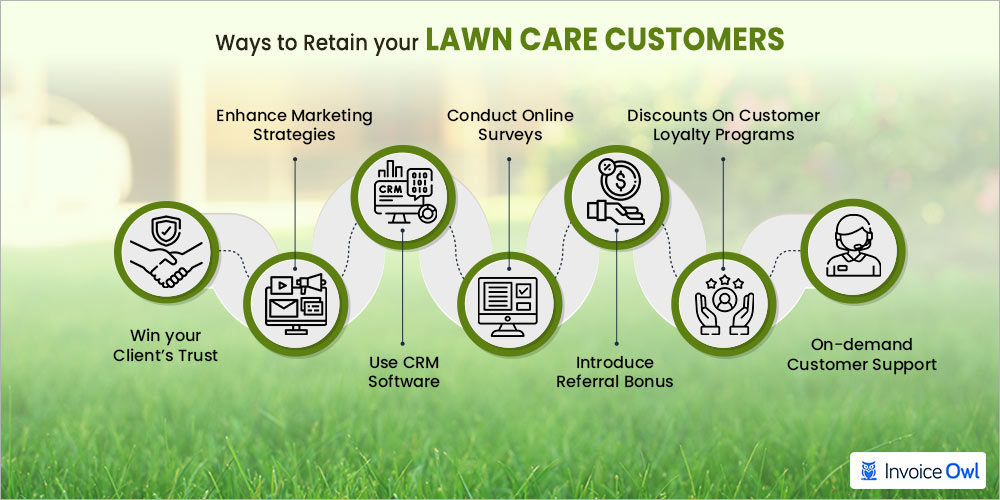
Effective customer retention and strong referral programs are vital for maintaining growth in a landscaping business. These strategies boost client loyalty and use satisfied customers to attract new business — creating a successful cycle of engagement.
Providing Exceptional Customer Service
Exceptional customer service is essential for keeping clients in the landscaping industry. This means timely communication, quick responses to inquiries, and a commitment to high-quality work. A study by the American Society of Landscape Architects (ASLA) found that 77% of clients view customer service as equally important as the service itself. Training staff to prioritize customer relations can greatly affect client satisfaction and retention rates.
Implementing Loyalty Programs for Repeat Business
Loyalty programs incentivize repeat business by rewarding customers for their ongoing patronage. Landscaping businesses can adopt several strategies, such as:
- Discounts on seasonal services after a specified number of jobs are completed.
- Referral bonuses for clients who refer new customers.
- Exclusive offers for long-term clients, like free consultations or additional services.
Recent market research indicates that businesses with loyalty programs often see repeat customer spending rise by up to 20% — making it a worthy investment for landscaping companies.
Encouraging Satisfied Customers to Leave Reviews
Online reviews heavily impact potential clients’ decisions. Encouraging satisfied customers to leave positive reviews on platforms such as Google, Yelp, or social media can boost a landscaping business’s credibility. Simple strategies to help with this include:
- Requesting reviews at the conclusion of a successful project.
- Providing links to review sites in follow-up emails.
- Offering small incentives, like discounts on future services, for leaving a review.
Research shows that 84% of people trust online reviews as much as personal recommendations — highlighting the significance of a strong online presence.
Creating Referral Incentives for Existing Clients
Referral incentives encourage existing clients to recommend services to friends and family. Establishing a structured referral program can generate increased business. Effective referral strategies include:
- Offering discounts on future services for both the referrer and the new client.
- Creating a tiered reward system where clients earn more significant rewards for multiple referrals.
- Promoting referral opportunities through newsletters and social media.
Data from industry surveys reveal that referred customers are 18% more likely to stay with a service compared to non-referred clients — making this a crucial strategy for acquiring new customers.
Many articles overlook the importance of personalized communication in retention strategies. A common misconception is that standard follow-ups are sufficient. Tailored communication that addresses specific client needs or preferences greatly increases the chances of repeat business. Understanding individual client histories and preferences allows for customized offers and services — fostering deeper client relationships.
To implement these strategies effectively, landscaping businesses should take the following actionable steps:
- Train staff on customer service best practices and set up communication protocols.
- Design a loyalty program with clear benefits, and make sure all clients are informed.
- Establish a system for soliciting and managing online reviews.
- Create a referral program with clear incentives and promote it through various channels.
By focusing on customer retention and referral programs, landscaping businesses can cultivate a loyal client base that not only returns for services but also actively promotes the business to new customers.
Local Strategies for Attracting Clients to Your Landscaping Business
Understanding local market dynamics is essential for any landscaping business looking to draw in clients. With 78% of local mobile searches leading to offline purchases, optimizing local visibility can greatly boost client acquisition efforts. This highlights the necessity of tailoring marketing strategies to fit the unique geographic and demographic characteristics of your target area.
Geographic Market Differences
In densely populated urban areas like Los Angeles or New York, landscaping businesses face tough competition. A unique value proposition is crucial — services like eco-friendly options or specialized garden designs can set a business apart. On the flip side, in smaller towns, the market may be less saturated. Businesses can more effectively harness community connections and word-of-mouth referrals. Understanding the competitive landscape is key to positioning services appropriately.
Local Business Applications
Local landscaping businesses can tap into their community presence and relationships to attract clients through a variety of strategies:
- Participating in local home and garden shows — this showcases services and connects directly with potential clients.
- Forming partnerships with local real estate agents to offer landscaping services to new homeowners.
- Using local social media groups to promote seasonal services and special offers tailored to community needs (this is often overlooked).
- Engaging in community events, like sponsoring local sports teams, to enhance brand visibility and goodwill.
Local Search and Visibility Impact
To effectively attract clients, landscaping businesses must enhance their local search visibility. This involves optimizing their Google Business Profile (GBP) and ensuring accurate local citations. Key actions include:
- Claim and verify your Google Business Profile to improve local search rankings.
- Encourage satisfied customers to leave positive reviews on your GBP — businesses with higher ratings tend to attract more clients.
- Use local keywords in your website content and blog posts to boost organic search visibility.
- List your business in local directories and confirm that NAP (Name, Address, Phone) information is consistent across all platforms.
Pricing and Cost in Local Markets
Pricing for landscaping services can vary widely based on geographic location. In metropolitan areas, rates can range from $50 to $150 per hour, while smaller towns may see rates from $30 to $80 per hour. Local businesses should plan for marketing and operational costs accordingly. Typically, it’s wise to allocate about 10-15% of revenue for local advertising efforts. National players may spend less proportionately due to broader reach.
Local Implementation Checklist:
- Claim and optimize your Google Business Profile.
- Encourage customer reviews and respond promptly.
- Participate in local events and community activities.
- Engage with local social media groups and forums.
- Use local SEO techniques on your website.
- Network with local real estate agents and businesses.
- Monitor competitors’ strategies and adjust your offerings as needed.
Frequently Asked Questions
What are the best marketing strategies for landscaping businesses?
Effective marketing strategies for landscaping businesses include local advertising, online presence through a professional website, and networking within the community. Utilizing targeted social media ads can also attract potential clients in specific neighborhoods.
How can I use social media to find landscaping clients?
Social media platforms like Instagram and Facebook are ideal for showcasing landscaping projects through photos and videos. Engaging with local community groups and sharing client testimonials can also help attract new clients.
What are common mistakes to avoid when getting landscaping clients?
Common mistakes include neglecting online presence and failing to follow up with leads. Additionally, underestimating the importance of customer service can deter potential clients from choosing your landscaping services.
How much should I budget for marketing my landscaping business?
A marketing budget for a landscaping business typically ranges from 5% to 10% of projected revenue. This budget should cover online advertising, print materials, and community sponsorships to effectively reach potential clients.
How long does it take to get clients for a landscaping business?
The timeline for acquiring clients can vary, but typically it takes 3 to 6 months to establish a solid client base. Consistent marketing efforts and networking can expedite this process.
What local SEO strategies are effective for landscaping businesses?
Effective local SEO strategies include optimizing your website with relevant keywords, creating a Google My Business profile, and gathering customer reviews. Additionally, local backlinks from community websites can enhance visibility in search results.
How can referrals help in getting clients for landscaping?
Referrals can significantly boost client acquisition as they leverage trust built through personal recommendations. Offering incentives for referrals can encourage satisfied clients to spread the word about your landscaping services.
Final Thoughts on how to get clients for landscaping business
Success in acquiring clients for a landscaping business hinges on a multifaceted approach that combines a robust online presence, strategic networking, and effective use of social media. By leveraging these strategies, businesses can not only attract clients but also build lasting relationships that foster loyalty and referrals.
To take immediate action, invest in a professional website that showcases your portfolio and client testimonials, ensuring it is optimized for local SEO to enhance visibility in search results.
Ready to boost your landscaping business? Consider partnering with a google ads expert to attract more clients and grow your brand effectively.
In a competitive market, mastering client acquisition is not just beneficial; it is essential for sustainable growth and long-term success in the landscaping industry.