

How to get clients as a therapist involves strategies that emphasize establishing a robust online presence, networking with other professionals, and leveraging social media for outreach. This approach is essential as research indicates that 70% of clients find therapists through online searches, highlighting the critical role of digital marketing in attracting new clients.
Understanding how to get clients as a therapist is crucial for sustaining and growing a successful practice. Therapists must effectively navigate a competitive landscape where online visibility and professional connections can significantly influence client acquisition. Failing to adopt effective client outreach strategies can result in lost opportunities, as the mental health industry continues to expand and evolve.
Inadequate grasp of client acquisition strategies can lead to substantial financial losses, inefficient use of marketing resources, and a significant competitive disadvantage in a saturated market. Therapists who do not prioritize these strategies risk stagnation and reduced client engagement.
This article will cover proven strategies for attracting clients, including the importance of building a strong online presence, effective networking techniques, and best practices for utilizing social media. Readers will gain insights into optimizing their outreach efforts and enhancing their visibility in the marketplace.
What are effective marketing strategies for therapists?
Effective marketing strategies for therapists include using social media, networking with other professionals, and listing services on online directories. Research indicates that 70% of therapists gain clients through referrals — this highlights the importance of building relationships.
Social media platforms, including Facebook, Instagram, and LinkedIn, can significantly boost visibility. Therapists should create engaging content tailored to their target audience. This might include informative posts, videos, or even live Q&A sessions. Regular interaction with followers fosters trust and credibility. Aim for a consistent posting schedule — ideally 3-5 times per week — to keep engagement high.
- Networking: Attend local events, workshops, or conferences to connect with other healthcare professionals. Building relationships with physicians, schools, and community organizations can lead to valuable referrals.
- Online Directories: List practices on platforms like Psychology Today or TherapyDen. These directories are often the first stop for potential clients searching for therapists. Confirm that profiles are detailed, featuring specialties, services, and client testimonials (this is often overlooked).
- Email Marketing: Develop a newsletter with helpful mental health tips and updates about services. This can keep former clients engaged and encourage referrals.
- Search Engine Optimization (SEO): Optimize your website for search engines by using relevant keywords. Think about creating a blog that addresses common mental health concerns to improve search visibility and attract new clients.
Expert insight: Consistently analyze the effectiveness of each marketing strategy. Use tools like Google Analytics to track website traffic and engagement metrics — this allows for data-driven adjustments to your approach.
How can therapists use social media to attract clients?
Therapists can effectively use social media to attract clients by creating engaging content and interacting with potential clients. Approximately 70% of consumers report using social media to research health-related information. This makes it a vital platform for outreach and connection.
To leverage social media successfully, therapists should focus on crafting content that resonates with their target audience. This includes sharing informative posts about mental health topics, offering tips for self-care, and providing insights into therapy practices. Visual content, such as infographics and videos, is particularly engaging — and shareable, too. Using platforms like Instagram and Facebook allows therapists to humanize their practice and establish a relatable online presence.
- Identify your target audience: Make sure to understand who your ideal clients are. Tailor your content to their needs and interests.
- Create valuable content: Share blog posts, videos, and quotes that educate and inspire. Aim for consistency in posting; this helps build a following.
- Engage with your audience: Respond promptly to comments and messages. This interaction fosters a sense of community — and trust.
- Utilize hashtags and local targeting: Use relevant hashtags to increase visibility. Consider location-based targeting to reach potential clients in your area.
- Collaborate with other professionals: Partner with local healthcare providers or influencers. This can expand your reach and enhance credibility.
Social media isn’t just about promotion; it’s about building relationships. Engaging authentically can lead to referrals — and a stronger client base.
Expert insight: Regularly analyze engagement metrics to refine your strategy. Focus on what content resonates most with your audience, (this is often overlooked) to optimize outreach efforts.
What are common mistakes therapists make when trying to get clients?
Common mistakes therapists make when trying to attract clients include neglecting their online presence and failing to network effectively. A survey by the American Psychological Association found that 40% of clients locate their therapists through online searches. This highlights the need for a strong digital footprint.
One major pitfall is not having an updated website or social media presence. An outdated website with broken links and minimal content can deter potential clients. A well-designed site, on the other hand, featuring relevant information, client testimonials, and a blog can boost credibility and draw in more inquiries. Therapists often underestimate social media’s power for networking and client engagement. By not actively participating in online communities or sharing valuable content, they miss chances to connect with potential clients. Building a professional network is crucial — don’t overlook this aspect.
Another frequent mistake is not taking advantage of professional networking opportunities. Attending local workshops or joining professional organizations can lead to referrals. A therapist who isolates themselves from their community might miss vital connections that could result in new clients. Establishing relationships with other healthcare providers can prove beneficial; for instance, a physician may refer patients dealing with mental health issues if they know of a therapist specializing in that area.
Expert insight: Invest time in enhancing your online presence and engage in community networking. These strategies can significantly increase your visibility and client base.
How much should therapists spend on marketing?
Therapists should allocate between 5% to 15% of their annual revenue for marketing efforts. For example, a therapist earning $100,000 annually should consider a marketing budget of $5,000 to $15,000. The exact amount can vary depending on specific circumstances and goals.
Several factors influence a therapist’s marketing costs. Key elements include the type of marketing strategies used, geographic location, and target audience. Each of these can significantly impact both the required budget and the expected return on investment (ROI). Important cost factors are:
- Marketing Channels: Digital marketing, print advertising, and networking events come with different costs. Online ads often necessitate ongoing investment, while local workshops might incur one-time expenses.
- Brand Development: Creating a professional website, logo, and marketing materials can require a significant upfront investment. However, these assets are crucial for establishing credibility.
- Competition: In areas with many therapists, greater spending on marketing may be required to stand out. In less saturated markets, a smaller budget can often suffice.
Monitoring ROI is key for understanding the effectiveness of marketing efforts. Therapists should track metrics like client acquisition costs and conversion rates. This helps evaluate which strategies yield the best results. Adjusting the marketing budget based on these insights can lead to more efficient spending and improved client acquisition outcomes.
Expert insight: Focus on low-cost, high-impact strategies such as networking and community engagement — especially when starting out. Regularly assess and tweak marketing strategies based on performance data. This ensures sustainable growth (this is often overlooked).
How long does it take to build a client base as a therapist?
Building a client base as a therapist usually takes anywhere from six months to two years. This timeline varies widely depending on factors like location, marketing strategies, and networking efforts.
Several factors influence how quickly a therapist can attract clients. The local demand for mental health services is crucial. In urban areas with a higher population density, therapists may secure clients more quickly. Rural settings might not offer the same pace — demand can be lower here. Moreover, therapists who focus on high-demand areas, such as trauma or anxiety, often see faster client acquisition.
Marketing strategies have a significant impact on this timeline. Therapists who invest in digital marketing, like a professional website and a social media presence, tend to attract clients more rapidly. Engaging in community outreach and networking with other healthcare providers can help too. Offering workshops or informational sessions enhances visibility and credibility as well, which can speed up client acquisition. Additionally, word-of-mouth referrals from satisfied clients can lead to a quicker expansion of a client base.
Expert insight: Therapists should continuously evaluate their marketing efforts and adapt based on client feedback and market conditions. Regularly updating skills and knowledge can also boost client retention. This can attract new clients more efficiently (this is often overlooked).
Building a Strong Online Presence
A strong online presence is essential for therapists who want to attract and keep clients. This section explains how to build a professional website, optimize it for search engines, create valuable content, and use online directories and reviews.
.png)
The Importance of a Professional Website
A well-designed website is the foundation of a therapist’s online presence. It functions as a digital business card, providing key information about services, qualifications, and contact details. A professional website should be visually appealing, user-friendly, and mobile-responsive—over 60% of web traffic comes from mobile devices as of 2024.
Moreover, having a website boosts credibility. Research shows that 75% of users assess a company’s credibility based on its website design. So, investing in quality web development is crucial for building trust with potential clients.
SEO Basics for Therapists
Search Engine Optimization (SEO) raises the visibility of your website on search engines. Key SEO practices include:
- Keyword Research: Identify terms potential clients use, such as “therapy for anxiety” or “relationship counseling.”
- On-Page SEO: Optimize website elements like title tags, meta descriptions, and headers with relevant keywords.
- Local SEO: Make sure your practice shows up in local searches by claiming your Google My Business listing and optimizing for local keywords.
Roughly 70% of consumers prefer learning about a business through articles rather than ads, which makes SEO a key component of online visibility.
Creating Valuable Content for Potential Clients
Content marketing is a strong method to engage potential clients. Creating blog posts, articles, or videos that address common mental health questions can establish a therapist as an authority in their field. For instance, a blog post titled “Coping Strategies for Anxiety” can draw in visitors looking for solutions.
Therapists should also think about including client testimonials and case studies in their content. These elements not only boost credibility but also offer relatable experiences for prospective clients.
Utilizing Online Directories and Reviews
Online directories like Psychology Today, GoodTherapy, and TherapyDen provide valuable platforms for therapists to list their services. These directories help increase visibility and connect therapists with clients actively seeking help. Confirm that your profile is complete, showcasing your specialties and approach.
Reviews have a significant impact on client decisions. Around 84% of people trust online reviews as much as personal recommendations. Encourage satisfied clients to leave positive reviews, and make sure to respond to all reviews—both positive and negative—to show engagement and professionalism.
Many therapists miss the finer points of online marketing. A common misconception is that just having a website suffices. In reality, ongoing SEO efforts and regular content updates are vital for maintaining visibility. Understanding local SEO specifics can greatly enhance your practice’s reach within your community.
To effectively build a strong online presence, therapists should:
- Create a professional, user-friendly website.
- Implement SEO strategies with a focus on relevant keywords and local optimization.
- Produce valuable content that addresses the needs and concerns of potential clients.
- Leverage online directories and actively manage client reviews.
Following these actionable steps can help therapists boost their online visibility and effectively attract clients.
Networking and Community Involvement
Building a strong network and engaging with the community is crucial for therapists aiming to attract clients. Solid professional and personal relationships can lead to referrals, boost visibility, and nurture trust among potential clients.
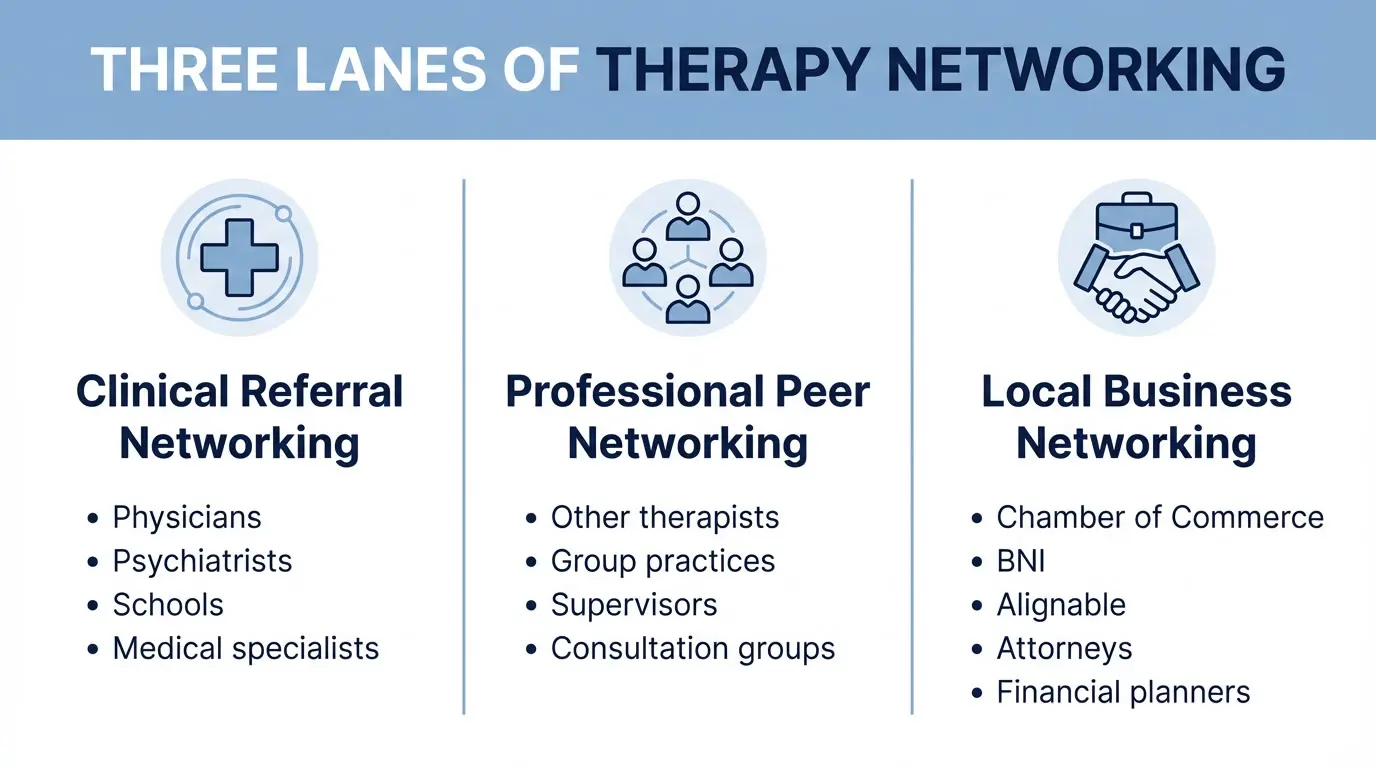
Joining Professional Organizations
Becoming a member of professional organizations like the American Psychological Association (APA) or the National Association of Social Workers (NASW) grants access to valuable resources. These organizations frequently host networking events, provide continuing education opportunities, and maintain directories that potential clients may refer to. Membership can also enhance credibility — many clients see professional affiliations as a sign of quality. In 2024, about 65% of therapists reported securing client referrals through these professional networks.
Attending Workshops and Conferences
Participating in workshops and conferences is an effective means to meet peers and form connections within the mental health community. These events usually showcase sessions on the latest therapeutic techniques, which can improve clinical skills while offering networking opportunities. Engaging in discussions and exchanging insights at these gatherings can position therapists as knowledgeable leaders in their field. According to a 2025 survey, 70% of attendees at such events reported forming valuable professional relationships — which often led to client referrals.
Collaborating with Other Healthcare Providers
Forming partnerships with other healthcare professionals, such as physicians, psychologists, and social workers, can significantly expand referral networks. Therapists should aim to establish relationships with general practitioners who can refer patients in need of mental health services. Setting up a reciprocal referral system can enhance client acquisition. A 2026 study revealed that therapists collaborating with primary care providers experienced a 40% increase in client referrals compared to those who did not.
Volunteering in Community Mental Health Initiatives
Active participation in community mental health initiatives shows commitment and allows therapists to connect with individuals who could benefit from their services. Volunteering can take many forms — for instance, providing workshops at schools or participating in local health fairs. These activities can boost visibility and position therapists as approachable resources in their communities. Data from the National Alliance on Mental Illness (NAMI) indicates that 55% of clients found their therapists through community outreach programs.
Nuance / Expert Layer
Many therapists undervalue informal networking opportunities. Casual interactions at local events, social gatherings, or even online forums can lead to significant referrals. Moreover, some therapists mistakenly think an online presence alone suffices for client acquisition. While digital marketing strategies are useful, they can’t replace the trust and relationships built through face-to-face interactions. Engaging with the community on a personal level can foster more sustainable client relationships compared to relying entirely on online platforms.
Practical Application
- Identify at least three professional organizations relevant to your practice and apply for membership.
- Plan to attend at least two workshops or conferences within the next year to expand your network.
- Reach out to local healthcare providers to discuss potential collaboration opportunities.
- Volunteer for community mental health initiatives to increase visibility and build relationships.
Leveraging Social Media Effectively
Social media is a powerful tool for therapists. It helps connect with potential clients, build a brand, and establish a professional presence. By effectively using these platforms, therapists can boost their visibility and draw in clients seeking their services.

Choosing the Right Platforms for Your Practice
Selecting the right social media platforms is crucial for reaching the target audience. Different platforms cater to various demographics and content types. Consider the following:
- Facebook: Ideal for community building and sharing longer, informative posts.
- Instagram: Focuses on visual content; perfect for engaging storytelling and quotes.
- LinkedIn: Best suited for professional networking and sharing industry-related insights.
- TikTok: An emerging platform for short, engaging video content — it’s great for younger audiences.
Research shows that as of 2024, about 78% of adults aged 18-29 use Instagram. This makes it a prime platform for connecting with younger clients seeking therapy.
Creating Engaging and Informative Content
Content is the cornerstone of social media engagement. Therapists should focus on producing valuable and relevant content that resonates with potential clients. Consider these strategies:
- Educational Posts: Share insights on mental health topics, coping strategies, and resources.
- Personal Stories: Use anonymized case studies or personal anecdotes to humanize your practice.
- Live Q&A Sessions: Host live sessions to answer common mental health questions — engage directly with your audience.
According to a 2023 survey, 67% of consumers prefer engaging with brands that offer educational content (this is often overlooked).
Building a Community and Interacting with Followers
Active engagement can foster a sense of community among followers. Therapists should prioritize interaction by:
- Responding to Comments: Engage with followers by answering questions and acknowledging feedback.
- Creating Polls and Surveys: Use these tools to understand audience interests — and preferences.
- Joining Relevant Groups: Participate in discussions within Facebook groups or forums related to mental health.
A thriving online community increases referral potential. Engaged followers are more likely to recommend services to others.
Using Targeted Ads to Reach Potential Clients
Paid advertising can significantly enhance visibility on social media. Targeted ads let therapists reach specific demographics based on location, interests, and behaviors. Key steps include:
1. Define your target audience based on demographics and interests.
2. Create compelling ad content that highlights your expertise and services.
3. Monitor ad performance and adjust strategies based on engagement metrics.
In 2024, social media ad spending is projected to exceed $200 billion, indicating the effectiveness of this approach in reaching potential clients.
Many therapists may underestimate social media’s power. However, successful engagement requires strategic planning and consistent effort. Common misconceptions include the belief that social media is only for personal use or that it’s ineffective for professional services. When used thoughtfully, social media can create lasting connections — enhancing a therapist’s practice.
To implement these strategies effectively, therapists should start by selecting 1-2 platforms that align with their target demographic. Develop a content calendar to ensure a regular posting schedule, focusing on diverse content types. Engage with followers through comments and live sessions to build community. Lastly, consider investing in targeted ads to increase reach and visibility. This way, your practice is positioned to attract clients actively seeking therapy services.
Evaluating Your Marketing Efforts
Assessing the effectiveness of marketing strategies is crucial for therapists looking to attract and retain clients. This process includes setting clear goals, using analytics tools, and making data-driven adjustments to enhance outcomes.
Setting Measurable Goals
Establishing measurable goals sets a benchmark for evaluating marketing success. Consider employing the SMART criteria: goals should be Specific, Measurable, Achievable, Relevant, and Time-bound. For instance, aim to increase client inquiries by 20% within six months. This clarity helps therapists track progress effectively—adjusting marketing tactics becomes easier.
Using Analytics Tools to Track Performance
Implementing analytics tools is essential for understanding how well various marketing channels perform. Google Analytics, social media insights, and customer relationship management (CRM) software can yield valuable data on client engagement and conversion rates. Key performance indicators (KPIs) worth monitoring include:
- Website traffic and sources
- Conversion rates from inquiries to appointments
- Client demographics and behavior patterns
According to a 2024 report, practices using analytics tools experienced a 30% increase in client retention rates compared to those that did not (this is often overlooked).
Adjusting Strategies Based on Feedback and Results
Regularly reviewing marketing performance allows therapists to refine their strategies. Collect feedback from clients through surveys or informal conversations to gauge their perceptions of marketing efforts. If a particular channel underperforms—like social media ads with low engagement—consider reallocating resources to more effective methods, such as community workshops or referral programs.
Understanding Client Acquisition Costs
Calculating client acquisition costs (CAC) is vital for evaluating marketing efficiency. CAC is found by dividing total marketing expenses by the number of new clients acquired in a specific period. For example, if a therapist spends $2000 in a month and gains 10 new clients, the CAC is $200. Keeping this figure low while ensuring high-quality client interactions is crucial for sustainable practice growth.
Moreover, industry benchmarks suggest that ideal CAC for mental health professionals should not exceed 15-20% of the average client revenue. This metric helps therapists confirm their marketing investments yield viable returns.
Nuance / Expert Layer
Many therapists mistakenly think that high visibility leads directly to client acquisition. In reality, the quality of engagement often outweighs quantity. A targeted marketing campaign that resonates with a specific demographic can outperform broad outreach. Understanding the nuances of the target audience—such as their preferred communication channels and pain points—can significantly enhance marketing effectiveness. Additionally, relying solely on digital marketing without incorporating personal referrals can limit potential client reach.
Practical Application
To effectively evaluate marketing efforts, therapists should:
- Set specific, measurable goals aligned with practice growth.
- Use analytics tools to track KPIs and client engagement.
- Gather client feedback regularly to identify areas for improvement.
- Calculate and monitor client acquisition costs to ensure marketing efficiency.
Implementing these strategies will enable therapists to optimize their marketing efforts and attract clients effectively.
Frequently Asked Questions
What are effective marketing strategies for therapists?
Effective marketing strategies for therapists include networking with other professionals, creating a user-friendly website, and utilizing online directories. Additionally, offering workshops or free resources can enhance visibility and attract potential clients.
How can therapists use social media to attract clients?
Therapists can attract clients through social media by sharing informative content, engaging with their audience, and showcasing their expertise. Utilizing platforms like Instagram and Facebook allows for targeted advertising and community building.
What are common mistakes therapists make when trying to get clients?
Common mistakes include neglecting to define a niche, failing to maintain an online presence, and not following up with leads. Many therapists also underestimate the importance of marketing and may rely solely on referrals.
How much should therapists spend on marketing?
Therapists should allocate around 5-10% of their annual income for marketing efforts. This budget can vary based on individual goals and the specific marketing channels utilized.
How long does it take to build a client base as a therapist?
Building a client base as a therapist typically takes six months to a few years, depending on marketing efforts and networking. Consistent outreach and client engagement can significantly accelerate this process.
Final Thoughts on how to get clients as a therapist
Establishing a robust client base as a therapist hinges on a multifaceted approach that integrates effective marketing strategies, engaging social media practices, and active community involvement. By prioritizing these elements, therapists can create a sustainable flow of clients that not only enhances their practice but also fosters a profound impact in their communities.
To take immediate action, therapists should develop a comprehensive marketing plan that includes a well-designed website optimized for search engines and a consistent social media presence to attract and connect with potential clients.
Ready to elevate your practice? Consider consulting a google ads expert to help you connect with more clients effectively.
Building a successful therapy practice is not merely about gaining clients; it is about cultivating meaningful relationships that facilitate healing and growth.