
How to get new clients as a financial advisor involves strategies such as enhancing online visibility, engaging in networking opportunities, and providing valuable educational content. Research indicates that 80% of clients prefer financial advisors who offer educational resources, making this approach crucial for attracting and retaining clients.
Understanding how to attract new clients is essential for financial advisors in a competitive marketplace. With the financial advisory industry projected to grow significantly, advisors must leverage effective strategies to stand out. Failure to do so can result in lost opportunities and diminished client trust.
Neglecting to master client acquisition can lead to significant financial losses, wasted marketing resources, and a weakened competitive position in the industry. Advisors who do not adapt to evolving client expectations risk falling behind their peers.
This article will explore proven methods for acquiring new clients as a financial advisor, including best practices for building an online presence, networking strategies, and the importance of delivering educational content to potential clients.
What are the best ways to attract new clients as a financial advisor?
Effective strategies for attracting new clients include leveraging digital marketing, establishing a strong referral network, and participating in community events. Data shows that financial advisors using a multi-channel approach can boost client acquisition rates by as much as 30% within a year.
Using digital marketing tactics is crucial for reaching potential clients. This includes optimizing a professional website for search engines and creating engaging content that addresses common financial concerns. Don’t overlook the power of social media platforms to connect with prospective clients. Investing in targeted online advertising can help reach specific demographics aligned with your ideal client profile.
- Build a referral network: Develop relationships with professionals like accountants, attorneys, and real estate agents. These individuals often encounter clients who might need financial guidance — and they can refer them to you.
- Host educational workshops: Organize seminars or webinars on relevant financial topics. This positions you as an expert and lets potential clients experience your knowledge firsthand.
- Engage in community involvement: Participate in local events, charity functions, or business expos. Being present in your community boosts your visibility and builds trust among potential clients.
Expert insight: Tailor your marketing messages to address the specific needs and concerns of your target audience. Personalized communication can significantly improve engagement and conversion rates (this is often overlooked).
How can social media help financial advisors get new clients?
Social media is a powerful tool for financial advisors, helping them engage with potential clients and generate leads. In fact, 73% of financial advisors reported acquiring new clients through social media platforms in 2024. This clearly indicates its growing importance in client acquisition strategies.
First, social media enables financial advisors to showcase their expertise and build trust with potential clients. By sharing insightful content — like articles, videos, and infographics — advisors can effectively demonstrate their knowledge in personal finance, investment strategies, and market trends. This content not only positions them as thought leaders but also attracts followers who might eventually seek their services.
Second, social media platforms facilitate direct interaction with potential clients. Financial advisors can engage with users by responding to comments, participating in discussions, and hosting live Q&A sessions. Such interaction fosters a sense of community and personal connection. This, in turn, can lead to stronger relationships and increased client inquiries.
- Identify Your Target Audience: Understand who your ideal clients are. Tailor your content to their specific interests and needs.
- Leverage Multiple Platforms: Use platforms like LinkedIn for professional networking, Facebook for community engagement, and Instagram for visual storytelling.
- Create Consistent Content: Regularly post valuable content that addresses common financial questions or concerns. This positions you as a reliable source of information.
- Utilize Paid Advertising: Consider using targeted ads to reach specific demographics. This can enhance your visibility among potential clients.
- Monitor Engagement: Track metrics such as likes, shares, and comments to understand what resonates with your audience. This helps refine your approach.
Expert insight: Financial advisors should prioritize building a personal brand on social media. Authenticity can significantly enhance client trust and loyalty. Regularly engaging with followers and being transparent about services is crucial. This can set advisors apart in a competitive landscape.
What common mistakes do financial advisors make when trying to get new clients?
Financial advisors often make critical mistakes that hinder their ability to acquire new clients. One significant error is failing to clearly define their target market — this can lead to wasted resources and ineffective marketing strategies. According to a 2024 survey, 63% of advisors reported struggling to connect with potential clients due to vague audience targeting.
A common scenario involves a financial advisor launching a broad marketing campaign without identifying specific demographics. For instance, an advisor might invest in social media ads targeting “individuals interested in financial services.” They often neglect to consider age, income level, or life stage. This approach results in low engagement rates and minimal client conversions, as the messaging fails to resonate with potential clients requiring tailored advice for retirement planning or wealth management (this is often overlooked).
Another frequent mistake is prioritizing sales over relationship-building. Advisors who focus on transactional interactions rather than fostering genuine connections often miss opportunities for long-term client relationships. For example, an advisor may concentrate solely on closing deals during initial meetings. They might neglect to listen to clients’ unique financial goals and concerns. This transactional approach can lead clients to seek more personalized service from competitors — limiting the advisor’s potential for growth.
Expert insight: To successfully attract new clients, financial advisors should invest time in understanding their ideal client profiles. Make sure to focus on building trust through personalized, value-driven interactions.
How long does it typically take to acquire new clients as a financial advisor?
Acquiring new clients as a financial advisor usually takes about three to six months. Of course, this timeframe can vary greatly depending on several factors, including the advisor’s marketing strategies and networking efforts, as well as the demographics of the target client base.
Several factors play a role in the length of the client acquisition process. First, effective marketing tactics are crucial. Advisors who embrace digital marketing, social media, and targeted advertising often see quicker results. In contrast, those who stick to traditional methods may lag behind. Additionally, networking and referrals can speed things up; advisors who build strong community relationships frequently enjoy a steady stream of referrals — which shortens the acquisition timeline.
The target market also impacts how fast clients are acquired. For example, advisors who focus on high-net-worth individuals often face a longer sales cycle. These clients usually conduct extensive due diligence before committing to a financial advisor. On the other hand, those targeting younger clients or small business owners might experience a quicker process, as these groups tend to be more receptive to new advisors.
Expert insight: Building a strong personal brand and a solid online presence can drastically cut down client acquisition time. Regularly engaging with potential clients through educational content is also beneficial — it fosters trust and encourages quicker decision-making.
What is the cost of acquiring new clients for financial advisors?
The cost of acquiring new clients for financial advisors usually falls between $1,000 to $3,500 per client. This number shifts depending on the strategies used and the conditions of the market. Some advisors even report higher costs based on their specific strategies and target demographics.
Several factors impact the total client acquisition cost for financial advisors. These include:
- Marketing Strategies: Traditional methods like print advertising, seminars, and networking are often pricier than digital strategies—think social media advertising and email campaigns.
- Target Audience: The more niche or affluent a target market, the greater the potential costs. Advisors focused on high-net-worth individuals often spend significantly more on personalized outreach and branding.
- Geographic Location: Costs can vary greatly by region. Urban areas usually have higher competition and marketing expenses than rural ones (this is often overlooked).
- Technology and Tools: Investing in CRM systems, marketing automation, and analytics tools can increase initial costs. However, these investments often lower long-term expenses by boosting efficiency.
- Referral Programs: Using referral incentives for current clients can be a cost-effective approach. It does require an initial investment in rewards and materials.
Additionally, the experience level and reputation of the financial advisor matter. More seasoned advisors might find that their brand equity helps reduce client acquisition costs since they benefit from word-of-mouth referrals and a strong reputation.
Expert insight: To optimize client acquisition costs, financial advisors should regularly assess how effective their marketing channels are. Adjusting strategies based on performance metrics can lead to a higher return on investment over time.
Leveraging Digital Marketing for Client Acquisition
This section explores advanced digital marketing techniques specifically designed for financial advisors. These methods are crucial for attracting and retaining clients.
Utilizing SEO and Content Marketing to Attract Organic Leads
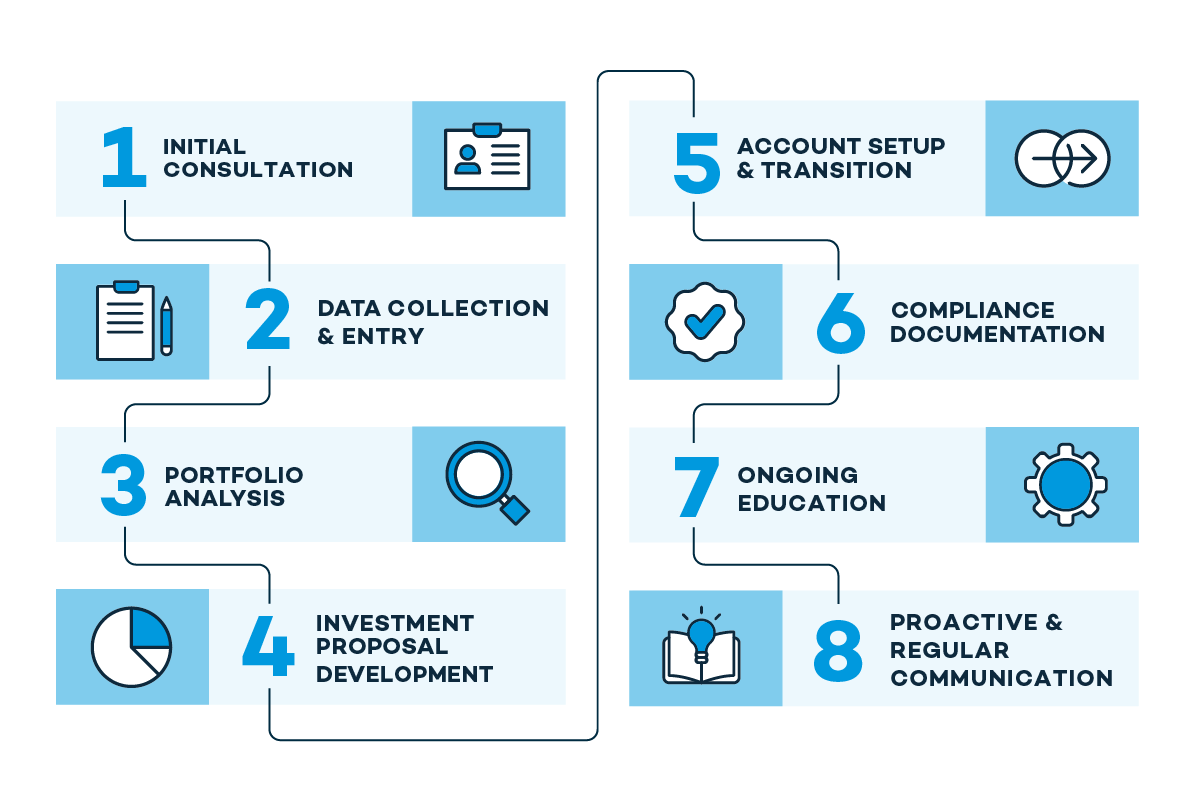
Search Engine Optimization (SEO) is essential for boosting online visibility among financial advisors. By optimizing website content with relevant keywords, advisors can enhance their search rankings. Content marketing — featuring blog posts, white papers, and guides — builds authority and engages potential clients. For example, a financial advisor regularly publishing articles on retirement planning can draw organic traffic from those seeking this information.
- Focus on long-tail keywords reflecting specific client queries.
- Use local SEO tactics to target clients in your geographical area.
- Create informative content addressing common financial questions.
A 2024 report reveals that businesses prioritizing blogging are 13 times more likely to achieve a positive ROI. This highlights content’s role in lead generation.
Importance of Email Marketing Campaigns for Nurturing Leads
Email marketing remains a powerful tool to maintain relationships with potential clients. By segmenting the audience, financial advisors can tailor messages based on client interests and stages in the buying process. Regular newsletters, personalized follow-ups, and targeted campaigns help keep services top-of-mind for prospects — which is often necessary.
- Use automated email sequences to nurture leads over time.
- Incorporate educational content that provides value.
- Track engagement metrics to refine future campaigns.
Data from 2025 indicates that email marketing generates an average return of $42 for every dollar spent. This makes it a cost-effective strategy for acquiring and retaining clients.
Using Pay-Per-Click Advertising Effectively
Pay-per-click (PPC) advertising can deliver immediate visibility for financial advisors. By targeting specific demographics and interests, advisors can connect with potential clients actively seeking financial guidance. Platforms like Google Ads and Facebook Ads offer precise targeting, enabling advisors to make the most of their advertising budget.
- Set clear objectives for each campaign, focusing on lead generation.
- Use A/B testing to optimize ad performance.
- Monitor key performance indicators (KPIs) to assess ROI.
In 2026, the global PPC market is projected to hit $300 billion, underscoring its growing significance in digital marketing strategies.
Building a Professional Website that Converts Visitors into Clients
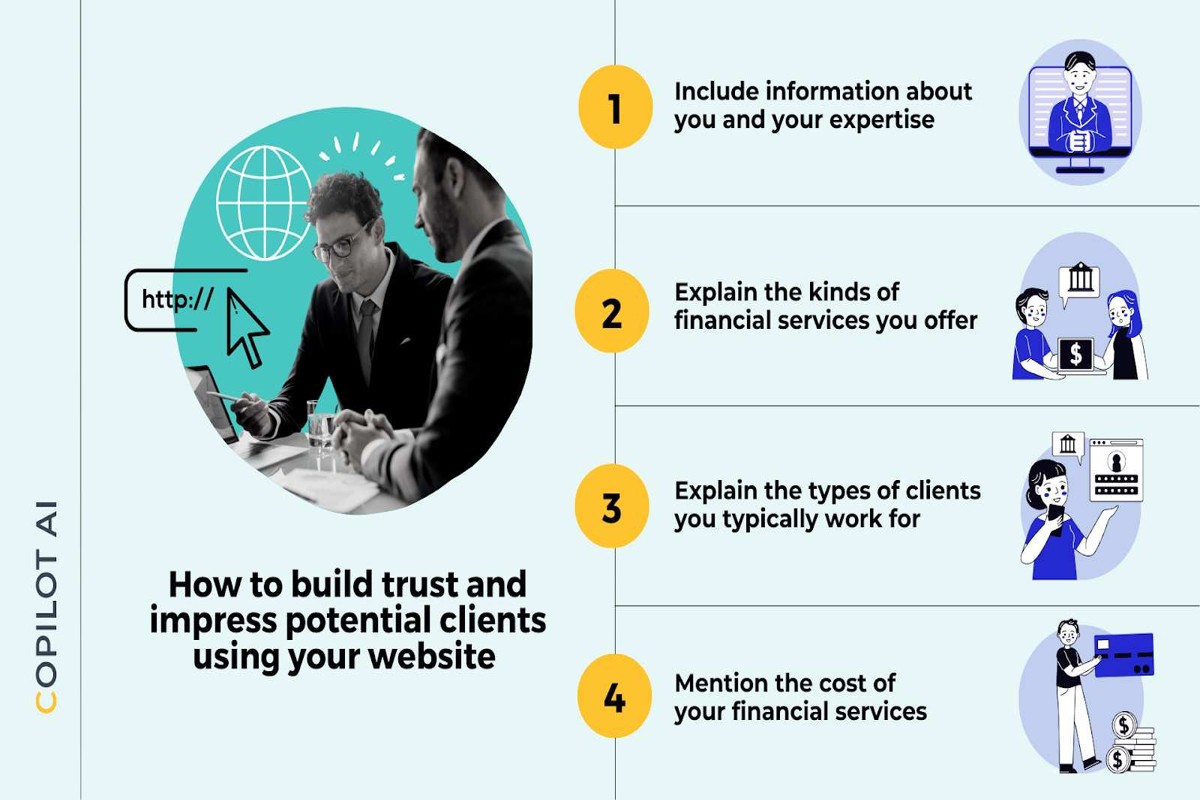
A well-designed website functions as the digital storefront for financial advisors. To convert visitors into clients, it must be user-friendly and include clear calls to action (CTAs). Essential elements involve informative content, testimonials, and tools like financial calculators.
- Make sure to optimize for mobile access on any device.
- Implement chat features for real-time communication.
- Use analytics to track visitor behavior and improve user experience.
Research indicates that 75% of users judge a company’s credibility based on its website design. This emphasizes the necessity for a professional online presence.
Beyond the basics, many financial advisors often overlook the value of integrating multi-channel marketing strategies. Combining SEO, email, PPC, and website optimization can forge a cohesive client acquisition strategy. Understanding client segmentation and behavior nuances can greatly enhance marketing effectiveness.
To effectively implement these strategies, financial advisors should start with a thorough audit of their current digital presence. Identify gaps in SEO, content, and user experience. Develop a content calendar for consistent engagement and allocate a budget for targeted PPC campaigns. By tracking and analyzing results, advisors can refine their approaches, ensuring a steady influx of new clients.
Networking and Building Relationships in the Financial Sector
This section delves into the crucial role of networking and relationship-building in attracting new clients as a financial advisor. Establishing connections within the financial sector can lead to valuable client referrals and numerous growth opportunities.
Participating in Industry Events and Conferences
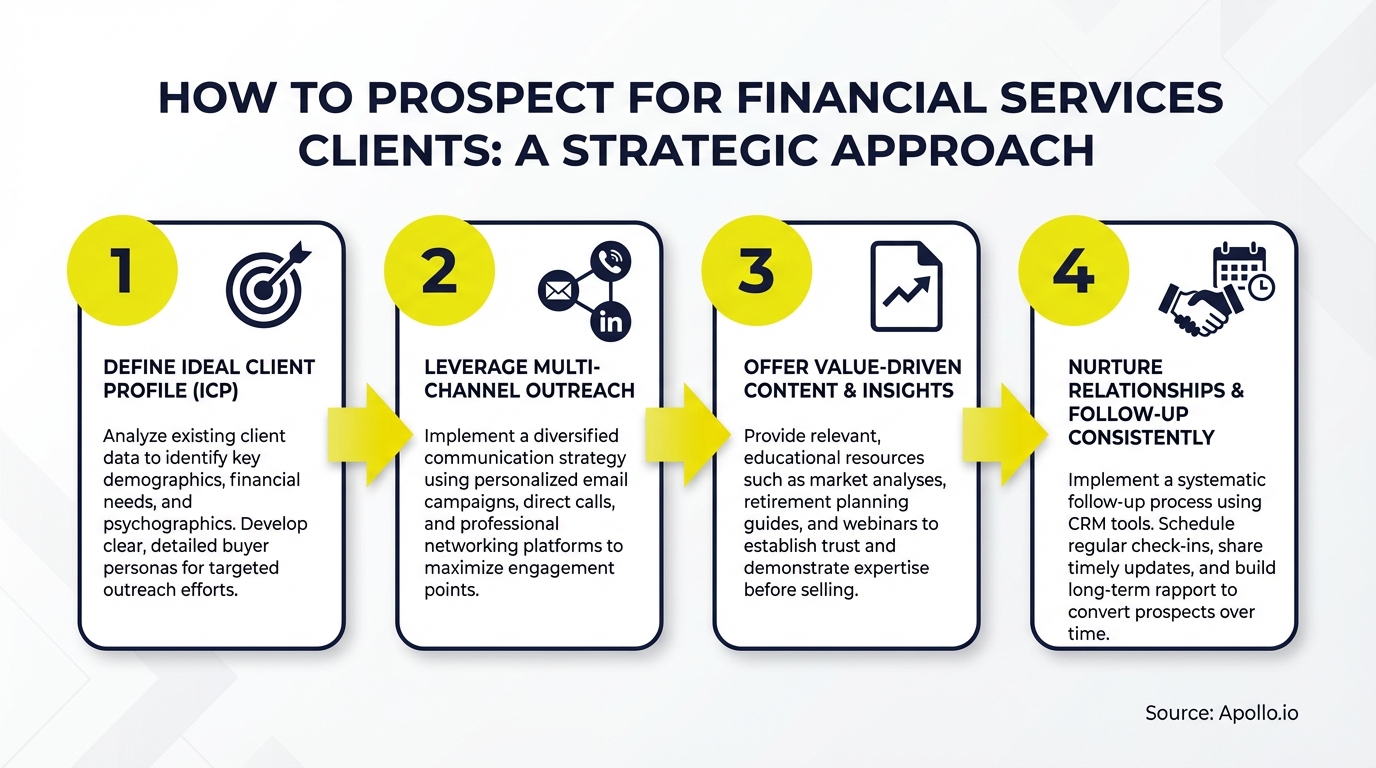
Attending industry events and conferences is among the most effective ways to network. These gatherings present a chance for financial advisors to meet potential clients and other professionals, nurturing relationships that can lead to referrals. A 2024 report revealed that 65% of financial advisors gained new clients through networking at such events. Notable conferences include the Financial Planning Association’s annual conference and the National Association of Personal Financial Advisors’ events — both offer opportunities to connect with peers and prospects alike.
Joining Professional Organizations and Associations
Membership in professional organizations boosts credibility and grants access to a wider network. Organizations like the Financial Planning Association (FPA) and the CFA Institute provide resources, educational opportunities, and networking events tailored for financial professionals. Actively engaging in these organizations can result in meaningful relationships and potential client referrals. As of 2025, membership in such organizations has been associated with a 30% increase in client acquisition for financial advisors.
Creating Referral Partnerships with Other Professionals
Forming referral partnerships with professionals in complementary fields can greatly enhance client acquisition efforts. Financial advisors should explore collaborations with attorneys, accountants, and real estate agents, since these professionals often meet clients needing financial advice. Establishing a formal referral agreement can foster a mutually beneficial relationship, enabling each party to refer clients to the other and thus broaden their client base.
Utilizing Existing Client Relationships for Referrals
Existing clients serve as one of the most valuable resources for acquiring new clients. Financial advisors should initiate referral programs that encourage current clients to refer friends and family. Studies show that referred clients are 50% more likely to become long-term clients. Advisors must regularly communicate with clients, reminding them of their services and promoting referrals — making the process seamless and rewarding for clients (this is often overlooked).
Nuance: The Importance of Authenticity in Networking
While networking can be a powerful tool, authenticity remains critical. Many advisors mistakenly think that simply attending events or joining organizations is enough to build relationships. However, genuine engagement — like following up with contacts and providing value through advice or resources — is essential. The most successful advisors focus on building trust and rapport, rather than solely chasing immediate gains. This approach fosters long-term relationships that lead to sustainable client acquisition.
Practical Application
- Identify and register for at least two industry conferences in the upcoming year.
- Join one or two professional organizations and take part in their events and forums.
- Network with professionals in related fields and propose referral partnerships.
- Develop a referral program for existing clients, offering incentives for successful referrals.
By actively engaging in these strategies, financial advisors can significantly enhance their networking efforts — and greatly improve their client acquisition rates.
Creating Valuable Content that Attracts Clients
Educational content acts as a key tool for financial advisors aiming to establish themselves as trusted experts. By offering valuable insights, advisors engage potential clients and create relationships that can lead to new business opportunities.

Types of Content that Resonate with Potential Clients
- Blog Posts: Regularly updated articles that tackle common financial questions or trends can draw organic traffic. For example, 70% of consumers prefer learning about products through content rather than traditional advertising.
- Infographics: Visual representations of complex financial data simplify information, making it more digestible — and more shareable.
- White Papers: In-depth reports on specific financial topics highlight expertise and provide actionable insights. This appeals to clients seeking detailed analysis.
- Social Media Posts: Short, informative posts can engage a wider audience, boosting visibility and encouraging interaction.
Effective Content Distribution Across Platforms
Content distribution is just as important as content creation. Financial advisors should consider the following strategies:
- Website Optimization: Make sure all content is easily accessible on the advisor’s website. Using SEO best practices can enhance visibility.
- Email Newsletters: Regularly send curated content to subscribers. This reinforces the advisor’s expertise while keeping potential clients informed.
- Social Media Engagement: Share content on platforms like LinkedIn and Facebook, as this helps reach a wider audience. Tailoring posts to each platform increases engagement rates.
The Role of Webinars and Workshops in Client Engagement
Webinars and workshops serve as dynamic platforms for direct interaction with potential clients. Offering free educational sessions on relevant financial topics can demonstrate expertise while fostering a personal connection. Interestingly, 73% of marketers believe that webinars are the best way to generate quality leads. These events allow advisors to showcase their knowledge, answer questions in real-time, and build trust through direct engagement.
Using Case Studies and Testimonials to Build Credibility
Case studies and client testimonials provide concrete proof of an advisor’s capabilities. By showcasing successful client outcomes, advisors illustrate their value proposition and stand out from competitors. Incorporating specific metrics — like a 30% increase in portfolio performance — can significantly enhance credibility. Moreover, testimonials can be prominently featured on websites, in brochures, and during presentations, reinforcing trustworthiness.
Many articles overlook the need for maintaining a consistent brand voice across all content. Advisors should confirm that every piece of content, whether it’s a blog post or a social media update, reflects their unique approach and philosophy. This consistency not only strengthens brand identity but also aids in client recall and recognition.
To apply these insights effectively, financial advisors should start by brainstorming a content calendar that includes a mix of the types mentioned. Prioritize high-value topics that resonate with the target audience. Additionally, establish a multi-channel distribution strategy, focusing on platforms where potential clients are most active. Finally, consider hosting a monthly webinar to engage prospects — and leverage client success stories as part of the marketing strategy. This proactive approach will greatly enhance efforts on how to get new clients financial advisor.
Tracking and Measuring Success in Client Acquisition
This section explores how financial advisors can effectively evaluate the success of their client acquisition strategies. By employing robust tracking and measurement techniques, advisors can optimize their efforts and boost client engagement.
Setting Key Performance Indicators (KPIs) for Client Acquisition
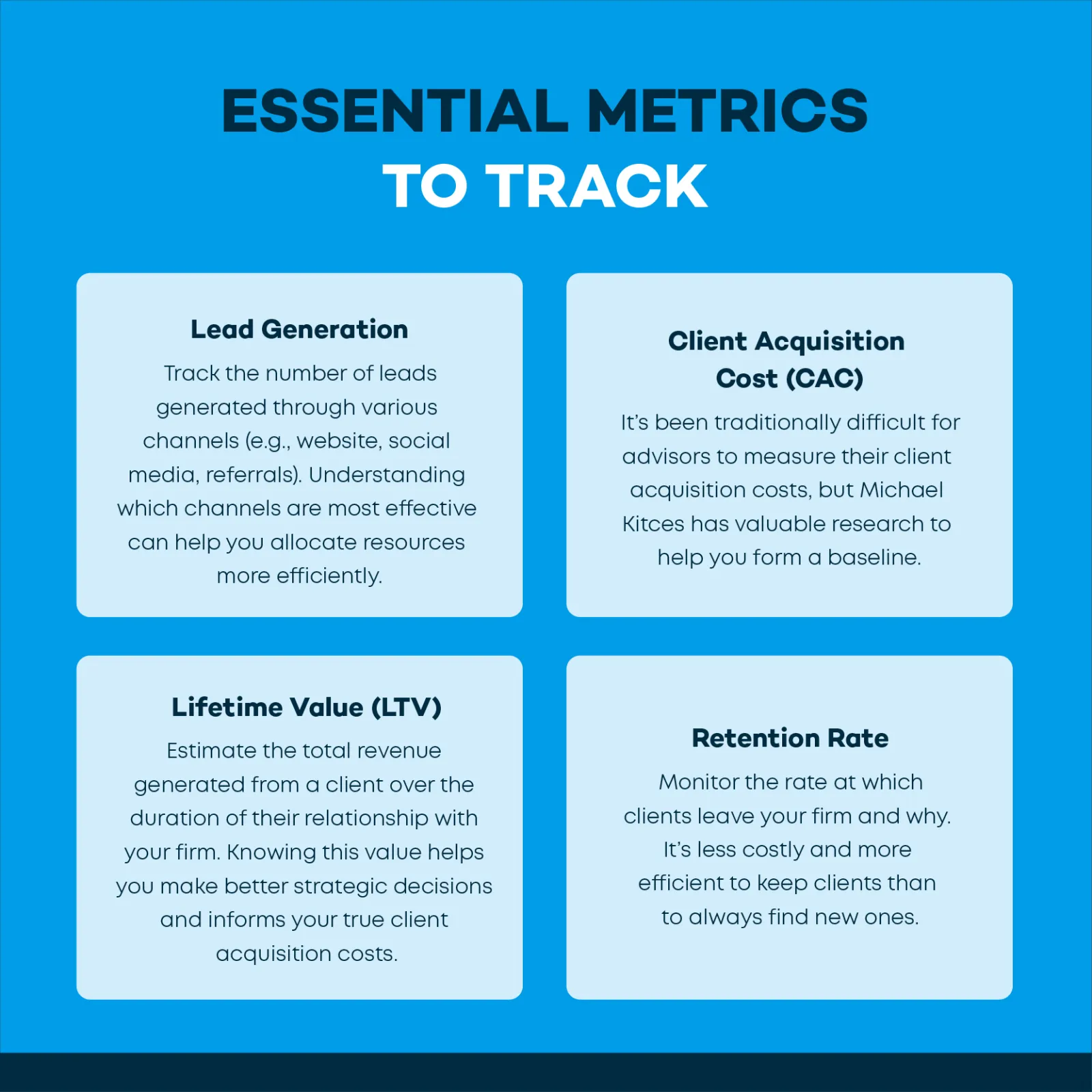
Establishing clear KPIs is essential for assessing how effective client acquisition strategies are. Common KPIs include:
- Number of new clients: Track the total number of clients acquired within a specific timeframe.
- Client acquisition cost (CAC): Calculate total marketing expenditures divided by the number of new clients acquired.
- Conversion rates: Measure the percentage of leads that convert into paying clients.
- Client retention rate: Analyze the percentage of clients who continue using your services year over year.
These KPIs provide a detailed overview of client acquisition performance, enabling advisors to focus on the most impactful strategies.
Using Analytics Tools to Track Marketing Efforts
Incorporating analytics tools is vital for collecting actionable insights. Platforms such as Google Analytics and CRM software deliver detailed data on marketing campaigns. Key features to analyze include:
- Website traffic: Monitor the number of visitors and their behavior on your site.
- Lead source tracking: Identify which channels (social media, referrals, etc.) generate the most leads.
- Email campaign performance: Assess open rates, click-through rates, and conversions from email marketing.
Using these tools allows financial advisors to refine their marketing efforts and allocate resources more effectively.
Adjusting Strategies Based on Performance Data
Data-driven decision-making is crucial for optimizing client acquisition strategies. Regularly review performance data to spot trends and areas needing improvement. If a specific marketing channel isn’t performing well, consider reallocating funds to more successful initiatives. For instance, a 2024 report indicated that financial advisors leveraging data analytics saw a 25% increase in lead conversion rates compared to those who did not.
The Importance of Client Feedback in Refining Approaches
Client feedback plays a critical role in strategy refinement. Gathering insights through surveys, interviews, or direct communication can uncover valuable information about client preferences and experiences. Implementing a structured feedback process allows for:
- Identifying service gaps: Understand areas where clients feel underserved.
- Enhancing client relationships: Show clients that their opinions matter — it fosters loyalty.
- Adapting services: Modify offerings based on client needs and expectations.
This feedback loop not only enhances service delivery but also strengthens the advisor-client relationship.
Nuance / Expert Layer
Common misconceptions regarding client acquisition often involve overemphasizing lead generation while ignoring the quality of leads. Many advisors assume that higher volumes of leads will naturally translate into more clients, but this approach can dilute resources. Instead, focus on nurturing quality leads through personalized engagement strategies. This distinction is crucial, as a targeted approach can yield a higher return on investment. Studies show that personalized marketing can increase conversion rates by 20% or more.
Practical Application
To effectively track and measure success in client acquisition, financial advisors should:
- Define specific KPIs relevant to their acquisition strategies.
- Implement analytics tools to gather and analyze performance data.
- Regularly review and adjust strategies based on data insights.
- Establish a system for collecting and analyzing client feedback.
By following these steps, advisors can enhance their approaches and ultimately learn how to get new clients as a financial advisor more effectively.
Frequently Asked Questions
What are the best ways to attract new clients as a financial advisor?
Effective strategies include networking, hosting educational workshops, and leveraging referrals from existing clients. Building a strong online presence through a professional website and content marketing also helps attract new clients.
How can social media help financial advisors get new clients?
Social media allows financial advisors to showcase their expertise, share valuable content, and engage with potential clients. Platforms like LinkedIn and Facebook can be effective for building relationships and increasing visibility.
What common mistakes do financial advisors make when trying to get new clients?
Common mistakes include not defining a target market, failing to follow up with leads, and neglecting online marketing. Additionally, advisors may overlook the importance of personal branding and client testimonials.
How long does it typically take to acquire new clients as a financial advisor?
The timeline for acquiring new clients can vary widely, often taking anywhere from a few weeks to several months. Factors influencing this include the advisor’s marketing strategy, networking efforts, and market conditions.
What is the cost of acquiring new clients for financial advisors?
The cost of acquiring new clients can range from a few hundred to several thousand dollars, depending on the marketing methods used. Effective strategies often yield a higher return on investment over time.
Final Thoughts on how to get new clients financial advisor
Attracting new clients as a financial advisor hinges on a multifaceted approach that integrates digital marketing, relationship-building, and content creation. By effectively utilizing social media and leveraging valuable insights, advisors can position themselves as trusted authorities, thereby enhancing client acquisition efforts.
Immediately implement a targeted social media strategy that includes regular content sharing and engagement with potential clients, ensuring visibility in a crowded marketplace.
Consider collaborating with a google ads expert to amplify your reach and attract new clients effectively as a financial advisor.
Mastering client acquisition is not just beneficial; it is essential for sustained growth in the financial advisory industry.