

How to get more therapy clients online involves implementing strategies such as search engine optimization, effective social media use, and active participation in online communities. These approaches can significantly increase visibility and client acquisition, with 76% of therapists reporting success in gaining clients through online marketing efforts.
Understanding how to attract more therapy clients online is essential for mental health professionals seeking to expand their practice. With the increasing reliance on digital platforms for service discovery, therapists must leverage these tools to reach potential clients effectively. Failure to adopt these strategies can lead to missed opportunities in a competitive market, where 30% of clients prefer seeking therapy online.
Neglecting to grasp effective online marketing techniques can result in lost revenue and wasted resources, leaving therapists at a disadvantage compared to competitors who successfully engage with clients through digital channels.
This article will cover proven strategies for increasing online client acquisition, including a comparison of top marketing platforms, cost breakdowns of various approaches, best practices for social media engagement, and insights into optimizing local SEO for therapy practices.
What are the best online platforms for therapists to attract clients?
Therapists can attract clients effectively through various online platforms — think social media, therapy directories, and personal websites. Each platform has its unique purpose and can significantly boost visibility and client engagement. Recent studies show that using multiple platforms can increase client inquiries by over 50%.
To maximize online client acquisition, therapists should consider the following platforms and best practices:
- Social Media: Use platforms like Facebook, Instagram, and LinkedIn to share valuable content. Post articles, tips, and insights about mental health regularly. Engaging with followers through live Q&A sessions builds trust and showcases expertise — this works well, but only when done consistently.
- Therapy Directories: Register on reputable directories such as Psychology Today, TherapyDen, and GoodTherapy. These platforms cater specifically to therapists and let potential clients filter by specialty, location, and insurance. Make sure profiles are complete and updated often (this is often overlooked).
- Personal Website: Create a professional website that serves as a hub for information about services, qualifications, and contact details. Incorporate search engine optimization (SEO) techniques to boost visibility in search results. Including a blog can also demonstrate expertise and enhance website traffic.
- Email Marketing: Build an email list by offering a free resource, like a mental health guide or newsletter. Send informative content and service updates regularly. This keeps therapists top-of-mind for potential clients.
- Online Advertising: Consider targeted online ads using Google Ads or Facebook Ads. These platforms allow precise targeting based on demographics and interests, which increases the chances of reaching potential clients actively seeking therapy.
Expert insight: Combining several platforms while maintaining a consistent voice can create a powerful online presence, making it easier for clients to find and connect with therapists.
How can I improve my therapy website to attract more clients?
Improving a therapy website to attract more clients involves optimizing design, enhancing search engine visibility, and creating valuable content. A well-designed website can increase user engagement by up to 70% — it’s crucial for therapists to implement effective strategies.
1. Optimize for Mobile Users: Make sure your website is mobile-friendly, since over 50% of web traffic comes from mobile devices. A responsive design improves user experience and reduces bounce rates.
2. Implement SEO Best Practices: Conduct keyword research to find relevant terms potential clients might search for, like “therapy for anxiety” or “couples counseling.” Use these keywords in page titles, meta descriptions, and throughout your content. This can lead to better search rankings.
3. Create Compelling Content: Publish informative articles, blog posts, or FAQs that tackle common mental health concerns. High-quality content establishes authority — and it encourages visitors to spend more time on your site.
4. Utilize Clear Calls to Action (CTAs): Place visible CTAs throughout your site, prompting visitors to schedule a consultation or contact you for more information. Effective CTAs can significantly boost conversion rates.
5. Showcase Testimonials and Reviews: Display client testimonials prominently to build trust with potential clients. Research shows nearly 80% of consumers trust online reviews as much as personal recommendations (this is often overlooked).
6. Enhance Website Speed: Optimize images and reduce unnecessary scripts to improve loading times. Websites that load in under three seconds have a 32% higher conversion rate — that’s worth knowing.
7. Incorporate an Easy-to-Use Contact Form: Confirm that your contact form is simple and straightforward. A complicated form can deter potential clients from reaching out.
Expert insight: Regularly review website analytics to understand user behavior and refine your strategies. Continuous optimization based on data can lead to sustained increases in client inquiries.
What marketing strategies work best for therapists?
Effective marketing strategies for therapists include social media marketing, email marketing, and content marketing. Each one has unique advantages and can significantly impact client acquisition. For example, 73% of consumers prefer communication via email — a key factor that underscores the importance of email marketing for reaching potential clients.
Social media marketing takes advantage of platforms like Facebook, Instagram, and LinkedIn to build a community and connect with potential clients. This strategy lets therapists showcase their expertise through posts, live sessions, and interactive content. Its visual nature often enhances connection and trust, which are crucial in therapy. However, keeping up an active presence requires consistent effort and creativity (this is often overlooked).
Email marketing, in contrast, emphasizes direct communication with both potential and existing clients. It enables therapists to share valuable resources, updates, and promotions. With a high return on investment — often around 4400% — email marketing remains a powerful tool for nurturing leads and turning them into clients. This strategy works particularly well for therapists who want to maintain ongoing relationships with clients.
Content marketing entails creating informative and relevant materials, such as blogs, videos, or podcasts, that resonate with the target audience. This approach positions therapists as experts in their field and can improve search engine visibility. Content marketing takes time and effort but can lead to long-term benefits in building credibility and attracting clients organically.
- Social Media Marketing: Engages clients through interactive content; requires ongoing effort.
- Email Marketing: Direct communication with high ROI; effective for nurturing leads.
- Content Marketing: Builds credibility through valuable content; improves SEO.
Expert insight: Combining these strategies often yields the best results. They can complement each other to enhance visibility and client engagement. Therapists should analyze their audience to find the most effective mix.
How much should therapists spend on online marketing?
Therapists should typically allocate between $500 to $2,000 each month for online marketing efforts. This budget can vary widely based on specific strategies, geographical location, and practice size.
Several factors influence the cost of online marketing for therapists. These include the choice of marketing channels, local competition, and desired outcomes. Here are key cost considerations:
- Advertising Platforms: Costs differ between platforms. Google Ads often requires a higher budget than social media ads — average costs per click can range from $1 to $3 for therapy-related keywords.
- Content Creation: Engaging content, such as blog posts or videos, can fluctuate between $100 to $1,000 each. This depends on the complexity and professional input required (this is often overlooked).
- Website and SEO: Investing in a professional website might cost between $2,000 to $10,000 initially. Ongoing SEO services typically range from $500 to $2,000 monthly to improve visibility.
Practitioners should also consider their target audience and local market preferences. Tailoring marketing strategies to specific demographics can lead to better engagement and more clients. Tracking return on investment (ROI) is crucial — this helps determine the effectiveness of various marketing strategies, allowing therapists to adjust their budgets as needed.
Expert insight: Focus on high-quality content and local SEO to maximize your budget. These strategies often yield better long-term results in attracting clients.
How long does it take to see results from online marketing for therapy?
Therapists can typically expect results from online marketing efforts within 3 to 6 months. However, this timeframe can vary greatly based on the strategies used and the therapist’s existing online presence.
Several factors influence how quickly results appear. First, the type of online marketing strategy employed plays a crucial role. For instance, search engine optimization (SEO) is a long-term strategy — it may take 6 to 12 months to yield substantial traffic and leads. In contrast, pay-per-click (PPC) advertising can generate immediate visibility and client inquiries, often within days of launching a campaign. Social media engagement can also lead to quick interactions; however, building a loyal client base through these platforms may require several months.
Another critical factor is the therapist’s current online visibility and reputation. Therapists with established websites and positive reviews often see results faster than those starting from scratch. Additionally, the geographical and competitive landscape affects timing. Therapists in highly competitive areas may need to invest more time and resources to stand out — while those in less saturated markets could see quicker results.
Expert insight: Implementing a multi-faceted approach that combines SEO, PPC, and social media marketing can accelerate attracting therapy clients online. Regularly reviewing analytics — and adjusting strategies based on performance data — can also enhance the effectiveness of marketing efforts (this is often overlooked).
What common mistakes do therapists make in online marketing?
Therapists often encounter several key mistakes in online marketing that can limit their ability to attract clients. One major issue is neglecting to optimize their websites for search engines. This leads to lower visibility. A 2024 survey revealed that over 60% of therapists reported lacking an SEO strategy — significantly reducing their chances of connecting with potential clients.
A common scenario involves a therapist creating a website with valuable content but failing to implement effective search engine optimization (SEO) techniques. They might have a blog filled with insightful mental health articles but don’t use relevant keywords or phrases that potential clients would search for. The result is often that their website remains buried in search engine results, causing them to miss out on attracting new clients. Another mistake is targeting too broadly in advertising; for instance, running generic Facebook ads without specifying the ideal client demographic can waste advertising spend and lead to minimal engagement.
Many therapists also overlook the significance of a strong social media presence. While they might have profiles on platforms like Instagram or Facebook, they often don’t engage consistently with their audience or share content that resonates with potential clients. A therapist, for example, may post infrequently and only share promotional material — this can alienate followers. Building a community through regular, meaningful interaction is essential for enhancing visibility and credibility online (this is often overlooked).
Expert insight: To effectively attract clients, the recommended approach is for therapists to invest in a targeted SEO strategy, engage meaningfully on social media, and refine their advertising efforts to reach specific demographics. These steps will significantly enhance their online presence and improve client acquisition rates.
How can I use social media to get more therapy clients?
Using social media effectively can greatly boost the number of therapy clients. Research shows that 71% of consumers who have a positive experience with a brand on social media are likely to recommend it to others — so engagement is key for attracting new clients.
To leverage social media for acquiring therapy clients, consider these specific tactics:
- Optimize Your Profile: Make sure your social media profiles are both professional and informative. Include a clear description of your services, credentials, and contact information. This makes it easy for potential clients to reach out.
- Create Valuable Content: Share informative and relevant content addressing common mental health concerns. This can include articles, infographics, or videos offering tips or highlighting the benefits of therapy.
- Engage with Your Audience: Actively respond to comments and messages — building rapport is essential. Engaging with followers can foster a sense of community and trust, encouraging them to seek your services.
- Use Targeted Advertising: Invest in paid advertising on platforms like Facebook and Instagram. These platforms provide targeted ads that can reach specific demographics, ensuring your services get seen by potential clients in your area.
- Join Relevant Groups: Get involved in Facebook groups or forums centered around mental health. Provide support and share your expertise. This can help establish your credibility and attract clients.
- Utilize Testimonials: Share client testimonials (with permission) on your social media. Positive reviews can enhance your credibility and demonstrate the impact of your services — this is often overlooked.
Expert insight: Regularly analyze your social media metrics to understand what content resonates most with your audience. This data can refine your strategy for effectively attracting more therapy clients.
Optimizing Your Online Presence for Client Attraction
Enhancing your online presence is vital for attracting therapy clients in today’s competitive digital landscape. This section explores practical techniques to boost your visibility and effectively appeal to potential clients.

Importance of a Professional Website Design
A professional website is the cornerstone of your online presence. It must reflect your brand, convey trust, and offer an intuitive user experience. Key elements of effective website design include:
- Responsive Design: Make sure your site is mobile-friendly. Over 50% of users access websites via mobile devices.
- Clear Navigation: Simplify the user journey with well-organized menus and information that’s easy to find.
- Compelling Visuals: Use high-quality images and graphics that resonate with your target audience.
Investing in a quality website can increase client engagement likelihood by up to 80% — it emphasizes the importance of making a strong first impression.
Utilizing SEO Best Practices for Therapists
Search Engine Optimization (SEO) is crucial for increasing online visibility. Therapists should focus on the following best practices:
- Keyword Research: Identify relevant keywords potential clients use in searches, such as “anxiety therapy near me” or “online therapy for depression.”
- On-Page Optimization: Optimize title tags, meta descriptions, and headers with targeted keywords to improve search rankings.
- Local SEO: Claim your Google My Business listing. Confirm consistency in your NAP (Name, Address, Phone number) across all platforms.
Incorporating these practices can lead to a 60% increase in organic traffic, enabling therapists to connect with a larger client base.
Creating Valuable Content That Addresses Client Needs
Content marketing is a powerful strategy for establishing authority and attracting clients. Therapists can create content that addresses common client concerns, such as:
- Blog Posts: Write articles on topics like coping strategies for anxiety or understanding grief.
- Videos: Produce short videos explaining therapeutic techniques or self-care tips.
- Webinars: Host live sessions on mental health topics, providing a space for interaction and learning.
A 2024 study shows that 70% of consumers prefer to learn about a service through articles rather than advertisements (this is often overlooked). This highlights the value of informative content.
Leveraging Online Reviews and Testimonials
Online reviews and testimonials are crucial for establishing credibility. Encourage satisfied clients to leave feedback on platforms such as Google, Yelp, or your website. Key strategies include:
- Requesting Reviews: After a successful session, ask clients to share their experiences.
- Showcasing Testimonials: Feature positive feedback prominently on your website and social media.
- Responding to Reviews: Engage with reviews, whether positive or negative. This demonstrates your commitment to client care.
Research indicates that 86% of consumers read reviews for local businesses. This underscores the importance of managing your online reputation.
While these strategies are foundational, many therapists overlook the need for continual updates and engagement. Regularly refreshing your content, optimizing for new keywords, and actively managing your online reputation can truly differentiate your practice in a crowded market.
To apply these insights effectively, therapists should start by assessing their current online presence. Prioritize website improvements, implement SEO strategies, create a content calendar, and establish a review request system. Taking these actionable steps will significantly enhance the ability to attract more therapy clients online.
Leveraging Social Media for Client Engagement
Using social media effectively can significantly boost client engagement for therapy practices. This section delves into advanced strategies for connecting with potential clients across various platforms. It emphasizes the importance of targeted outreach and community building — both essential components of a successful strategy.
Choosing the Right Social Media Platforms for Your Practice
Selecting the right social media platforms is vital for reaching the appropriate audience. Keep the following options in mind, based on demographic and professional alignment:
- Facebook: Ideal for a broad audience. It’s effective for community building and sharing resources.
- Instagram: A visual platform that’s perfect for sharing inspirational content, client testimonials, and raising mental health awareness.
- LinkedIn: The best choice for connecting with professionals. It’s useful for networking and sharing industry insights.
- TikTok: An emerging platform for engaging younger demographics with creative, entertaining video content.
Best Practices for Creating Engaging Content
Creating compelling content is crucial for attracting potential clients. Adhering to best practices can make a difference:
- Consistency: Post regularly to maintain engagement and visibility. Aim for at least 3-5 times per week — this keeps your practice top of mind.
- Value-Driven Content: Share informative articles, tips, and resources that address common mental health concerns (this is often overlooked).
- Authenticity: Use a genuine voice that reflects your practice’s values and therapeutic approach.
According to a 2024 survey, 72% of consumers prefer engaging with brands that provide personalized content.
Building a Community and Fostering Client Relationships
Building a community around your practice can significantly enhance client loyalty and referrals. Consider these strategies:
- Interactive Posts: Use polls, questions, and live Q&A sessions to foster engagement. This encourages participation.
- Support Groups: Create private groups where clients can share experiences and support one another.
- Regular Feedback: Encourage clients to provide feedback on your services and content. This creates a sense of belonging.
Fostering relationships through social media not only keeps current clients engaged — it also attracts new ones through word-of-mouth referrals.
Using Paid Advertising to Reach a Broader Audience
Paid advertising can significantly amplify your reach. Effective strategies to consider include:
- Targeted Ads: Use Facebook and Instagram’s targeting features to reach specific demographics based on age, location, and interests.
- Retargeting Campaigns: Implement retargeting to engage users who have visited your website or interacted with your content.
- Budget Management: Start with a modest budget and analyze performance metrics. Adjust campaigns as needed.
Statistics reveal that businesses using targeted social media ads often see a 25% increase in client acquisition rates.
Advanced strategies for leveraging social media demand a focused approach. To implement these insights, start by analyzing your target audience and selecting the right platforms. Develop a content calendar to ensure consistency and variety in your posts. Engage your audience through interactive content, and think about investing in paid advertising to expand your reach. Regularly review performance metrics to refine your approach and maximize engagement — ensuring your practice continues to grow and thrive in the digital landscape.
Networking and Collaborating with Other Professionals
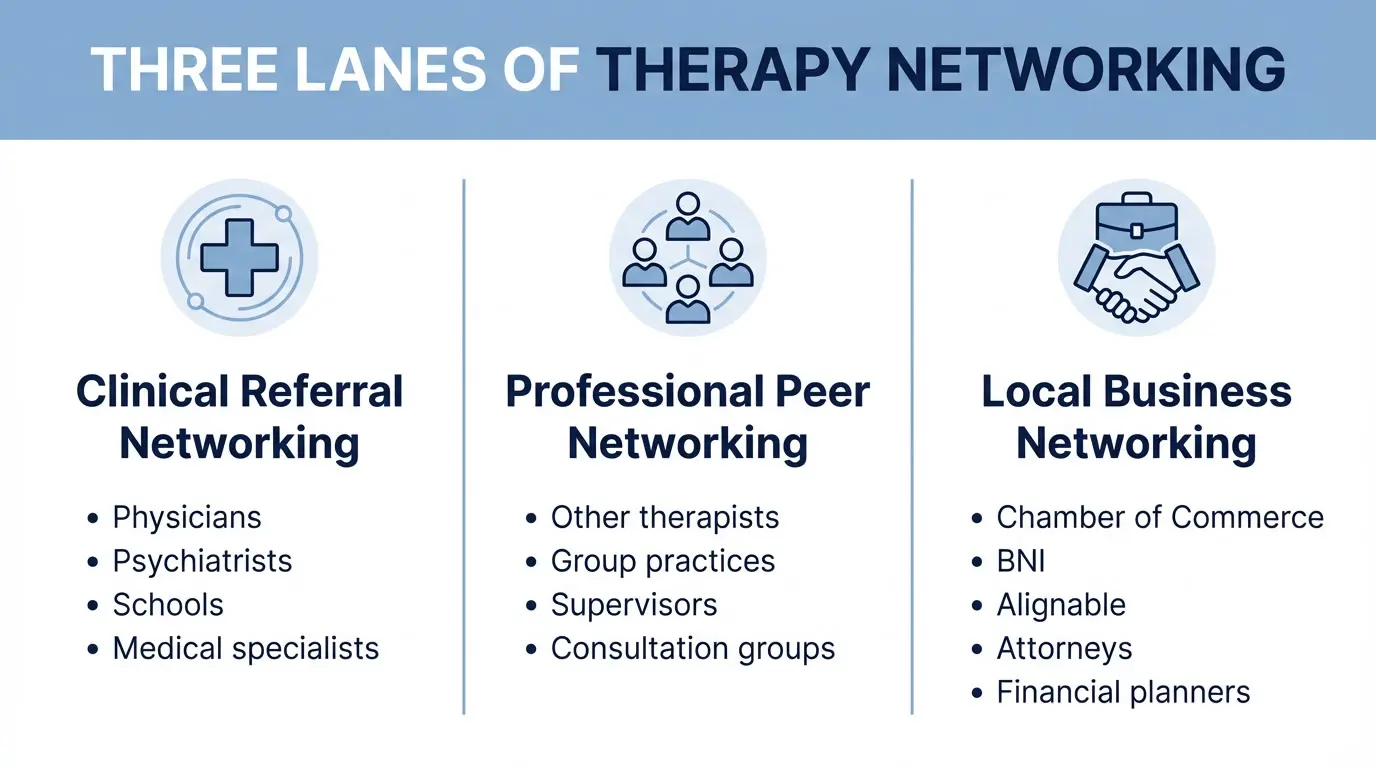
This section examines the importance of building a referral network with healthcare professionals and community organizations. This network is crucial for expanding reach and attracting therapy clients online.
Identifying Potential Referral Sources
Building a strong referral network starts with identifying potential sources. Think about professionals whose services complement your therapy practice, such as:
- Primary care physicians
- Psychiatrists
- Social workers
- School counselors
- Community health organizations
These professionals often encounter clients needing therapy. They can be valuable allies in networking efforts. Local businesses like gyms, wellness centers, and yoga studios can also serve as excellent referral sources — especially for clients looking for mental health support related to stress and physical well-being.
Approaching and Establishing Partnerships
After identifying potential referral sources, the next step is approaching these professionals to form partnerships. Start by reaching out via email or phone to introduce yourself and your practice. Highlight your areas of specialization and how collaboration can benefit both parties. Schedule face-to-face meetings or virtual consultations to discuss potential synergies and build rapport.
Be ready to explain how your services can enhance the care they provide and address any concerns they might have about referring clients to you. Building trust is crucial. Regular communication and follow-ups can help solidify these relationships.
Creating Mutually Beneficial Referral Agreements
Developing clear and mutually beneficial referral agreements is vital for maintaining long-term partnerships. These agreements should outline:
- The process for making referrals
- Follow-up protocols for client care
- Confidentiality and ethical considerations
According to a 2024 survey, 68% of therapists report that formalized referral agreements significantly increase client referrals. Establishing these guidelines ensures that all parties understand their responsibilities and expectations — fostering a collaborative environment.
Participating in Community Events and Workshops
Engaging with the community through events and workshops can further boost networking efforts. Participation in local health fairs, mental health awareness events, or workshops allows showcasing expertise and connecting with potential referral sources. Such events provide opportunities to meet other professionals, share knowledge, and promote services directly to the community.
Consider hosting your own workshops on relevant mental health topics, inviting other professionals to co-facilitate. This method not only demonstrates leadership in the field but positions you as a trusted resource for referrals.
Networking and collaborating with other professionals isn’t just about exchanging referrals; it’s about creating a support system that enhances client care. Many therapists overlook the potential of cross-disciplinary partnerships, focusing solely on direct client acquisition. However, effective networking can lead to a consistent flow of clients through established trust and shared goals.
To effectively implement these strategies:
- Identify at least five potential referral sources within your community.
- Reach out to these professionals, introducing your services and discussing collaboration.
- Develop a referral agreement outlining the process and expectations.
- Participate in at least one community event each quarter to build visibility.
By proactively engaging with other professionals and the community, your practice can reap significant benefits. This enhances the ability to attract more therapy clients online.
Tracking and Analyzing Your Marketing Efforts
Effective tracking and analysis of marketing efforts are crucial for therapists looking to expand their client base online. Leveraging analytics tools and understanding performance metrics helps therapists make informed decisions. This enhances outreach and engagement.
Setting Up Analytics for Your Website and Social Media
Implementing analytics serves as the foundation of tracking marketing effectiveness. Use tools like Google Analytics for your website to monitor traffic sources. You can also gauge user behavior and conversion rates. For social media platforms, leverage built-in analytics tools like Facebook Insights and Instagram Analytics — these help evaluate engagement rates, audience demographics, and post performance.
- Google Analytics: Set up goals to track specific actions, like booking an appointment or signing up for a newsletter.
- Social Media Analytics: Analyze post reach, likes, shares, and comments to pinpoint content that resonates with your audience.
- CRM Systems: Use customer relationship management software to efficiently track client inquiries and follow-ups.
Understanding Key Performance Indicators (KPIs)
Defining and monitoring KPIs allows therapists to gauge the success of their marketing strategies. Common KPIs include the following:
- Website Traffic: The number of visitors to your site indicates overall interest.
- Conversion Rate: The percentage of website visitors who take a desired action — like booking a session.
- Engagement Rate: This measures how actively users interact with your content on social media.
According to recent studies, effective tracking of these KPIs can improve conversion rates by up to 30% from 2024 to 2026.
Adjusting Strategies Based on Performance Data
Regularly reviewing analytics data helps identify trends and areas for improvement. If a particular marketing channel yields low conversion rates, consider reallocating resources to more effective platforms. A/B testing various campaigns can provide insights — this helps reveal what resonates with potential clients, allowing for data-driven adjustments.
Continuous Improvement Through Feedback and Analysis
Incorporating client feedback is essential for refining marketing strategies. Conduct surveys or request reviews to gather insights on what clients appreciate about your services and what could be improved. This feedback can inform adjustments to both marketing content and service delivery, fostering a better client experience.
Statistics indicate that businesses proactively seeking customer feedback see an increase in client retention rates by up to 25% between 2025 and 2026.
Many therapists mistakenly rely solely on intuition when making marketing decisions. However, data-driven strategies often reveal insights that intuition may overlook. For instance, while a therapist might believe that social media is the best platform for outreach, analytics could show that email newsletters yield higher engagement and conversion rates.
To effectively implement these strategies, therapists should:
- Set up comprehensive analytics tools for both their website and social media accounts.
- Identify and monitor relevant KPIs to track marketing performance.
- Regularly review data to make informed adjustments to marketing strategies.
- Solicit client feedback to enhance service offerings and marketing messages.
By following these actionable steps, therapists can better understand how to get more therapy clients online. This ultimately leads to a more robust practice and improved client engagement.
Frequently Asked Questions
What are the best online platforms for therapists to attract clients?
Popular online platforms for therapists include Psychology Today, TherapyDen, and BetterHelp. These platforms provide visibility and connect therapists with potential clients seeking mental health services.
How can I improve my therapy website to attract more clients?
Enhance your therapy website by ensuring it is user-friendly, mobile-optimized, and includes clear calls to action. Incorporating client testimonials and informative blog content can also boost engagement and attract more clients.
What marketing strategies work best for therapists?
Effective marketing strategies for therapists include search engine optimization (SEO), content marketing, and leveraging social media platforms. Additionally, networking with other healthcare professionals can lead to referrals and increased visibility.
How much should therapists spend on online marketing?
Therapists typically allocate 5-10% of their gross income for online marketing efforts. This budget can vary based on individual goals and the competitiveness of the local market.
How long does it take to see results from online marketing for therapy?
Results from online marketing can take anywhere from three to six months to materialize. Consistent effort and strategic adjustments are essential for achieving lasting outcomes.
What common mistakes do therapists make in online marketing?
Common mistakes include neglecting to optimize their website for SEO and failing to engage with potential clients on social media. Additionally, not tracking marketing metrics can hinder the effectiveness of campaigns.
How can I use social media to get more therapy clients?
Utilize social media by sharing valuable content, engaging with followers, and participating in relevant discussions. Targeted ads can also help reach specific demographics and attract potential therapy clients.
Final Thoughts on how to get more therapy clients online
To effectively attract more therapy clients online, it is essential to combine a robust online presence with strategic marketing efforts and professional networking. By optimizing your website, engaging on social media, and collaborating with other professionals, therapists can significantly enhance their visibility and credibility in a competitive landscape.
Immediately implement a targeted social media campaign that highlights your expertise and encourages client engagement, ensuring that your content resonates with your ideal audience’s needs and concerns.
Ready to boost your therapy practice? Connect with a google ads expert who can help you attract more clients online today!
In an era where digital connections are paramount, mastering online client acquisition strategies is not just beneficial; it is imperative for sustained practice growth and success.