

How to get clients for your therapy practice involves implementing effective marketing strategies, networking, and improving your online presence. A strong digital footprint is essential, as approximately 70% of clients discover therapists through online searches.
Understanding how to attract clients to your therapy practice is crucial for sustaining and growing your business. As the mental health sector continues to expand, practitioners must embrace modern marketing techniques to reach potential clients effectively. Missteps in client acquisition strategies can result in significant financial losses; studies show that practices with poor visibility can miss out on 30% of potential clients.
Failure to grasp effective client acquisition strategies can lead to missed revenue opportunities, wasted marketing resources, and a competitive disadvantage in an increasingly crowded marketplace. Without a solid plan, therapy practices risk stagnation and decline.
This article will provide a comprehensive guide on proven strategies for gaining clients, including a comparison of top marketing providers, a breakdown of costs, best practices for engagement, and leveraging local SEO to enhance visibility.
What are the best marketing strategies for therapists?
The best marketing strategies for therapists involve leveraging digital platforms, creating valuable content, and building professional networks. Research shows that over 70% of clients search for mental health services online. A strong online presence is essential for attracting new clients.
Therapists can adopt several effective marketing strategies to boost visibility and draw in clients:
- Use Social Media: Create professional profiles on platforms like Facebook, Instagram, and LinkedIn. Share informative content, client testimonials (with consent), and engage with followers to build community trust.
- Content Marketing: Develop a blog or video series centered on mental health topics relevant to your expertise. This positions you as a knowledgeable resource — and it also improves search engine visibility, attracting potential clients actively seeking help.
- Networking: Establish connections with other healthcare providers, such as physicians and social workers. Referrals from trusted professionals can significantly boost your client base.
- Email Marketing: Build an email list to send newsletters featuring mental health tips, updates on your practice, and special offers. Personalize communications for better engagement and to remind potential clients of your services (this is often overlooked).
- Online Directories: List your practice on platforms like Psychology Today or TherapyDen. These directories are frequently used by individuals looking for therapists, providing direct access to potential clients.
Expert insight: Consistency in marketing efforts is key. Regularly updating content and engaging with your audience helps maintain visibility. Over time, this fosters trust and leads to a steady influx of clients.
How can I attract more clients to my therapy practice?
Attracting more clients to a therapy practice requires targeted marketing strategies and greater visibility in the community. Research shows that practices with a solid online presence can experience up to a 50% increase in client inquiries within six months.
To effectively attract clients, consider these actionable steps:
- Optimize Your Online Profiles: Make sure your website and social media profiles are professional, current, and easy to navigate. Use SEO best practices to appear in local search results — highlight your specialties and services.
- Leverage Local SEO: Claim and optimize your Google My Business listing. This helps potential clients find your practice when searching for therapists nearby. Visibility increases significantly.
- Network with Local Professionals: Build relationships with local healthcare providers, schools, and community organizations. Referrals from trusted professionals can lead to a steady stream of clients — this is often essential.
- Offer Free Workshops or Seminars: Host events on relevant mental health topics. This showcases your expertise and allows potential clients to connect with you in a relaxed environment.
- Utilize Client Testimonials: Encourage satisfied clients to leave reviews online. Positive testimonials enhance credibility and attract new clients looking for reassurance about your services (worth double-checking).
- Engage on Social Media: Share valuable content related to mental health on platforms like Facebook and Instagram. Engaging posts can help you reach a broader audience and establish yourself as a thought leader.
Expert insight: Regularly assess your marketing efforts and adjust based on client feedback and analytics. This ongoing process ensures your strategies stay relevant and effective in attracting new clients.
What role does social media play in getting therapy clients?
Social media serves as a vital tool for attracting therapy clients. Studies show that over 70% of consumers turn to social media to find and evaluate services, including mental health providers. By using platforms like Facebook, Instagram, and LinkedIn, therapists can connect with potential clients and highlight their professional expertise.
For instance, a therapist focused on anxiety disorders might set up an Instagram account to share insights and coping strategies. Posting engaging content — like short videos on anxiety management techniques or infographics about mental health statistics — allows the therapist to engage followers and build a sense of community. Relevant hashtags, like #MentalHealthAwareness and #AnxietyHelp, can also boost post visibility. This helps reach a wider audience. Regular interaction, such as Q&A sessions or live discussions, can enhance trust and motivate potential clients to seek help.
Moreover, social media provides a platform to showcase testimonials and success stories. A therapist might create a highlight reel on Instagram that features client testimonials (with permission) or case studies demonstrating the effectiveness of their methods. This not only showcases expertise but also helps normalize the act of seeking help — making potential clients feel more at ease about reaching out.
Expert insight: Consistency in posting and engagement is crucial. Therapists should aim for at least three posts each week to stay visible and relevant in the crowded social media landscape.
How much should I spend on marketing my therapy practice?
Therapy practices generally allocate between 5% to 10% of their annual revenue for marketing. For a practice that generates $100,000 a year, this translates to a budget of $5,000 to $10,000 annually. This amount depends on growth goals and market conditions.
Several factors influence how much to spend on marketing for a therapy practice. These factors include:
- Practice Size: Larger practices with multiple therapists usually need a higher budget for coordinated marketing efforts.
- Target Audience: Marketing to specific demographics or populations often requires tailored strategies — and these can be costlier.
- Marketing Channels: Choosing between digital marketing, print advertising, community outreach, or networking events will significantly impact overall costs.
Moreover, the expected return on investment (ROI) differs by strategy. Digital marketing often yields a higher ROI. For instance, online ads or social media campaigns tend to acquire clients at a lower cost. In contrast, traditional methods like print ads might offer a slower return, but they help build long-term local awareness (this is often overlooked).
Expert insight: Prioritize digital marketing strategies — such as search engine optimization (SEO) and social media advertising — since they frequently deliver the highest ROI for therapy practices in today’s market.
How long does it take to build a client base for a therapy practice?
Building a client base for a therapy practice usually takes anywhere from six months to two years. The length of time varies based on several factors, such as location, marketing efforts, and networking strategies.
Numerous variables influence the timeline for creating a strong client base. First, geography plays a critical role — urban areas often provide a larger potential clientele, speeding up growth compared to rural locations. Additionally, local market competition can either hinder or help the process; in a saturated market, it may take longer to establish a niche.
Marketing strategies are also vital. Therapists who actively use digital marketing, including social media and search engine optimization, usually draw clients faster. On the other hand, practitioners who depend solely on word-of-mouth referrals might face a slower buildup. Networking with other professionals, like physicians and community organizations, can speed up referrals and improve visibility.
Another important factor is the therapist’s specialization. Niche practices that focus on specific populations or issues may have different timelines. For instance, therapists specializing in trauma or anxiety may see a quicker influx of clients due to the high demand (this is often overlooked). In contrast, generalist practices might take longer to develop a steady client flow.
Expert insight: To boost client acquisition, consider forming partnerships with local healthcare providers and using online platforms to enhance visibility. Regularly assess your marketing strategies — adapting to changing client needs and preferences is crucial.
Leveraging Online Platforms to Increase Visibility
Effectively using online platforms can greatly enhance visibility for therapy practices and help connect with potential clients. This section outlines essential strategies, which include website optimization, directory listings, and engagement in online communities.

Creating a Professional Website with SEO Best Practices
A professional website is the cornerstone of any online presence. Implementing strong Search Engine Optimization (SEO) practices is key — it ensures potential clients can find your services easily. Key elements include:
- Keyword Research: Identify relevant terms that potential clients are using to search for therapy services.
- Quality Content: Regularly update your website with informative blog posts that tackle common mental health concerns.
- Mobile Optimization: Make sure your website is fully responsive; after all, over 60% of web traffic comes from mobile devices as of 2024.
Integrating local SEO strategies can also enhance visibility. Listing your practice in Google My Business can increase local search traffic by up to 70% — this is worth double-checking.
Utilizing Online Directories
Online directories, such as Psychology Today and TherapyDen, are crucial tools for reaching clients actively seeking therapy. These platforms allow practitioners to showcase their credentials, specialties, and contact information. Consider the following:
- Profile Completeness: Confirm that your profile is fully completed with a professional photo, bio, and a detailed description of your services.
- Client Reviews: Encourage satisfied clients to leave positive reviews. 84% of people trust online reviews just as much as personal recommendations.
- Specializations: Clearly outline your therapeutic approaches and specializations to attract your target demographic.
The visibility gained from these directories can lead to a significant increase in client inquiries — this works well when profiles are engaging.
Engaging in Online Forums and Mental Health Communities
Participating in online forums and mental health communities can help create connections with potential clients. Platforms like Reddit, Facebook groups, and specialized forums offer chances to share expertise and answer questions. Important strategies include:
- Provide Value: Share insights and resources, rather than promoting your services directly. This builds trust within the community.
- Network with Peers: Engage with other professionals to foster referrals and share best practices.
- Host Q&A Sessions: Consider organizing live Q&A sessions to address mental health topics; this showcases your expertise while engaging with potential clients.
Research indicates that active participation in such communities can enhance visibility and credibility. This often leads to increased client engagement.
Many practitioners overlook the nuanced role of online engagement in building trust and rapport. While having a website and directory listings is essential, the real value lies in authentic interactions with potential clients. Misconceptions often arise around the need to maintain a formal tone online; however, a genuine and approachable demeanor can significantly improve connection and trust — especially in the mental health field.
To effectively leverage these online platforms, therapy practitioners should take the following actions:
- Develop a professional website optimized for SEO.
- List your practice on relevant online directories and confirm profiles are complete and engaging.
- Actively participate in online communities, providing valuable insights and engaging authentically with participants.
By implementing these strategies, practitioners can effectively increase visibility and attract clients to their therapy practices.
Networking and Building Referral Relationships
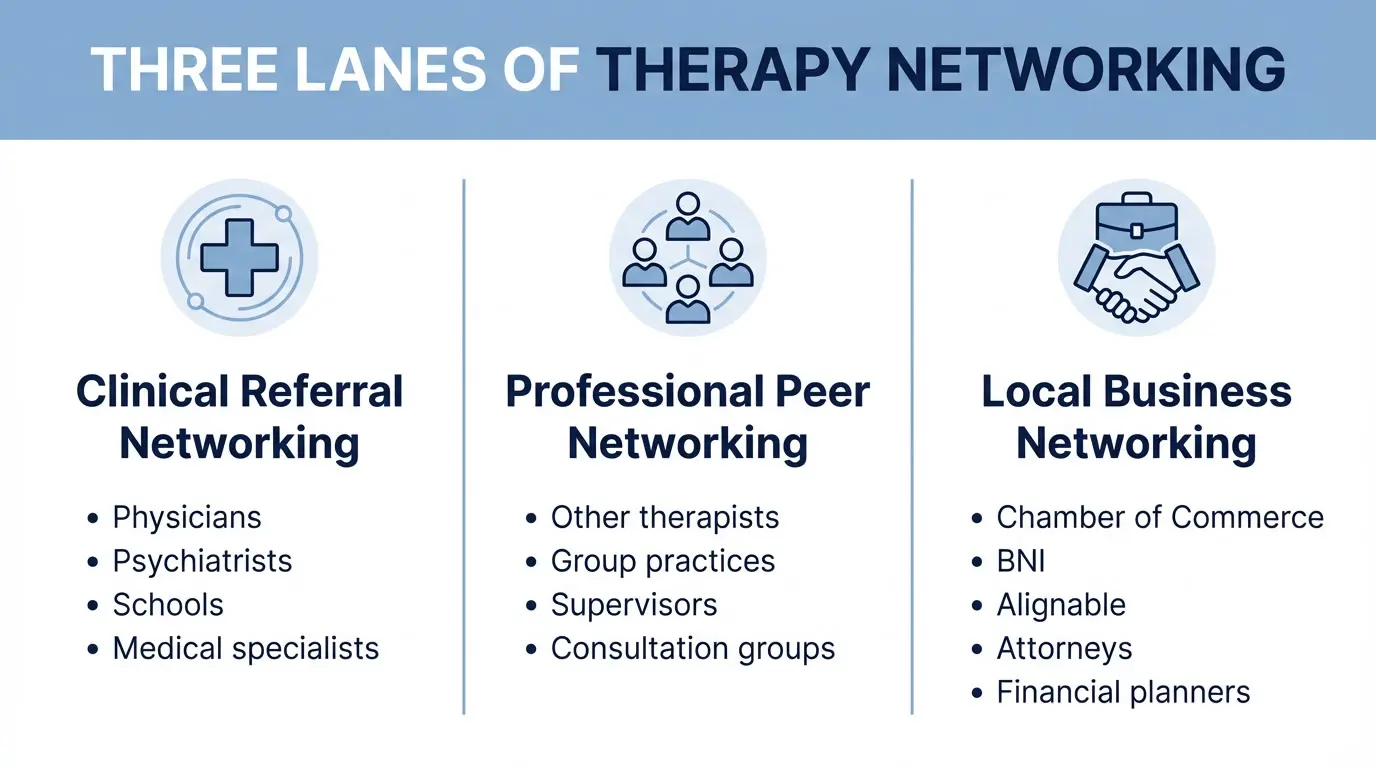
This section explores the importance of networking and building referral relationships. It’s a cornerstone for successfully acquiring clients in a therapy practice. Establishing connections with key individuals and organizations can create a steady stream of referrals — which is vital for enhancing professional credibility.
Identifying Potential Referral Sources
Identifying the right referral sources is critical for expanding your client base. Potential referral sources include:
- Medical Professionals: Collaborate with primary care physicians, psychiatrists, and specialists who may see patients in need of therapy.
- Community Organizations: Partner with local non-profits, schools, and wellness centers that can refer clients seeking mental health support.
- Other Therapists: Establish connections with therapists specializing in different areas or modalities, creating a referral network for clients outside your expertise.
Research shows that approximately 60% of therapy clients come from referrals. This highlights the vital role these connections play in client acquisition.
Strategies for Maintaining Professional Relationships
Building relationships isn’t a one-time effort. It requires ongoing interaction and trust. Consider these strategies:
- Regular Communication: Keep in touch through newsletters, emails, or personal check-ins. This keeps your referral sources informed about your practice and any new services.
- Networking Events: Attend local health fairs, workshops, and professional gatherings. It’s a chance to meet potential referral sources and strengthen existing relationships.
- Mutual Support: Offer to refer clients to other professionals when appropriate. This establishes a reciprocal relationship that encourages others to do the same.
The Impact of Word-of-Mouth Referrals
Word-of-mouth referrals play a significant role in client acquisition. They often lead to higher conversion rates. Clients referred by trusted sources are more likely to engage your services. A study from the American Psychological Association found that word-of-mouth referrals account for up to 75% of new clients in therapy practices. This statistic underscores the value of nurturing strong relationships with referral sources.
Nuance / Expert Layer
Many therapists underestimate the power of informal referrals. While formal relationships with medical professionals and organizations are crucial, casual referrals from friends, family, or satisfied clients can also drive client acquisition. Also, many articles focus solely on initial contact strategies — but they overlook the importance of nurturing these relationships over time. Establishing a follow-up system for both referral sources and clients can build trust and lead to more consistent referrals.
Practical Application
To leverage these insights, practitioners should:
- Identify at least three potential referral sources within their community.
- Develop a plan for regular communication, including updates about services and client success stories.
- Attend one networking event per month to expand professional connections.
- Implement a follow-up system to consistently engage both referral sources and clients.
These actionable steps will enhance the ability to get clients for your therapy practice. They will also help build a robust referral network.
Creating Compelling Content to Attract Clients
Effective content marketing is a powerful tool for therapists aiming to attract clients. By producing engaging and valuable resources, therapists can position themselves as experts. This helps build trust with potential clients.
Types of Content That Resonate with Potential Clients
- Blog Posts: Articles that address common mental health issues can attract readers looking for solutions.
- Videos: Short, informative videos effectively convey empathy and expertise. They make complex topics more relatable.
- Infographics: Visual data related to mental health can simplify information — and encourage sharing.
- Podcasts: Audio content discussing therapy techniques or client success stories can engage a wider audience.
Using Blogs and Videos to Showcase Expertise
Creating a blog allows therapists to share insights on various mental health topics. Incorporating SEO strategies can boost visibility, driving organic traffic to their website. For instance, blogs on anxiety management techniques or coping strategies for depression can attract individuals seeking guidance. A 2023 survey indicated that 70% of clients prefer engaging with providers who showcase knowledge through informative content.
Videos are an effective medium for therapists to present their methodologies and philosophies. A well-crafted video can convey emotion and establish a personal connection — crucial for prospective clients. Therapists can use platforms like YouTube or Instagram to share short clips explaining therapy concepts or providing mental health tips.
The Importance of Providing Value Through Educational Resources
Offering free educational resources is a vital strategy for building credibility. Resources such as e-books, worksheets, or webinars on relevant topics can pique the interest of potential clients. These resources not only provide immediate value but also assist in gathering contact information for future marketing efforts. In fact, 65% of consumers say they’re more likely to engage with a brand that offers free resources (this is often overlooked).
Nuance / Expert Layer
Many therapists underestimate the potential of content marketing, thinking their clinical qualifications alone will attract clients. However, establishing an online presence through content is essential in today’s digital landscape. Potential clients often do extensive research before choosing a therapist. Misconceptions linger that content creation requires extensive technical skills or big marketing budgets; in reality, many effective tools and platforms are user-friendly and cost-efficient. Therapists should focus on authenticity and consistency — not perfection — in their content.
Practical Application
To implement these strategies effectively, therapists should:
1. Develop a content calendar to plan blog topics and video scripts for at least three months.
2. Use SEO tools to identify keywords potential clients are searching for, incorporating these into blog posts.
3. Create one educational resource, like a downloadable guide, to offer on their website in exchange for email sign-ups.
4. Engage with viewers by responding to comments on videos and encouraging questions. This interaction can lead to more content ideas.
By adopting these content marketing strategies, therapists can enhance their visibility and authority. Ultimately, they’ll learn how to get clients for their therapy practice more effectively.
Common Mistakes Therapists Make in Client Acquisition
This section highlights frequent pitfalls therapists face when trying to attract clients, uncovering critical areas that are often missed in client acquisition strategies.

Neglecting Online Presence and SEO
A strong online presence is vital for any therapy practice. Many therapists don’t grasp how crucial search engine optimization (SEO) is for improving their visibility. A staggering 75% of potential clients turn to online searches to find therapists. It’s imperative to rank well on search engines. Without an optimized website, practices can easily become invisible to those needing help.
- Failing to invest in a professional website can hurt first impressions.
- Not using relevant keywords can limit reach in searches.
- Ignoring local SEO tactics can cut visibility in the community.
Failing to Network Effectively
Networking plays a key role in client acquisition, yet many therapists miss its significance. Building relationships with other professionals in the mental health field can lead to referrals. In a 2024 survey, 60% of therapists noted that referrals were their primary source of new clients.
- Participating in community events boosts local visibility.
- Joining professional associations can lead to collaborative opportunities.
- Connecting with physicians and other healthcare providers can aid in referrals.
Not Understanding the Target Audience’s Needs
Client acquisition strategies often stumble when therapists fail to fully understand their target audience’s needs. Tailoring services to specific concerns can greatly enhance client attraction. Research shows that practices addressing niche issues enjoy a 40% higher client retention rate.
- Conducting surveys or interviews can shed light on client expectations.
- Using social media platforms to engage with potential clients can provide valuable feedback.
- Adapting marketing messages to reflect client pain points can significantly enhance resonance.
Nuanced Perspectives on Client Acquisition
A common misconception is that a strong online presence guarantees client acquisition. While it’s essential, it must be paired with genuine engagement in the community and a clear understanding of client needs. Therapists often underestimate the importance of feedback loops—gathering client input can refine both services and marketing strategies. This iterative process is crucial for keeping up with the evolving mental health landscape.
Practical Application
Therapists can improve their client acquisition strategies by following these actionable steps:
- Invest in professional website design and SEO services.
- Attend local networking events and workshops to build connections.
- Conduct regular surveys to better understand and address client needs.
Implementing these strategies will greatly enhance efforts in attracting clients for your therapy practice, leading to sustainable growth and improved client satisfaction.
Frequently Asked Questions
What are the best marketing strategies for therapists?
Effective marketing strategies for therapists include building a professional website, utilizing search engine optimization (SEO), and leveraging online directories. Networking with other healthcare providers and offering free workshops or webinars can also enhance visibility.
How can I attract more clients to my therapy practice?
Attracting more clients involves creating a strong online presence, engaging in community outreach, and offering specialized services that meet specific needs. Additionally, obtaining positive client testimonials can significantly enhance credibility and attract new clients.
What role does social media play in getting therapy clients?
Social media is a powerful tool for therapists to connect with potential clients and share valuable content. Regularly posting informative articles, videos, and engaging with followers can increase visibility and establish trust within the community.
How much should I spend on marketing my therapy practice?
Marketing budgets for therapy practices typically range from 5% to 10% of annual revenue. It’s essential to evaluate the effectiveness of each marketing channel to ensure optimal return on investment.
How long does it take to build a client base for a therapy practice?
Building a client base can take several months to a few years, depending on factors such as location, marketing efforts, and networking. Consistent outreach and engagement are crucial for accelerating this process.
Final Thoughts on how to get clients for your therapy practice
Successful client acquisition in therapy hinges on a multifaceted approach that combines effective marketing strategies with authentic relationship-building. By leveraging online platforms, nurturing referral networks, and producing valuable content, therapists can significantly enhance their visibility and appeal to potential clients.
To begin, create a targeted social media campaign that highlights your expertise and the unique benefits of your practice; this will not only attract clients but also foster trust and engagement within your community.
Ready to boost your client base? Connect with a google ads expert today and watch your therapy practice flourish!
Establishing a strong client base is essential for the sustainability of any therapy practice, making these strategies crucial for long-term success.