

How to get clients as a financial advisor involves strategies focused on establishing a robust online presence, effective networking, and delivering valuable content. These approaches significantly enhance client acquisition, with research indicating that 80% of financial advisors depend on referrals, underscoring the importance of relationship-building in achieving success.
Understanding how to attract clients as a financial advisor is crucial in a highly competitive landscape. Financial advisors need to effectively market their services to stand out, as the industry continues to evolve with digital advancements and shifting consumer preferences. Missing key strategies can lead to diminished client engagement and lost revenue opportunities, with the financial advisory market projected to reach $1.5 trillion by 2025.
Failure to master client acquisition strategies can result in substantial financial losses, wasted marketing resources, and a significant competitive disadvantage. Advisors who do not effectively attract clients may struggle to sustain their practices and achieve growth in a crowded market.
This article will cover proven strategies for acquiring clients, including the importance of building an online presence, leveraging networking opportunities, and creating valuable content that resonates with potential clients. Readers will also learn best practices and actionable tips to enhance their client acquisition efforts.
What are effective ways to attract clients as a financial advisor?
Attracting clients as a financial advisor involves a multifaceted approach that includes marketing strategies, networking opportunities, and personal branding. Research shows that 76% of clients prefer advisors with a strong online presence — digital marketing is, therefore, crucial for success.
1. Develop a strong online presence: Create a professional website that highlights services, credentials, and client testimonials. Use search engine optimization (SEO) techniques to improve visibility in search results. This strategy attracts potential clients actively seeking financial advice.
2. Leverage social media: Use platforms like LinkedIn, Facebook, and Instagram to share financial insights and engage with your audience. Posting valuable content regularly can position you as an authority in the field — this builds trust and attracts inquiries.
3. Network actively: Attend industry events, local business gatherings, and community functions. Connecting with potential clients at these events is essential. Building relationships in your community leads to referrals and strengthens your reputation as a reputable advisor.
4. Offer free workshops or webinars: Hosting educational sessions on financial literacy topics showcases your expertise. Attracting attendees who may seek personalized advice afterward can be very effective. This strategy often converts participants into clients as they recognize the value you provide.
5. Utilize client referrals: Encourage satisfied clients to refer friends and family by implementing a referral program. Personal recommendations carry significant weight — incentivizing referrals can often lead to an increase in new clients.
Expert insight: Focus on building long-term relationships instead of chasing short-term gains. Consistently delivering value and maintaining communication fosters loyalty. This, in turn, encourages clients to recommend your services to others (this is often overlooked).
How can networking help financial advisors get clients?
Networking serves as a crucial strategy for financial advisors to acquire clients, fostering relationships that can lead to referrals and new business opportunities. Studies show that around 70% of financial advisors consider networking their main source of client acquisition — highlighting its importance for building a solid client base.
To network effectively, a strategic approach is necessary for engaging with potential clients and industry peers. Attending networking events allows financial advisors to meet individuals who may need financial services or can refer clients. Here are specific best practices to make the most of networking efforts:
- Attend industry events: Participate in conferences, seminars, and workshops relevant to finance. These events create opportunities to connect with potential clients and other professionals who can introduce you to their networks.
- Join professional organizations: Become a member of associations like the Financial Planning Association or local business groups. Membership can boost credibility and help you connect with individuals seeking financial advice (this is often overlooked).
- Leverage social media: Use platforms like LinkedIn to build a professional online presence. Share valuable content regularly and engage with connections to raise awareness about your services and establish authority in the field.
- Request referrals: After successfully assisting clients, ask them for referrals. Satisfied clients often recommend your services to friends and family, expanding your reach through trusted connections.
- Follow up and maintain relationships: After meeting new contacts, send personalized follow-up messages — this nurtures relationships effectively. Regular communication keeps you top-of-mind when someone needs financial advice.
Expert insight: Focus on quality over quantity in networking. Building deep, meaningful relationships can yield more referrals than merely accumulating a large number of contacts.
What role does social media play in attracting financial clients?
Social media is a powerful tool for financial advisors to attract clients by showcasing their expertise and engaging directly with potential customers. A 2024 study found 78% of financial advisors using social media reported an increase in client inquiries and engagement.
Platforms like LinkedIn and Instagram serve distinct yet complementary purposes in client acquisition. For instance, a financial advisor can create a professional LinkedIn profile that highlights their credentials and shares industry insights. Posts about market trends should be regular. By actively participating in LinkedIn groups related to finance and investment, the advisor can engage with potential clients, answer questions — and establish thought leadership, leading to trust and credibility. A well-crafted LinkedIn strategy can lead to a noticeable increase in client referrals and inquiries.
Meanwhile, Instagram provides a more personal touch. It allows advisors to connect with a broader audience through visually appealing content. Regularly posting educational infographics, client success stories, or short videos explaining financial concepts can help demystify complex topics (this is often overlooked). For example, an advisor might post a series of videos on budgeting tips. Not only does this showcase their expertise, but it also engages users in the comments, fostering a community around financial literacy. This two-pronged approach can significantly enhance visibility and attract diverse clients.
Expert insight: To maximize effectiveness, tailor content to the platform. Use LinkedIn for professional insights and networking. Leverage Instagram for engaging, educational visuals that resonate with a wider audience.
How much should a financial advisor invest in marketing?
A financial advisor should generally invest between 5% to 10% of their revenue on marketing efforts. For instance, if an advisor manages $1 million in assets and earns a 1% fee, the annual revenue would reach $10,000. This suggests a marketing budget of about $500 to $1,000 per year.
Several factors can influence the marketing budget for financial advisors. These include the advisor’s target market, the competitiveness of the local financial advisory landscape, and the types of services offered. Advisors focusing on high-net-worth individuals may need a larger budget to establish a premium brand presence — while those targeting younger clients might find more cost-effective digital strategies beneficial.
- Target Audience: The demographic and financial sophistication of the target audience can dictate marketing spend. High-net-worth clients often require more personalized outreach (this is often overlooked).
- Marketing Channels: The choice of marketing channels significantly affects costs. Traditional media (e.g., print, radio) often demands larger budgets than online marketing, like social media or email campaigns.
- Geographic Location: Advisors in metropolitan areas may face higher competition and marketing costs compared to those in rural regions. This often necessitates a more substantial investment to stand out.
Expert insight: Tracking the return on investment (ROI) from various marketing strategies is crucial. Advisors should regularly assess which channels yield the best client acquisition rates — and adjust their budgets accordingly to maximize effectiveness.
What common mistakes do financial advisors make when acquiring clients?
Financial advisors often face several pitfalls that hinder their client acquisition efforts. These mistakes can lead to lost opportunities and a tarnished reputation. Research shows that around 60% of financial advisors grapple with effective client outreach, which frequently results in stagnant growth.
One major error is the failure to define a target market. Advisors who don’t clearly identify their ideal clients might waste resources on broad marketing efforts—yielding minimal returns. By honing in on a specific demographic, advisors can tailor their messaging and services to meet that group’s unique needs.
- Neglecting digital presence: A lack of a professional online presence can really limit visibility. Advisors need to establish a strong website and maintain active social media profiles to draw in potential clients.
- Overlooking networking opportunities: Many advisors underestimate the power of personal connections. Engaging in local events and professional organizations can generate valuable referrals. Building relationships with other professionals often creates a strong referral network.
- Ignoring follow-up: Failing to follow up with leads is a critical mistake. A timely, personalized follow-up can greatly improve the chances of transforming a prospect into a client. Implementing a systematic approach to follow-ups can boost both client retention and acquisition.
- Not showcasing expertise: Advisors frequently miss the chance to demonstrate their knowledge and value. Sharing insights through blogs, webinars, or workshops can position an advisor as a thought leader—attracting clients who seek expertise (this is often overlooked).
Expert insight: To maximize client acquisition, financial advisors should continually refine their approach. Experts recommend leveraging data analytics to understand client preferences and market trends. This proactive strategy ensures sustained growth and relevance in a competitive landscape.
How long does it take to build a client base as a financial advisor?
Building a client base as a financial advisor usually takes anywhere from six months to two years. The exact timeline can vary quite a bit, depending on several factors — market conditions, networking skills, and more.
The length of time to establish a solid client base is influenced by various factors. First, the advisor’s marketing strategy is critical. Advisors who use digital marketing and social media often reach potential clients faster than those who rely solely on traditional methods. A strong referral network from existing clients and professional connections can really speed things up. According to a 2024 survey, financial advisors actively seeking referrals reported acquiring clients 30% faster than those who didn’t (this is often overlooked).
Another important factor is the advisor’s niche or specialization. Advisors focused on high-demand areas, like retirement planning or wealth management for high-net-worth individuals, typically attract clients more quickly than those in less competitive sectors. Additionally, the initial geographic market can impact client acquisition speed. Urban areas usually offer a larger pool of potential clients compared to rural locations. Advisors who participate in community events or local business groups can gain visibility and build trust more rapidly — it’s a smart move.
Expert insight: To speed up client acquisition, prioritize building a strong online presence and engage actively in networking opportunities. Regularly updating clients and prospects with informative content can enhance relationships and accelerate referrals.
What is the best way to follow up with potential clients?
The best way to follow up with potential clients is to adopt a multi-channel approach that includes email, phone calls, and personalized messages. Research shows that 80% of sales require at least five follow-ups. Yet, only 8% of salespeople keep going after the first contact.
Effective follow-up strategies focus on engaging without overwhelming the potential client. Here are several proven steps:
- Send a Thank-You Note: After an initial meeting or conversation, send a personalized thank-you email within 24 hours. Acknowledge their time — and reinforce key points discussed.
- Schedule a Follow-Up Call: Within a week, propose a follow-up call to address any questions they might have. This shows commitment. Plus, it keeps the conversation alive.
- Provide Value-Added Content: Share relevant articles, reports, or insights tailored to their interests. This not only demonstrates expertise but also positions you as a valuable resource (this is often overlooked).
- Utilize Social Media: Engage with potential clients on platforms like LinkedIn. Comment on their posts or share industry-related content to keep your name fresh in their minds.
- Be Mindful of Timing: Space your follow-ups appropriately, typically every 7-10 days. Avoid being overly persistent — that can lead to annoyance.
Following up effectively demands a balance of persistence and respect for the potential client’s time. Tailoring your approach based on their responses and preferences will enhance the chances of converting them into clients.
Expert insight: Use CRM software to track interactions and schedule follow-ups. Confirm that no potential client falls through the cracks due to oversight.
How can financial advisors differentiate themselves from competitors?
Financial advisors can stand out through unique selling propositions (USPs) and effective branding strategies. In a crowded marketplace, leveraging specialized expertise, personalized services, and innovative communication methods can attract and retain clients. Research shows that 78% of clients prefer advisors who offer tailored strategies over generic advice. This preference is significant.
One effective way to differentiate is through specialization. Advisors can target niche markets like retirees, small business owners, or specific professions such as healthcare. This focus enables them to gain deep insights into the unique financial needs and challenges of these groups, making their services more relevant — and appealing. In contrast, generalists might struggle to connect with clients seeking tailored financial solutions.
Another approach is to boost client engagement through technology. Advisors can use client relationship management (CRM) tools, personalized financial planning software, and various educational resources to foster a more interactive experience. This tech-driven approach improves efficiency and builds stronger relationships. Meanwhile, those sticking solely to traditional methods may find it difficult to meet the evolving expectations of tech-savvy clients (this is often overlooked).
- Specialization: Focus on specific client segments to provide tailored advice.
- Technology Integration: Use digital tools to enhance client engagement and service delivery.
- Branding and Storytelling: Develop a strong brand narrative that resonates with target audiences.
Expert insight: Financial advisors should continuously seek feedback from clients to refine their offerings and spot emerging market trends that can further set their services apart. Regularly updating branding strategies based on client preferences can lead to a sustained competitive edge — a crucial factor in this industry.
Building a Strong Online Presence
Establishing a robust online presence is crucial for financial advisors aiming to attract new clients. This section explores strategies that can significantly boost visibility and build client relationships through digital channels.

The Importance of a Professional Website
A well-designed, professional website is the cornerstone of an online presence. It acts like a digital business card, offering potential clients essential information about services, credentials, and contact details. A 2024 survey found that 70% of consumers research financial services online before deciding. So, having a user-friendly and informative website is crucial for conversion.
Utilizing SEO Strategies to Attract Organic Traffic
Search Engine Optimization (SEO) plays an essential role in improving website visibility on search engines. Implementing effective SEO strategies helps financial advisors rank higher in search results — this can lead to increased organic traffic. Key strategies include:
- Keyword Optimization: Use relevant keywords like “financial advisor,” “investment strategies,” and “retirement planning” throughout the website.
- On-Page SEO: Focus on meta tags, headers, and image alt texts to boost content relevance.
- Local SEO: Optimize for local search queries by listing the business in local directories and using geo-targeted keywords.
In 2025, about 53% of website traffic is projected to come from organic search, highlighting the importance of effective SEO.
Creating Valuable Content that Addresses Client Needs
Content marketing is a powerful method for establishing authority and trust. By providing valuable content that addresses the specific financial needs of potential clients, advisors can position themselves as knowledgeable experts. Effective content types include:
- Blog Posts: Regularly updated articles on relevant financial topics.
- Webinars: Interactive sessions that educate clients about financial planning.
- Guides and E-books: In-depth resources that offer actionable insights.
Research from 2026 shows that companies prioritizing content marketing generate 3.5 times more leads than those that don’t.
Leveraging Online Reviews and Testimonials
Online reviews and testimonials significantly impact potential clients’ decision-making. Positive feedback can enhance credibility and attract new clients. Financial advisors should actively seek reviews from satisfied clients and display them prominently on their websites and social media profiles. A 2025 study revealed that 88% of consumers trust online reviews as much as personal recommendations.
Nuance / Expert Layer
Many financial advisors underestimate mobile optimization’s impact on their online presence. With over 60% of users accessing websites via mobile devices, a site that isn’t mobile-friendly can deter potential clients. Plus, advisors often overlook the importance of engaging with their audience on social media channels — this is often overlooked. Platforms like LinkedIn and Facebook can effectively share insights and connect with clients, yet only 30% of financial advisors use them actively for marketing.
Practical Application
To leverage these strategies effectively, financial advisors should:
- Invest in a professional website that reflects brand identity and provides essential information.
- Implement SEO best practices to enhance search visibility.
- Develop a content calendar to consistently produce valuable, relevant content.
- Encourage satisfied clients to leave reviews and feature these testimonials prominently.
By taking these steps, financial advisors can effectively enhance their online presence and attract new clients.
Networking Strategies for Financial Advisors
This section explores effective networking techniques designed specifically for financial advisors. These strategies can lead to valuable client referrals and strategic partnerships.

Attending Industry Conferences and Seminars
Industry conferences and seminars are prime opportunities for financial advisors. They can connect with potential clients and industry peers. Engaging in these events allows advisors to showcase their expertise, stay informed about market trends, and build relationships that can lead to referrals. Notably, a 2024 survey found that 68% of financial professionals gained new clients directly through networking at these events.
Joining Local Business Groups and Associations
Local business groups and associations create a platform for financial advisors to meet entrepreneurs and small business owners seeking financial guidance. Actively participating in these organizations helps advisors build credibility. This establishes them as trusted resources. Joining local chambers of commerce, Rotary clubs, and other professional groups can enhance visibility — and this often results in referrals from fellow members.
Building Relationships with Accountants and Attorneys
Accountants and attorneys frequently serve clients with overlapping financial needs. This makes them valuable allies for financial advisors. Establishing strong relationships with these professionals can create a mutually beneficial referral network. Regular communication, joint seminars, and co-hosting events can strengthen these ties. A recent study indicated that 75% of financial advisors found referrals from accountants and attorneys significantly contributed to their client base.
Utilizing Social Media for Professional Networking
Social media platforms, especially LinkedIn, offer excellent opportunities for financial advisors to network professionally. By sharing informative content and engaging in industry discussions, advisors can establish themselves as thought leaders. LinkedIn groups focused on finance and investment can be leveraged to connect with potential clients. Plus, a 2025 report revealed that 55% of financial advisors found new clients through social media interactions — an avenue worth exploring.
Nuance / Expert Layer
While traditional networking methods are effective, many financial advisors overlook digital networking and community engagement. Some believe relying solely on personal referrals or face-to-face interactions is enough, yet studies show a diversified approach — combining both online and offline strategies — yields better results. Additionally, many advisors underestimate the potential of niche networking groups that cater to specific demographics or industries. This can lead to more targeted client acquisition.
Practical Application
- Identify and register for at least two industry conferences or seminars within the next six months.
- Join one or two local business groups or associations relevant to your target market.
- Reach out to at least three accountants or attorneys to discuss potential collaboration opportunities.
- Enhance your LinkedIn profile with valuable content and actively engage in finance-related discussions.
Content Marketing and Client Education
Establishing authority and trust with potential clients is essential for financial advisors. Content marketing and client education are powerful tools for conveying expertise and building relationships with prospects.
Creating Informative Blogs and Articles
Blogs and articles offer an accessible platform for financial advisors to share insights on relevant financial topics. By consistently publishing informative content, advisors can address common client concerns, clarify complicated concepts, and demonstrate their expertise. Research shows that businesses prioritizing blogging see 13 times more return on investment (ROI) than those that don’t. Key topics might include investment strategies, retirement planning, or tax-saving tips.
Hosting Webinars and Workshops
Webinars and workshops provide interactive opportunities to engage with potential clients. These sessions allow advisors to present financial information in a dynamic format while answering questions in real time. A 2023 survey found that 73% of participants in financial webinars felt more informed about their financial decisions afterward. Topics can range from market outlooks to personal finance fundamentals—catering to various audience segments.
Using Newsletters to Keep Clients Informed
Regular newsletters can be a vital communication tool for financial advisors. These publications keep clients updated on market trends, legislative changes, and personal finance tips. A well-crafted newsletter can enhance client retention; studies show 61% of consumers enjoy receiving newsletters from brands they trust. Incorporating client success stories and testimonials can further boost credibility (this is often overlooked) and strengthen relationships.
Developing E-books or Guides on Financial Topics
E-books and comprehensive guides can help position financial advisors as thought leaders in their field. By providing in-depth analysis on specific subjects, such as estate planning or investment diversification, advisors offer valuable resources for potential clients. Recent data indicates that 65% of consumers prefer in-depth content like e-books over short-form articles when researching financial services. Advisors can use these resources as lead magnets, encouraging downloads in exchange for contact information.
Nuance and Expert Insights
While many financial advisors understand the importance of content marketing, few fully leverage the potential of educational content. A common misconception is that only high-level topics attract clients. In reality, addressing everyday financial concerns can resonate more deeply with prospective clients. Tailoring content to specific demographics—such as millennials versus retirees—can enhance relevance and engagement. Additionally, maintaining a consistent publishing schedule is vital; irregular updates can lead to diminished interest and trust.
Practical Application
- Create a content calendar to plan and schedule blog posts, webinars, and newsletters.
- Identify key client pain points and develop targeted content that addresses these issues.
- Use analytics tools to track engagement and adjust content strategies accordingly.
- Promote educational content through social media channels to broaden reach—and attract potential clients.
By effectively utilizing content marketing and client education, financial advisors can not only attract new clients but also foster long-term relationships built on trust and expertise.
Measuring Success: Tracking Client Acquisition Efforts
Effective client acquisition for financial advisors hinges on the ability to measure success through data and analytics. This section outlines how to set measurable goals, use CRM tools, analyze results, and adjust strategies based on insights.
Setting Measurable Goals for Client Acquisition
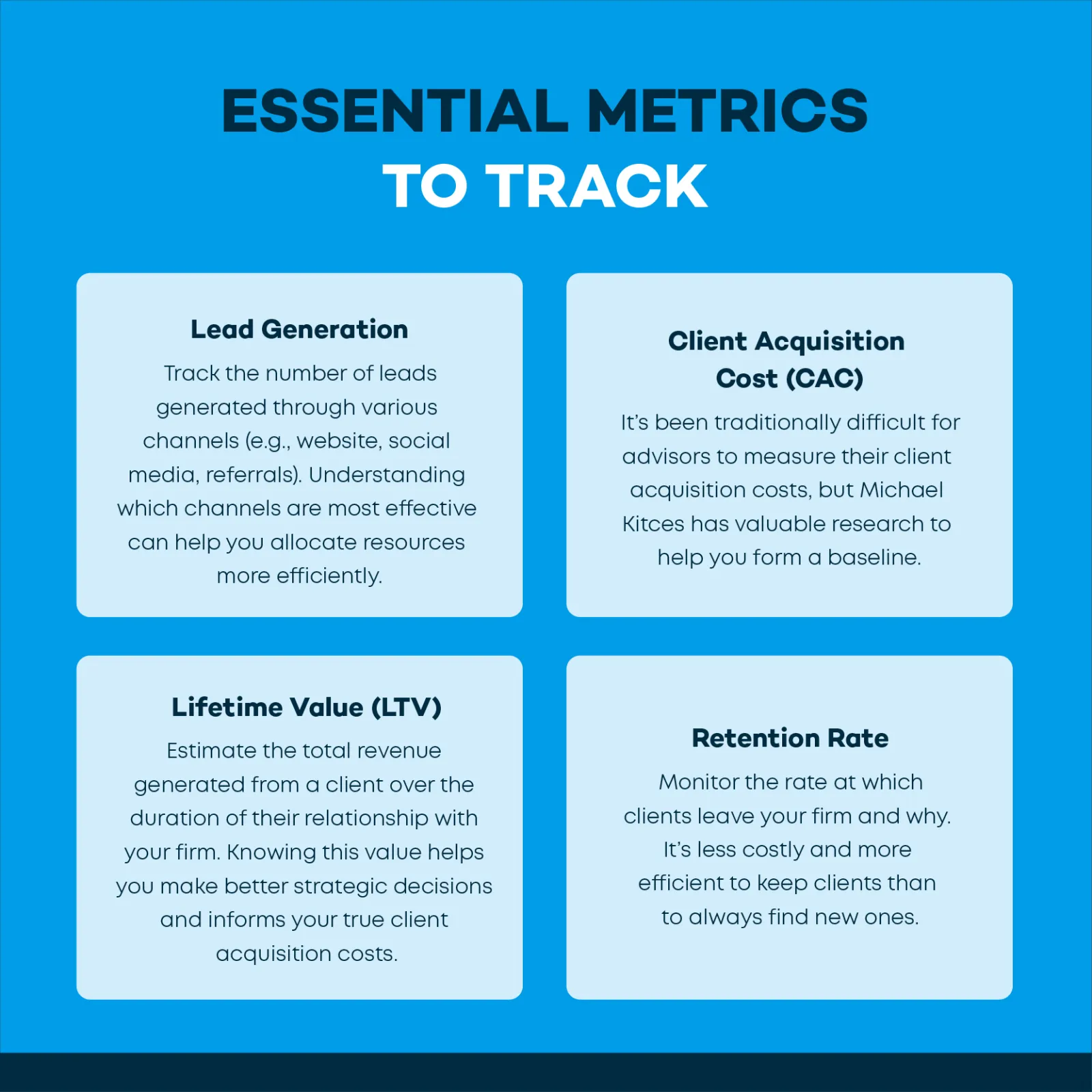
Establishing clear, quantifiable objectives is essential in client acquisition efforts. Financial advisors need to define specific targets — such as the number of new clients to acquire within a set time frame. For instance, aiming to boost the client base by 20% over the next year provides a tangible benchmark. Goals should also include metrics like conversion rates and average client value. This enables advisors to assess their performance effectively.
Using CRM Tools to Track Interactions and Conversions
Customer Relationship Management (CRM) tools are crucial for tracking client interactions and conversions. These platforms enable financial advisors to record every touchpoint with potential clients — from initial contact to final conversion. Using CRM systems generates a centralized database of client information, enhancing personalized outreach strategies. According to recent studies, firms employing CRM solutions report a 27% increase in client retention rates, highlighting the effectiveness of these tools in building long-term relationships.
Analyzing Which Strategies Yield the Best Results
Data analysis plays a vital role in determining which client acquisition strategies are the most effective. Financial advisors should regularly review performance metrics like cost per acquisition (CPA) and return on investment (ROI) across various marketing channels. For example, a campaign generating a high volume of leads but with a low conversion rate may signal a need for refinement. By concentrating on high-performing strategies, advisors can allocate resources more efficiently and improve overall effectiveness.
Adjusting Tactics Based on Data-Driven Insights
Flexibility in adapting strategies based on analytical insights is key for sustained success. Financial advisors should set up a routine for reviewing data and making necessary adjustments. For instance, if a particular social media platform shows a higher engagement rate than others, reallocating marketing efforts toward that channel can lead to better client acquisition outcomes. This iterative approach fosters a more agile and responsive client acquisition strategy.
Common misconceptions include the idea that all client acquisition strategies must remain static. In reality, the most successful financial advisors constantly tweak their approaches based on the changing landscape and data trends. Ignoring these insights can often lead to missed opportunities and stagnation.
Practical Application
- Set specific, measurable goals for client acquisition, such as increasing the client base by 20% in one year.
- Implement a CRM tool to track all client interactions and conversions — ensuring comprehensive data collection.
- Regularly analyze marketing strategies to identify which channels yield the highest ROI, adjusting tactics as needed.
- Conduct quarterly reviews of client acquisition processes to pinpoint areas for improvement and adapt to market changes.
Frequently Asked Questions
What are effective ways to attract clients as a financial advisor?
Effective ways to attract clients include leveraging referrals, hosting educational seminars, and utilizing targeted online advertising. Building a strong online presence through a professional website can also enhance visibility.
How can networking help financial advisors get clients?
Networking allows financial advisors to establish relationships with potential clients and other professionals who can provide referrals. Participating in community events and industry conferences can significantly expand a financial advisor’s reach.
What role does social media play in attracting financial clients?
Social media serves as a powerful tool for financial advisors to showcase expertise, share insights, and engage with potential clients. Regularly posting informative content can help build trust and establish authority in the financial sector.
How much should a financial advisor invest in marketing?
Financial advisors should consider allocating 5-10% of their revenue towards marketing efforts. This investment can vary based on business goals and the effectiveness of chosen marketing strategies.
What common mistakes do financial advisors make when acquiring clients?
Common mistakes include neglecting follow-ups, failing to define a target market, and underestimating the importance of personal branding. Advisors often overlook the value of building relationships over time.
How long does it take to build a client base as a financial advisor?
Building a client base can take anywhere from six months to several years, depending on factors like networking efforts and marketing strategies. Consistency and persistence are key to long-term success.
What is the best way to follow up with potential clients?
The best way to follow up is through personalized communication, such as a tailored email or a phone call. Timing is crucial; following up within a week of initial contact keeps the conversation fresh.
How can financial advisors differentiate themselves from competitors?
Financial advisors can differentiate themselves by specializing in niche markets, offering unique services, or showcasing their credentials and success stories. A strong personal brand and effective communication can also set them apart.
Final Thoughts on how to get clients financial advisor
To successfully attract clients as a financial advisor, it is essential to leverage a multifaceted approach that combines a robust online presence, strategic networking, and targeted content marketing. By establishing credibility and demonstrating expertise, financial advisors can create lasting relationships with potential clients that lead to sustainable growth.
As a practical next step, financial advisors should invest in a high-quality, user-friendly website that showcases their services and includes valuable resources for potential clients, reinforcing their role as trusted experts in the field.
Ready to elevate your client acquisition game? Consider hiring a google ads expert to maximize your online visibility and attract more potential clients.
In an increasingly competitive market, mastering these strategies is not just beneficial; it is imperative for securing a steady stream of clients and achieving long-term success in the financial advisory profession.