
How to get more counselling clients involves implementing effective strategies to enhance visibility and attract new clients. With 70% of clients searching for services online, optimizing your digital presence through SEO, social media, and networking is crucial for growth and sustainability in the counselling field.
Understanding how to attract more counselling clients is vital for professionals in the mental health sector. As the demand for mental health services continues to rise, practitioners must adapt their marketing strategies to effectively reach potential clients. Neglecting digital marketing can lead to decreased visibility, resulting in missed opportunities to connect with individuals in need of support.
Failure to grasp effective client acquisition strategies can lead to significant revenue loss, wasted marketing resources, and a competitive disadvantage in an increasingly crowded marketplace. Counsellors who do not adapt may find themselves struggling to sustain their practices.
This article will outline proven strategies for increasing counselling clients, including best practices for digital marketing, effective use of social media, and leveraging local SEO to enhance visibility. Readers will gain insights into actionable steps that can lead to sustained growth and a flourishing practice.
What are effective marketing strategies for counselling services?
Effective marketing strategies for counselling services involve a combination of online marketing, community outreach, and building referral networks. In 2024, about 70% of clients look for mental health services through online channels — so, having a digital presence is crucial.
One key approach is enhancing online visibility through a professional website and search engine optimization (SEO). A well-structured website with relevant keywords can boost search rankings. This makes it easier for potential clients to find your services. Additionally, using social media platforms like Facebook and Instagram can help build a brand presence and engage a wider audience. Regular posts sharing insights, mental health tips, or client testimonials can build trust and encourage inquiries (this is often overlooked).
- Host Workshops and Seminars: Conducting workshops on mental health topics can position your practice as a community resource. These events offer value and create chances for networking with potential clients.
- Leverage Local SEO: Optimize your online profiles for local searches by claiming your Google My Business listing. Make sure your contact information, services offered, and hours of operation are accurate and up-to-date.
- Develop a Referral Program: Partner with other healthcare providers, such as physicians or schools, to create a referral network. Offering incentives for referrals can motivate partners to recommend your services.
- Utilize Email Marketing: Build an email list and send regular newsletters that include mental health tips, upcoming events, and updates about your services. This keeps your practice in the minds of potential clients.
Expert insight: Consider tracking the effectiveness of each marketing strategy to identify what works best for your practice. Adjusting your approach based on data-driven insights can significantly enhance client acquisition efforts over time.
How can I use social media to attract counselling clients?
Using social media effectively can greatly improve the chances of attracting counselling clients. By creating engaging content, targeting ads, and connecting with potential clients on platforms like Facebook and Instagram, practitioners can reach a broader audience and build a robust online presence.
To start, focus on creating content that truly resonates with your target audience. This can include informative posts, videos, and graphics that offer insights into mental health topics. Aim to post consistently — ideally 3-5 times per week. This keeps your audience engaged. Use stories and live sessions on platforms like Instagram and Facebook to encourage real-time interaction and foster a sense of community.
Next, consider social media advertising. Platforms like Facebook and Instagram provide targeted advertising options that let you reach specific demographics — such as age, location, and interests. According to recent data, 70% of users feel more connected to brands that engage with them on social media. Allocate a budget for these ads to promote your services, workshops, or special events. Make sure your ads include clear calls to action.
Finally, actively connect with potential clients by participating in relevant online communities. Join groups focused on mental health, wellness, or personal development, and contribute valuable insights. Responding to comments on your posts and engaging with followers can help build trust and encourage potential clients to reach out (this is often overlooked).
Expert insight: Use analytics tools on social media platforms to track engagement and adjust your strategy based on what content resonates most with your audience. This data-driven approach will refine your efforts and maximize your reach.
What is the best way to network for counselling referrals?
Building strong relationships with other professionals and community organizations remains the best way to network for counselling referrals. A 2024 study revealed that over 60% of clients find their counsellors through referrals from other healthcare providers.
Networking for referrals hinges on fostering collaborative relationships within the community. Establishing connections with physicians, social workers, and educational institutions can create a robust referral network. Professionals in these fields often interact with individuals needing counselling services — they’re valuable allies. Regularly attending interdisciplinary meetings or workshops boosts visibility, and it helps build trust, which is essential for referrals.
- Join Professional Associations: Becoming an active member of relevant organizations, like local mental health associations, helps establish credibility. It also provides essential networking opportunities with other professionals who can offer referrals.
- Engage in Community Events: Participating in local health fairs, workshops, or community outreach programs allows counsellors to meet potential referral sources. Plus, it showcases their expertise and services.
- Offer Educational Workshops: Hosting workshops on mental health topics can position counsellors as experts in the field. This not only raises awareness of services offered but also encourages referrals from participants and attendees (this is often overlooked).
- Utilize Social Media and Online Networking: Building an online presence through platforms like LinkedIn helps connect with other professionals. Sharing insights, articles, or resources related to counselling can attract referrals from those who value expertise in the field.
Expert insight: Cultivating a referral network requires ongoing effort and relationship maintenance. Regular check-ins with referral sources can significantly enhance the chances of receiving client referrals.
How much should I spend on marketing as a counsellor?
Counsellors typically allocate between 5% to 10% of their gross income for marketing efforts. For instance, if a counselling practice generates $100,000 annually, the marketing budget should ideally fall between $5,000 to $10,000 each year. This investment can yield a significant return — but only when targeted effectively.
Several factors play a role in determining the marketing budget for counselling practices. These include:
- Practice Size: Larger practices often need a bigger budget to maintain visibility and attract clients. Solo practitioners usually spend less.
- Target Audience: Targeting specific demographics or niche markets often requires tailored marketing strategies, which can be more costly.
- Marketing Channels: Costs can vary widely across channels. Digital marketing (e.g., social media, SEO) tends to be more cost-effective compared to traditional methods (e.g., print ads, radio).
- Geographic Location: Competition levels vary by region, which impacts how much needs to be spent to stand out.
- Brand Development: Investing in a professional website, branding materials, and client testimonials can enhance credibility — though it may also increase upfront costs.
It’s also crucial to consider the expected return on investment (ROI). Effective marketing strategies can lead to increased client inquiries and higher conversion rates. Tracking metrics like the number of new clients, client retention rates, and overall revenue growth helps assess how effective marketing expenditures really are.
Expert insight: Focus on measurable marketing strategies, like digital ads and search engine optimization, as these strategies often provide clearer insights into client acquisition costs and ROI.
How long does it take to see results from marketing efforts?
Results from marketing efforts can take anywhere from a few weeks to several months, depending on the strategy used. For instance, online advertising may yield leads within 4 to 6 weeks. In contrast, content marketing often requires 3 to 6 months to establish traction and generate consistent client inquiries.
Several factors influence the timeline for seeing results. The type of marketing strategy plays a significant role. Strategies like pay-per-click advertising or social media campaigns can produce quick results — often within weeks. On the other hand, organic methods such as search engine optimization (SEO) and content marketing typically take longer to build momentum. For example, SEO can take up to 6 months to rank well in search engines, thereby gradually increasing visibility and attracting clients.
Additionally, the target audience and market conditions significantly affect timing. If a counselling practice is in a competitive area, it may take longer to distinguish itself and attract clients. However, a niche market with less competition might yield faster results (this is often overlooked). Other elements also matter: the quality of the marketing materials, the clarity of the messaging, and the effectiveness of the call-to-action all play critical roles in determining client acquisition speed.
Expert insight: Regularly assess and adjust marketing strategies based on performance metrics. This helps optimize efforts and can potentially accelerate the timeline for acquiring new counselling clients.
What are common mistakes to avoid when attracting clients?
Common mistakes made by counsellors when attracting clients include neglecting their online presence, failing to define their target audience, and not using effective marketing strategies. For example, studies indicate that 70% of clients turn to the internet for mental health professionals. Yet, many counsellors lack a professional website or a solid social media presence.
A common pitfall is having an unclear message about the services offered. A counsellor focused on anxiety management might promote broad mental health services instead of specifying their niche. This dilutes marketing efforts — which makes it tougher for potential clients to see the value provided. Clearly defining and communicating their specialty can help counsellors attract a more targeted audience, increasing the chances of client engagement.
Another mistake is underestimating the role of client testimonials and reviews. Many professionals overlook social proof (this is often overlooked), which can heavily influence a potential client’s decision. Actively seeking feedback from current clients and showcasing positive testimonials on websites or social media can boost credibility and pull in new clients. Also, keeping a Google My Business profile current can enhance local visibility, since 46% of all Google searches are aimed at finding local information.
Expert insight: To maximize client acquisition, focus on a specific niche, enhance your online presence, and leverage testimonials to build trust and credibility.
How can I improve my counselling website to attract clients?
Improving a counselling website to attract clients means enhancing its design, content, and functionality. A well-structured website can boost visitor engagement by as much as 50% — leading to more inquiries and bookings.
To enhance your counselling website, consider these key elements:
- Clear Branding: Make sure your website has a professional, cohesive look that reflects your counselling practice. Use consistent colors, fonts, and imagery to foster trust and recognition.
- User-Friendly Navigation: Create an intuitive layout that lets visitors find information easily. A simple menu structure works best. Ensure that contact information is easy to spot.
- Compelling Content: Provide detailed information about your services, qualifications, and therapeutic approaches. Use engaging language that addresses potential clients’ needs and concerns directly.
- Testimonials and Reviews: Feature client testimonials prominently on your site. Positive feedback builds credibility and can profoundly influence a prospective client’s decision (this is often overlooked).
- Search Engine Optimization (SEO): Optimize your website for search engines by using relevant keywords, meta descriptions, and alt text for images. This can enhance your visibility in search results and draw in more visitors.
- Blog or Resource Section: Maintain a blog with articles related to mental health and counselling. This not only positions you as an expert — it also improves SEO, drawing more traffic to your site.
- Contact Options: Provide multiple ways for potential clients to reach you, including phone, email, and a contact form. Think about adding a scheduling tool for easy appointment booking.
Expert insight: Regularly update your website with fresh content and testimonials to keep it relevant and engaging. Monitoring analytics will help pinpoint which areas are effective and where improvements are needed.
What role does SEO play in getting counselling clients?
Search Engine Optimization (SEO) is about optimizing a website to improve visibility on search engines. This directly impacts the acquisition of counselling clients. In 2023, around 68% of online experiences begin with a search engine. This underscores the significance of SEO for counselling practices aiming to attract new clients.
SEO is critical for enhancing the online presence of counselling practices. By optimizing website content with relevant keywords — think “counselling services” or “therapist near me” — practitioners can achieve higher rankings in search results. Increased visibility leads to more website traffic. This can ultimately convert visitors into clients. Moreover, local SEO strategies like claiming Google My Business listings and gathering client reviews can significantly enhance a practice’s visibility in local searches. This makes it easier for potential clients to find and reach out.
Another crucial aspect of SEO is the creation of high-quality content. Publishing informative articles, blog posts, and mental health resources can position a counselling practice as an authority — something worth double-checking. This not only helps with search engine rankings but also builds trust with potential clients. Engaging content encourages shares and backlinks, further boosting the site’s authority and reach.
Expert insight: Focus on local SEO tactics and quality content creation to maximize visibility. Regularly update your website with fresh content. Use analytics to refine strategies for better client acquisition.
Building a Strong Online Presence for Counsellors
Establishing a robust online presence is critical for counsellors looking to attract more clients. This section outlines key components of an effective digital strategy that goes beyond basic marketing tactics.
Creating an Informative and User-Friendly Website
An effective website acts as the cornerstone of a counsellor’s online presence. It should convey services offered, qualifications, and contact information clearly. A well-structured site includes:
- Clear navigation that lets visitors find information quickly.
- Responsive design that ensures compatibility across devices.
- Contact forms that facilitate easy client inquiries.
A professional website can boost credibility — studies indicate that 75% of users judge a company’s credibility based on its website design.
Utilizing SEO Best Practices for Visibility
Search Engine Optimization (SEO) is essential for increasing online visibility. Implementing SEO best practices can significantly improve a website’s ranking on search engines. Key strategies include:
- Conducting keyword research to find terms potential clients use.
- Optimizing on-page elements, such as title tags, meta descriptions, and headers.
- Building quality backlinks from reputable sources to enhance authority.
According to recent data, 93% of online experiences begin with a search engine. SEO is an indispensable tool for reaching your target audience.
Engaging in Content Marketing through Blogs and Articles
Content marketing positions counsellors as experts in their field. Regularly publishing informative blogs and articles not only draws visitors but also enhances SEO efforts. Focus on:
- Writing about common mental health issues and providing actionable advice.
- Sharing case studies or testimonials (with client consent) to showcase effectiveness.
- Creating resources like eBooks or guides that can be downloaded in exchange for email sign-ups.
Data shows companies that blog receive 97% more links to their websites, increasing visibility and potential client engagement.
Leveraging Online Directories and Review Sites
Online directories and review platforms are crucial for building trust and reaching new clients. Key actions include:
- Listing services on platforms like Psychology Today, TherapyDen, or GoodTherapy.
- Encouraging satisfied clients to leave positive reviews on Google and Yelp.
- Responding to reviews — both positive and negative — to showcase engagement and professionalism.
Statistics indicate that 84% of people trust online reviews as much as personal recommendations, highlighting their importance in client acquisition.
Nuanced Considerations
Many counsellors underestimate the impact of website speed and mobile optimization. A website that takes longer than three seconds to load can lose up to 40% of visitors. Additionally, misconceptions about SEO continue; many believe it’s a one-time task. In reality, SEO demands ongoing effort and adaptation to algorithm changes. Regularly updating content and adjusting strategies based on analytics is essential for maintaining visibility.
Practical Application
To implement these strategies effectively, counsellors should take specific actions:
- Create or update their website with a focus on user experience.
- Conduct keyword research to optimize website content.
- Establish a content calendar for regular blog updates.
- List services on at least three online directories.
- Encourage clients to leave reviews and actively engage with feedback.
By following these steps, counsellors can significantly enhance their online presence and ultimately learn how to get more counselling clients.
Leveraging Community Connections and Networking
This section delves into practical strategies for networking and fostering relationships within the community — vital for generating referrals and attracting clients. Building a strong local presence is key for counselling professionals aiming to grow their clientele.
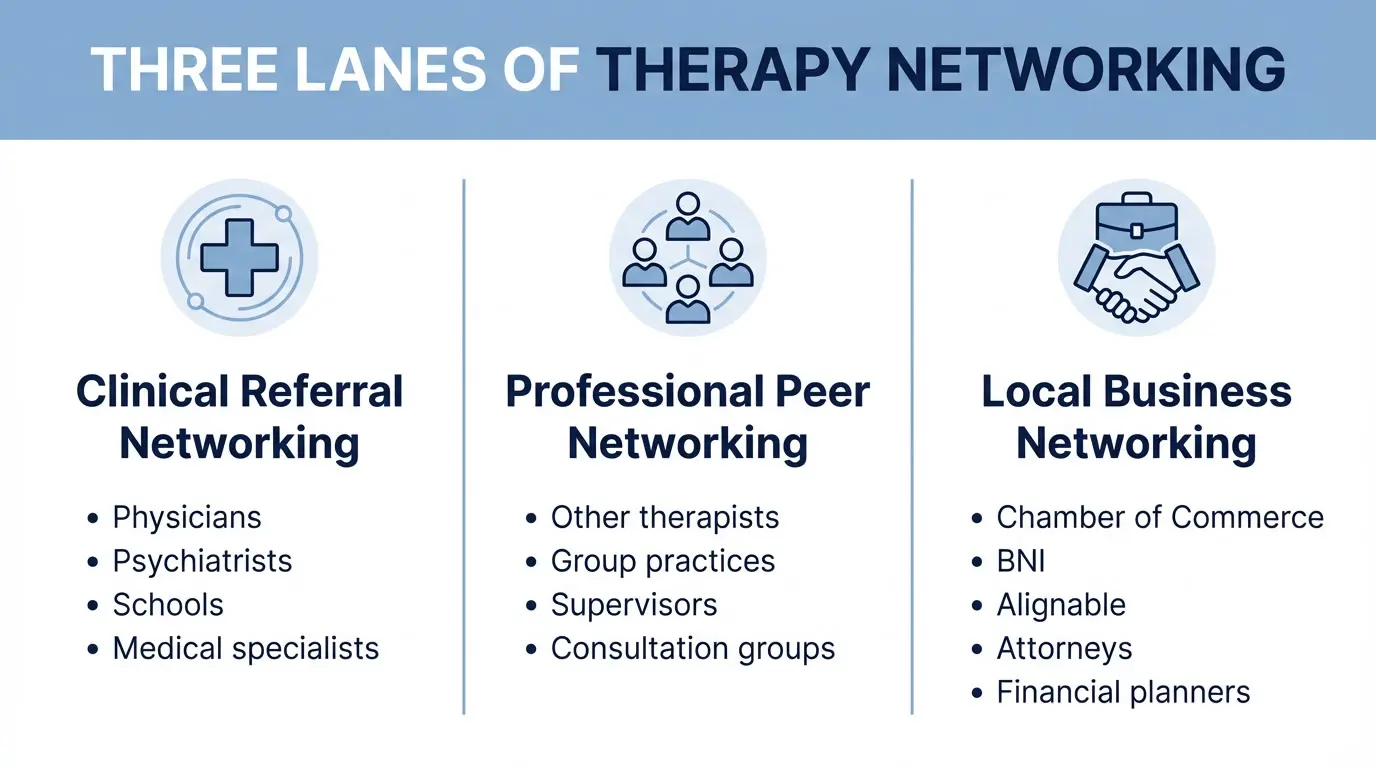
Identifying Potential Referral Sources in the Community
Identifying potential referral sources is a crucial first step for expanding a counselling practice. Referral sources can include:
- Healthcare Providers: Local doctors, psychiatrists, and other mental health professionals often look for reliable counselling services for their patients.
- Schools: Teachers and school counselors can be excellent referral sources, especially for younger clients.
- Community Organizations: Non-profits and community centers frequently assist populations that could benefit from counselling services.
According to a 2024 report, more than 30% of clients find their therapists through referrals from healthcare providers. This highlights the importance of these connections.
Creating Partnerships with Local Organizations
Building partnerships with local organizations not only enhances visibility but also boosts credibility. Consider these approaches:
- Collaborate on Workshops: Offer joint workshops on mental health topics with local organizations to showcase expertise and build rapport.
- Participate in Community Events: Get involved in local fairs, health expos, or charity events to connect with potential clients and other professionals.
- Establish Referral Agreements: Formalize relationships with local healthcare providers and organizations to facilitate mutual referrals.
These partnerships provide direct access to potential clients and increase community awareness of your services — a crucial advantage.
Attending Networking Events and Workshops
Networking events and workshops present valuable opportunities to engage with other professionals and potential clients. To maximize these opportunities, consider:
- Prepare an Elevator Pitch: Create a concise and engaging description of your services to share with attendees.
- Follow Up: Collect contact information and send personalized follow-up messages to maintain connections.
- Join Professional Associations: Become a member of relevant associations to access exclusive networking events and resources.
Research from 2025 indicates that professionals who actively network are 50% more likely to receive referrals than those who do not — an impressive advantage.
Utilizing Follow-Up Strategies to Maintain Connections
Maintaining relationships with referral sources is crucial for long-term success. Effective follow-up strategies encompass:
- Regular Check-Ins: Schedule periodic visits or calls to keep relationships strong and show ongoing interest.
- Share Resources: Provide referral sources with useful materials related to mental health, such as articles or workshop invitations.
- Express Gratitude: A simple thank-you note can reinforce relationships and encourage continued referrals.
Building and maintaining connections within the community requires consistent effort and strategic engagement. One common misconception is that networking is a one-time effort. In reality, it’s an ongoing process that needs active participation and nurturing of relationships (this is often overlooked).
To effectively implement these strategies, professionals should create a networking plan that includes a list of local organizations to approach, a calendar of events to attend, and a follow-up schedule for maintaining connections. By actively engaging with the community, counselling professionals can significantly enhance visibility and attract more clients.
Using Digital Marketing Strategies Effectively
This section discusses targeted digital marketing strategies that can greatly boost visibility and draw in more counselling clients. By leveraging these methods, counselling services can improve their outreach and engagement with potential clients.
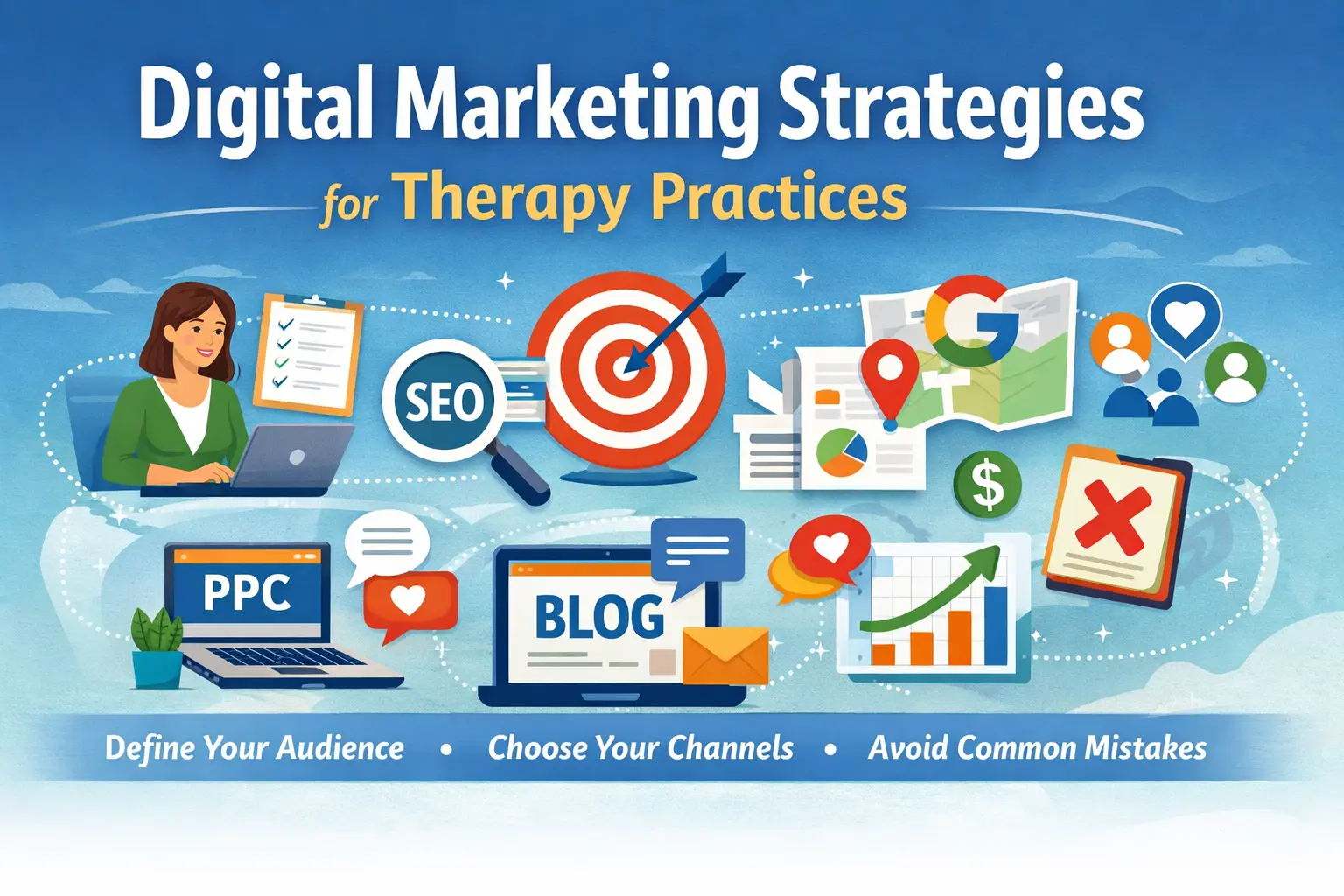
Implementing Targeted Social Media Marketing Campaigns
Social media platforms provide unmatched opportunities for reaching specific demographics. Creating targeted campaigns helps counselling services connect with individuals seeking support. Facebook, Instagram, and LinkedIn all allow for demographic targeting — based on age, location, and interests.
- Facebook Ads: Use detailed targeting options to reach those searching for mental health support.
- Instagram Stories: Share eye-catching content that showcases services, client testimonials, and mental health tips.
- LinkedIn Outreach: Engage with professionals and organizations that might refer clients, promoting services within relevant groups.
Using Google Ads for Local Visibility
Google Ads can dramatically improve local visibility for counselling services. With 63% of all clicks going to the top three paid ads on search engine results pages, investing in Google Ads is essential for attracting local clients.
- Keyword Research: Identify and bid on relevant keywords like “counselling near me” or “mental health services in [your city].”
- Ad Extensions: Use location and call extensions to make it easier for potential clients to reach your practice.
- Local Targeting: Focus on geographic targeting to ensure ads show up for users in your service area.
Creating Engaging Content for Email Marketing
Email marketing remains a powerful tool for nurturing relationships with potential clients. A well-crafted email campaign can drive engagement and encourage inquiries. It’s definitely worth the effort.
- Newsletter Sign-Ups: Offer a free resource (e.g., an eBook on mental health) in exchange for email subscriptions.
- Regular Updates: Send monthly newsletters featuring articles, client success stories, and practical mental health tips.
- Personalization: Tailor content based on subscriber interests to boost open rates and engagement.
Analyzing and Adjusting Marketing Strategies Based on Performance
Regularly analyzing marketing performance is vital for optimizing strategies. Using analytics tools, counselling services can track key performance indicators (KPIs) such as click-through rates, conversion rates, and ROI.
- Google Analytics: Monitor website traffic sources to pinpoint which digital marketing strategies work best.
- Social Media Insights: Evaluate engagement metrics to refine social media content and targeting.
- Ad Performance: Regularly review Google Ads campaigns — adjusting bids and keywords based on performance data.
Common misconceptions include the belief that digital marketing is solely for larger firms. In reality, tailored digital strategies can benefit counselling practices of all sizes. Recognizing local nuances and client needs enables more personalized marketing approaches, resonating more effectively with potential clients.
To implement these strategies effectively, start by establishing a clear marketing plan that integrates social media, Google Ads, and email campaigns. Allocate a specific budget for each channel, and set measurable goals for each campaign. Regularly reviewing performance data is key to making informed adjustments — ensuring efforts align with the objective of attracting more counselling clients.
Tracking and Measuring Success in Client Acquisition
Effective tracking and measuring of client acquisition strategies is essential for optimizing marketing efforts and growing client numbers. This section outlines methodologies and tools that can sharpen understanding of what works — and what needs improvement.
Setting Clear Goals and KPIs
Establishing clear goals and key performance indicators (KPIs) creates a framework for evaluating the success of marketing initiatives. Specific, measurable goals might include increasing website traffic by 30% within six months or obtaining a minimum of 10 new clients each month. Common KPIs for counselling practices include:
- Website conversion rate
- Cost per acquisition (CPA)
- Client retention rate
Defining these metrics allows for targeted adjustments. They help maintain focus on primary objectives.
Using Analytics Tools
Using analytics tools is crucial for tracking performance across various platforms. Google Analytics, for instance, provides insights into website performance, user behavior, and conversion rates. Social media analytics tools, like Facebook Insights and Instagram Analytics, enable assessment of engagement and reach. Key metrics to monitor include:
- Traffic sources (organic, paid, social)
- Engagement rates (likes, shares, comments)
- Demographics of visitors
In 2024, businesses leveraging data analytics reported an average increase of 20% in client acquisition rates — illustrating the importance of these tools.
Gathering Client Feedback
Client feedback is a vital component for continuous improvement. Regularly collecting feedback through surveys, follow-up calls, or feedback forms can reveal insights into client satisfaction and service effectiveness. Key areas to focus on include:
- Overall satisfaction with services
- Areas for improvement
- Likelihood of recommending your services
Implementing changes based on feedback can enhance relationships and boost referral rates — something worth double-checking.
Adjusting Strategies Based on Measurable Outcomes
Adapting marketing strategies based on measurable outcomes is essential for sustained success. Regularly reviewing analytics data and client feedback allows for informed decisions. For instance, if social media campaigns yield low engagement, consider reallocating resources to more effective channels — such as email marketing or community workshops.
Nuance / Expert Layer
Many practitioners underestimate the value of integrating qualitative data from client feedback with quantitative analytics. While numbers can indicate trends, they often don’t capture the nuances of client experiences. For example, a high conversion rate may mask underlying issues — such as poor client communication or unmet expectations. A comprehensive approach that combines both data types provides a more rounded view of client acquisition success.
Practical Application
To effectively implement these strategies, follow these steps:
1. Define specific client acquisition goals and KPIs.
2. Use analytics tools to monitor website and social media performance.
3. Regularly gather and analyze client feedback.
4. Adjust marketing strategies based on data insights.
By systematically applying these practices, counselling professionals can enhance client acquisition efforts and achieve greater success.
Frequently Asked Questions
What are effective marketing strategies for counselling services?
Effective marketing strategies for counselling services include content marketing, search engine optimization (SEO), and community outreach. Establishing a strong online presence through informative blogs and local partnerships can significantly enhance visibility.
How can I use social media to attract counselling clients?
Utilizing social media to attract counselling clients involves sharing valuable content, engaging with your audience, and promoting services through targeted ads. Platforms like Facebook and Instagram can help build community and increase awareness of your practice.
What is the best way to network for counselling referrals?
Networking for counselling referrals can be achieved by attending local events, joining professional organizations, and collaborating with other healthcare providers. Building relationships with peers can lead to mutual referrals and increased client trust.
How much should I spend on marketing as a counsellor?
Counsellors typically allocate 5-10% of their gross income to marketing efforts. This budget should cover both online and offline marketing strategies to effectively reach potential clients.
How long does it take to see results from marketing efforts?
Results from marketing efforts can vary, but typically, it takes 3 to 6 months to see significant outcomes. Consistent engagement and strategy adjustments are essential for long-term success in attracting clients.
What are common mistakes to avoid when attracting clients?
Common mistakes include neglecting online presence, failing to define a target audience, and underestimating the importance of follow-ups. Avoiding these pitfalls can enhance client attraction efforts significantly.
How can I improve my counselling website to attract clients?
Improving a counselling website involves optimizing for user experience, ensuring mobile compatibility, and providing clear information about services. Incorporating testimonials and a blog can also enhance credibility and attract potential clients.
What role does SEO play in getting counselling clients?
SEO plays a crucial role in getting counselling clients by improving website visibility in search engine results. Effective SEO strategies help potential clients find services more easily, leading to increased inquiries and appointments.
Final Thoughts on how to get more counselling clients
To effectively attract more counselling clients, it is essential to integrate robust online marketing strategies with active community engagement. By establishing a strong digital presence and nurturing professional relationships, counsellors can create a compelling value proposition that resonates with potential clients.
Implement a comprehensive social media strategy that not only showcases your expertise but also invites engagement and conversation, fostering a sense of community around your practice.
Ready to boost your client base? Connect with a google ads expert today and watch your counselling practice thrive!
Attracting more clients is crucial for sustaining a successful counselling practice, and leveraging these strategies will position counsellors as trusted resources in their communities.