
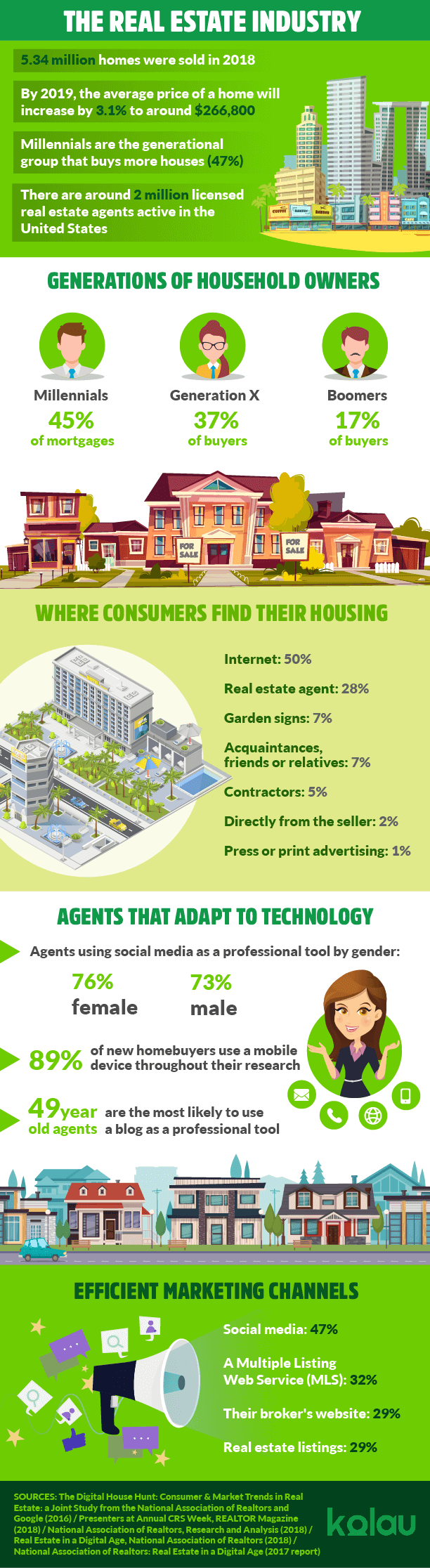
How to get clients for real estate involves implementing effective strategies such as establishing a robust online presence, utilizing social media platforms, and engaging in local networking. These approaches are essential, as data from the National Association of Realtors indicates that 44% of home buyers initiate their property search online, highlighting the importance of digital marketing in attracting potential clients.
Understanding how to get clients for real estate is crucial for real estate professionals aiming to thrive in a competitive market. With the ongoing digital transformation, agents must recognize that a significant portion of home-buyers conduct their research online, necessitating effective online strategies. Failing to adapt could result in losing potential clients to competitors who leverage these digital tools effectively.
Neglecting to master client acquisition strategies can lead to substantial losses in revenue, wasted marketing resources, and a diminished market presence. Real estate agents who do not prioritize these methods risk falling behind in a rapidly evolving industry.
This article will provide insights into proven strategies for acquiring clients in real estate, including a comparison of top digital marketing techniques, a breakdown of associated costs, best practices for engagement, and the importance of local SEO in driving business growth.
What are the best ways to get clients in real estate?
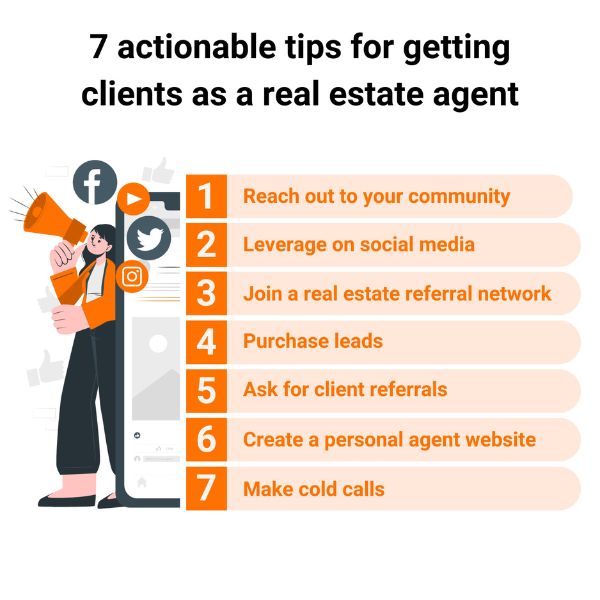
Effective methods for acquiring clients in real estate include networking, leveraging online marketing, and using referrals. Research shows that 74% of real estate agents generate business through referrals. This underscores the importance of building strong relationships.
Networking remains one of the most powerful tools for real estate agents. Attend local events, join community organizations, and engage in industry conferences to meet potential clients and establish connections. It’s all about building a robust network — this can lead to valuable partnerships and referrals, enhancing visibility in the market.
- Use Social Media: Platforms like Instagram and Facebook allow agents to showcase properties and connect with a wider audience. Regularly post engaging content, including virtual tours and client testimonials, to attract potential clients.
- Develop a Professional Website: A well-designed website serves as a digital storefront. Be sure to include property listings, client reviews, and informative blog posts to improve search engine optimization (SEO) and drive traffic to your site.
- Engage in Email Marketing: Create a targeted email list to share valuable insights, new listings, and market updates. Personalized emails can foster relationships — they keep agents top-of-mind for potential clients.
- Host Open Houses: Organizing open houses not only showcases properties but also brings together potential buyers and the agent in a low-pressure environment. Use this opportunity to build rapport and gather contact information for follow-ups.
Expert insight: Consistent follow-up with leads is crucial. Agents who engage with clients within 24 hours are 60% more likely to convert them into clients. Prioritize timely communication to maximize opportunities (this is often overlooked).
How can social media help real estate agents get clients?
Social media platforms like Instagram and Facebook serve as essential tools for real estate agents looking to attract clients. About 74% of homebuyers turn to social media to find their agents. This makes it an effective channel for showcasing listings and engaging with potential clients.
Using social media requires several strategic steps. First, agents should create visually appealing profiles on platforms such as Instagram and Facebook. Make sure to include professional photos, contact information, and links to listings. Regularly posting high-quality images of properties can capture potential buyers’ attention and highlight the agent’s expertise. Engaging with followers through comments and direct messages builds relationships and fosters trust (this is often overlooked).
- Showcase Listings: Use visually compelling images and videos of properties to generate interest. Consider virtual tours or reels that highlight unique features of each listing.
- Share Market Insights: Post updates about local market trends, pricing, and neighborhood information. This positions you as a knowledgeable resource.
- Run Targeted Ads: Use Facebook and Instagram’s ad targeting features to reach specific demographics. This enhances visibility among potential clients.
- Engage with the Community: Join local groups related to real estate or community interests. Participate in discussions to establish credibility and connect with potential clients.
- Collect Testimonials: Share success stories and client testimonials to build social proof. This can significantly influence potential buyers’ decisions.
Social media also enables real-time interaction. Agents can respond promptly to inquiries, which significantly enhances the customer experience. This immediacy often increases the likelihood of conversion.
Expert insight: Consistency is crucial — posting regularly and maintaining an authentic voice will help build a loyal following and boost engagement over time.
What is the cost of acquiring clients in real estate?
The cost of acquiring clients in real estate generally falls between $1,500 and $3,000
per client. This range can change quite a bit, depending on marketing strategies, geographic location, and current market conditions.
Several factors play a role in determining client acquisition costs in real estate. Grasping these nuances can help agents optimize their marketing budgets and boost their return on investment. Here are some key elements that influence these costs:
- Marketing Channels: Different approaches, like social media advertising and search engine marketing, have varying costs. Print advertising, for example, often costs more. Digital marketing tends to be more cost-effective compared to traditional methods.
- Geographic Location: In areas with higher competition, greater marketing investment is often necessary to stand out. Urban markets typically see higher costs than rural ones.
- Branding and Reputation: Established agents or firms with a strong brand might have lower acquisition costs. This is due to increased trust and recognition among potential clients.
Besides these factors, the quality of leads generated from various marketing efforts can also affect overall costs. High-quality leads, which are more likely to convert into clients, often require a bigger upfront investment — but they tend to yield better long-term results.
Expert insight: Concentrate on optimizing marketing strategies tailored to your local market dynamics. Regularly assess the performance of each channel to allocate resources effectively and reduce acquisition costs over time (this is often overlooked).
How long does it take to get clients in real estate?
On average, real estate agents take about 3 to 6 months to land their first clients. This timeline can vary quite a bit, depending on factors like experience, market conditions, and networking efforts.
Several factors influence how long it takes to acquire clients in real estate. First, an agent’s prior experience and knowledge of the local market can speed things up. New agents might need additional time to build credibility and a solid reputation. Seasoned professionals, on the other hand — they often have a pre-existing network that can lead to quicker referrals. Current market conditions also play a crucial role. In a competitive market, agents may find clients more readily. Conversely, in a slow market, it can take longer to attract buyers and sellers (this is often overlooked).
Networking and marketing strategies also impact how quickly an agent can secure clients. Agents who actively engage in community events, use social media, and cultivate relationships with potential clients often see faster results. Implementing effective marketing strategies, like targeted advertising and open houses, can further shorten the timeline. Agents who invest in ongoing education and training often develop skills that enhance their appeal to clients, which ultimately accelerates the client acquisition process.
Expert insight: Consistent follow-up with leads and maintaining a strong online presence are essential for speeding up the process of building a client base in real estate.
What are common mistakes to avoid when trying to get clients?
New real estate agents often make critical mistakes that hinder their ability to attract clients. A prevalent error is neglecting to build a strong online presence — studies indicate that 77% of home buyers use the internet to search for properties. Without a robust digital footprint, agents miss out on potential leads. This is crucial.
One common pitfall is failing to leverage social media effectively. For instance, an agent may create a profile on platforms like Facebook or Instagram but only post listings without engaging with users. This lack of interaction often leads to low visibility and missed opportunities for relationship-building. Engaging content—like market updates, home-buying tips, and community highlights—encourages interaction and can significantly increase an agent’s reach (this is often overlooked).
Another frequent mistake is not following up with leads consistently. An agent may meet potential clients at an open house but then neglect to establish a follow-up system. Research shows that 80% of sales require five follow-ups after the initial contact; however, many agents stop after just one or two attempts. Implementing a systematic approach to follow-ups can enhance client retention and lead conversion rates. This is vital.
Expert insight: Focus on building relationships over making immediate sales. Personal outreach, such as handwritten notes or personalized emails, can create a lasting impression and foster trust with potential clients. This strategy pays off.
Building an Effective Online Presence
A strong online presence is crucial for real estate professionals aiming to attract and retain clients. This section highlights key strategies that leverage digital platforms to boost visibility and engagement.
Creating a Professional Website with Listings
A well-designed website is the foundation of an effective online presence. It should offer user-friendly navigation, high-quality property images, and detailed listings that include essential details like square footage, neighborhood information, and pricing. According to a 2024 survey, 93% of homebuyers use online resources during their search — making a professional website indispensable.
Key features of a successful real estate website include:
- Mobile Responsiveness: Make sure the website functions seamlessly on mobile devices. About 70% of users browse real estate listings on smartphones.
- Integrated MLS Listings: Connect with Multiple Listing Service (MLS) databases to provide up-to-date property listings.
- Contact Forms: Simplify the inquiry process. Easy-to-find contact options encourage potential clients to reach out.
Utilizing SEO to Improve Visibility
Search Engine Optimization (SEO) is essential for boosting online visibility. Using relevant keywords—including phrases like “how to get clients for real estate”—can significantly enhance search rankings. A well-structured SEO strategy focuses on:
- Keyword Research: Identify high-traffic keywords relevant to your market.
- On-Page Optimization: Optimize title tags, meta descriptions, and header tags to improve search engine results.
- Local SEO: Leverage local keywords and create Google My Business profiles to target specific geographic areas.
Statistics reveal that 61% of marketers see SEO as their top priority for lead generation, underscoring its importance in real estate marketing.
Engaging Content Marketing Strategies
Content marketing is vital for establishing authority and attracting clients. By creating valuable content, real estate professionals can engage potential buyers and sellers.
Effective content marketing strategies include:
- Blogging: Regularly publish articles on market trends, home-buying tips, and neighborhood insights.
- Video Tours: Use video content to showcase properties and create virtual tours — appealing to tech-savvy clients.
- Social Media Marketing: Share listings and content across platforms like Instagram and Facebook to reach a wider audience.
A 2025 report shows that companies investing in content marketing experience a conversion rate six times higher than those that don’t.
Email Marketing for Lead Generation
Email marketing remains one of the most effective tools for nurturing leads. Building a targeted email list allows real estate professionals to send personalized content directly to potential clients. Strategies for effective email campaigns include:
- Segmented Lists: Group contacts based on interests or demographics to tailor content.
- Automated Drip Campaigns: Set up automated emails that deliver valuable information over time. This keeps your brand top-of-mind.
- Regular Newsletters: Share market updates, new listings, and featured articles to maintain engagement.
According to recent findings, email marketing for real estate professionals yields an average ROI of $44 for every $1 spent.
Nuance / Expert Layer
Common misconceptions about online presence in real estate often stem from the belief that just having a website is enough. However, a passive online presence won’t generate leads. Active engagement — along with continuous optimization — is essential. Additionally, many agents overlook the significance of local SEO, which is crucial for targeting specific communities and neighborhoods. Failing to optimize for local searches can lead to missed opportunities, considering that 78% of mobile local searches result in an offline purchase.
Practical Application
To effectively build an online presence, real estate professionals should:
1. Develop a user-friendly, mobile-responsive website with integrated MLS listings.
2. Implement a robust SEO strategy that targets relevant keywords.
3. Create a diverse content marketing plan that includes blogs, videos, and social media engagement.
4. Establish a segmented email marketing campaign to effectively nurture leads.
By executing these strategies, real estate professionals can attract and retain clients more efficiently.
Networking Strategies for Real Estate Professionals
This section explores effective networking strategies for real estate professionals, highlighting how relationships can greatly enhance client acquisition efforts.
Joining Local Real Estate Associations
Becoming a member of local real estate associations opens doors to a wealth of resources, including training, market insights, and networking opportunities. These organizations frequently hold meetings, seminars, and workshops — where members can connect with industry peers. A 2024 survey by the National Association of Realtors shows that 70% of new clients come from personal referrals and networking. This highlights how crucial these associations are for building a strong client base.
Participating in Community Events
Engaging in community events serves as a powerful method for real estate professionals to establish their presence and connect with potential clients. Whether it’s local fairs, charity events, or neighborhood meetups, these gatherings let agents showcase their expertise while building rapport with community members. Actively participating not only increases visibility but also fosters trust — a vital component in the real estate industry.
Building Relationships with Local Businesses
Forming partnerships with local businesses can lead to mutually beneficial relationships. Real estate professionals can collaborate with mortgage lenders, home improvement stores, and insurance agencies to exchange referrals and resources. Such strategic alliances often lead to increased exposure and client acquisition opportunities. For example, hosting joint events or workshops can attract potential clients while providing valuable information (worth double-checking).
Utilizing Client Referrals Effectively
Client referrals rank among the most effective methods for acquiring new clients. Establishing a systematic referral process can really maximize this potential. Encourage satisfied clients to refer friends and family by offering incentives like discounts on future services or gift cards. A study by ReferralCandy indicates that referred customers have a 37% higher retention rate, which makes them more valuable in the long run.
Nuance / Expert Layer
While networking is commonly seen as a simple process of meeting people, many professionals often overlook the need to nurture these relationships over time. A frequent misconception is that just attending events or joining associations suffices; however, consistent follow-up and engagement are critical. Building a network is about quality, not just quantity — developing deep, meaningful relationships yields better results than superficial connections. Moreover, utilizing digital networking platforms, like LinkedIn, can enhance traditional networking efforts, allowing for a broader reach and engagement with potential clients.
Practical Application
- Join at least one local real estate association to gain access to resources and networking opportunities.
- Participate in at least one community event each month to increase visibility and establish local connections.
- Identify three local businesses to collaborate with and explore partnership opportunities for referrals.
- Create a referral program that incentivizes existing clients to refer new business.
Leveraging Social Media for Client Acquisition
Effectively using social media is crucial for real estate professionals aiming to connect with potential clients. This section delves into strategies that maximize engagement and enhance client acquisition through targeted social media efforts.
Choosing the Right Platforms for Your Audience
Selecting the right social media platforms is vital for reaching the target demographic. Each platform attracts distinct user bases, which influences engagement levels and the effectiveness of messages.
- Facebook: Great for detailed listings, community engagement, and targeted ads. There are over 2.9 billion monthly active users as of 2024.
- Instagram: A visual platform that’s perfect for showcasing property images and virtual tours. Engagement rates here are 10 times higher than those on Facebook.
- LinkedIn: Effective for targeting professionals and investors. It’s ideal for sharing market insights and networking with industry peers.
Creating Engaging Content That Showcases Listings
Content quality plays a significant role in attracting client interest. Real estate professionals should aim to create visually appealing and informative posts that highlight property features and local market conditions.
- High-Quality Images: Use professional photography to capture properties’ best features.
- Video Tours: Create engaging video content that allows potential clients to explore listings remotely.
- Informative Posts: Share insights about the real estate market, home-buying tips, and neighborhood highlights to establish expertise.
Using Targeted Ads to Reach Potential Clients
Social media advertising provides robust targeting capabilities, allowing real estate professionals to reach specific demographics based on location, interests, and behaviors. This approach works well — but only when data is accurate.
In 2025, businesses using targeted ads reported a 70% higher conversion rate compared to non-targeted campaigns. Implementing a structured ad strategy involves:
- Identifying target audiences through market research.
- Setting clear objectives for each ad campaign.
- Monitoring and adjusting campaigns based on performance metrics.
Building a Community Through Consistent Engagement
Engagement fosters trust and loyalty among potential clients. Regular interaction with followers aids in building a community around your brand. Strategies to enhance engagement include:
- Responding promptly to comments and messages.
- Hosting live Q&A sessions to address client inquiries.
- Sharing user-generated content to showcase satisfied clients and their experiences.
Many professionals overlook social media algorithms. Content that garners higher engagement gets prioritized in users’ feeds, boosting visibility. Therefore, creating shareable and relatable content is crucial for expanding reach.
To implement these strategies effectively, real estate professionals should create a content calendar that outlines posting schedules, themes, and engagement tactics. Regularly analyzing performance metrics will help inform necessary adjustments, ensuring ongoing improvement in client acquisition efforts.
Tracking and Analyzing Client Acquisition Efforts
Measuring how well client acquisition strategies perform is essential for optimizing marketing in real estate. This section outlines ways to track performance, set benchmarks, and adapt strategies based on data insights.

Setting Clear KPIs for Marketing Efforts
Establishing key performance indicators (KPIs) forms the foundation for assessing client acquisition success. Effective KPIs in real estate often include:
- Lead Conversion Rate: The percentage of leads that convert into clients.
- Cost Per Acquisition (CPA): Total marketing expenses divided by the number of new clients acquired.
- Return on Investment (ROI): Revenue generated from marketing efforts compared to the costs involved.
In 2024, the average CPA for real estate agents is estimated to sit around $1,500. This underscores the urgent need for targeted and efficient strategies.
Using Analytics Tools to Track Performance
Using analytics tools enables real estate professionals to gather data on marketing initiatives. Tools like Google Analytics, CRM software, and social media insights provide valuable information about user behavior and engagement.
Key metrics to focus on include:
- Website Traffic: The number of visitors to your site, indicating interest levels.
- Engagement Rates: Metrics such as clicks, shares, and comments on social media posts.
- Lead Sources: Identifying which channels (e.g., social media, referrals, email campaigns) generate the most leads.
Adjusting Strategies Based on Data Insights
Data-driven decision-making proves crucial for refining marketing strategies. Regularly reviewing performance metrics reveals underperforming areas — for example, if social media ads yield a low conversion rate, consider reallocating the budget to more effective channels.
A/B testing can also shed light on what resonates with potential clients. This involves creating two versions of a marketing asset to see which performs better, enabling continuous improvement.
Understanding the Customer Journey from Lead to Client
Mapping the customer journey helps identify critical touchpoints that influence a lead’s decision-making process. Key stages include:
- Awareness: The lead becomes aware of your services through marketing efforts.
- Consideration: The lead researches options and evaluates your offerings.
- Decision: The lead chooses to engage your services, becoming a client.
Understanding this journey allows for tailored marketing efforts that meet specific needs at each stage.
Nuance / Expert Layer
A common misconception is that merely tracking metrics will lead to improved performance. However, it’s not just about collecting data; focus must shift to actionable insights derived from that data. Many agents overlook qualitative data, such as client feedback and market trends — this information can provide context to quantitative metrics (this is often overlooked). Moreover, a strategy’s effectiveness may vary by market segment, necessitating a nuanced approach tailored to specific client demographics.
Practical Application
To effectively track and analyze client acquisition efforts, real estate professionals should:
- Define and set clear KPIs that align with business objectives.
- Use analytics tools to gather data on lead generation and conversion.
- Regularly review data to identify trends and adjust strategies accordingly.
- Map the customer journey to understand and optimize client interactions.
Implementing these steps will enhance the ability to attract clients in real estate, driving growth and profitability.
Frequently Asked Questions
What are the best ways to get clients in real estate?
The best ways to get clients in real estate include networking, leveraging referrals, and utilizing online marketing strategies. Building a strong personal brand and maintaining client relationships are also crucial for long-term success.
How can social media help real estate agents get clients?
Social media platforms allow real estate agents to showcase listings, share market insights, and engage with potential clients. By creating valuable content and interacting with followers, agents can build trust and expand their reach.
What is the cost of acquiring clients in real estate?
The cost of acquiring clients in real estate varies widely, typically ranging from a few hundred to several thousand dollars per client. Factors influencing this cost include marketing strategies, advertising expenses, and the agent’s experience level.
How long does it take to get clients in real estate?
The timeline for acquiring clients in real estate can range from a few weeks to several months. Factors such as market conditions, networking efforts, and marketing strategies significantly impact the duration.
What are common mistakes to avoid when trying to get clients?
Common mistakes include neglecting follow-ups, failing to establish a strong online presence, and not understanding the target market. Additionally, agents should avoid overpromising and underdelivering on services.
Final Thoughts on how to get clients for real estate
Success in real estate hinges on a multifaceted approach to client acquisition that prioritizes building a strong online presence, effective networking, and leveraging social media. By integrating these strategies, real estate professionals can not only attract a steady stream of clients but also cultivate long-lasting relationships that drive future business.
To maximize your client acquisition efforts, invest in a targeted social media advertising campaign that highlights your unique value proposition and showcases your expertise in the market. This strategic move can significantly enhance your visibility and engagement with potential clients.
Ready to elevate your real estate business? Consult a google ads expert to uncover effective strategies for attracting more clients today!
Mastering client acquisition in real estate is not just beneficial; it is essential for sustaining a competitive edge in an ever-evolving market.