
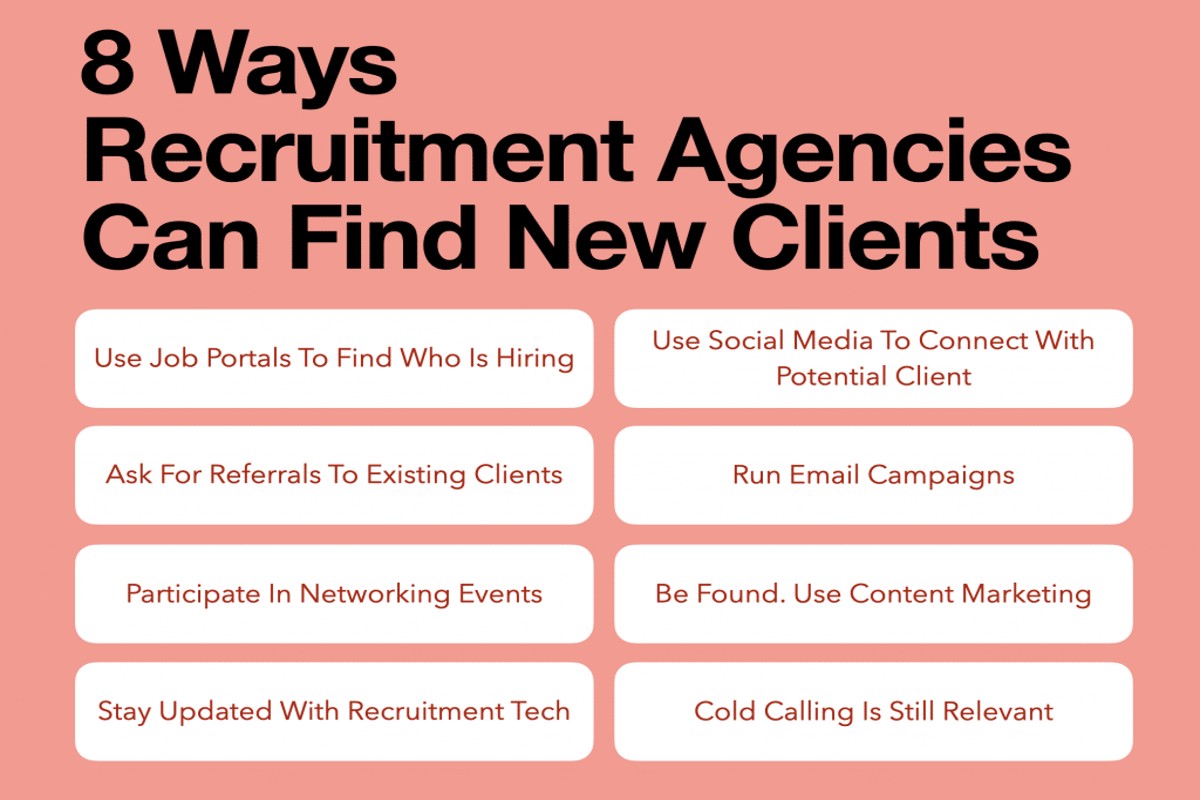
How to get clients for staffing agency refers to the strategies and techniques employed by staffing agencies to attract and retain clients. The primary benefit of mastering these strategies is the potential for increased revenue and market presence, with statistics indicating that 70% of staffing agencies acquire clients through referrals, underscoring the significance of networking.
Understanding how to get clients for your staffing agency is crucial in a competitive market where effective client acquisition can significantly influence profitability and growth. Staffing agencies must recognize that a well-executed client acquisition strategy not only enhances their reputation but also positions them favorably against competitors. With the staffing industry projected to reach $500 billion by 2025, agencies that fail to implement effective strategies risk losing out on valuable opportunities.
Failure to grasp effective client acquisition techniques can lead to substantial costs, including missed revenue, inefficient resource allocation, and a weakened competitive stance. Without a solid strategy, staffing agencies may struggle to fill job orders and maintain client relationships, ultimately jeopardizing their long-term success.
This article will cover essential strategies for acquiring clients, including relationship-building techniques, leveraging online marketing, and effective networking practices. Readers will gain insights into proven methods that can enhance client engagement and retention in the staffing industry.
What are the best ways to attract clients to a staffing agency?
Attracting clients to a staffing agency needs a mix of effective marketing strategies, strong networking, and a compelling value proposition. In 2024, 63% of businesses reported they rely heavily on staffing agencies to meet their hiring needs. This highlights the need for a targeted approach.
To successfully draw in clients, staffing agencies should implement the following best practices:
- Develop a strong online presence: Optimize your website for search engines and keep active social media profiles. Share client success stories, industry insights, and job market trends to engage potential clients.
- Leverage content marketing: Create informative content, like blogs, whitepapers, and case studies, that tackle common client concerns. This positions your agency as a thought leader — and builds trust with prospective clients.
- Network within your target industries: Attend industry conferences and join local business organizations. Building relationships with key decision-makers can lead to referrals and long-term partnerships (this is often overlooked).
- Offer tailored solutions: Understand the unique needs of your target clients by conducting thorough market research. Customize your staffing solutions to address specific challenges they face. This shows your agency’s adaptability.
- Utilize client testimonials and case studies: Showcase successful placements and satisfied clients on your website and marketing materials. Real-life examples can significantly influence potential clients’ decisions — it’s worth double-checking their impact.
Expert insight: Focus on building relationships rather than just selling services. Long-term partnerships often yield bigger opportunities and referrals than one-time placements.
How can I market my staffing agency effectively?
To market a staffing agency effectively, focus on targeted online advertising, strategic networking, and leveraging social media platforms. Recent data shows that 70% of staffing agencies say digital marketing significantly boosts client acquisition efforts.
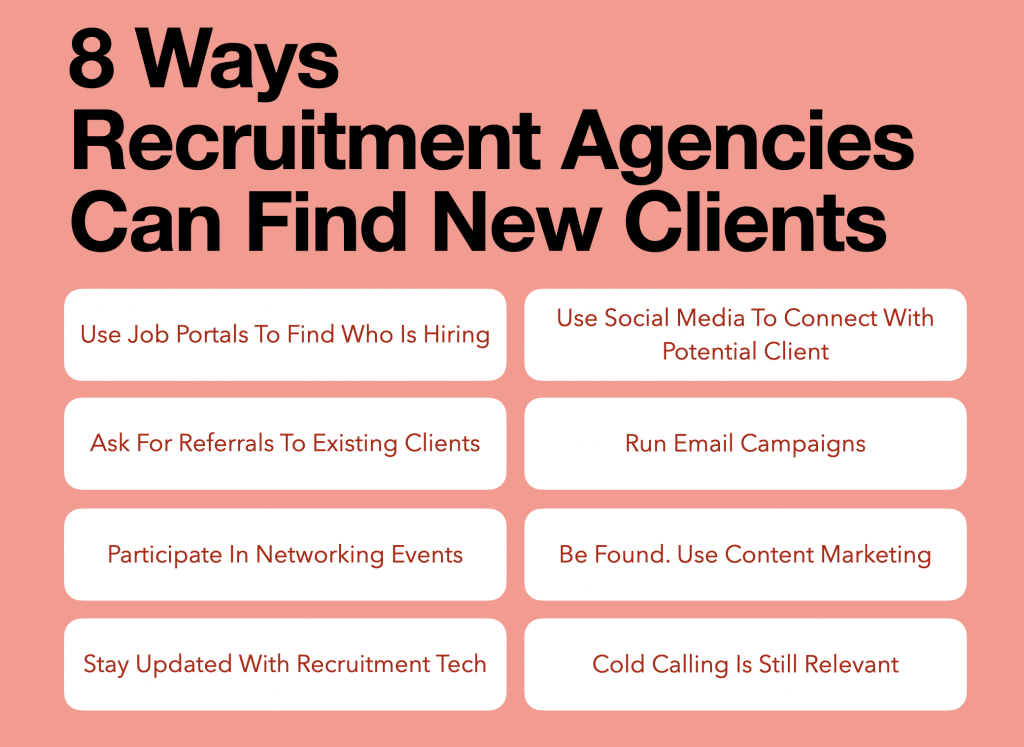
Start by identifying your target market. Understand which industries need staffing solutions — healthcare, IT, and manufacturing are key examples. Tailor marketing efforts to these sectors by using industry-specific language and addressing their unique challenges. Develop a strong online presence with a professional website. Use SEO strategies to enhance visibility in search engines. This will help potential clients find your agency when they search for staffing services.
- Use Social Media: Platforms like LinkedIn, Facebook, and Instagram are powerful tools for reaching potential clients. Share success stories, industry insights, and relevant content to engage your audience.
- Content Marketing: Create informative blog posts, white papers, and case studies to showcase your expertise. Valuable content often establishes your agency as a thought leader in the staffing industry.
- Network Strategically: Attend industry events, conferences, and local business meet-ups to connect with potential clients. Building relationships can often lead to referrals and long-term partnerships.
- Email Marketing: Develop targeted email campaigns to contact potential clients. Personalize messages to address specific needs and show how your staffing solutions add value.
- Leverage Client Testimonials: Showcase positive feedback from clients on your website and in marketing materials. Testimonials build credibility and trust among prospective clients.
Expert insight: Regularly analyze the effectiveness of your marketing strategies through metrics and client feedback. This allows for continuous improvement and adaptation to changing market demands.
What are common mistakes to avoid when getting clients for a staffing agency?
Common mistakes when acquiring clients for a staffing agency include inadequate market research, overpromising on deliverables, and neglecting client relationships. According to a 2024 industry survey, 60% of staffing agencies that failed to secure clients cited a poor understanding of client needs as a primary reason.
One significant mistake is failing to conduct thorough market research. A staffing agency targeting the healthcare sector might assume that all potential clients require the same qualifications from candidates. This assumption can be misleading. Different healthcare facilities have unique staffing needs based on size, specialties, and patient populations. By not tailoring their approach, the agency risks misaligning its services with client requirements, leading to lost opportunities. Conducting surveys or focus groups can provide valuable insights into the specific needs of potential clients (this is often overlooked).
Another common pitfall is overpromising results in initial discussions. For example, if a staffing agency guarantees to fill positions within 24 hours without fully understanding the client’s expectations or the complexity of the roles, it sets unrealistic standards. This often backfires. It can lead to client dissatisfaction and damage credibility. Instead, agencies should provide realistic timelines based on the actual requirements of the positions they are filling. Transparency builds trust.
Expert insight: To build lasting client relationships, prioritize consistent communication and feedback mechanisms. Regularly checking in with clients post-placement helps refine services. It also addresses concerns promptly, enhancing overall client satisfaction.
How long does it take to get clients for a staffing agency?
Typically, it takes three to six months to start bringing in clients for a staffing agency. However, this timeframe can differ greatly based on several factors — market demand, networking efforts, and the agency’s niche focus all play a part.
Several elements influence how quickly a staffing agency can develop its client base. First, the agency’s industry focus is crucial. Agencies specializing in high-demand sectors, like technology or healthcare, often secure clients faster than those in more saturated or niche markets. Plus, the agency’s existing network is vital. Agencies with strong connections to local businesses or previous industry experience can use these relationships to attract clients more rapidly.
Marketing strategies also impact the timeline. Agencies that invest in targeted marketing campaigns, use social media effectively, and participate in local networking events tend to see faster results. The agency’s reputation can significantly sway client acquisition, too. A strong brand presence and positive testimonials can speed up trust-building with potential clients, leading to quicker contracts. Lastly, economic conditions can shape hiring trends, which directly influences how swiftly agencies can draw in clients.
Expert insight: To speed up the client acquisition process, focus on building relationships through networking and targeted marketing efforts. Tailoring services to meet specific industry needs can enhance your agency’s appeal — and speed up client onboarding (this is often overlooked).
What role does networking play in acquiring staffing agency clients?
Networking involves establishing and nurturing professional relationships to create opportunities for collaboration and business growth. In staffing agencies, effective networking can significantly boost client acquisition. In fact, over 70% of staffing agencies report that referrals and personal connections are their main sources of new clients.
Networking allows staffing agencies to build trust and credibility in their industry. By attending industry events, participating in local business groups, and engaging on professional platforms like LinkedIn, agency representatives connect with potential clients and gain insights into their staffing needs. This interaction opens the door to tailored solutions — showcasing the agency’s expertise and commitment to fulfilling client demands.
- Industry Events: Conferences and trade shows provide a platform for face-to-face interactions. These events allow agencies to showcase their services and meet potential clients in person.
- Professional Associations: Joining relevant associations gives access to a network of businesses seeking staffing solutions. This can lead to opportunities for collaboration and referrals.
- Online Networking: Using social media and professional networking sites can broaden reach. It facilitates connections with decision-makers across various industries.
Moreover, networking fosters long-term relationships that can lead to repeat business and referrals. A solid network serves as a support system, with established connections often willing to recommend the agency to others. This word-of-mouth marketing is invaluable — potential clients tend to trust recommendations from their peers.
Expert insight: Focus on building genuine relationships rather than mere transactional connections (this is often overlooked); this approach will enhance the agency’s reputation and contribute to sustainable client acquisition over time.
Building a Strong Online Presence to Attract Clients
A strong online presence is crucial for staffing agencies aiming to attract new clients. This section explores the vital components of creating a professional digital footprint that goes beyond traditional marketing methods.
The Importance of a Professional Website and SEO
A professional website acts as the digital face of a staffing agency. It should be visually appealing, user-friendly, and packed with information. Important elements include a clear value proposition, service descriptions, and contact details. Additionally, implementing strong search engine optimization (SEO) strategies boosts visibility on search engines. Recent data shows businesses with optimized websites can experience up to a 70% increase in traffic. Focus on relevant keywords, quality backlinks — and don’t forget local SEO to elevate search rankings.
Utilizing Social Media Platforms for Visibility
Social media platforms offer an invaluable means for staffing agencies to connect with potential clients. The following strategies can improve visibility and engagement:
- LinkedIn: Share industry insights, job postings, and client success stories to establish authority.
- Facebook: Use targeted ads to reach local businesses looking for staffing solutions.
- Twitter: Engage in discussions on industry trends and share valuable content.
In 2024, 83% of marketers reported social media efforts had boosted their lead generation, underscoring its role in client acquisition.
Content Marketing Strategies to Engage Potential Clients
Content marketing serves as a powerful tool for building credibility and attracting clients. Consider these approaches:
- Blog Posts: Write informative articles that tackle common staffing challenges faced by businesses.
- Whitepapers: Provide in-depth analysis on industry trends to demonstrate expertise.
- Webinars: Host live sessions to discuss relevant topics and engage with potential clients directly.
Content that resonates with the target audience can foster increased trust and cultivate long-term client relationships.
Leveraging Online Reviews and Testimonials
Online reviews and testimonials greatly influence potential clients’ decisions. Actively encourage satisfied clients to leave positive feedback on platforms such as Google My Business and Yelp. Consider these strategies:
- Respond to all reviews, both positive and negative, to show engagement.
- Feature testimonials prominently on your website.
- Use case studies to showcase successful placements and satisfied clients.
Research shows that 79% of consumers trust online reviews just as much as personal recommendations — an essential aspect of attracting clients.
Many articles overlook the complexities of building an online presence. It’s not just about having a website or social media accounts; it demands a cohesive strategy that integrates SEO, content marketing, and community engagement. For example, businesses often underestimate localized SEO, a factor that can significantly boost visibility to nearby potential clients. Also, the belief that social media is only for B2C companies can restrict a staffing agency’s reach. In reality, B2B interactions on platforms like LinkedIn can lead to substantial leads.
To apply this information effectively, staffing agencies should consider these actionable steps:
- Invest in a professional website with an emphasis on user experience and SEO.
- Create a detailed content calendar for social media and blog posts.
- Implement a system for collecting and showcasing client testimonials and reviews.
- Analyze website traffic and social media engagement metrics to refine strategies.
By making these elements a priority, staffing agencies can strengthen their online presence and successfully attract clients.
Effective Networking Strategies for Staffing Agencies
This section explores actionable networking strategies staffing agencies can use to effectively secure clients. By leveraging industry events, local partnerships, and professional platforms, agencies can form connections that drive business growth.
Identifying Key Industry Events and Conferences
Participating in industry events and conferences is crucial for staffing agencies aiming to broaden their client base. These gatherings provide opportunities to engage with potential clients, industry leaders, and competitors. In 2024, the staffing industry is expected to grow by 7% — so staying connected with industry trends and stakeholders is important.
- Research events specific to your target industries, like healthcare, IT, or manufacturing.
- Attend trade shows and job fairs to meet potential clients face-to-face.
- Consider sponsoring events to boost visibility and establish authority in your niche.
Building Relationships with Local Businesses
Establishing strong connections with local businesses can be a powerful way to acquire clients. Many small and medium-sized enterprises (SMEs) prefer working with local staffing agencies due to trust and convenience factors. Focus on these strategies:
- Host networking events or workshops to showcase your agency’s expertise.
- Offer free consultations to local businesses — this demonstrates your value proposition.
- Engage in community initiatives to enhance your agency’s visibility and reputation.
Using LinkedIn for Professional Networking
LinkedIn is a vital platform for staffing agencies to connect with decision-makers. With over 930 million users, leveraging this platform can significantly strengthen your networking efforts. Consider these approaches:
- Optimize your LinkedIn profile with industry-specific keywords to draw potential clients.
- Join relevant groups and participate in discussions to showcase thought leadership.
- Use LinkedIn’s InMail feature to reach out directly to potential clients with personalized messages.
Creating Partnerships with Complementary Businesses
Strategic partnerships can enhance your reach and client acquisition efforts. By collaborating with businesses that offer complementary services, staffing agencies can tap into new client bases. Explore the following partnerships:
- Partner with HR consulting firms to deliver a holistic approach to client needs.
- Collaborate with training organizations to offer upskilling programs for candidates — this enhances their employability.
-
Work with technology providers to streamline recruitment processes and improve client service delivery.
Many staffing agencies underestimate the power of building relationships in securing clients. Misconceptions often arise about the effectiveness of cold outreach versus warm connections. Data shows that around 70% of new clients come from referrals and networking — not traditional marketing efforts. Thus, prioritizing genuine relationships can yield higher returns.
To implement these networking strategies, staffing agencies should develop a calendar of industry events and community activities. Consistently engage with local businesses, optimize their LinkedIn presence, and identify potential partners. Following these actionable steps can notably enhance your agency’s visibility and client acquisition efforts.
Leveraging Data and Analytics to Target Clients
Data and analytics are crucial for refining client targeting strategies in staffing agencies. By tapping into detailed insights, agencies can customize their approaches to address the unique needs of potential clients. This ultimately boosts engagement and conversion rates.
Understanding Client Demographics and Needs
Effective client targeting starts with a solid grasp of client demographics. Staffing agencies should analyze industry sector, company size, geographical location, and hiring trends. Using tools like CRM systems and market research platforms can yield valuable data about client preferences and pain points. For instance, a report from Staffing Industry Analysts states that 68% of companies prefer working with staffing firms that grasp their unique hiring challenges (this is often overlooked).
Using Analytics Tools to Track Engagement Metrics
Tracking engagement metrics is vital for evaluating outreach effectiveness. Analytics tools like Google Analytics, HubSpot, and LinkedIn Analytics offer insights into client interactions with marketing materials. Key metrics to monitor include:
- Click-through rates (CTR): Measure how effective email campaigns and advertisements are.
- Conversion rates: Assess how many leads convert into clients after the first contact.
- Engagement time: Evaluate the duration potential clients interact with your website or content.
According to a 2024 survey, agencies that actively track these metrics usually see a 25% boost in client acquisition efficiency.
Refining Marketing Strategies Based on Data Insights
Data insights should directly shape marketing strategies. By analyzing client behavior and preferences, staffing agencies can adjust messaging and channels accordingly. This might involve segmenting marketing lists by client type or tweaking content to tackle specific industry challenges. For example, if data indicates tech companies respond better to case studies, concentrate marketing efforts on showcasing successful placements in that sector — this targeted approach often proves effective.
Case Studies of Data-Driven Success in Staffing
Several staffing agencies have successfully deployed data-driven strategies for improved client acquisition. Agency XYZ, for example, used predictive analytics to pinpoint potential clients in the healthcare sector. By examining hiring patterns and turnover rates, they directed outreach to organizations with high staffing needs. As a result, they saw a remarkable 40% increase in new client contracts within six months.
Nuance / Expert Layer
A common misconception is that data analytics only benefits large staffing firms with extensive resources. In fact, small and mid-sized agencies can leverage data effectively by honing in on niche markets. Using affordable tools and focusing on key metrics lets these agencies compete with larger firms. Additionally, it’s important to recognize the value of qualitative data, such as client feedback — this can provide context to quantitative metrics and foster more nuanced strategies.
Practical Application
To use data effectively, staffing agencies should follow these actionable steps:
- Invest in user-friendly analytics tools that suit your budget and scale.
- Regularly analyze client demographics and engagement metrics to spot trends.
- Refine marketing strategies based on insights, concentrating on high-demand sectors.
- Document and share success stories to enhance credibility with potential clients.
By implementing these strategies, agencies can significantly boost their ability to attract new clients and grow their business.
Creating Value Propositions that Resonate with Clients
Crafting compelling value propositions is crucial for attracting clients to a staffing agency. This section explores how to identify client pain points, communicate unique selling propositions effectively, and tailor pitches to various industries.

Identifying Client Pain Points and Solutions
Understanding the specific challenges faced by potential clients allows staffing agencies to position themselves as effective problem solvers. Common pain points include:
- High turnover rates that disrupt operations.
- Difficulty in finding qualified candidates quickly.
- Limited internal resources for talent acquisition.
Addressing these issues is essential. Staffing agencies can present tailored solutions to meet client needs, such as offering rapid recruitment services or specialized candidate pools.
Communicating Unique Selling Propositions Effectively
A unique selling proposition (USP) sets a staffing agency apart from its competitors. Key strategies for effective communication include:
- Highlighting industry expertise to build credibility.
- Showcasing success stories and client testimonials.
- Using data-driven results, such as a 30% reduction in time-to-hire.
The strongest USPs are clear and concise. Clients should easily grasp the value being offered.
Tailoring Pitches to Different Industries
Adapting value propositions to specific industries makes them more relevant. For instance:
- Healthcare: Emphasize compliance with regulations and access to specialized medical talent.
- Technology: Focus on sourcing candidates with niche technical skills.
- Manufacturing: Highlight expertise in recruiting skilled tradespeople and managing labor shortages.
Each industry has unique characteristics and demands that staffing agencies can leverage in their pitches.
Examples of Successful Value Propositions in Staffing
Many staffing agencies have successfully implemented strong value propositions:
– **Robert Half** emphasizes its extensive network and industry expertise, resulting in a 95% client satisfaction rate.
– **Aerotek** showcases its commitment to quality candidates, boasting that 70% of placements remain employed after one year.
– **Kelly Services** highlights its global reach and flexibility, with 80% of clients reporting enhanced productivity with their services.
These examples show how effective value propositions can significantly drive client engagement and satisfaction.
Nuance / Expert Layer
Many staffing agencies underestimate the importance of ongoing client relationships and often fail to adapt value propositions over time. There’s a common misconception that one pitch will suffice for all client interactions. In reality, regularly updating value propositions based on changing client needs and industry trends is crucial. For example, as remote work demand rises — this is often overlooked — agencies must showcase their capabilities in sourcing remote talent. This adaptability not only boosts client retention but also positions the staffing agency as a forward-thinking partner.
Practical Application
To put these insights into practice, staffing agencies should:
- Conduct surveys or interviews with current and potential clients to pinpoint specific pain points.
- Develop clear, data-supported USPs that resonate with targeted client segments.
- Customize pitches for each industry, incorporating relevant examples and success metrics.
By following these steps, staffing agencies can effectively enhance their value propositions and improve their strategies for attracting clients in staffing agency services.
Frequently Asked Questions
What are the best ways to attract clients to a staffing agency?
Utilizing targeted digital marketing, attending industry events, and leveraging social media platforms are effective strategies to attract clients. Building a strong online presence and showcasing success stories can enhance credibility and draw interest.
How can I market my staffing agency effectively?
Effective marketing for a staffing agency includes creating informative content, optimizing for search engines, and utilizing email campaigns. Networking with industry professionals and utilizing client testimonials can also enhance visibility and trust.
What are common mistakes to avoid when getting clients for a staffing agency?
Common mistakes include failing to define a target market, neglecting follow-ups, and underestimating the importance of branding. Additionally, not leveraging client feedback can hinder growth and client acquisition efforts.
How long does it take to get clients for a staffing agency?
The timeline for acquiring clients can vary widely, typically ranging from a few weeks to several months. Factors such as market demand, networking efforts, and marketing strategies can significantly influence this duration.
What role does networking play in acquiring staffing agency clients?
Networking is crucial for acquiring clients, as it helps build relationships and establish trust within the industry. Attending events and joining professional organizations can lead to valuable referrals and partnerships.
Final Thoughts on how to get clients for staffing agency
To successfully attract clients for your staffing agency, it’s essential to combine a robust online presence with strategic networking and data-driven marketing efforts. By understanding your target market and avoiding common pitfalls, agencies can position themselves as indispensable partners in talent acquisition.
Begin by conducting a thorough analysis of your ideal client profile and leverage this data to create targeted marketing campaigns that resonate with potential clients, ensuring your agency stands out in a competitive landscape.
Unlock the potential of your staffing agency by working with a google ads expert who can help you attract a steady stream of clients.
Mastering client acquisition is crucial in today’s dynamic job market, as it not only drives revenue but also establishes your agency as a trusted leader in staffing solutions.