
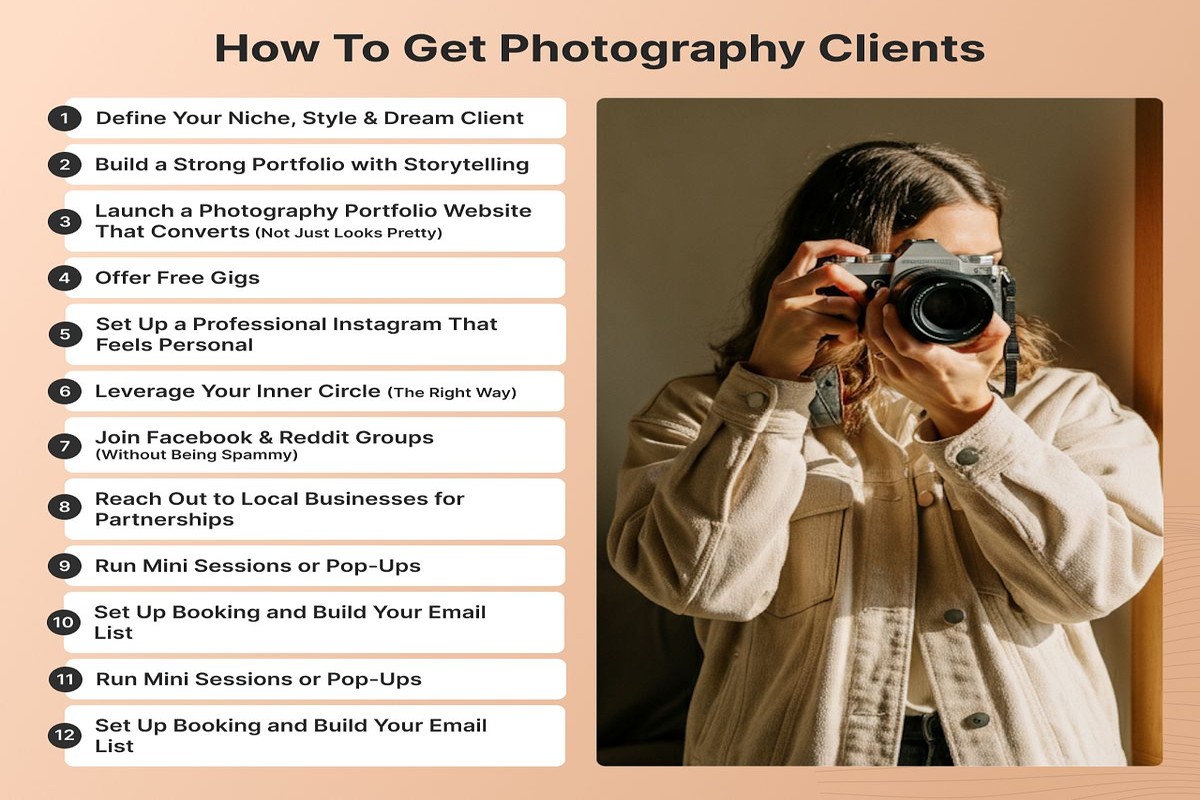
How to get clients for photography involves implementing effective strategies to attract and retain clients in the competitive photography market. A strong online presence through a portfolio website and social media is essential, as 85% of clients trust recommendations from friends and family. By leveraging these techniques, photographers can significantly increase their client base and enhance their business growth.
Understanding how to get clients for photography is crucial for both emerging and established photographers. In a market where competition is fierce, failing to effectively attract clients can lead to lost opportunities and stagnant growth. According to recent industry reports, the photography market is expected to reach $10 billion by 2025, underscoring the need for effective client acquisition strategies.
Without grasping these strategies, photographers risk missing out on revenue opportunities, wasting marketing resources, and falling behind competitors who successfully attract clients through effective networking and referrals.
This article will cover proven strategies for acquiring clients, including building a compelling online presence, effective networking techniques, and the importance of leveraging word-of-mouth referrals. Readers will also learn about best practices for engaging potential clients and optimizing their marketing efforts.
What are effective ways to find photography clients?
Effective ways to find photography clients include leveraging networking opportunities, using social media marketing, and participating in local events. A 2023 survey revealed that 65% of photographers consider networking their primary source of new clients.
Networking remains a cornerstone strategy for finding clients. Building relationships with other professionals — like wedding planners, event coordinators, and local businesses — often leads to referrals. Attend industry conferences, workshops, and local meet-ups to connect with potential collaborators or clients. Establishing a strong local presence can enhance visibility and credibility.
Social media marketing is another powerful tool for reaching a broader audience. Platforms like Instagram and Facebook enable photographers to showcase their work and engage with followers. Consistently posting high-quality images, using relevant hashtags, and interacting with your audience can greatly increase your reach. Consider running targeted ads to reach specific demographics — this can really boost inquiries and bookings.
- Attend local events: Participate in community gatherings, fairs, and festivals. Offering free mini-sessions or showcasing your portfolio can attract immediate interest.
- Collaborate with other creatives: Partnering with models, makeup artists, and stylists can enhance your portfolio while exposing you to their networks.
- Optimize your website: Make sure your website is user-friendly, showcases your best work, and includes clear contact information. Invest in SEO to improve search visibility. This is often overlooked.
Expert insight: Regularly updating your portfolio and engaging with past clients can foster repeat business and referrals. This builds a sustainable client base over time.
How can I market my photography services?
Marketing photography services effectively requires a strategic approach — and various tactics such as SEO, social media advertising, and collaborations are essential. Implementing these strategies can significantly increase visibility and attract potential clients.
1. Optimize your website for SEO: Make sure your photography website is optimized for search engines by using relevant keywords, creating high-quality content, and improving site speed. Over 70% of consumers start their search for services online. So, SEO is crucial for visibility.
2. Utilize social media advertising: Platforms like Instagram and Facebook offer targeted advertising options. These can help reach specific demographics interested in photography. Investing even a small budget can lead to substantial engagement — and inquiries from potential clients.
3. Collaborate with other professionals: Partner with local businesses, event planners, or influencers to cross-promote services. Collaborations expose your work to new audiences and establish credibility in the community (this is often overlooked).
4. Leverage email marketing: Build an email list and send out newsletters featuring your latest work, promotions, or photography tips. Email marketing can yield an average return on investment of $42 for every dollar spent. That’s a cost-effective strategy.
5. Participate in local events: Attend or sponsor local events to showcase your work and network with potential clients. Engaging with the community can create lasting relationships and lead to referrals — something that’s vital for growth.
Expert insight: Regularly update your portfolio with your best work. Confirm that your online presence reflects your unique style and offerings. This authenticity will resonate with clients and set you apart from competitors.
What should be included in a photography portfolio?
A photography portfolio needs a diverse selection of work samples, client testimonials, and clear contact information. It should ideally showcase at least 15-20 high-quality images. These images should demonstrate various styles and techniques used in different settings.
Diverse work samples are crucial to illustrate versatility. For instance, a photographer specializing in weddings might include portraits, candid moments, and detail shots of decorations. Each image must be well-composed and edited to reflect the photographer’s unique style — this is often overlooked. Additionally, including a few standout projects, like a large-scale event or a personal project, can illustrate depth and creativity that goes beyond typical client work.
Client testimonials add credibility and can influence potential clients’ decisions. Including 3-5 short quotes from satisfied clients, alongside their names and the type of photography service received, can help build trust. Clear contact information is vital; it should be easy to find. Multiple ways to reach the photographer, such as email, phone, and social media links, should be included. This accessibility often makes a significant difference in securing inquiries and bookings.
Expert insight: Tailoring your portfolio to reflect the specific niche you want to attract clients from can enhance its effectiveness. Focus on quality over quantity — that’s key to making a lasting impression.
How much should I charge for photography services?
Photography service rates usually fall between $50 and $300 per hour. This depends on several factors like expertise and location. For package deals, prices range from $200 for basic sessions to over $2,000 for weddings or specialized events.
Several factors influence photography pricing. First, the photographer’s experience level matters greatly. Beginners often charge lower rates to build their portfolio. In contrast, seasoned professionals can command higher fees — their established reputation supports this. Additionally, the type of photography being offered impacts pricing. Portrait, wedding, commercial, and event photography each have different market expectations and standard rates (this is often overlooked).
- Geographic location: Prices in urban areas are typically higher due to increased demand and cost of living.
- Session duration: Longer sessions often warrant higher fees. They require more time and effort.
- Post-processing work: The extent of editing and retouching can also affect costs. More complex edits require extra time, leading to higher charges.
Market research is crucial. Analyzing local competitors’ pricing provides insights into appropriate rate settings. Photographers should also consider their unique value proposition. Specialized skills or niche markets can help justify premium pricing. Offering tiered packages can cater to various client budgets, while also ensuring quality service.
Expert insight: Regularly review and adjust pricing based on market trends, client feedback, and personal growth in skill and experience. This approach helps maintain competitiveness and profitability.
What are common mistakes to avoid when getting photography clients?
Common mistakes in acquiring photography clients include neglecting online presence, poor client communication, and inadequate branding. A survey by the Professional Photographers of America in 2024 revealed that 68% of photographers struggle to attract clients due to insufficient marketing efforts.
First, a weak online presence can severely limit visibility. Photographers must create and maintain a professional website that showcases their portfolio. This should include contact information, services offered, and client testimonials. Additionally, engaging on social media platforms can significantly boost exposure — this is often overlooked.
- Neglecting Social Media: Regularly post high-quality images and engage with followers. Use platforms like Instagram and Facebook to reach a wider audience.
- Poor Client Communication: Establish clear communication channels. Respond promptly to inquiries, and maintain professionalism in all interactions to build trust and rapport.
- Inconsistent Branding: Develop a cohesive brand identity, including a logo and style guide. Consistency across all marketing materials enhances recognition and credibility.
Moreover, many photographers underestimate the importance of networking. Building relationships with other professionals in related fields — such as event planners or venues — can lead to valuable referral opportunities. Attend industry events or join local photography groups to expand your network (worth double-checking).
Expert insight: Investing time in an effective online marketing strategy and maintaining strong communication can lead to a 40% increase in client inquiries over time.
Building a Strong Online Presence
A strong online presence is crucial for photographers aiming to attract clients. This section details the essential elements for creating an effective online portfolio and leveraging social media to boost visibility and engagement.
Creating a Professional Website with a Portfolio
A professional website forms the backbone of a photographer’s online presence. It must showcase a well-curated portfolio highlighting the photographer’s best work across different genres. High-quality images are essential. Organized galleries and a user-friendly interface can create a positive first impression. According to a 2024 survey, 70% of clients reported that they selected a photographer based on the quality of their website.
- High-Quality Visuals: Use images that reflect your style and expertise.
- About Page: Include a personal biography that resonates with potential clients.
- Contact Information: Make sure your contact details are easy to find for inquiries.
Leveraging Social Media Platforms for Visibility
Social media platforms are invaluable for photographers looking to reach a wider audience. Platforms like Instagram, Facebook, and Pinterest enable photographers to share their work and engage with followers. Regular posts featuring recent shoots, behind-the-scenes glimpses, and client testimonials can significantly boost visibility. As of 2026, Instagram revealed that 60% of users use the platform to discover new products and services — showcasing its potential for client acquisition.
Utilizing SEO to Enhance Online Discoverability
Search Engine Optimization (SEO) plays a vital role in improving online visibility. By optimizing website content with relevant keywords, photographers can increase their chances of appearing in search engine results. The following strategies can enhance SEO:
- Keyword Research: Identify and incorporate keywords that are relevant to photography services.
- Alt Text for Images: Use descriptive alt text for images to boost accessibility and SEO.
- Blogging: Regularly update a blog with photography tips or project highlights to drive traffic.
Engaging with Potential Clients through Content Marketing
Content marketing involves creating valuable content that attracts and engages potential clients. Photographers can produce blog posts, tutorials, or videos that demonstrate their expertise and offer useful insights. This approach not only builds credibility but also fosters a connection with the audience. In fact, businesses prioritizing content marketing typically see a conversion rate six times higher than those that don’t.
Nuance / Expert Layer
Many photographers underestimate the significance of maintaining a cohesive brand across all online platforms. A consistent visual identity — including logo, color scheme, and typography — strengthens brand recognition and trust. Moreover, photographers often overlook the importance of engaging with their audience. Responding promptly to comments and messages can create a sense of community and loyalty, which is essential for attracting repeat clients.
Practical Application
To establish a strong online presence, photographers should take the following actionable steps:
- Create and regularly update a professional website featuring a diverse portfolio.
- Engage consistently on social media platforms by sharing quality content and interacting with followers.
- Implement SEO best practices to enhance website discoverability.
- Develop a content marketing strategy that showcases expertise and engages potential clients.
Networking and Building Relationships
Networking is crucial for acquiring clients in photography. Building genuine relationships can open doors to opportunities and referrals, which enhance visibility and credibility in the industry.
Attending Industry Events and Workshops
Participating in photography conferences, trade shows, and workshops gives direct access to potential clients and industry leaders. These events foster an environment for learning and collaboration. Photographers can showcase their work and engage face-to-face with peers and prospective clients. According to a survey by Photofinisher, 78% of photographers reported gaining new clients through networking events in 2024.
Joining Photography Groups and Associations
Membership in local or national photography associations can greatly enhance networking opportunities. These groups often host events, provide essential resources, and facilitate connections among members. Engaging in online forums and social media groups dedicated to photography can also help establish a presence in the community — and attract potential clients (this is often overlooked).
- Local photography clubs
- Professional organizations like the American Photographic Artists (APA)
- Online platforms such as Meetup and Facebook Groups
Building Relationships with Vendors and Other Creatives
Developing relationships with vendors — such as makeup artists, stylists, and event planners — can lead to a reciprocal referral system. These professionals often interact with clients seeking photography services, making them valuable allies. Collaborating on projects or offering to feature their services in your portfolio can strengthen these connections. Additionally, fostering relationships with other creatives can lead to collaborative projects that showcase all parties involved, expanding reach and visibility.
Utilizing Referrals and Word-of-Mouth Marketing
Referrals remain one of the most effective methods for acquiring new clients. Encouraging satisfied clients to share their experiences can amplify word-of-mouth marketing. Implementing a referral program — where existing clients receive incentives for referring new clients — can enhance this strategy. Statistics indicate that referred clients are 18% more likely to stay loyal and spend more than non-referred clients.
Nuance in Networking Strategies
Many photographers underestimate the power of informal networking. Casual interactions, such as conversations at coffee shops or community events, can lead to unexpected opportunities. Some believe that networking is solely about exchanging business cards. However, effective networking is really about establishing genuine connections and providing value. Building trust and rapport can lead to long-term client relationships, rather than just one-off transactions.
Practical Application
To effectively leverage networking for client acquisition, follow these steps:
- Identify and attend at least two industry events per quarter.
- Join one or more photography associations relevant to your niche.
- Reach out to at least three vendors or creatives for potential collaborations.
- Develop a referral program to encourage past clients to promote your services.
Implementing these strategies can enhance visibility and create pathways to new clients. This effectively addresses how to get clients for photography.
Leveraging Social Media for Client Acquisition
Strategically using social media can greatly boost client acquisition for photographers. This section outlines effective methods to leverage platforms, craft engaging content, and build a community around your work.

Choosing the Right Platforms for Your Target Audience
Identifying the right social media platforms is crucial for attracting clients. Each platform serves distinct demographics and types of content.
- Instagram: This platform is ideal for visual content. With over 1.4 billion users, Instagram is a prime spot for photographers to showcase their portfolios.
- Facebook: Boasting 2.9 billion monthly active users, Facebook allows for targeted community engagement and advertising. This is especially useful for event photography.
- Pinterest: A strong platform for inspirational content, Pinterest is effective for wedding and lifestyle photography. Notably, 80% of its users are female (this is often overlooked).
Creating Engaging Content That Showcases Your Work
Content quality matters — it’s key to attracting potential clients. Photographers should focus on crafting visually appealing and emotionally resonant posts.
- High-Quality Images: Always use professional-grade photos that reflect your unique style and vision.
- Behind-the-Scenes Content: Share stories and processes that engage viewers. This can humanize your brand.
- Client Testimonials: Highlight positive feedback to build credibility and trust. This can go a long way.
Running Targeted Ads to Reach Potential Clients
Paid advertising can greatly extend reach. Platforms like Instagram and Facebook enable photographers to run targeted ad campaigns based on specific demographics, interests, and behaviors.
- Define Your Audience: Use insights and analytics to pinpoint your ideal client. This is essential.
- Set a Budget: Allocate a monthly budget for ads, with recommended spending starting at $100 for effective campaigns.
- Monitor Performance: Use platform analytics to track engagement and conversion rates. Adjust strategies accordingly for best results.
Engaging with Followers to Build Community and Trust
Building a loyal community is essential for long-term success. Interaction fosters trust and engagement — this can lead to client referrals.
- Respond to Comments: Engage with followers by promptly addressing comments and questions. Don’t let them linger.
- Host Live Q&A Sessions: Use live features to connect with your audience. Offer advice and insights into your work.
- Collaborate with Other Creatives: Partner with fellow photographers or influencers. This helps expand your reach and boosts credibility.
Many photographers underestimate the impact of community engagement. A common misconception is that simply posting images will draw in clients. However, proactive engagement and relationship-building are critical for fostering trust and loyalty among potential clients.
To effectively leverage social media for client acquisition, photographers should:
- Identify the platforms that best align with their target audience.
- Create a content calendar to ensure consistent and varied posts.
- Allocate a budget for targeted ads and monitor performance metrics.
- Engage with followers regularly, responding to comments and messages.
Implementing these strategies will enhance visibility and establish a strong online presence that attracts clients effectively.
Effective Client Communication and Follow-Up
Effective communication and diligent follow-up are vital for building lasting relationships with photography clients. These practices not only boost client satisfaction but also increase the chances of repeat business and referrals.

Establishing Clear Communication from the Outset
Clear communication starts with setting mutual expectations. From the first inquiry, photographers should explain their services, pricing structures, and timelines. This transparency builds trust and minimizes misunderstandings. Use contracts to outline project specifics — including deliverables and deadlines. A 2024 survey found that 78% of clients prefer photographers who provide detailed written agreements before work begins.
Following Up After Initial Inquiries or Shoots
Following up with clients after their initial inquiries or completed shoots is crucial for keeping them engaged. A well-timed follow-up email can reinforce their choice to hire you and encourage them to book additional services. Implement a follow-up schedule like this:
- 24 hours after initial inquiry
- 1 week after the shoot
- 1 month after project completion
Personalized messages can significantly enhance the impact of these communications. For example, referencing specific moments from the shoot reminds clients of their experience — as well as the quality of your work.
Gathering Feedback and Testimonials for Future Marketing
Feedback is an invaluable asset for photographers. Actively seek client opinions through surveys or direct requests for testimonials. Recent studies show that 92% of consumers read online reviews before making a purchase decision (this is often overlooked), highlighting the importance of testimonials in attracting new clients. Use this feedback to refine services and improve the client experience.
Maintaining Relationships Through Newsletters and Updates
Building an ongoing relationship with clients can be achieved through regular newsletters or updates. These communications might include:
- Showcasing recent projects
- Announcing special promotions or events
- Sharing photography tips or industry news
Consistent engagement keeps your services top-of-mind and can lead to referrals and repeat business. A 2023 study found that businesses maintaining regular contact with clients see a 30% increase in customer retention rates.
Common misconceptions about client communication often include the idea that initial contact is enough to secure future work. In reality, consistent follow-up and ongoing engagement are essential for building a loyal client base. Many photographers underestimate the power of personalized communication — which can greatly enhance client relationships.
To effectively apply these principles, photographers should:
- Create a communication plan that includes key touchpoints.
- Use CRM tools to manage client interactions and follow-up schedules.
- Incorporate client feedback into marketing materials and service offerings.
- Develop a newsletter template to easily share updates and stay in touch.
By implementing these strategies, photographers can improve their client communication. The result is often enhanced satisfaction, loyalty, and, ultimately, a stronger client base.
Frequently Asked Questions
What are effective ways to find photography clients?
Networking through social media platforms, attending local events, and joining photography groups can help in finding clients. Additionally, referrals from satisfied customers play a crucial role in client acquisition.
How can I market my photography services?
Utilizing social media, maintaining an engaging website, and leveraging SEO techniques are effective marketing strategies. Collaborating with local businesses and offering promotions can also attract potential clients.
What should be included in a photography portfolio?
A photography portfolio should showcase a diverse range of work, including various styles and subjects. High-quality images and a clear presentation of skills are essential for attracting clients.
How much should I charge for photography services?
Pricing for photography services varies based on experience, location, and the complexity of the project. Researching industry standards and evaluating your costs will help determine appropriate rates.
What are common mistakes to avoid when getting photography clients?
Common mistakes include failing to define a target market and neglecting to promote services effectively. Additionally, underpricing services can devalue work and deter potential clients.
Final Thoughts on how to get clients for photography
Success in acquiring photography clients hinges on a multifaceted approach that combines a compelling online presence, strategic networking, and effective use of social media. Mastering these elements not only establishes credibility but also fosters lasting relationships that can lead to referrals and repeat business.
To take immediate action, refine your online portfolio to highlight your best work and ensure it is optimized for search engines, making it easier for potential clients to discover your services.
Ready to elevate your photography business? Connect with a google ads expert today and start attracting more clients with targeted advertising strategies!
In a competitive market, the ability to consistently attract and retain clients is essential for sustainable growth in the photography industry.