

How to get legal clients involves implementing effective strategies to attract and retain clients in the legal sector. A strong online presence, community networking, and leveraging referrals are essential, as approximately 70% of clients find their lawyers through personal recommendations, underscoring the significance of trust in legal services.
Understanding how to get legal clients is crucial for law firms aiming to thrive in a competitive market. Legal practitioners must recognize that client acquisition is not just about marketing; it involves building relationships and establishing credibility. According to the American Bar Association, 75% of clients prefer to hire attorneys who have been referred to them, illustrating the critical role of personal connections in client retention and growth.
Failure to grasp effective client acquisition strategies can result in missed revenue opportunities and wasted marketing resources. Law firms that do not prioritize building trust and visibility may find themselves at a competitive disadvantage, losing potential clients to firms that effectively leverage their networks and online platforms.
This article will explore proven strategies for attracting legal clients, including best practices for online marketing, the importance of local SEO, and methods for enhancing referral networks. Readers will gain actionable insights to optimize their client acquisition efforts and ensure long-term success.
What are the best ways to attract legal clients?
Attracting legal clients requires a strategic approach that combines digital marketing, networking, and building a strong referral system. In 2024, over 70% of potential clients start their search for legal services online. A robust online presence is essential.
To effectively attract legal clients, consider these best practices:
- Optimize Your Website for SEO:
Make sure your website is user-friendly and optimized for search engines. Focus on local SEO strategies to rank higher in search results related to your practice area.
- Leverage Social Media: Use platforms like LinkedIn, Facebook, and Twitter to engage with potential clients. Share informative content, legal tips, and updates about your practice. This builds authority and trust — a crucial element.
- Network Actively: Attend industry events, legal seminars, and local business gatherings. Meeting potential clients and other professionals is vital. Building relationships can lead to referrals and new business opportunities.
- Establish a Referral Program: Create incentives for past clients and colleagues to refer new clients to your practice. A well-structured referral program can greatly increase your client base (this is often overlooked).
- Utilize Online Reviews and Testimonials: Encourage satisfied clients to leave positive reviews on platforms like Google My Business and Avvo. High ratings and testimonials bolster credibility and attract new clients.
Expert insight: Consistently track and analyze the effectiveness of your marketing strategies. Adjust your approach based on data-driven insights — this ensures optimal client acquisition.
How can I use social media to get legal clients?
Using social media effectively can greatly improve the chances of attracting legal clients. By leveraging platforms like LinkedIn and Facebook, legal professionals can share valuable content, engage with potential clients, and establish a credible online presence. In fact, a 2024 survey revealed that 72% of consumers turn to social media for information about legal services before deciding whom to hire.
Follow these steps to harness social media for client acquisition:
- Optimize your profiles: Make sure your social media profiles are professionally designed, with clear information about your services, experience, and contact details. Use a professional photo. Consistent branding across platforms is also key.
- Create valuable content: Share informative articles, case studies, and legal tips that address the needs and concerns of potential clients. Aim for at least two posts per week — this helps maintain visibility and engagement.
- Engage with your audience: Respond to comments and messages quickly. Participate in discussions in relevant groups or forums, showcasing your expertise and willingness to help (this is often overlooked).
- Utilize targeted advertising: Invest in social media ads aimed at demographics relevant to your practice area. Facebook and LinkedIn allow for precise targeting based on location, interests, and professional backgrounds.
- Network with other professionals: Connect with other legal professionals and referral sources on social media. Building relationships can lead to referrals — and new client opportunities.
By following these steps, legal professionals can establish a strong social media strategy that attracts potential clients and builds a trustworthy brand.
Expert insight: Regularly analyze your social media metrics to understand which types of content resonate most with your audience. This allows for strategy refinement, leading to maximum impact.
What are common mistakes lawyers make when trying to get clients?
Lawyers often make the mistake of steering clear of online marketing, neglecting client relationships, and not defining a niche. For instance, a survey from the American Bar Association found that 58% of small law firms don’t actively engage in digital marketing.
One common scenario involves a small law firm that relies only on word-of-mouth referrals. This method can bring in some clients — but it severely restricts growth potential. Without an online presence, prospective clients might struggle to find the firm or learn about its services. Additionally, ignoring online marketing can lead to missing out on the 70% of clients who search for legal services online before making a decision (this is often overlooked).
Another frequent mistake is overlooking the significance of nurturing client relationships. For example, a lawyer might win a case but not follow up with the client afterward. This lack of engagement can result in missed opportunities for referrals or repeat business. Building a lasting connection through consistent communication and client feedback can greatly enhance client retention and satisfaction.
Expert insight: Focus on establishing a defined niche and developing a strong online presence to attract and retain clients effectively. Use social media and content marketing to showcase expertise in that niche — ensuring visibility in an increasingly digital marketplace.
How much should I budget for client acquisition in a law firm?
Law firms should budget around 7-10% of their annual revenue for client acquisition and marketing efforts. For instance, a firm generating $1 million in revenue should set aside between $70,000 and $100,000 for these important activities.
Several factors impact the cost of acquiring legal clients. These include the firm’s size, practice area, and geographic location. Larger firms or those in competitive markets often need to invest more to stand out. In contrast, smaller firms or those in niche areas might find that lower-cost strategies can be quite effective. Additionally, the target audience and the marketing channels used can significantly affect costs.
- Target Audience: Understanding the demographics and preferences of potential clients can help tailor marketing strategies. This can potentially reduce costs (this is often overlooked).
- Marketing Channels: Different channels, like digital marketing, social media, or traditional advertising, come with varying costs. Digital marketing often provides better tracking and ROI.
- Competition: In highly competitive practice areas, firms may need to spend more on branding and outreach. This is crucial to differentiate themselves from others.
Investing in client acquisition isn’t just an expense — it’s a vital component of growth. Firms must evaluate their current revenue and the market landscape to determine the right budget. Regularly assessing the effectiveness of marketing strategies is also key to reallocating resources for maximum impact.
Expert insight: Use data analytics to measure the return on investment (ROI) of different marketing channels. This approach helps make more informed budgeting decisions for future client acquisition strategies.
How long does it take to get legal clients after starting a law firm?
Typically, it takes about 6 months to a year to build a steady client base after launching a law firm. Factors such as location, marketing strategies, and networking efforts can significantly influence this timeline.
Several elements impact how quickly a new law firm can attract clients. First, geographic location plays a crucial role. Firms in busy urban areas often see clients faster than those in rural regions — thanks to a larger potential client base. Additionally, the type of law practiced can affect how quickly clients come through the door. For example, family law and criminal defense practices usually yield quicker results compared to niche areas like intellectual property law, which often require more specialized outreach (this is often overlooked).
Marketing strategies are equally vital. Law firms that invest in a solid digital marketing plan, including search engine optimization (SEO), social media engagement, and online advertising, tend to reach clients more swiftly. Networking within local legal communities and getting involved in community events can also speed up client acquisition. Building strong relationships and establishing a referral network can lead to a quicker influx of clients.
Expert insight: Focus on creating a strong online presence and leverage local networking opportunities. Consistency in marketing efforts is important. It’s key to reducing the time it takes to secure clients — and building a reputable practice.
What role does networking play in getting legal clients?
Networking is crucial for acquiring legal clients. It fosters relationships that lead to referrals and new business opportunities. About 70% of clients find their attorneys through referrals — this highlights the importance of a strong professional network.
Networking includes a variety of activities. These range from attending industry conferences to participating in local bar association events and community service. Such interactions not only boost visibility but also build trust and credibility in the legal community. A solid presence can result in potential clients seeking legal services based on recommendations from peers or satisfied clients (this is often overlooked).
Additionally, effective networking can create strategic partnerships with other professionals, such as financial advisors or real estate agents. They can provide valuable referrals. Leveraging online platforms, like LinkedIn, helps legal practitioners connect with a broader audience, share insights, and showcase expertise. Regular engagement in both in-person and virtual settings can greatly expand one’s reach and influence.
Expert insight: Prioritize quality over quantity in networking. Developing meaningful relationships can yield more referrals than simply amassing contacts.
Can online reviews help me get legal clients?
Yes, positive online reviews can greatly enhance credibility and attract potential legal clients. Research shows that about 84% of people trust online reviews as much as personal recommendations. This makes them a powerful tool for law firms.
Online reviews act as a form of social proof. When prospective clients encounter favorable feedback from previous clients, they’re more likely to trust the legal services on offer. A high volume of positive reviews can really set a law firm apart in a crowded market. Additionally, search engines often prioritize businesses with strong reviews — which improves visibility and drives more traffic to your website.
- Encourage client feedback: Prompt satisfied clients to leave reviews on platforms like Google My Business and Yelp. Simple follow-up emails can often yield significant results.
- Respond to reviews: Engage with both positive and negative reviews. Thank clients for their feedback. Address any concerns raised. This shows your commitment to service and can minimize the impact of negative reviews.
- Showcase reviews: Feature positive testimonials prominently on your website and social media. Highlighting client success stories can instill confidence in potential clients (this is often overlooked).
Incorporating online reviews into a broader marketing strategy can lead to significant benefits. Make sure to maintain an active presence on review platforms, continually seeking out feedback and managing your online reputation.
Expert insight: Consider integrating a review management tool to monitor and respond to client feedback efficiently. This proactive approach not only enhances client relations — it also strengthens your firm’s online reputation.
What types of content should I create to attract legal clients?
Creating high-quality, informative content is vital for attracting legal clients. Focus on addressing common legal questions and concerns through different content formats. Statistics show that 70% of consumers prefer learning about a product or service through articles, not advertisements.
Effective content strategies for legal professionals include:
- Blog Posts: Write articles that tackle frequently asked legal questions, emerging trends, and case studies. For instance, a post explaining the steps to take after a car accident can draw in individuals seeking immediate legal advice — a crucial need.
- Video Content: Produce short videos that simplify complex legal concepts. Visual content can boost understanding and retention, making your practice feel more accessible (this is often overlooked).
- Guides and E-books: Create comprehensive guides on specific legal topics, such as “The Ultimate Guide to Estate Planning.” Offering these resources in exchange for contact information can also help build a mailing list of potential clients.
- Webinars: Host live or recorded webinars on relevant legal issues. This interactive format allows for real-time engagement and establishes authority while providing valuable insights to participants — a win-win scenario.
- FAQs and Resource Pages: Develop a dedicated section on your website for frequently asked questions and resources. This not only improves SEO but also positions your firm as a go-to source for legal information.
Expert insight: Regularly updating content and integrating SEO best practices will enhance visibility. This ensures potential clients can easily find your services when searching for legal assistance.
Building an Effective Online Presence
Establishing a robust online presence is critical for law firms looking to attract and retain clients. This section outlines key strategies for creating a professional digital footprint that boosts visibility and credibility.

Importance of a Professional Website
A professional website is the cornerstone of any law firm’s online presence. It should reflect the firm’s brand identity and values while providing essential information about the services offered. Key elements include:
- User-Friendly Design: Make sure navigation is easy and accessible across devices.
- Contact Information: Prominently display phone numbers, email addresses, and office locations.
- Client Testimonials: Feature reviews and case studies to build trust.
Statistics indicate that 75% of users judge a company’s credibility based on its website design. The result is often a direct impact on client acquisition. Proper investment here matters.
SEO Strategies for Law Firms
Search Engine Optimization (SEO) is vital for improving a law firm’s visibility in search engine results. Effective SEO strategies include:
- Keyword Research: Identify relevant keywords that potential clients use to search for legal services.
- On-Page Optimization: Optimize titles, meta descriptions, and headers to align with targeted keywords.
- Local SEO: Create a Google My Business profile and acquire local citations to enhance visibility in local searches.
According to recent data, 93% of online experiences begin with a search engine — this emphasizes the necessity for law firms to invest in SEO.
Utilizing Content Marketing
Content marketing positions law firms as thought leaders in their fields. Effective strategies include:
- Blogging: Regularly publish informative articles that address common legal queries and showcase expertise.
- Webinars and Podcasts: Host educational sessions to engage potential clients and establish authority.
- Resource Guides: Create downloadable content that provides value, encouraging visitors to share their contact information.
Research shows that firms actively engaging in content marketing generate three times more leads than those that do not.
Engaging on Social Media Platforms
Social media platforms are powerful tools for connecting with potential clients and building relationships. Effective engagement strategies include:
- Regular Posting: Share relevant legal updates, news, and firm accomplishments to maintain visibility.
- Client Interaction: Respond promptly to inquiries and comments — this fosters engagement.
- Targeted Advertising: Use social media ads to reach specific demographics, increasing the chances of attracting suitable clients.
A recent survey indicated that 80% of consumers engage with brands on social media (this is often overlooked), underscoring the importance of a strategic social media presence.
Nuance / Expert Layer
Many law firms underestimate the role of user experience (UX) in their online presence. A well-structured website with intuitive navigation not only enhances SEO but also improves client conversion rates. Additionally, firms often fail to appreciate mobile optimization. With over 50% of website traffic coming from mobile devices, confirming that websites are mobile-friendly can significantly influence client engagement.
Practical Application
To effectively build an online presence, law firms should:
1. Invest in a professional website with user-centric design.
2. Implement comprehensive SEO strategies to enhance search visibility.
3. Develop and maintain a content marketing plan that includes blogs, webinars, and resource guides.
4. Engage actively on social media platforms to foster relationships and drive traffic.
By following these strategies, firms can greatly improve their ability to attract and retain legal clients.
Leveraging Networking and Referrals
This section explores the importance of personal connections in acquiring legal clients. It highlights how networking and referrals play a critical role in building a successful legal practice.

Building Relationships with Other Professionals
Establishing strong relationships with professionals in related fields can greatly enhance client acquisition. Lawyers benefit from connections with real estate agents, financial advisors, and accountants. These professionals often encounter clients needing legal help. By fostering these relationships, attorneys create a mutually beneficial referral system. A study by the Legal Marketing Association in 2024 found that 68% of clients prefer hiring a lawyer referred by someone they trust.
Participating in Local Events and Seminars
Engaging in local events and seminars provides valuable networking opportunities. Attorneys should actively participate in community activities — think legal workshops, business expos, and charity events. These platforms not only boost visibility but also allow for direct interactions with potential clients and collaborators. Attending at least four events annually can increase referral opportunities by up to 30%, according to recent data from the American Bar Association.
Creating a Referral Program
A structured referral program incentivizes existing clients and colleagues to refer new clients. This program might offer rewards like discounts on future services or referral fees. Make sure to clearly communicate the program’s benefits to boost participation. A well-crafted referral program can increase client referrals by 25% within the first year, as indicated by a 2025 report from the National Law Review.
Utilizing Alumni Networks and Associations
Leveraging alumni networks and professional associations can provide substantial networking advantages. Many law schools have active alumni groups that help graduates connect with each other. Joining local bar associations and participating in their events can also enhance visibility within the legal community. Engaging with these networks often leads to collaborative opportunities and client referrals — a solid support system for legal professionals.
Nuance / Expert Layer
A common misconception is that networking is purely about quantity over quality. While attending numerous events can increase exposure, the depth of relationships formed is crucial for effective referrals. A targeted approach focusing on a few strategic partnerships can yield better results than a broad, superficial network. Moreover, many lawyers overlook digital networking platforms, such as LinkedIn (this is often overlooked), which can expand reach beyond local connections and tap into global networks.
Practical Application
To effectively leverage networking and referrals, legal professionals should:
- Identify and connect with at least three professionals in related fields.
- Attend a minimum of four community events or seminars each year.
- Establish a formal referral program with clear incentives.
- Join and actively participate in alumni networks and professional associations.
Implementing these strategies can lead to a steady influx of clients and boost the overall growth of a legal practice.
Understanding Client Needs and Pain Points
This section looks at the vital importance of grasping the specific needs and challenges potential legal clients face. Identifying these factors accurately is key. Legal professionals can then tailor their services to effectively meet client expectations — which enhances satisfaction.

Conducting Market Research
Market research is crucial for law firms aiming to attract clients. This process involves analyzing demographic data, legal trends, and client behavior. Use surveys, focus groups, and industry reports to collect insights. According to a recent study, 65% of clients prefer attorneys who understand their specific industry challenges (this is often overlooked), highlighting the need for targeted research.
Identifying Common Legal Issues Faced by Clients
Legal clients frequently encounter a variety of common issues that differ by demographic and industry. The most reported legal concerns often include:
- Contract disputes
- Family law matters
- Business formation and compliance
- Personal injury claims
- Estate planning
By identifying these prevalent issues, legal practitioners can better position their services to meet the specific needs of their target audience — it’s all about relevance.
Tailoring Services to Meet Client Expectations
Once client needs are identified, law firms must tailor their services. This might include flexible billing arrangements, adapting communication styles, and offering personalized legal solutions. A survey conducted in early 2024 found that 70% of clients prefer lawyers who provide customized services that fit their unique situations.
The Value of Client Feedback
Ongoing client feedback serves as a valuable asset for legal practitioners. Regularly implementing feedback mechanisms, like post-service surveys or follow-up consultations, allows firms to gauge client satisfaction. This helps pinpoint areas for improvement. A 2025 report indicated that firms actively seeking client feedback increased their retention rates by 25% — a significant gain, underscoring the importance of this practice.
Moreover, proactively engaging with clients builds trust. This approach can lead to referrals, which are essential for sustaining a legal practice.
Nuanced Insights on Client Needs
Many practitioners underestimate the complexity of client needs. There’s a common assumption that all clients care primarily about cost. While affordability is important, clients also prioritize transparency, speed of service, and emotional support during legal proceedings. Acknowledging these nuanced expectations can set a law firm apart in a competitive market. In fact, clients often look for attorneys who can act as advisors rather than just service providers — a clear shift toward relationship-based legal services.
Practical Application
To effectively apply this knowledge, legal professionals should:
- Conduct thorough market research to understand the specific legal issues facing their target audience.
- Develop tailored service offerings that address those pain points.
- Implement client feedback systems for continuous improvement in service delivery.
- Focus on building relationships by becoming trusted advisors.
By following these steps, legal professionals can boost their ability to attract and retain clients — ultimately enhancing their practice’s growth and success.
Tracking and Measuring Success in Client Acquisition
This section offers insights on how to evaluate client acquisition strategies in the legal sector. Implementing effective tracking and measurement practices can refine approaches and boost client engagement.
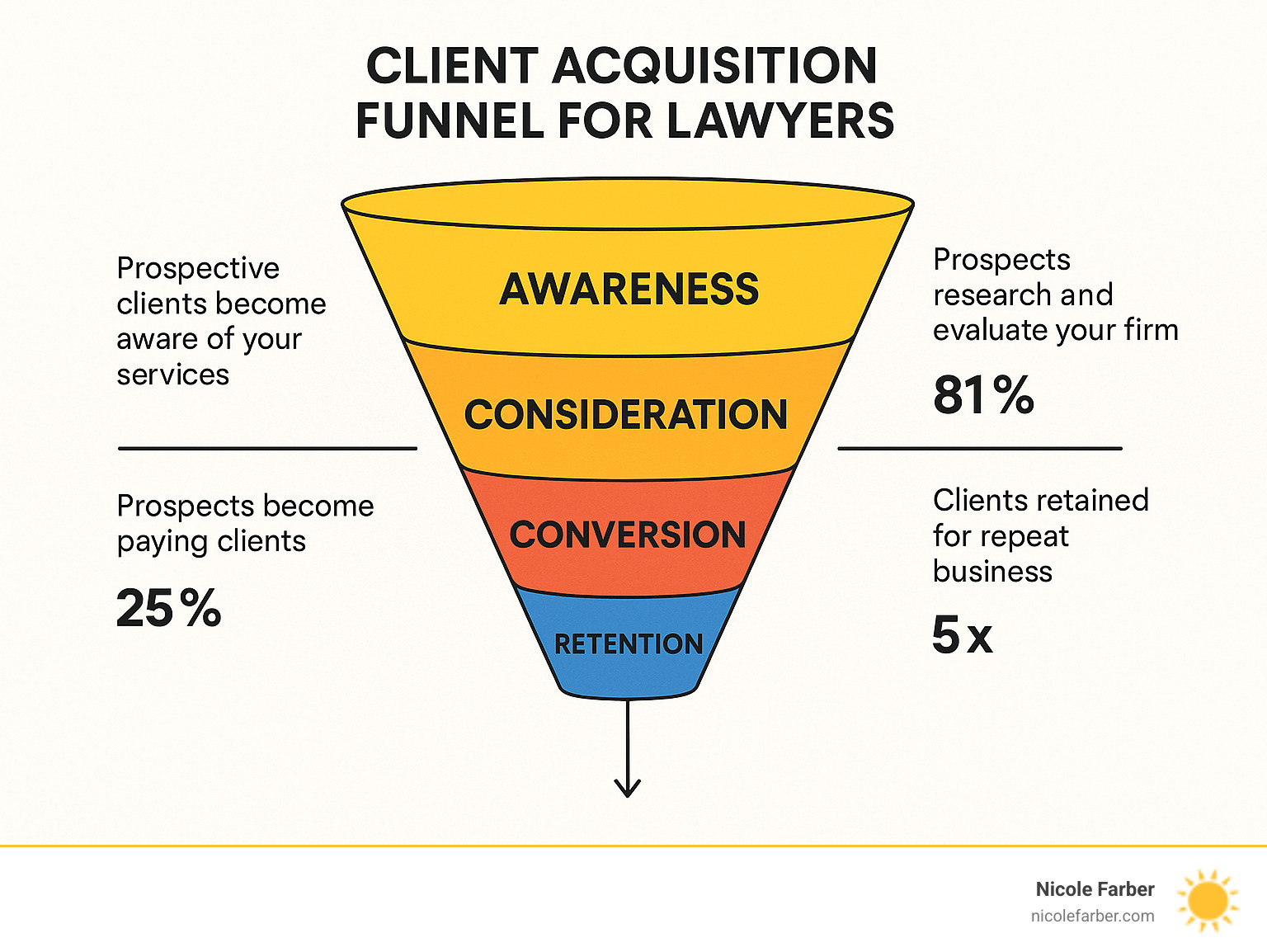
Setting Clear Objectives and KPIs
Clear objectives are vital for tracking success in client acquisition. Objectives must be specific, measurable, achievable, relevant, and time-bound (SMART). Common key performance indicators (KPIs) for legal client acquisition include:
- Number of new client inquiries per month
- Conversion rates from consultations to retained clients
- Client acquisition cost (CAC)
For example, a law firm might aim to increase new client inquiries by 20% within six months. This goal can guide marketing strategies effectively.
Using Analytics Tools to Monitor Performance
Analytics tools are essential for monitoring performance across different channels. Platforms like Google Analytics, social media insights, and customer relationship management (CRM) systems provide invaluable data. Key metrics worth tracking include:
- Website traffic and user engagement
- Source of leads (organic search, referrals, paid ads)
- Client demographics and behavior patterns
A 2024 survey found that 68% of law firms using analytics tools reported better client acquisition outcomes — emphasizing the power of data-driven decision-making.
Adjusting Strategies Based on Data Insights
Data insights should lead to adjustments in client acquisition strategies. Regularly reviewing performance metrics helps identify underperforming areas. If a marketing campaign shows low conversion rates, it likely needs re-evaluation or redesign.
A/B testing is an effective method for refining strategies. Comparing two variations of a marketing approach allows firms to identify which one connects better with potential clients — so they can optimize efforts accordingly.
The Importance of Continuous Improvement
Continuous improvement is crucial for maintaining a competitive edge in client acquisition. The legal market is dynamic, which means strategies need regular updates. This includes:
- Staying informed about industry trends and client preferences
- Soliciting feedback from clients on services and experiences
- Investing in professional development for staff to enhance service delivery
Research shows that firms focused on continuous improvement experience a 15% higher retention rate among clients — underscoring the importance of adaptive strategies.
Nuance / Expert Layer
A common misconception is that tracking metrics guarantees success. Simply collecting data without context can lead to misinterpretation. Legal professionals must monitor both quantitative data and qualitative feedback from clients (this is often overlooked). This combined approach promotes a comprehensive understanding of client needs and expectations, allowing for tailored strategies that resonate more personally.
Practical Application
To track and measure client acquisition success effectively, legal professionals should undertake the following actionable steps:
- Define SMART objectives and identify relevant KPIs.
- Implement analytics tools and regularly review performance metrics.
- Conduct A/B tests to refine marketing strategies based on data insights.
- Solicit client feedback to inform continuous improvement initiatives.
By adopting these practices, legal professionals can improve their ability to attract and retain clients — ultimately driving business growth.
Frequently Asked Questions
What are the best ways to attract legal clients?
Effective strategies to attract legal clients include optimizing your website for search engines, leveraging online advertising, and creating informative content that addresses potential clients’ needs. Building a strong online presence is essential for visibility and credibility.
How can I use social media to get legal clients?
Social media can be utilized to engage with potential clients by sharing valuable content, answering legal questions, and showcasing client testimonials. Platforms like LinkedIn and Facebook are particularly effective for building professional relationships and enhancing visibility.
What are common mistakes lawyers make when trying to get clients?
Common mistakes include neglecting online marketing, failing to define a target audience, and not following up with leads. Additionally, many lawyers underestimate the importance of personal branding and client relationships in client acquisition.
How much should I budget for client acquisition in a law firm?
Law firms typically allocate 5-10% of their gross revenue for marketing and client acquisition. This budget should cover online advertising, networking events, and content creation to effectively reach potential clients.
How long does it take to get legal clients after starting a law firm?
It can take anywhere from a few months to over a year to acquire legal clients after starting a law firm, depending on marketing strategies and network development. Building a reputable brand and client base requires time and consistent effort.
What role does networking play in getting legal clients?
Networking is crucial for building relationships and referrals, which are key sources of legal clients. Attending industry events, joining professional organizations, and connecting with other professionals can enhance visibility and trust within the community.
Can online reviews help me get legal clients?
Yes, online reviews significantly influence potential clients’ decisions by establishing credibility and trust. Positive reviews on platforms like Google and Yelp can enhance your firm’s reputation and attract new clients.
What types of content should I create to attract legal clients?
Creating informative blog posts, videos, and guides that address common legal questions can attract potential clients. Additionally, case studies and client testimonials can showcase your expertise and build trust with your audience.
Final Thoughts on how to get legal clients
Attracting legal clients requires a strategic blend of understanding client needs, building a robust online presence, and harnessing the power of networking. Success hinges on not just promoting services but genuinely connecting with potential clients through insightful engagement and tailored solutions.
To enhance client acquisition, prioritize creating a targeted content marketing strategy that addresses specific client pain points, positioning your firm as a trusted resource in your area of expertise.
Ready to take your legal practice to the next level? Consider hiring a google ads expert to help you attract more clients with proven strategies!
Establishing a solid client base is paramount for long-term success in the legal industry, making the implementation of these strategies essential for any law firm aspiring to thrive.