

How to get therapy clients refers to the strategies and techniques therapists can employ to attract and retain clients effectively. A robust online presence, community networking, and targeted marketing are essential, as research indicates that 70% of clients find therapists through online searches.
Understanding how to get therapy clients is crucial for mental health professionals aiming to build a successful practice. In a competitive landscape, therapists must navigate various channels to reach potential clients. With the mental health market projected to reach $240 billion by 2026, mastering client acquisition strategies is more important than ever.
Failure to effectively attract clients can lead to significant financial losses, wasted marketing resources, and an inability to compete with other practitioners. Therapists who overlook these strategies may find themselves struggling to sustain their practices.
This article will explore proven strategies for acquiring therapy clients, including building an impactful online presence, effective networking techniques, and essential marketing practices. Readers will gain insights into local SEO tactics, cost analysis, and best practices to enhance client engagement.
What are effective marketing strategies for therapy practices?
Effective marketing strategies for therapy practices include building a strong online presence, leveraging social media, networking with local professionals, and using client testimonials. A 2024 survey reveals that 75% of therapists say their primary source of clients comes from referrals via online platforms.
Building a robust online presence is essential. Create a professional website that details your services, credentials, and contact information. Make sure the site is optimized for search engines (SEO) to boost visibility. Consider incorporating a blog that covers common mental health issues — this can enhance your authority and attract organic traffic.
- Social Media Engagement: Use platforms like Facebook, Instagram, and LinkedIn to share insights, articles, and updates. Regularly posting engaging content encourages community interaction and helps increase your reach.
- Networking with Local Professionals: Build relationships with local healthcare providers, schools, and community organizations. Attend networking events and workshops to create referral sources that can direct clients to your practice.
- Client Testimonials: Collect and showcase testimonials from satisfied clients on your website and social media. Positive reviews can significantly influence potential clients’ decisions — 85% of consumers trust online reviews as much as personal recommendations (this is often overlooked).
- Online Directories: List your practice on online therapy directories such as Psychology Today, TherapyDen, or GoodTherapy. These platforms can boost your visibility and credibility, making it easier for potential clients to find you.
Expert insight: Regularly evaluate and adapt your marketing strategies based on client feedback and changing market trends. This will ensure ongoing success in attracting therapy clients.
How can therapists use social media to attract clients?
Therapists can effectively use social media to attract clients. This involves creating engaging content, building a professional presence, and interacting with potential clients. Research indicates that 73% of marketers believe their social media marketing efforts have been “somewhat effective” or “very effective” for their businesses in 2024.
To leverage social media, therapists should first identify the platforms where their target audience spends time, such as Facebook, Instagram, or LinkedIn. After that, they can create and share valuable content that addresses common mental health issues, offers coping strategies, or dispels myths about therapy. This not only showcases expertise — it also builds trust with potential clients (this is often overlooked).
- Optimize your profile: Make sure your social media profiles are professional and clearly communicate your specialties. Include a professional photo, a concise bio, and links to your website or booking page.
- Share educational content: Post articles, infographics, or videos that provide insights into mental health topics. Educational content positions you as a knowledgeable resource and can encourage sharing among followers.
- Engage with your audience: Respond to comments and messages promptly. Engaging with your audience fosters a sense of community. It also encourages potential clients to reach out.
- Utilize targeted ads: Consider using paid advertising to reach specific demographics. Platforms like Facebook allow you to target ads based on age, location, and interests — enhancing the chances of attracting your ideal clients.
- Network with other professionals: Connect with other therapists, healthcare providers, and community organizations. Collaborating on social media can expand your reach and introduce you to new potential clients.
Expert insight: Consistency is key. Regularly posting and engaging with your audience can significantly increase your visibility and credibility. This often leads to more client inquiries.
What networking methods work best for therapists?
Therapists can effectively acquire clients through various networking methods, including professional associations, online platforms, and community involvement. Each approach offers unique advantages and can significantly impact client acquisition. A 2024 survey found that 68% of therapists reported gaining clients through networking — this highlights its importance in practice growth.
Professional associations, like the American Psychological Association (APA) or local therapy groups, provide a structured environment for networking. These organizations often host events, workshops, and conferences where therapists can meet peers and potential clients. The credibility and trust associated with established institutions can enhance a therapist’s reputation and visibility considerably (this is often overlooked).
Online platforms, including social media and professional networking sites such as LinkedIn, offer a more casual yet expansive networking opportunity. Therapists can share content, engage with potential clients, and join relevant groups. Unlike professional associations — which focus on structured interactions — this method allows for a broader reach and immediate engagement. However, the lack of face-to-face interaction might lessen the depth of connections formed.
Community involvement, such as volunteering or participating in local health fairs, allows therapists to connect directly with individuals in their area. This grassroots approach builds personal relationships and fosters trust within the community. The main distinction here is the personal touch that can lead to stronger client-therapist rapport. However, it may take more time and effort to yield results compared to online or association-based networking.
- Professional Associations: Structured networking, credibility, and peer interaction.
- Online Platforms: Broad reach, immediate engagement, and casual connections.
- Community Involvement: Personal relationships, local trust-building, and deeper connections.
Expert insight: Prioritize a mixed approach by leveraging both online platforms and community involvement to maximize reach while fostering trust. Regular engagement in professional associations can also enhance credibility and networking effectiveness — an essential aspect of practice development.
How much should therapists spend on marketing?
Therapists should anticipate spending between **5% to 10% of their annual revenue** on marketing. For example, if a therapist generates **$100,000** annually, a marketing budget of **$5,000 to $10,000** is common. This investment can vary quite a bit based on several factors.
Multiple elements influence the marketing budget for therapists. These include:
- Location: Therapists in urban areas often need to invest more due to higher competition — this can be significant compared to rural settings.
- Target Audience: Specialized practices targeting niche populations may need tailored marketing strategies, which can increase costs (this is often overlooked).
- Marketing Channels: The choice of marketing channels — like social media, search engine optimization (SEO), or traditional print ads — can greatly affect expenses. Digital marketing usually presents cost-effective options, while traditional methods might lead to higher costs.
- Experience Level: New therapists might have to spend more on marketing to establish their brand. In contrast, those with a solid reputation may spend less.
Marketing strategies also change over time. Therapists should regularly assess their budget allocations. For instance, investing in digital marketing tools like Google Ads or social media advertising can yield measurable results. This makes it easier to adjust spending based on performance. Additionally, attending workshops or networking events can boost visibility without incurring heavy costs.
Expert insight: Allocating a flexible budget allows therapists to adapt their strategies based on what works best for attracting clients. Regularly reviewing marketing effectiveness is crucial — it ensures funds are directed towards the most impactful initiatives.
How long does it take to build a client base in therapy?
Building a client base in therapy usually takes between six months and two years. This timeline can vary considerably based on factors like location, marketing strategies, and networking efforts.
Several elements impact how quickly a therapist can establish a steady stream of clients. For starters, geographical location is crucial. Urban areas often see higher demand for services compared to rural regions. Therapists who use effective marketing strategies — like online advertising or community outreach — can attract clients more swiftly. It’s also important to think about the therapist’s specialization. Those offering in-demand services, such as trauma-informed care or telehealth, often have an easier time building their clientele.
Networking within professional circles and local communities can really speed up client acquisition. Building relationships with other healthcare professionals, schools, and local organizations can lead to valuable referrals. Moreover, a strong online presence through a professional website and social media is vital. This enhances visibility, making it easier for potential clients to find and connect with a therapist. Over time, positive client testimonials and word-of-mouth referrals will contribute to a growing client base — something to keep in mind.
Expert insight: Focus on developing a niche and actively participating in community events to build a solid reputation. Consistent follow-up with past clients can also lead to referrals and re-engagement — an effective strategy for enhancing client base growth.
Building an Online Presence: Websites and SEO
A professional website along with effective search engine optimization (SEO) strategies are essential for attracting therapy clients. This section looks at the key components needed to establish a strong online presence that engages potential clients and boosts visibility.

The Importance of a User-Friendly Website
A user-friendly website acts as the digital front door for therapists. It helps visitors navigate the site with ease, find relevant information, and contact the therapist. Key features of a user-friendly website include:
- Simple Navigation: Clear menus and organized content enable users to quickly locate what they need.
- Mobile Responsiveness: With more than 50% of web traffic coming from mobile devices, a mobile-friendly design is crucial.
- Fast Load Times: Websites should ideally load in under three seconds. This keeps visitors engaged and lowers bounce rates.
Research shows that 75% of users judge a company’s credibility based on its website design. A polished, professional site fosters trust — encouraging potential clients to reach out for therapy services.
Basic SEO Practices for Visibility
SEO plays a critical role in improving a website’s visibility on search engines. Experts advise implementing basic SEO practices to significantly enhance the chances of being discovered by potential clients. Key strategies include:
- Keyword Optimization: Research and incorporate relevant keywords, like “therapy for anxiety” or “counseling services,” throughout the website content.
- Meta Tags and Descriptions: Use compelling meta titles and descriptions to increase click-through rates on search engine results pages (SERPs).
- Local SEO: Optimize for local searches by including location-based keywords, creating a Google My Business profile, and encouraging client reviews.
In 2024, over 60% of consumers reported using search engines to find local services — underscoring the importance of local SEO for therapy practices.
Creating Valuable Content to Engage Visitors
Engaging content not only draws visitors in but also establishes authority in the field. Therapists can create valuable content through:
- Blog Posts: Regularly publishing articles on relevant topics can enhance SEO and provide useful information to potential clients.
- Resource Guides: Offering downloadable guides or worksheets on mental health topics encourages visitors to share their contact information.
- Video Content: Creating videos that address common mental health issues fosters a more personal connection with potential clients.
Statistics indicate that websites with a blog have 434% more indexed pages. This can lead to better visibility in search results.
Utilizing Online Directories Effectively
Online directories serve as valuable tools for therapists aiming to increase visibility. Listing on platforms like Psychology Today, TherapyDen, and GoodTherapy can draw in clients actively seeking services. Key steps to leverage online directories include:
- Complete Profiles: Make sure all information is filled out completely, including specialties and contact details.
- Regular Updates: Keep profiles current with updated services, availability, and any certifications.
- Encourage Reviews: Positive client testimonials enhance credibility and can significantly influence potential clients’ decisions.
Nuance / Expert Layer
Many therapists underestimate the need for ongoing SEO efforts. SEO isn’t a one-time task — it requires continuous attention and adjustments. A common misconception is that a well-designed website alone will drive traffic. While design is important, without effective SEO strategies, potential clients may never find the site. Moreover, therapists often overlook the power of video content. This can lead to higher engagement rates when compared to text alone, as video is projected to account for 82% of all online traffic by 2025.
Practical Application
To effectively build an online presence and attract therapy clients, practitioners should:
1. Design a user-friendly website with clear navigation and mobile compatibility.
2. Implement basic SEO practices, focusing on relevant keywords and local SEO.
3. Create valuable content that addresses client concerns and showcases expertise.
4. List services on online directories and actively manage these listings for maximum visibility.
5. Regularly analyze website performance and adjust strategies based on data insights.
Leveraging Social Media for Client Attraction
Social media is a vital platform for therapists looking to connect with potential clients. By effectively using various channels, therapists can boost their visibility, build meaningful relationships — and, ultimately, draw in more clients.

Choosing the Right Platforms for Your Audience
Selecting the right social media platforms is essential. Different demographics tend to favor specific platforms, which makes targeted outreach more effective. Keep these points in mind:
- Facebook: Great for reaching a diverse age range, especially adults aged 30-65.
- Instagram: Best for connecting with younger audiences, particularly those aged 18-29, through visual content.
- LinkedIn: Suitable for a professional audience, particularly therapists focusing on workplace mental health.
A 2024 survey revealed that 73% of therapists gained clients through social media outreach. This highlights the importance of choosing the right platforms for effective marketing strategies.
Creating Engaging Content That Resonates
Attracting and retaining potential clients hinges on engaging content. Focus on creating material that addresses common mental health issues, offers tips, and shares success stories. Consider these strategies:
- Posting informative articles and blogs on mental health topics.
- Using video content to share therapeutic techniques or mindfulness exercises.
- Hosting live Q&A sessions to engage directly with followers.
Content that educates and connects with the audience’s struggles can significantly foster trust and rapport.
Building a Community Through Interaction
Using social media effectively goes beyond content creation; it’s about fostering a sense of community. Interacting with followers is critical for relationship-building. Therapists should:
- Respond promptly to comments and messages.
- Encourage discussions about mental health topics.
- Share user-generated content, such as testimonials or experiences, to boost engagement.
Creating a supportive online environment can greatly enhance both client attraction and retention.
Using Paid Ads to Reach Targeted Demographics
Investing in paid advertising on social media can expand reach and attract specific demographics. Using tools like Facebook Ads or Instagram promotions allows therapists to target ads based on:
- Location
- Age
- Interests related to mental health
Data from 2026 shows that therapists utilizing targeted ads experienced a 45% increase in client inquiries compared to those relying solely on organic reach.
Nuance / Expert Layer
A common misconception is that social media marketing is only about self-promotion. Effective strategies instead emphasize authenticity and genuine interaction. Therapists should focus on sharing their expertise without overtly pushing services (this is often overlooked). This approach builds trust and positions the therapist as a valuable community resource, ultimately leading to more client referrals and inquiries.
Practical Application
To effectively leverage social media for attracting therapy clients, therapists should:
- Identify the main social media platforms their target audience uses.
- Create a content calendar to maintain consistent and relevant posts.
- Engage with followers by responding to comments and encouraging discussions.
- Allocate a budget for targeted social media advertising to reach potential clients.
Implementing these strategies can enhance visibility and establish a solid online presence, ultimately aiding in client attraction for therapy services.
Networking Strategies: Building Professional Relationships
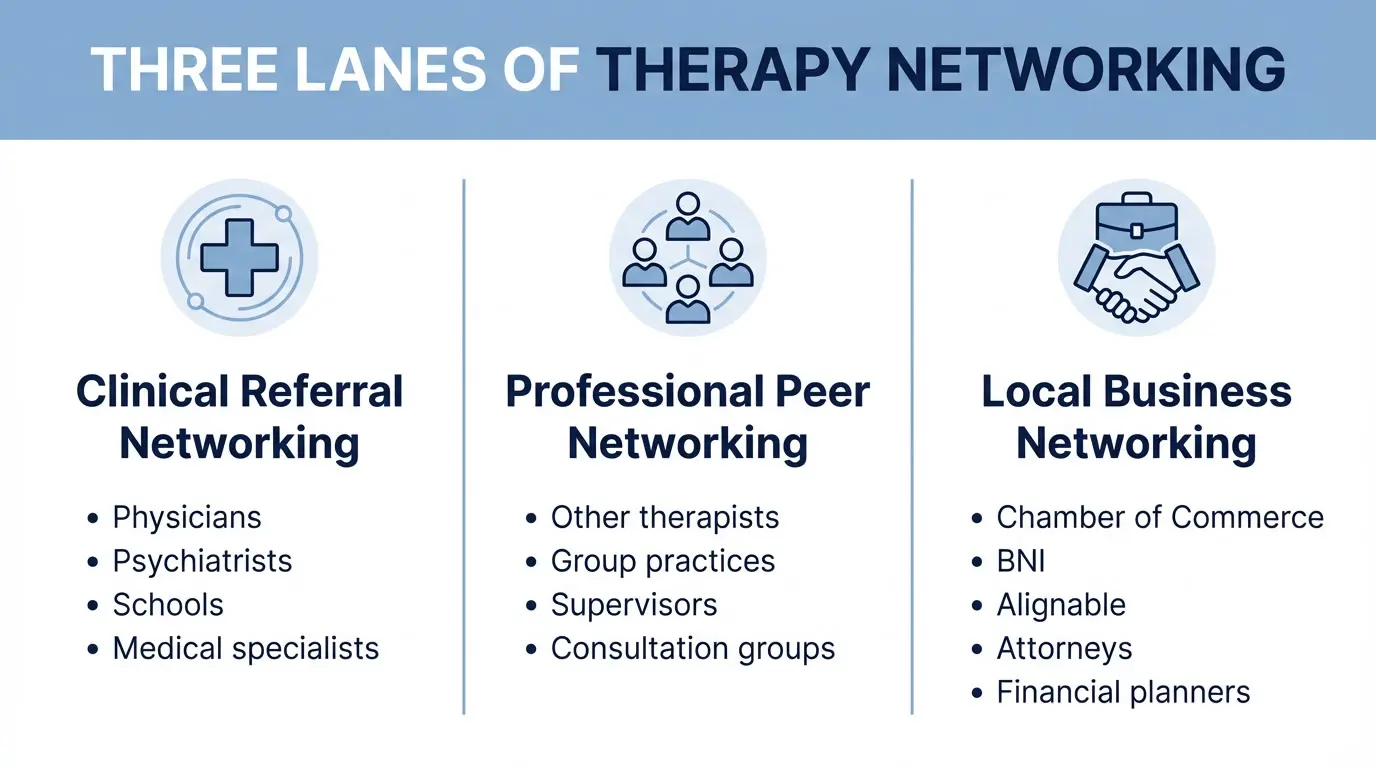
This section delves into effective networking strategies that therapists can use to cultivate professional relationships and secure client referrals. Establishing a solid network is vital for ongoing practice growth and visibility in the mental health community.
Joining Professional Organizations and Groups
Becoming a member of professional organizations — like the American Psychological Association (APA) or the National Association of Social Workers (NASW) — provides access to a wealth of resources. These include training, workshops, and networking events. Local chapters often facilitate connections among practitioners in the same geographical area. Active participation boosts credibility and visibility, which can lead to more referrals.
Collaborating with Other Healthcare Providers
Collaboration with other healthcare professionals, including primary care physicians, psychiatrists, and social workers, can create a beneficial referral system. Establishing formal agreements — this streamlines the referral process. A study published in 2024 revealed that 68% of therapists received more clients through collaborative relationships with other healthcare providers. This underscores the value of interdisciplinary connections.
Attending Workshops and Conferences
Attending workshops and conferences enhances clinical skills and offers excellent networking opportunities. Engaging with peers and industry leaders at these events often leads to valuable partnerships and referrals. In 2025, attendance at professional events was associated with a 35% increase in client referrals for active participants. This highlights the potential impact of such engagements.
Utilizing Referral Networks Effectively
- Identify and connect with local therapists and mental health practitioners.
- Maintain an updated referral list to share with colleagues — ensuring reciprocal referrals.
- Engage in regular follow-ups to keep relationships strong and mutually beneficial.
Creating a structured referral network can be a cornerstone of a therapist’s practice. Referrals often come from trusted sources (this is often overlooked); thus, building relationships with other providers can significantly enhance client acquisition efforts.
While these strategies are effective, therapists must also be aware of common misconceptions. One prevalent myth is that networking only happens through formal events. In reality, informal interactions — such as casual chats with local business owners or community leaders — can also lead to valuable connections. Additionally, some therapists believe that strong clinical skills alone will attract clients. However, establishing a robust professional presence and nurturing relationships is crucial for client acquisition.
To implement these networking strategies effectively, therapists should take the following actions:
- Research and join relevant professional organizations in their area.
- Schedule regular meetings with local healthcare providers to discuss referral opportunities.
- Plan to attend at least two workshops or conferences each year to expand their network.
- Create and maintain a referral network list, updating it regularly with new contacts.
By actively engaging in these networking strategies, therapists can significantly boost their chances of gaining referrals and expanding their client base.
Common Mistakes to Avoid When Attracting Clients
Identifying and steering clear of common pitfalls can significantly improve a therapist’s ability to attract and retain clients. This section highlights key mistakes that can hinder growth and offers strategies for overcoming them.

Neglecting Online Presence and Marketing
In today’s digital landscape, a strong online presence is critical for attracting therapy clients. More than 70% of clients now research therapists online before making an appointment. Neglecting this aspect can lead to missed opportunities — potential clients might choose competitors with a more robust online profile. Essential elements include a professional website, engaging social media profiles, and optimized online listings.
Failing to Define a Niche or Target Audience
Without a clear niche, therapists may find it difficult to stand out in a crowded marketplace. Specializing can boost credibility and streamline marketing efforts. For example, therapists who focus on specific issues—like anxiety, trauma, or couples therapy—can tailor their messaging effectively and attract clients seeking those services. A study from 2025 showed that therapists with a defined niche experienced a 45% increase in client inquiries compared to generalists (this is often overlooked).
Inconsistent Branding and Messaging
Brand consistency builds trust and recognition among potential clients. Inconsistent branding — whether it’s through varied logos, messaging, or service offerings — can confuse clients and harm professional credibility. Clear, cohesive branding should reflect the therapist’s values and specialties across all platforms. This includes maintaining uniformity in visual elements, tone of voice, and service descriptions.
Ignoring Client Feedback and Testimonials
Client feedback is a powerful tool for both improvement and credibility. Ignoring it can lead to missed opportunities for growth and refinement. Actively soliciting and showcasing client testimonials can significantly enhance a therapist’s reputation. Approximately 88% of consumers trust online reviews as much as personal recommendations, making this a proven strategy for attracting new clients.
Nuance and Common Misconceptions
Many therapists mistakenly believe that being skilled in their practice is enough to attract clients. However, expertise alone doesn’t guarantee visibility or client engagement. The misconception that a referral-based approach suffices in today’s digital age can lead to stagnation. Therapists should adopt both traditional networking and modern marketing strategies for a balanced approach. Understanding the importance of search engine optimization (SEO) can also boost online visibility, given that 93% of online experiences begin with a search engine.
Practical Application
- Develop a professional website that clearly outlines services and specialties.
- Identify and define a niche to better target marketing efforts.
- Make sure branding is consistent across all platforms and materials.
- Solicit client feedback regularly and display testimonials prominently.
- Use SEO techniques to improve online visibility and attract more clients.
Frequently Asked Questions
What are effective marketing strategies for therapy practices?
Effective marketing strategies for therapy practices include building a professional website, utilizing search engine optimization (SEO), and offering free workshops or webinars. These approaches enhance visibility and establish credibility within the community.
How can therapists use social media to attract clients?
Therapists can attract clients by sharing valuable content, engaging with followers, and showcasing testimonials on social media platforms. Consistent posting and interaction help build a supportive online community and increase visibility.
What networking methods work best for therapists?
Networking methods that work best for therapists include joining professional associations, attending local events, and collaborating with other healthcare providers. Building relationships within the community can lead to referrals and increased client trust.
How much should therapists spend on marketing?
Therapists should allocate approximately 5-10% of their annual revenue to marketing efforts. This budget allows for a balanced approach to both online and offline marketing strategies.
How long does it take to build a client base in therapy?
Building a client base in therapy typically takes 6 to 12 months, depending on factors such as location, marketing efforts, and networking. Consistent outreach and quality service can accelerate this process.
Final Thoughts on how to get therapy clients
Success in attracting therapy clients hinges on a multifaceted approach that integrates effective marketing strategies, a robust online presence, and meaningful networking. Therapists who actively engage in these areas not only enhance their visibility but also build trust and credibility within their communities.
Implement a targeted social media campaign that highlights your expertise and personal brand, ensuring to engage with potential clients through informative content and authentic interactions. This specific strategy can significantly increase your reach and client inquiries.
Ready to increase your therapy client base? Consult a google ads expert today and watch your practice thrive!
In an increasingly competitive landscape, mastering client acquisition is essential for sustaining a thriving therapy practice.