
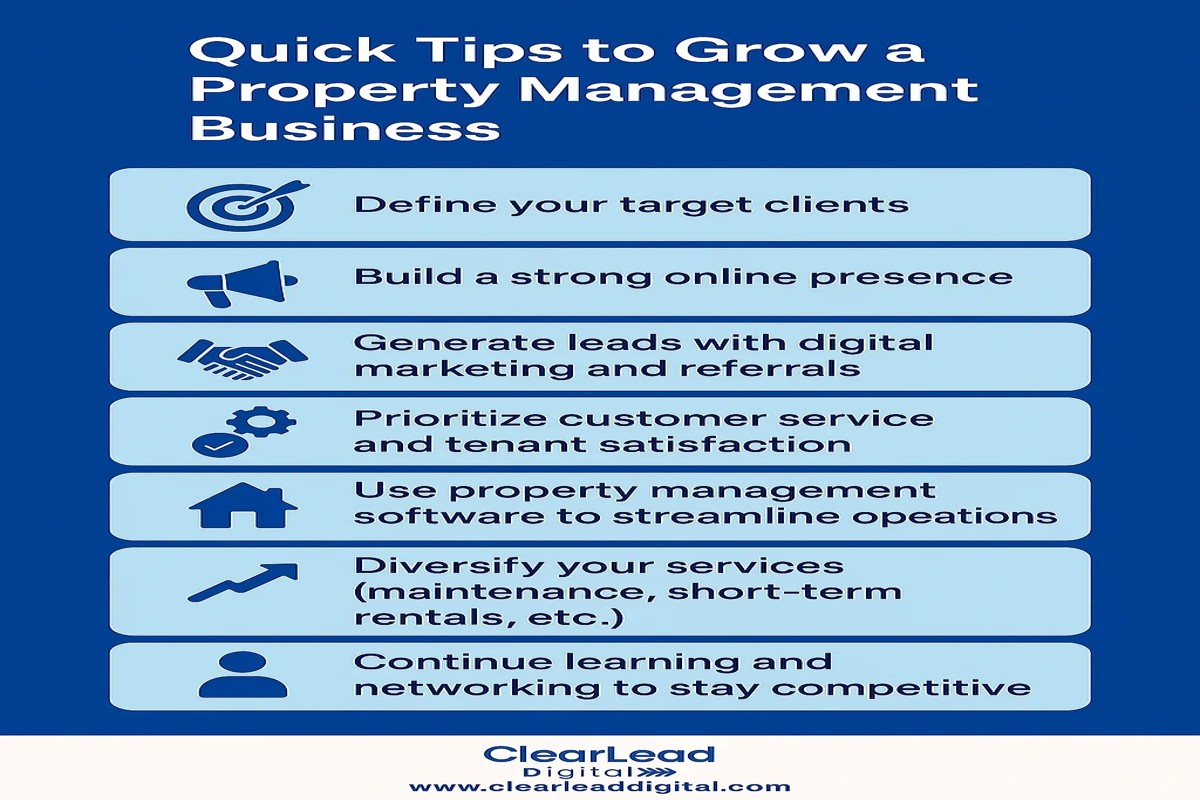
How to get property management clients involves strategies focused on enhancing online visibility, engaging in community networking, and implementing targeted marketing approaches. The primary benefit of these methods is the ability to attract new clients effectively, with approximately 80% of property managers acquiring clients through referrals and local marketing efforts.
Understanding how to get property management clients is crucial for property management businesses looking to thrive in a competitive market. With the property management sector projected to reach $22 billion by 2025, mastering client acquisition strategies can significantly impact growth and sustainability. Failing to implement effective strategies can result in lost opportunities and diminished market presence.
Neglecting to grasp these client acquisition strategies may lead to substantial revenue losses, wasted marketing resources, and a competitive disadvantage in a crowded marketplace. Property management companies that do not adapt risk falling behind their peers who effectively leverage these methods.
This article will cover proven strategies for acquiring property management clients, including effective networking techniques, the importance of local SEO, and best practices for targeted marketing campaigns. Readers will gain insights into actionable steps to enhance their client acquisition efforts.
What are the best ways to attract property management clients?
To attract property management clients effectively, use targeted marketing strategies that combine online presence with personal connections. Research shows over 60% of property management companies gain clients through referrals and networking — this underscores the importance of these channels.
Successful client acquisition demands a multi-faceted approach. Here are some proven strategies:
- Use Online Advertising: Invest in pay-per-click (PPC) campaigns and social media ads to reach potential clients. Target specific demographics and geographic locations to maximize your ad spend. Platforms like Google Ads can yield a high return on investment when tailored correctly.
- Build a Strong Online Presence: Create an informative website that showcases your services, client testimonials, and case studies. Make sure to optimize your site for search engines (SEO) to increase visibility. Regularly update your blog with relevant content — this helps establish authority and attracts organic traffic.
- Network Actively: Attend industry conferences, local business events, and real estate meetups to connect with property owners and real estate agents. Building relationships in person can lead to valuable referrals and partnerships. Don’t underestimate the power of face-to-face interactions.
- Leverage Client Referrals: Encourage satisfied clients to refer your services to their contacts. Implement a referral program that offers incentives for successful leads. This not only boosts client acquisition but also enhances client loyalty (worth double-checking).
- Engage on Social Media: Use platforms like Facebook, LinkedIn, and Instagram to showcase your properties and services. Share valuable content, engage with followers, and respond promptly to inquiries to build a community around your brand.
Expert insight: Focus on blending digital marketing with personal outreach. The synergy between online strategies and traditional networking can significantly enhance your reach and credibility in the property management sector.
How much should I charge for property management services?
Property management fees usually fall between 8% to 12% of the monthly rent collected per property. Some companies opt for a flat fee, which generally ranges from $100 to $300 monthly. This depends on the services provided and the type of property.
Several factors impact property management fees. First, the type of property is crucial. Managing residential properties typically incurs lower fees, while commercial properties are more complex and demanding. So, costs can be higher there. Also, location matters; urban areas often see increased fees due to higher demand and operational expenses.
- Services Offered: Comprehensive management services — like maintenance, tenant screening, and rent collection — usually command higher fees compared to basic services.
- Property Size: Larger properties or multiple units may qualify for volume discounts, which can influence the percentage charged.
- Market Competition: In competitive markets, property management companies might adjust their fees to draw in clients, affecting typical pricing structures.
Expert insight: While setting fees, take into account your unique value proposition and the specific services you provide. Tailoring your pricing strategy can meet client needs effectively (this is often overlooked) and keep you competitive in the market.
What skills do I need to manage properties effectively?
Effective property management hinges on a blend of strong communication, organization, and a solid grasp of real estate laws. These skills lead to successful interactions with clients, tenants, and vendors, ensuring properties operate smoothly. According to the National Association of Residential Property Managers, 85% of property management success ties back to these core competencies.
Strong communication skills are a must for property managers. They interact with a range of stakeholders — property owners, tenants, maintenance teams, and more. Clear communication builds trust, helps resolve conflicts, and guarantees everyone knows their responsibilities. Additionally, effective communication can boost tenant satisfaction and retention.
Another key skill is organization. Property managers often juggle various tasks. They coordinate maintenance requests, manage budgets, and ensure compliance with regulations, among other duties. A well-organized approach lets managers prioritize effectively, track deadlines diligently, and maintain accurate records. This skill is crucial in managing finances; attention to detail can lead to significant savings and improved cash flow.
- Knowledge of real estate laws: Property managers need to be well-versed in local, state, and federal regulations governing rental properties. This knowledge helps ensure compliance, avoid legal issues, and protect both property owners’ and tenants’ interests.
- Financial acumen: Grasping budgeting, accounting, and financial reporting is essential. Property managers must create and manage budgets, track expenses, and report on financial performance to property owners — this is often overlooked.
- Customer service: Providing excellent service to tenants greatly enhances retention rates. Property managers should respond promptly to tenant needs and complaints, ensuring a positive living experience.
Expert insight: Investing in ongoing education and training can significantly boost a property manager’s effectiveness. Staying updated on industry trends and legal changes is vital for maintaining a competitive edge in property management — it’s crucial to keep learning.
How long does it take to get property management clients?
On average, securing property management clients can take anywhere from three to six months. This varies based on the effectiveness of marketing efforts and networking activities.
Several factors influence this timeline. First, the strength of your marketing strategy is crucial. If you effectively implement targeted online advertising, social media campaigns, and SEO practices, you’ll attract clients more quickly. On the flip side, relying solely on word-of-mouth referrals can significantly extend the timeline. This method often hinges on existing client satisfaction and personal networks — something to keep in mind.
Networking activities also impact client acquisition speed. Engaging with local real estate associations and attending industry conferences can accelerate connections with potential clients. Hosting seminars helps too. Building relationships within the community fosters trust, which can lead to quicker referrals. However, remember that the initial stage of establishing a brand presence often requires patience. It takes time for your efforts to yield visible results.
Expert insight: To expedite client acquisition, consider offering initial consultations or discounted services for first-time clients. This approach can create immediate interest — leading to quicker sign-ups and, ultimately, shortening the timeline to establish a solid client base.
What marketing strategies are most effective for property managers?
Effective marketing strategies for property managers include leveraging social media, optimizing for local SEO, and engaging in community involvement. Recent studies show that 73% of property management companies using social media actively see an increase in client inquiries — that’s significant.
Social media platforms like Facebook, Instagram, and LinkedIn can greatly enhance visibility and client engagement. Creating valuable content is key. Property showcases, tenant testimonials, and maintenance tips attract potential clients. Regularly posting and interacting with followers builds a sense of community and trust (this is often overlooked).
- Use Local SEO: Optimize your website for local search by including relevant keywords, creating location-specific content, and confirming that your Google My Business listing is accurate. This strategy can increase visibility among potential clients searching for property management services in your area.
- Engage in Community Involvement: Participate in local events, sponsor community activities, or collaborate with local businesses. This builds brand awareness while also positioning your company as a trusted community partner.
- Implement Email Marketing: Develop a targeted email marketing campaign to nurture leads and keep existing clients informed. Regular newsletters can include market updates, property management tips, and special offers — these keep your audience engaged.
- Leverage Online Reviews: Encourage satisfied clients to leave positive reviews on platforms like Google and Yelp. High ratings and testimonials can significantly influence potential clients’ decisions (worth double-checking).
Expert insight: Consistently monitor and analyze your marketing strategies’ performance to pinpoint what works best. Adjusting your approach based on data-driven insights often leads to sustained growth in client acquisition.
Are there any common mistakes to avoid when seeking clients?
Yes, there are several common mistakes to avoid when seeking property management clients. One significant misstep is neglecting to establish a robust online presence — about 85% of property owners research property management companies online before making a decision.
One prevalent scenario involves a property management company that relies solely on traditional marketing methods, like flyers and local newspaper ads. While these methods can generate some leads, they often miss the mark with today’s tech-savvy property owners. Without a comprehensive online strategy, including a user-friendly website and active social media profiles, the company risks losing out on engaging potential clients who prefer digital communication. Additionally, not following up promptly with leads can result in lost opportunities. If a prospective client inquires about services but doesn’t receive a response within 24 hours, chances are they’ll turn to a competitor. Studies show that timely follow-ups can boost conversion rates by as much as 50%.
Moreover, another common pitfall is not showcasing positive client testimonials and case studies (this is often overlooked). Property owners are more inclined to trust a management company that displays proven success and satisfied clients. Without visible proof of past performance, potential clients may hesitate to engage. So, integrating client feedback into marketing materials and online platforms can significantly enhance credibility and attract new clients — it’s a vital step.
Expert insight: Focus on creating a strong online presence and make timely follow-ups a priority to maximize client acquisition efforts. Regularly update your website and social media with success stories to build trust and encourage inquiries.
How can I build a referral network for property management?
Building a referral network for property management means establishing strong relationships with real estate agents, landlords, and other professionals. This network can greatly enhance client acquisition. Referrals often account for up to 30% of new clients in the property management industry.
To effectively build a referral network, follow these steps:
- Identify key professionals: Start by identifying real estate agents, landlords, mortgage brokers, and contractors in your area. These individuals are often the first point of contact for property owners seeking management services.
- Attend networking events: Participate in local real estate meetings, trade shows, and industry conferences. Engaging in face-to-face interactions fosters trust — and opens opportunities for referrals.
- Offer value first: Provide valuable resources, such as market reports or property management tips, to your contacts. This positions you as an expert (this is often overlooked) and encourages them to refer you when opportunities arise.
- Create a referral program: Develop a structured referral program that rewards professionals for sending clients your way. This could be a monetary incentive or a service discount that benefits both parties.
- Follow up regularly: Maintain consistent communication with your network through newsletters, emails, or social media. Keeping your services top-of-mind ensures that your contacts think of you when opportunities come up.
- Build relationships: Invest time in nurturing relationships with your network. Schedule coffee meetings or lunches to strengthen connections and discuss mutual goals.
Establishing a robust referral network takes time and effort. However, the rewards are substantial. A well-connected network not only generates leads but also enhances credibility within the property management community.
Expert insight: Focus on building genuine relationships instead of transactional interactions. This fosters long-term trust, which can lead to a steady stream of high-quality referrals over time.
Building an Effective Online Presence
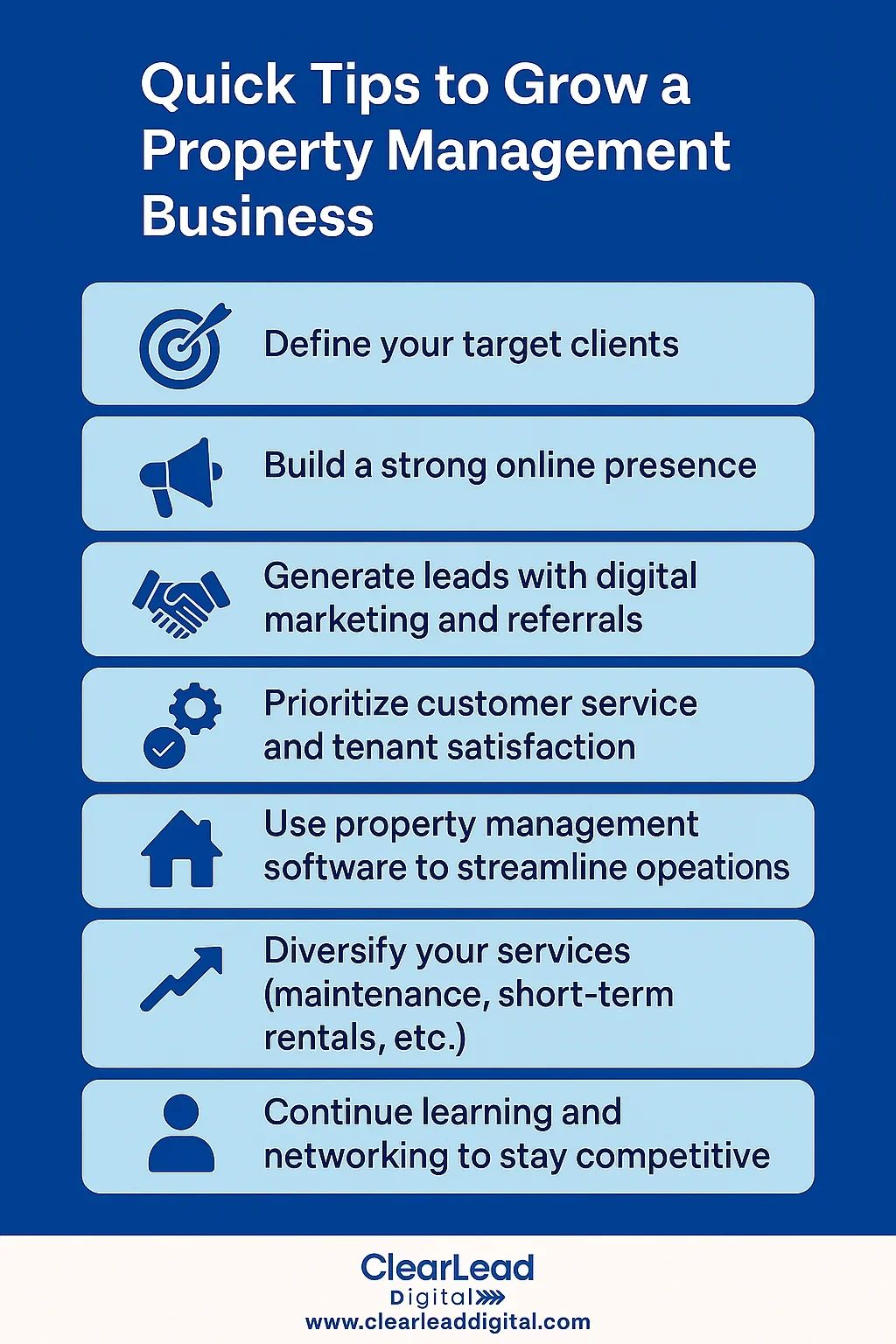
Establishing a robust online presence is critical for attracting property management clients. This section explores essential components of a digital strategy that enhances visibility, builds credibility, and fosters client relationships.
Creating a Professional Website with SEO Optimization
A professional website serves as the cornerstone of your online presence. It needs to be visually appealing and easy to navigate. Key elements include:
- Responsive Design: Make sure your website is mobile-friendly. Over 50% of web traffic now comes from mobile devices.
- SEO Optimization: Implement on-page SEO strategies. This includes using relevant keywords, optimizing meta tags, and including alt text for images. Websites optimized for search engines often achieve conversion rates up to 14.6%, compared to just 1.7% for outbound leads.
- Compelling Content: Offer valuable content, like blog posts or guides related to property management. This keeps visitors engaged and improves search rankings.
Utilizing Social Media Platforms
Social media platforms are vital for engaging potential clients and showcasing expertise. Focus on these strategies:
- Platform Selection: Choose platforms that align with your target audience. Facebook works well for residential properties, whereas LinkedIn is ideal for commercial properties.
- Consistent Posting: Regularly share updates, industry news, and educational content. Brands that post consistently see engagement increase by up to 67%.
- Interactive Content: Use polls, Q&A sessions, and live videos to interact directly with followers. Addressing their concerns matters.
Implementing Online Reviews and Testimonials
Online reviews are powerful tools for establishing credibility. Consider the following:
- Encourage Feedback: Actively request reviews from satisfied clients. Approximately 79% of consumers trust online reviews as much as personal recommendations.
- Showcase Testimonials: Display positive testimonials prominently on your website and social media. This helps enhance trust.
- Respond to Reviews: Engage with both positive and negative reviews. Doing so demonstrates a commitment to customer service.
Using Email Marketing to Nurture Leads
Email marketing remains a highly effective strategy for nurturing leads. Implement these practices:
- Segment Your Audience: Tailor messages based on client interests and previous interactions. This increases relevance.
- Regular Newsletters: Send out informative newsletters that include property management tips, market updates, and service promotions. Keeping your brand top-of-mind is essential.
- Automated Follow-ups: Use automation tools to send follow-up emails to leads who’ve shown interest but haven’t engaged further yet.
While many property management firms focus primarily on traditional marketing, a comprehensive digital strategy is essential. A common misconception — that a simple website is sufficient — misses the point. Without continual engagement and optimization across multiple platforms, potential clients may easily overlook your services. The most effective strategies combine a professional website, active social media engagement, authentic reviews, and targeted email campaigns. This creates a holistic approach.
To leverage this information effectively, start by auditing your current online presence. Identify gaps in your website’s SEO, create a content calendar for social media, solicit reviews from past clients, and plan an email marketing strategy. These actionable steps will enhance visibility and attract more property management clients.
Networking Strategies for Property Managers
Effective networking is crucial for property managers looking to attract new clients and generate referrals. This section outlines proven strategies that can greatly enhance client acquisition efforts.
Attending Local Real Estate Events and Meetups
Participating in local real estate events and meetups offers unmatched chances for property managers to connect with potential clients and industry peers. Engaging in these gatherings opens the door to exchanging ideas, insights on market trends, and establishing valuable relationships. According to a 2024 report by the National Association of Realtors, over 70% of real estate professionals credit a large portion of their business to networking at such events.
Joining Property Management Associations and Groups
Becoming a member of property management associations and groups grants access to a wealth of resources and networking opportunities. These organizations frequently host educational seminars, conferences, and workshops that help facilitate connections among industry professionals. Additionally, membership can boost credibility, making it easier to draw in clients. The Property Management Association (PMA) reported that members saw a 30% increase in client referrals compared to non-members in 2025.
Collaborating with Local Businesses for Mutual Referrals
Forming partnerships with local businesses can establish a solid referral network. Collaborations with real estate agents, home improvement contractors, and financial advisors can generate mutual referrals. For instance, a trusted real estate agent may send property management clients your way, while a property manager might direct clients who need renovations to a reliable contractor. Establishing these relationships requires clear communication — and a formal referral agreement ensures both parties reap benefits.
Leveraging Existing Client Relationships for Referrals
Current clients can serve as one of the most significant sources of new business. Actively soliciting referrals from satisfied clients can yield high-quality leads. Implementing a referral program offering incentives, such as discounts on future services, may motivate clients to recommend your services to their networks. According to a 2026 survey by Property Management Insider, 40% of new clients come from referrals (this is often overlooked), underscoring the importance of nurturing existing relationships.
Nuance: Overcoming Common Misconceptions
Many property managers underestimate the impact of networking, believing that digital marketing alone is enough for client acquisition. However, personal connections often lead to higher trust and conversion rates. Additionally, some might think attending events is a passive activity. In reality, active participation — like engaging in discussions and following up with new contacts — is vital for maximizing networking benefits. Fostering genuine relationships frequently results in long-term client loyalty and referrals, something digital marketing alone can’t achieve.
Practical Application
- Research and register for upcoming local real estate events and meetups.
- Join at least one property management association in your area.
- Identify three local businesses for potential collaboration and initiate outreach.
- Develop a referral program for existing clients to incentivize recommendations.
Leveraging Local Marketing Techniques
This section explores effective local marketing strategies that property management companies can use to attract clients in their geographic area. Implementing these techniques can enhance visibility and build community connections. Ultimately, this approach increases client acquisition.
Utilizing Local SEO to Attract Nearby Clients
Local Search Engine Optimization (SEO) is crucial for property management firms looking to capture nearby clients. Optimizing website content with local keywords, such as “property management in [City Name],” can improve rankings in search results. A 2024 study found that 76% of consumers searching for local services visit a business within a day if they find relevant information online.
- Claim and optimize Google My Business listings.
- Encourage satisfied clients to leave positive reviews — this can enhance online reputation.
- Create location-specific content on your website to address local market trends (this is often overlooked).
Engaging in Community Events and Sponsorships
Taking part in community events allows property management companies to connect directly with potential clients. Sponsoring local sports teams, charity events, or community fairs increases brand visibility. A survey conducted in 2025 indicated that 58% of consumers are more likely to engage with businesses that actively participate in their communities.
Focus on events that align with your target demographic. For instance, sponsoring a home and garden show can draw homeowners interested in property management services.
Creating Targeted Ads for Local Audiences
Targeted advertising serves as another effective way to reach potential property management clients. Platforms like Facebook and Google Ads enable businesses to create ads aimed specifically at local demographics. By using geotargeting options, companies can make sure their ads are visible to users in specific areas.
- Use Facebook Ads to reach local homeowners and real estate investors.
- Run Google Ads campaigns focusing on local search terms.
- Try out promotional offers to attract new clients through ads.
Building Partnerships with Local Real Estate Agents
Forming strategic partnerships with local real estate agents provides a steady stream of referrals for property management services. Agents often encounter clients needing property management but may not offer these services themselves. Establishing a mutually beneficial relationship can enhance business opportunities for both parties.
Consider creating a referral program that incentivizes agents for each client they refer — this fosters a collaborative network that boosts client acquisition.
A common misconception in local marketing is that online strategies alone suffice for client acquisition. While digital marketing is essential, effective local engagement through community involvement and partnerships is equally critical. Balancing online visibility with offline presence creates a comprehensive approach to attracting clients.
To implement these strategies, property management companies should:
- Conduct a local SEO audit and optimize online content.
- Identify upcoming community events and explore sponsorship opportunities.
- Launch targeted ad campaigns focusing on local audiences.
- Network with local real estate agents to establish referral partnerships.
By actively applying these local marketing techniques, property management firms can significantly enhance their reach and effectively acquire new clients.
Understanding Client Needs and Building Trust
This section explores essential strategies for grasping client needs and nurturing trust. These are key in acquiring property management clients. A solid foundation in these areas allows property managers to effectively tailor their services and build lasting relationships.
Conducting Market Research to Understand Client Preferences
Successful property management depends largely on identifying client preferences. Thorough market research involves several steps: analyzing demographic data, surveying potential clients, and evaluating competitors. Specific methods include:
- Using online surveys to gather feedback on desired services.
- Analyzing local rental market trends to identify common client expectations.
- Reviewing competitor offerings to pinpoint service gaps.
According to a 2024 survey by the National Association of Residential Property Managers, 68% of property owners prioritize communication and responsiveness when selecting a management company. Understanding these preferences helps property managers align their offerings accordingly.
Offering Personalized Services to Meet Specific Needs
Personalization plays a crucial role in property management. Clients often seek services tailored to their needs. By providing customized solutions, property managers can stand out in a crowded market. Strategies include:
- Conducting initial consultations to assess specific client needs.
- Creating customized management plans based on client feedback.
- Implementing flexible pricing structures that accommodate various client budgets.
Research shows that 54% of clients are willing to pay more for personalized services, underscoring the significance of customization in attracting property management clients.
Establishing Clear Communication and Transparency
Effective communication serves as the foundation of trust in property management. Establishing clear communication channels promotes transparency — which reassures clients about the management process. Best practices include:
- Setting regular updates and check-ins to discuss property performance.
- Providing detailed reports on financials and tenant interactions.
- Encouraging open dialogue through multiple communication platforms.
A 2025 report from the Property Management Institute revealed that companies with transparent communication practices enjoy a 30% higher client retention rate compared to those lacking clarity.
Building Long-Term Relationships Through Excellent Service
Long-term relationships rely on consistent, high-quality service. Satisfied clients are more likely to refer new business and return for future services. Strategies to enhance service quality include:
- Regular training for staff on customer service excellence.
- Implementing feedback loops to continuously improve services.
- Offering loyalty programs or incentives for long-term clients.
Data from 2026 indicates that property management firms focusing on client retention strategies experienced a 25% increase in revenue year-over-year.
Common misconceptions suggest that securing a client guarantees a stable relationship. However, ongoing engagement and responsiveness are crucial. Property managers must stay proactive, anticipating client needs and adapting services even after contracts are signed (this is often overlooked).
To effectively carry out these strategies, property managers should start by conducting a comprehensive market analysis to identify potential clients and their preferences. After that, develop a structured communication plan that emphasizes transparency. Lastly, create personalized service offerings that satisfy individual client needs. This way, a high level of satisfaction can be achieved, fostering long-term relationships. By concentrating on these elements, property managers can effectively attract and retain clients in a competitive market.
Frequently Asked Questions
What are the best ways to attract property management clients?
Effective strategies include leveraging online marketing, networking within local real estate communities, and showcasing successful case studies. Offering free consultations can also entice potential clients to engage your services.
How much should I charge for property management services?
Property management fees typically range from 8% to 12% of the monthly rent collected. Factors such as property type, location, and service level can influence pricing.
What skills do I need to manage properties effectively?
Essential skills include strong communication, financial management, and problem-solving abilities. Knowledge of local property laws and maintenance processes is also crucial for effective property management.
How long does it take to get property management clients?
The timeline can vary significantly, but it often takes several months to establish a client base. Building relationships and reputation in the community is key to attracting clients.
What marketing strategies are most effective for property managers?
Digital marketing, including SEO, social media advertising, and email campaigns, are highly effective for property managers. Networking events and local partnerships can also enhance visibility and client acquisition.
Are there any common mistakes to avoid when seeking clients?
Common mistakes include underpricing services and neglecting to build a strong online presence. Failing to follow up with leads or not understanding client needs can also hinder success.
How can I build a referral network for property management?
Building a referral network involves connecting with real estate agents, contractors, and local businesses. Regularly attending industry events and providing excellent service can encourage referrals from satisfied clients.
Final Thoughts on how to get property management clients
To effectively attract property management clients, a multifaceted approach that combines a robust online presence, strategic networking, and targeted local marketing is essential. Mastering these elements not only enhances visibility but also establishes credibility in a competitive market.
Take immediate action by optimizing your online profiles with client testimonials and case studies that showcase your successes, as this builds trust and positions you as an authority in property management.
To elevate your client acquisition game, consider consulting a google ads expert who can help you craft effective advertising strategies.
Securing quality clients is not just beneficial; it’s vital for sustainable growth and profitability in the property management industry.